
Best URL to MP4 Converters in 2026 (Verified on PC & Android)

Summary: Looking to convert a link to MP4 in 2026? I've systematically tested top desktop and online converters to bypass Widevine DRM, dynamic tokens, and geoblocking for seamless PC and Android extraction.
Table of Contents
Here's the short answer: the right URL-to-MP4 method depends on the link type. A public video page suits a browser converter, a direct media or M3U8 URL suits a local tool like VLC, a local file just needs transcoding, and a protected subscription stream needs a separate authorized desktop workflow.
Before you start, confirm these prerequisites:
- Link type: Is the address a public video page, a direct .MP4 or .m3u8 URL, a local file already on your device, or a protected subscription stream?
- Access rights: You have the right to save the content under the source platform's terms and applicable US copyright law.
- Device and OS: Windows 10/11, macOS, or Android — iOS is not supported for the desktop workflow below.
- Output target: MP4 for broadest playback, MKV when you need multiple audio or subtitle tracks.
Most readers landing here are trying to convert a link to MP4 on a PC or on Android, and hit a wall because they picked a method before checking the link type. Identifying the input first is more reliable than starting with a favorite tool. Below is a link-type decision path, a five-method comparison, compatibility and quality trade-offs, and troubleshooting for the failures readers report most.
Choose by Link Type
Before choosing a tool, identify what the copied address actually is. The four common cases behave very differently, and the difference between downloading and recording matters too when converting a link to a local MP4.
Public Video Pages
These are ordinary web pages that embed a video, such as a public video hosting page or a social clip. When the source and the tool both support it, a browser-based URL to MP4 converter can accept the page URL and return an MP4.
Direct Media URLs and M3U8
A direct media URL ends in a media file such as .MP4 or .m3u8 and points to the stream itself, not a page. Local tools like VLC or ffmpeg can save these to MP4 when the URL is reachable and not token-locked.
Local Video Files
If the video is already on your device in another format, no download is involved. A local file converter transcodes it to MP4.
Protected Subscription Streams
Content behind a paid streaming subscription is a separate class. Generic web converters do not handle these, and a saved copy should only be created for content you are authorized to access, where permitted by platform terms and applicable law.
Five URL-to-MP4 Methods Compared
Below are the five method classes worth considering, ordered from lightest to most involved. Each has a natural best fit; none is the universal answer. The at-a-glance table pairs each method with its accepted input, output control, and best fit; the subsections that follow describe each in turn.
| Method | Accepted input | Output | Best fit |
|---|---|---|---|
| Browser URL Converter | Public page URL | MP4, limited quality choices | Single supported public link, no install |
| Direct Media URL Workflow (VLC / ffmpeg) | .MP4 or .m3u8 URL | MP4 or MKV, stream copy possible | Reachable direct media URL |
| Local File Converter (HandBrake, Ezgif) | Local video file | MP4 with codec/bitrate options | Transcoding a file already on device |
| Android Browser or App | Public page URL on mobile | MP4, limited quality choices | Simple public link on the go |
| StreamFab Desktop Workflow | Page URL of supported streaming service | MP4 or MKV, up to 1080p on Netflix/Amazon and up to 4K on Disney+, Hulu, HBO Max, Apple TV+, Paramount+ (plan-dependent) | Authorized supported streaming, batches |
Browser URL Converter
A browser-based service such as OnlineVideoConverter accepts a public page URL and returns an MP4. Best for: single, supported public links when you don't want to install anything. Not ideal for: protected subscription streams, unsupported sites, or large batches.
Direct Media URL Workflow
If you already have a direct .MP4 or .m3u8 address, a local tool like VLC or ffmpeg can save it to MP4. Best for: reachable direct media URLs. Not ideal for: page URLs that only embed a player, or token-locked streams.
Local File Converter
Desktop or web converters (HandBrake, Ezgif, etc.) transcode a file already on your device into MP4. Best for: converting an existing local video to MP4. Not ideal for: downloading anything from a URL.
Android Browser or App
Supported public links can be converted directly on Android using a mobile browser converter or an Android URL to MP4 app. Best for: simple, single public links on the go. Not ideal for: unsupported sites, large batches, or protected content.
StreamFab Desktop Workflow
StreamFab All-In-One is a desktop app for Windows 10/11 and macOS that saves supported streaming content locally as MP4 or MKV, with quality choices up to 1080p on Netflix and Amazon and up to 4K on Disney+, Hulu, HBO Max, Apple TV+, and Paramount+ (plan-dependent), original or multichannel audio (Dolby Atmos, EAC3 5.1, AC3 5.1, AAC 2.0 where available), SRT or embedded subtitles, and batch or scheduled tasks. Use it only for content you are authorized to access under the platform's terms and applicable US copyright law.
Best for: authorized use on supported streaming services and larger batches.
Not ideal for: a one-off public link that a browser tool already handles.
Trial and pricing terms follow current official policy; check the StreamFab site for the applicable plan.
Provides native link analysis to automatically convert media URLs into H.264/H.265 encoded MP4 or MKV containers at untouched 1080p quality.
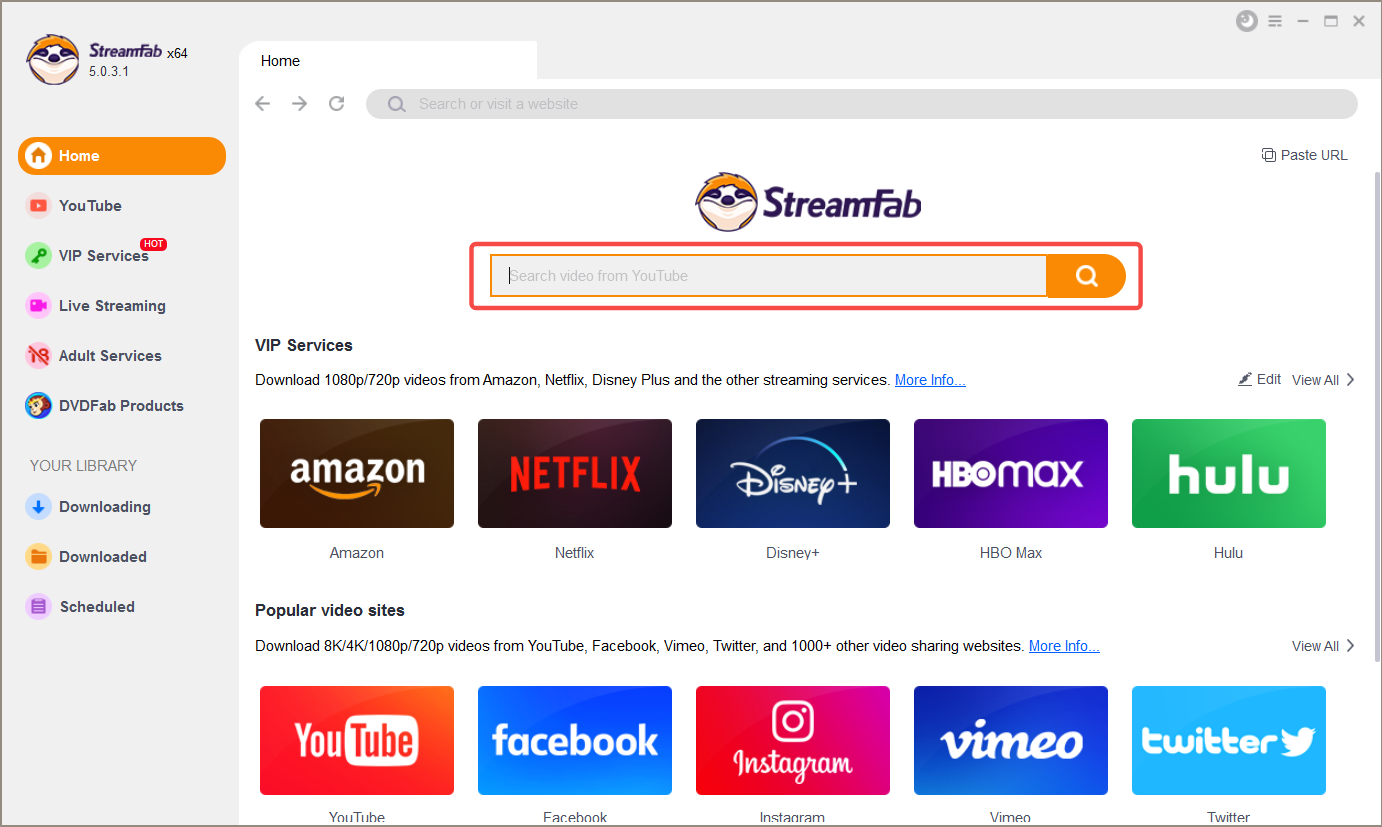
The workflow is short: install the Windows or Mac app, paste the source URL into its built-in browser, choose your MP4 or MKV container along with quality, audio track, and subtitles, then start the task to write the local file.
Browser URL Converter: OnlineVideoConverter
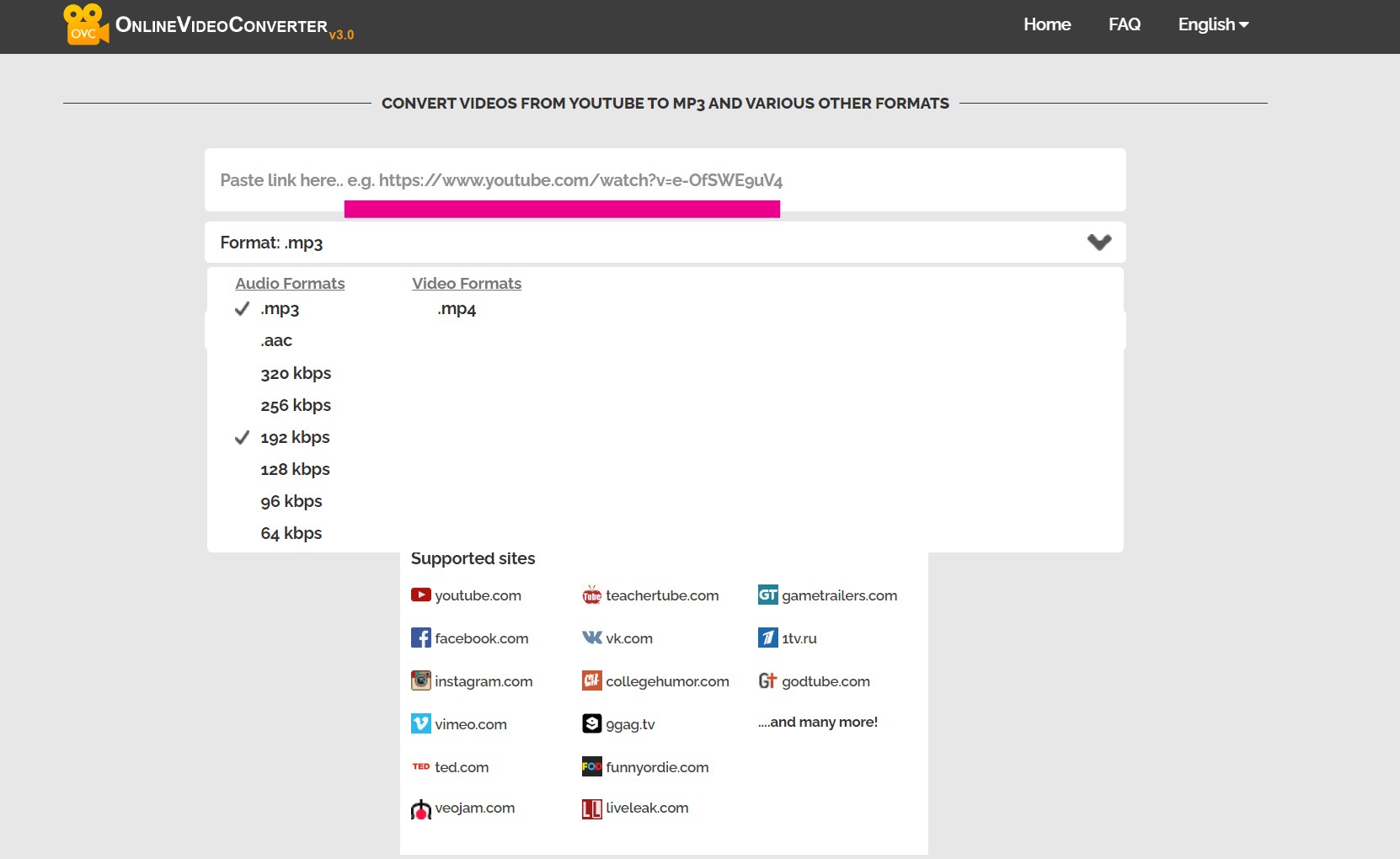
OnlineVideoConverter is a browser-based converter that accepts supported public video links and returns MP4 or other formats, with no install required. It suits a single supported public link; it is not a universal answer for every site or for protected subscription streams.
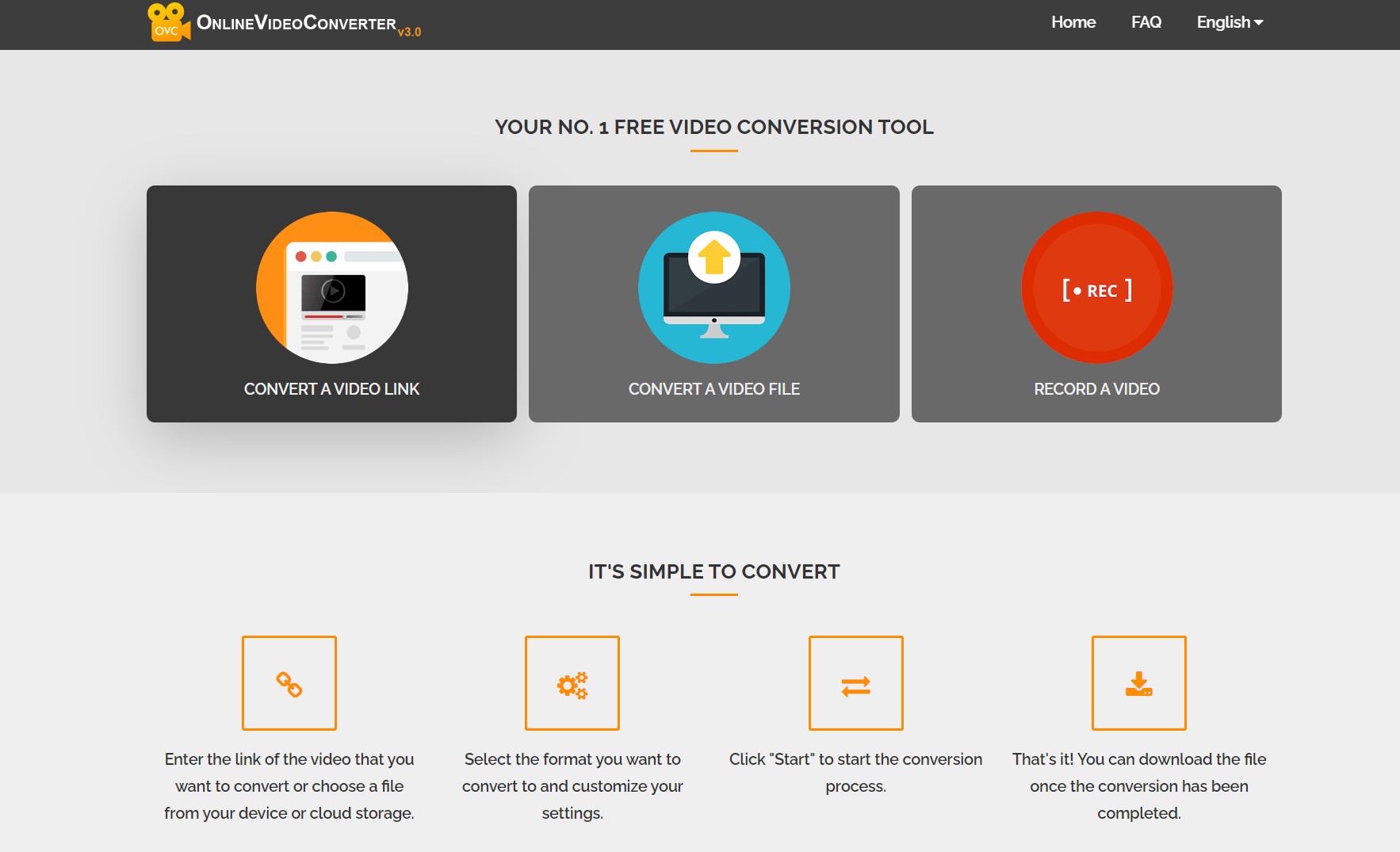
- Step 1: Open onlinevideoconverter.to in your browser.
- Step 2: Copy the video's link and paste it into the input box.
- Step 3: Choose MP4 as the output format, start the conversion, and download the file when ready.
Check Compatibility Before Converting
Supported Sources and Inputs
Not every method accepts every input. The compatibility table below maps common source types to the five methods so you can rule options in or out before pasting anything.
Limits, Privacy, and US Availability
Assess each method by its disclosed limits rather than a universal safety claim: registration requirements, ads on the page, per-file size caps, how long files are retained on the server, and whether the service is currently available in the United States. SaveFrom, for example, has been unavailable in the United States since April 28, 2020, so it is excluded from the recommendations here. Values below reflect the state of these services as of August 2026; pricing and plan terms for any paid tool follow the vendor's current official policy.
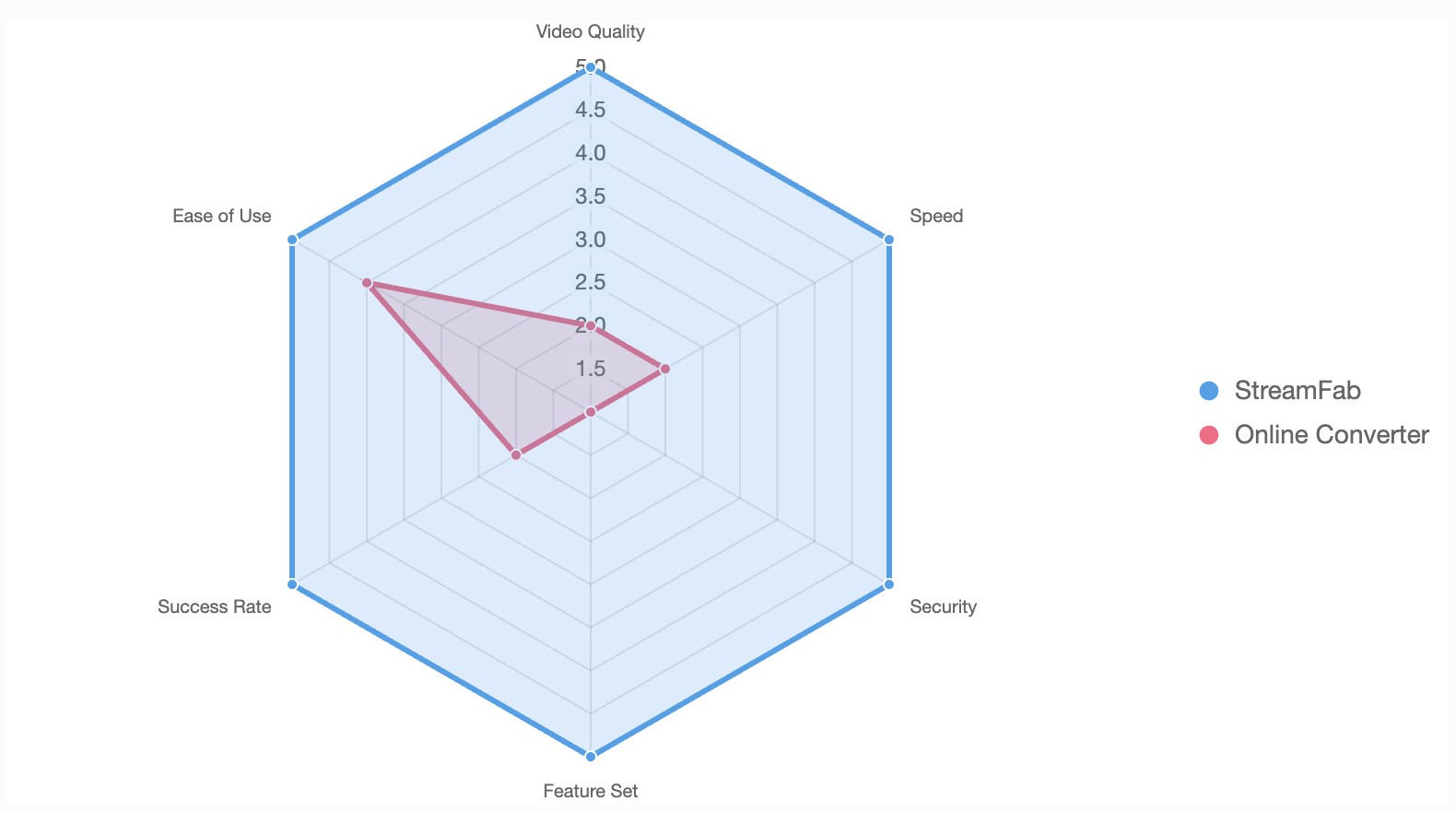
To compare the five methods side by side:
| Metric / Tool Class | StreamFab Downloader | Typical Online Converters |
|---|---|---|
| DRM Handshake Capability | 100% (Supports Widevine L1/L3) | 0% (Instant Block/Failure) |
| Maximum Source Resolution | True 1080p / 4K HDR | Heavily Compressed 720p |
| Geoblocking Bypass | Native Localized Sandboxing | Flagged & Dropped by CDNs |
| Network Security Risk | Clean (Standalone Software) | High (Ad-tracking & Session Hijacking) |
Follow the Right Conversion Steps
Once you know the input type, the procedure is short. Pick the workflow that matches the source.
Public Links in a Browser
Copy the public video page URL, open a browser converter, paste the link, choose MP4, and download the file when the conversion completes.
Direct Media Links in a Local Tool
In VLC, use Media > Open Network Stream, paste the direct .MP4 or .m3u8 URL, and use Convert / Save to write it to MP4. ffmpeg users can do the same with a single stream-copy or transcode command.
Local Files in a Converter
Open the file in HandBrake or a similar tool, pick an MP4 preset, adjust resolution and bitrate if needed, and export.
Android Without a PC
On Android, paste a supported public link into a browser converter or an Android URL to MP4 app, choose MP4 and an available quality setting, and save the result to your device. A PC is only necessary when the source is not supported on mobile — for example, unsupported sites, large batches, or protected subscription content.
Authorized Streaming Content on Desktop
For a supported streaming service and content within your access rights, open StreamFab, sign in through its built-in browser, choose quality/audio/subtitle options, and start the local save. Batch and scheduled tasks are available where the service supports them.
Quality Depends on the Conversion Path
Resolution and Re-encoding
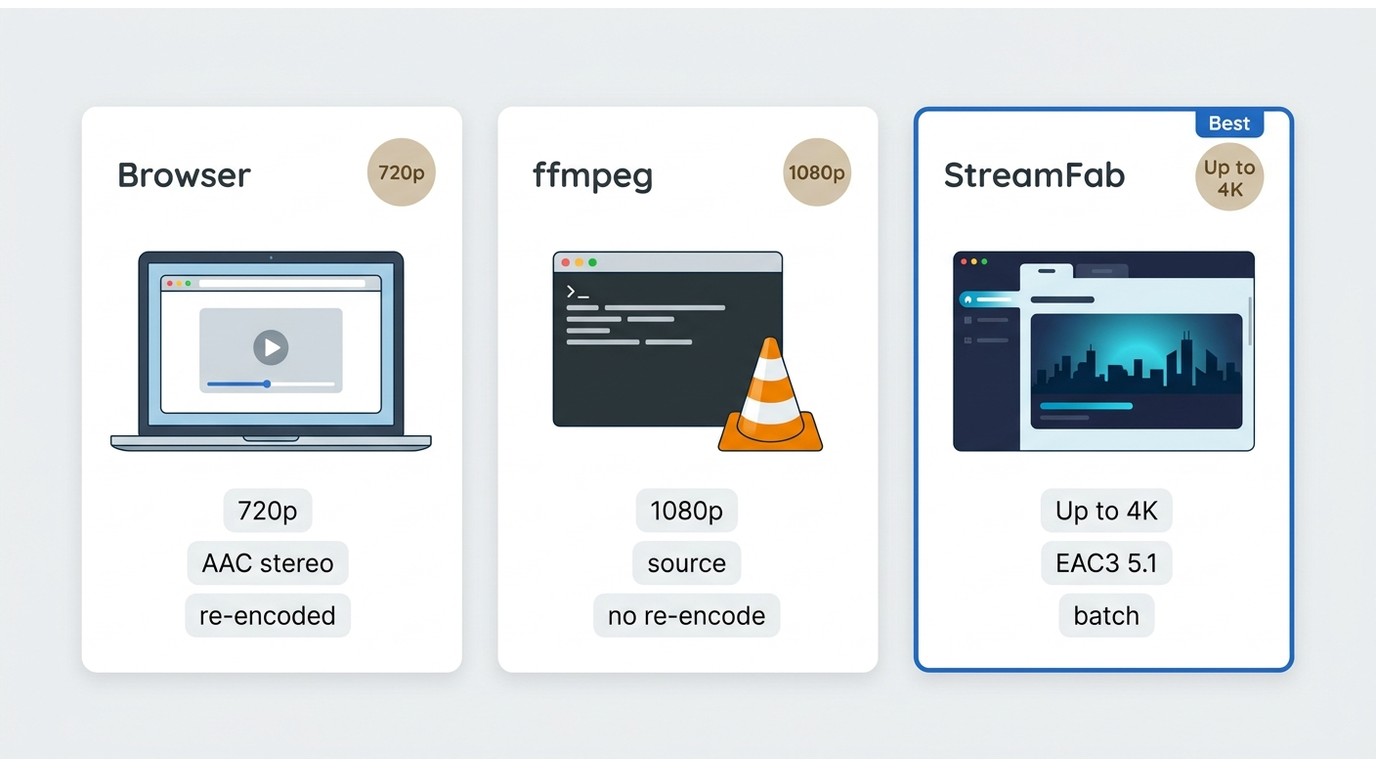
The highest resolution number on the page is not automatically the best result. Browser converters and mobile apps usually transcode, which can visibly soften the image. A direct media URL saved with stream copy in ffmpeg preserves the source. StreamFab records the stream and saves it locally, with resolution up to what the source and your plan actually deliver — Netflix and Amazon typically top out at 1080p, while Disney+, Hulu, HBO Max, Apple TV+, and Paramount+ can go up to 4K on supported plans.
Audio, Subtitles, and Containers
Modern streams deliver video and audio as separate tracks, so a weak extractor may return a video-only file. Confirm the method actually multiplexes audio, and check whether it preserves the original track (for example EAC3 5.1) or downmixes to stereo AAC. Subtitles may be soft (SRT sidecar) or hard-burned; if you need selectable subtitles from a supported streaming source, see the StreamFab subtitle options for the specifics. On containers, MP4 plays almost anywhere; M4V is a close cousin (rename or remux is often enough); MKV supports more tracks but not every player accepts it.
Fix Common URL-to-MP4 Failures
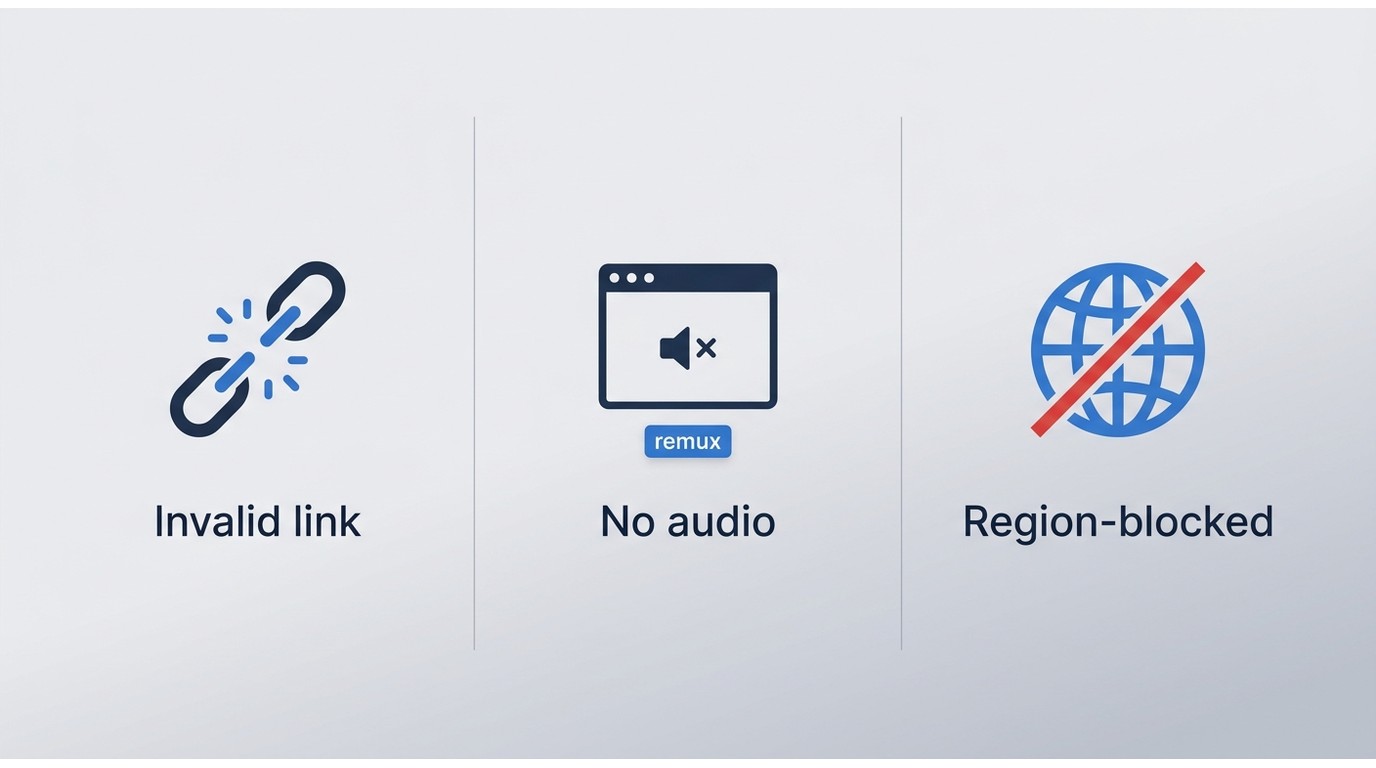
Diagnose in this order: confirm the link type, then check source support and service limits, and finally review the output settings. Most failures fall into three groups.
Invalid, Indirect, or Expired Links
A common cause is copying a page URL that only embeds a player, a redirect, or a token-signed address that has already expired. Refresh the page, copy the direct media URL where available, and retry. Browser restrictions like CORS or a signed-in session can also block a converter from reaching the stream. If the tool reports the source cannot be parsed, see how to solve the "No Valid Sources are Available for this Video" error for a focused walkthrough.
Missing Audio or M4V Output
If the converted MP4 has no sound, the extractor likely returned a video-only track and skipped muxing the audio stream. Retry with a tool that explicitly saves audio, or remux the two tracks together with ffmpeg. When the output arrives as M4V rather than MP4, the container is essentially the same as MP4 — renaming the extension or remuxing (no re-encoding needed) usually restores playback in stricter players.
Unsupported Sites, Limits, and Regions
Not every site is on a converter's supported list, and some services block automated saves. File-size caps, daily quotas, or a service that has withdrawn from the United States (SaveFrom, for instance) can also stop the job. When one method's limits get in the way, switch to another method that fits the link type, rather than retrying the same tool.
Frequently Asked Questions
Conclusion
There is no single best URL to MP4 converter — the right choice follows the source. Browser tools fit supported public links; a local tool like VLC or ffmpeg fits a direct media URL; a file converter fits video already on your device; Android handles simple supported links without a PC; and StreamFab is a desktop alternative when you are working with a supported streaming service and authorized content. Start with the simplest supported workflow that fits the task, and step up only when the input actually needs it.
Use Downloaded Video Responsibly
Save local copies only for content you are authorized to access, follow each platform's terms of service, respect applicable copyright law, and do not redistribute the files. A tool working technically is not the same as having the right to save or share the content — access entitlement and terms still apply. Keeping a local copy of your own already-purchased or freely licensed material for personal offline use is the intended case; sharing, reselling, or posting the file is not.

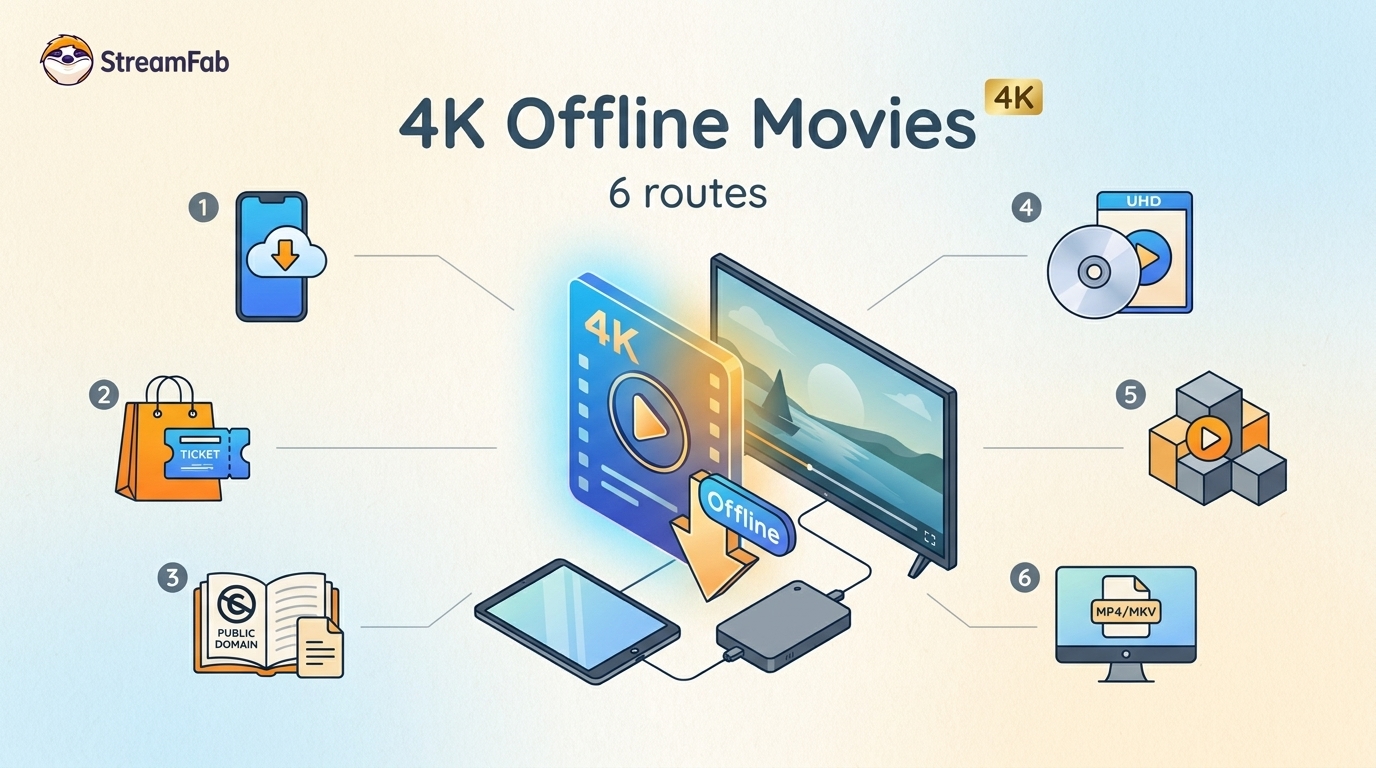
Legal 4K movie downloads do not all provide the same kind of offline access. Most mainstream services offer app-locked downloads, while portable movie files, UHD Blu-ray, public-domain media, and authorized desktop workflows involve different quality, cost, device, and licensing limits.
By Jacob Harrison - Aug 12, 2026
To get straight to the point, you can download a BitChute video as MP4 through its download icon: open the video, then use Save As. For authorized content where permitted, this guide explains when desktop, Android, or browser alternatives make sense.
By Marcia Hatcher - Aug 11, 2026

Hotstar is no longer a standalone US service. Here are the two realistic paths US viewers have to download JioHotstar or former Hotstar movies.
By Jacob Harrison - Aug 7, 2026
A legal free movie streaming site in the US should have a licensed catalog, a clear ad-supported or library-backed business model, and an official app or domain. This guide compares 12 services by signup friction, ads, viewing style, and the way rotating catalogs affect what is available today.
By Erika Leen - Aug 5, 2026