
HTML5 Video Not Found: 6 Fixes That Actually Work in 2026

Summary: Facing the HTML5 video file not found error on iPhone Safari or getting error code 4? Discover advanced 2026 solutions to bypass CDN blocks, HEVC codec issues, and secure your media library for seamless offline playback.
Here's the short answer: "HTML5 Video Not Found" means the player UI loaded, but the media itself didn't—that's usually a blocked or expired stream, not a truly deleted file. A true HTTP 404 means the source was purged from the server, and the player can't recover it; every other case (stale token, codec mismatch, tracking-prevention block, or CDN edge drop) is fixable from your end.
I spent last week stress-testing playback across a mix of private VOD platforms and niche tube sites, and I kept running into that same overlay: player frame loaded, UI responsive, and content refusing to start. The basics still resolve most of these cases in 2026 — but when they don't, the real culprit is almost always a codec mismatch, aggressive tracking prevention, or a severed CDN handshake, not something a cookie sweep alone will clear.
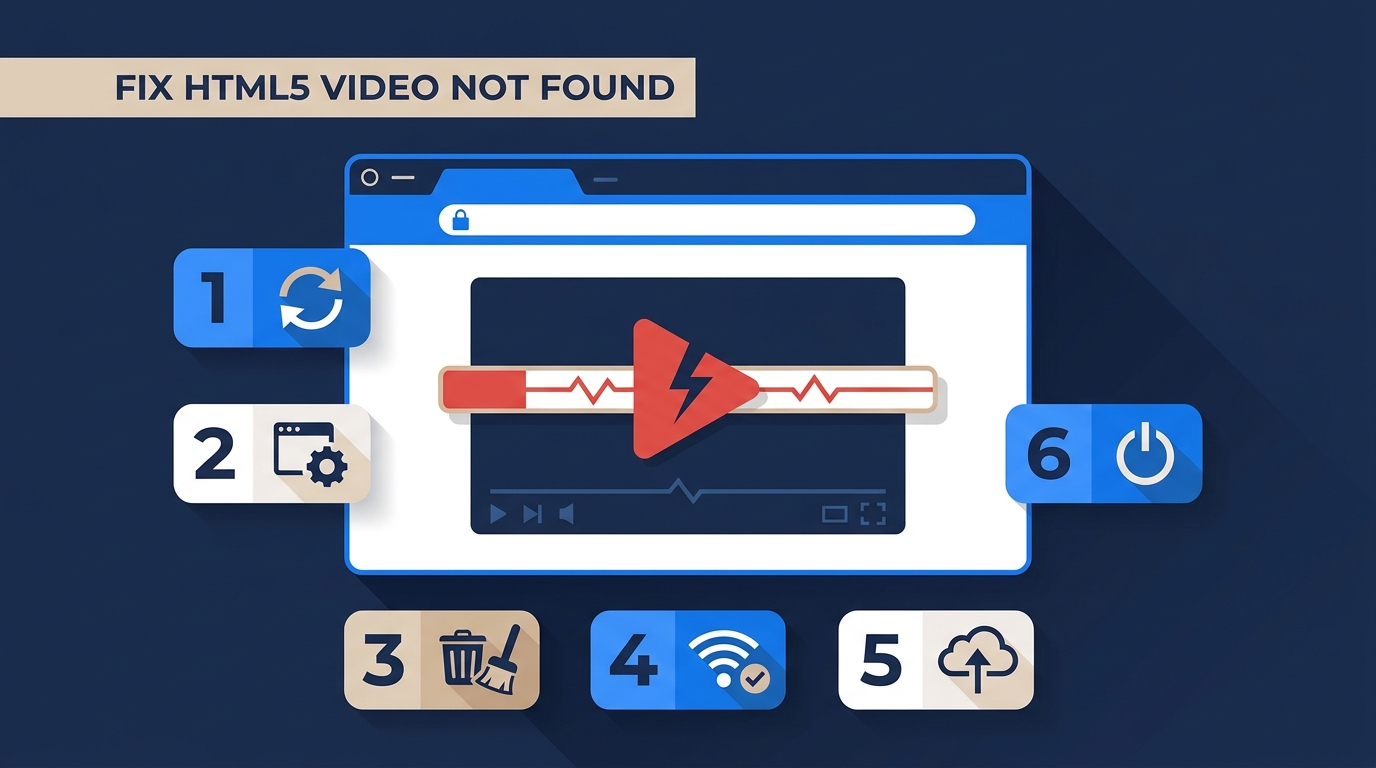
As an editor who tracks how modern browsers handle streaming video formats, my read is this: fixing HTML5 video not found in 2026 means working through a short ladder—try the first-line browser fixes, then diagnose codec (HEVC/AV1), tracking prevention, and CDN issues, and only then reach for a local copy when a stream keeps failing. Below is that ladder in order.
Fixing HTML5 Video Not Found in 2026
To resolve these playback failures, first rule out the basics on your side, then work down to codec, mobile tracking prevention, private CDN, and hardware acceleration causes.
First-Line Fixes: Refresh, Clear Cache, Update Your Browser
Before anything clever, run the three fixes that still clear most cases in 2026:
- Hard-refresh the page and clear cache & cookies. Press Ctrl+F5 on Windows or Cmd+Shift+R on Mac to force a fresh fetch, then clear the site's cache and cookies from your browser settings. This alone fixes stale edge node routes and expired session tokens.
- Update your browser to its latest 2026 build. Media Source Extensions and codec support ship with the browser engine; an out-of-date build is the single most common cause of a healthy file failing to play.
- Try a different browser. If Chrome throws the error, open the same page in Safari, Firefox, or Edge. A cross-browser test tells you in seconds whether the issue is codec/engine-specific or truly server-side.
If all three come up empty, the cause is deeper than the browser session—keep reading.
Resolving Error Code 4 and HEVC/AV1 Codec Issues
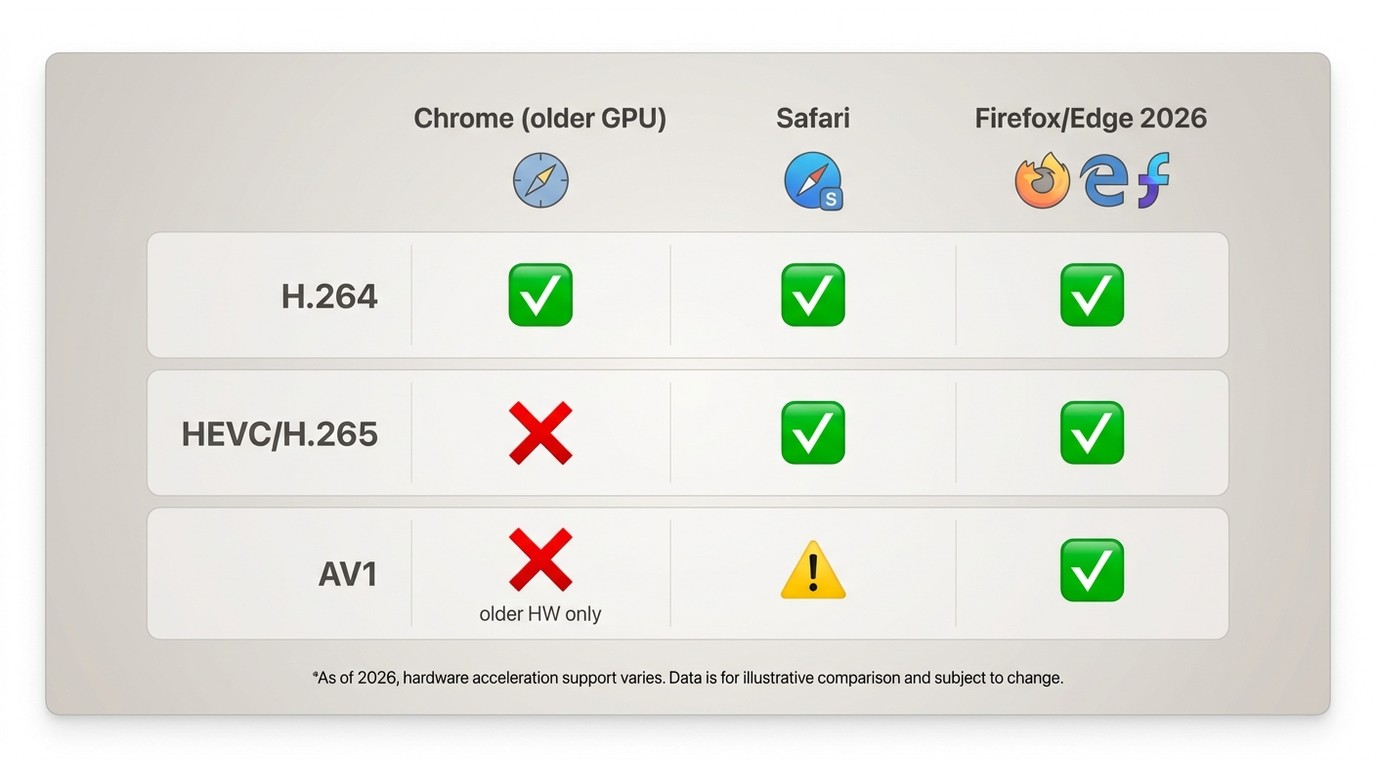
If the player shows you error code HTML5 video 4, your browser is basically saying it connected to the server successfully, but the media format itself isn't properly encoded for its playback engine. Basically, this is a major decoding failure on your end; it doesn't mean the file is actually missing from the server.
In 2026, decode failures increasingly come from AV1 as well as HEVC/H.265: a browser or GPU without AV1 support will throw the error even on a perfectly healthy file. Private hosts have leaned into raw H.265/HEVC to cut bandwidth, and newer platforms are pushing AV1 for the same reason. Safari handles HEVC natively; Chromium browsers on older hardware often reject both codecs outright.
Fix: switch browsers or force H.264. Open the same page in Safari (for HEVC) or a current Chromium build with AV1 support; if you control the player, force an H.264 fallback through dev tools. Upgrading the browser engine — see the first-line fixes above — also brings in the latest Media Source Extensions and codec support.
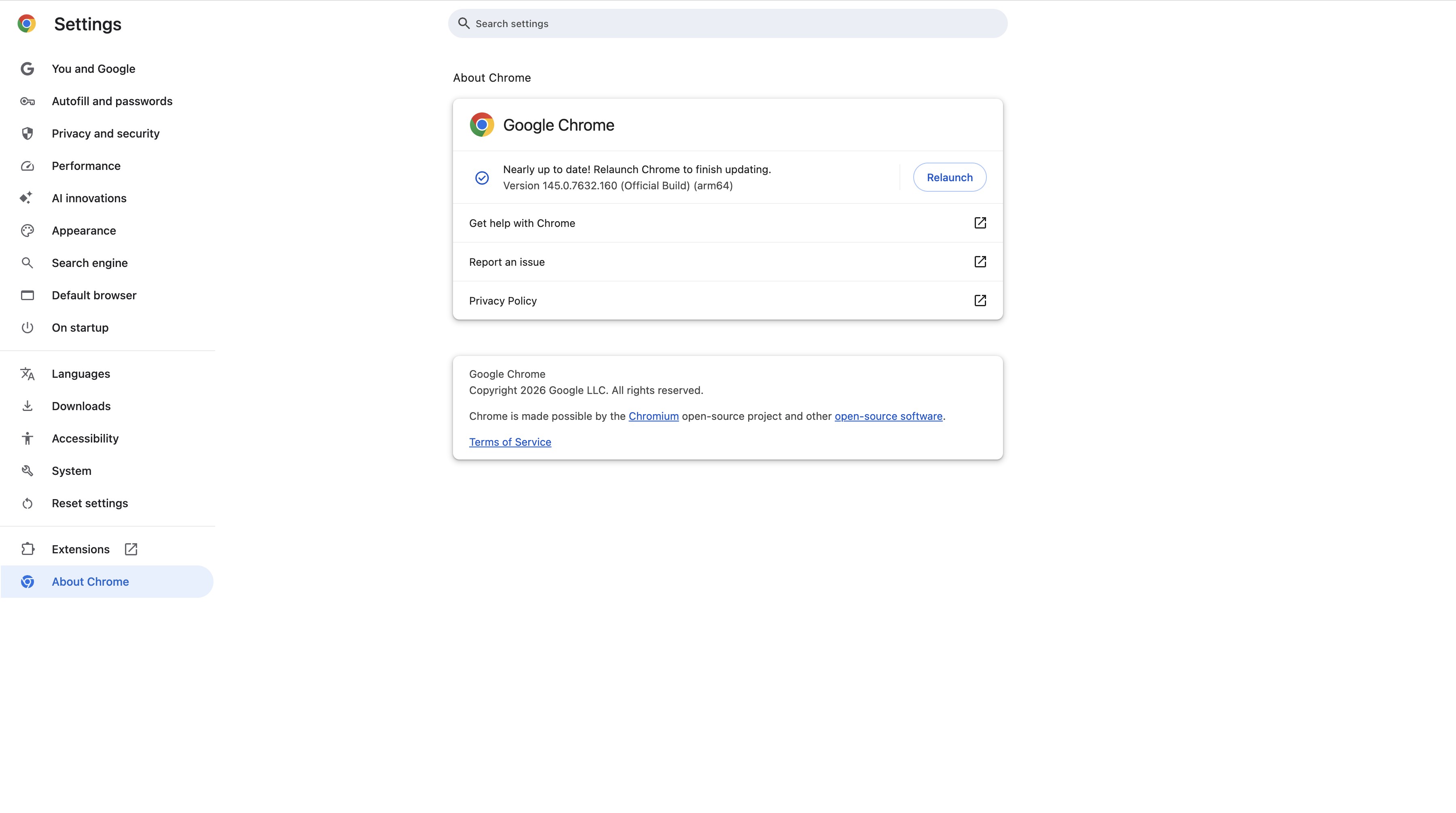
Quick tip: Just hit F12 to open your browser console and take a look at the network tab. If that ``or ``file is giving you a 200 OK status but error code 4 still shows up on the UI, your GPU probably just lacks the right codec instruction set.
Diagnosing Safari and iPhone WebKit Blocks
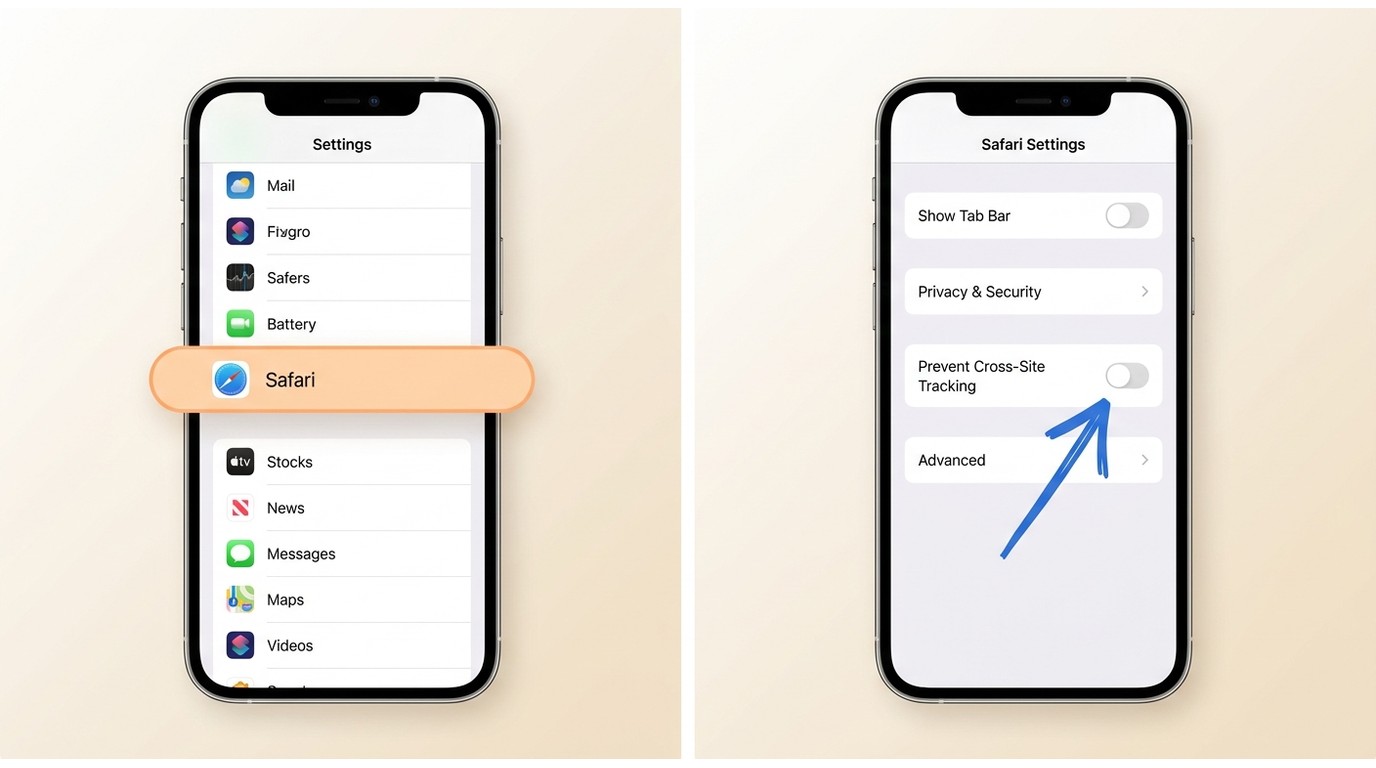
Quick answer for iPhone/Safari: the "HTML5 video file not found" error on iPhone is almost always Intelligent Tracking Prevention blocking the third-party CDN's authentication token. Go to Settings > Safari and turn off "Prevent Cross-Site Tracking" to test whether playback returns. If it does, the site relies on cross-site cookies for video auth; if it doesn't, the cause is elsewhere (codec or CDN).
Under the hood, Safari's WebKit is aggressive about blocking cross-site tracking on iOS 26, and it accidentally sweeps up the auth tokens third-party video CDNs need. Toggling ITP off is a diagnostic—you can turn it back on once you've confirmed the cause and whitelist the site if the platform allows it.
Tube Sites and Private CDN Recovery Tactics
Looking through server logs for stuff like camwhores HTML5 video file not found or trying to figure out how to recover pornlux video mot found, I noticed the real culprit is usually these super fragile, dynamic CDN nodes. A lot of private tube sites spin up temporary video URLs on the fly. So if the exact Edge node handling your fragment happens to drop dead, the JavaScript player just throws a 404 error—even though the main video file is sitting perfectly fine over on the origin server.
If you want to recover that stream, mashing the reload button won't help you much. You actually need to dig into the page source, grab that base ``playlist URL, and push it through a real network parser before your temp token completely runs out.
Hardware Acceleration and uBlock Origin Conflicts
Nowadays, ad-blockers using those strict 2026 filtering rules (looking at you, uBlock Origin) constantly mistake server-side ad insertion (SSAI) scripts for malware, which completely kills the HTML5 player. On top of that, hardware acceleration sometimes fights with your GPU drivers. That's usually why you get a weird black screen while the audio is still playing in the background.
If adding the player script to your whitelist doesn't do the trick, the next logical step is to just disable hardware acceleration to give your GPU a little break.
Server-Side Checks for Site Owners and Developers
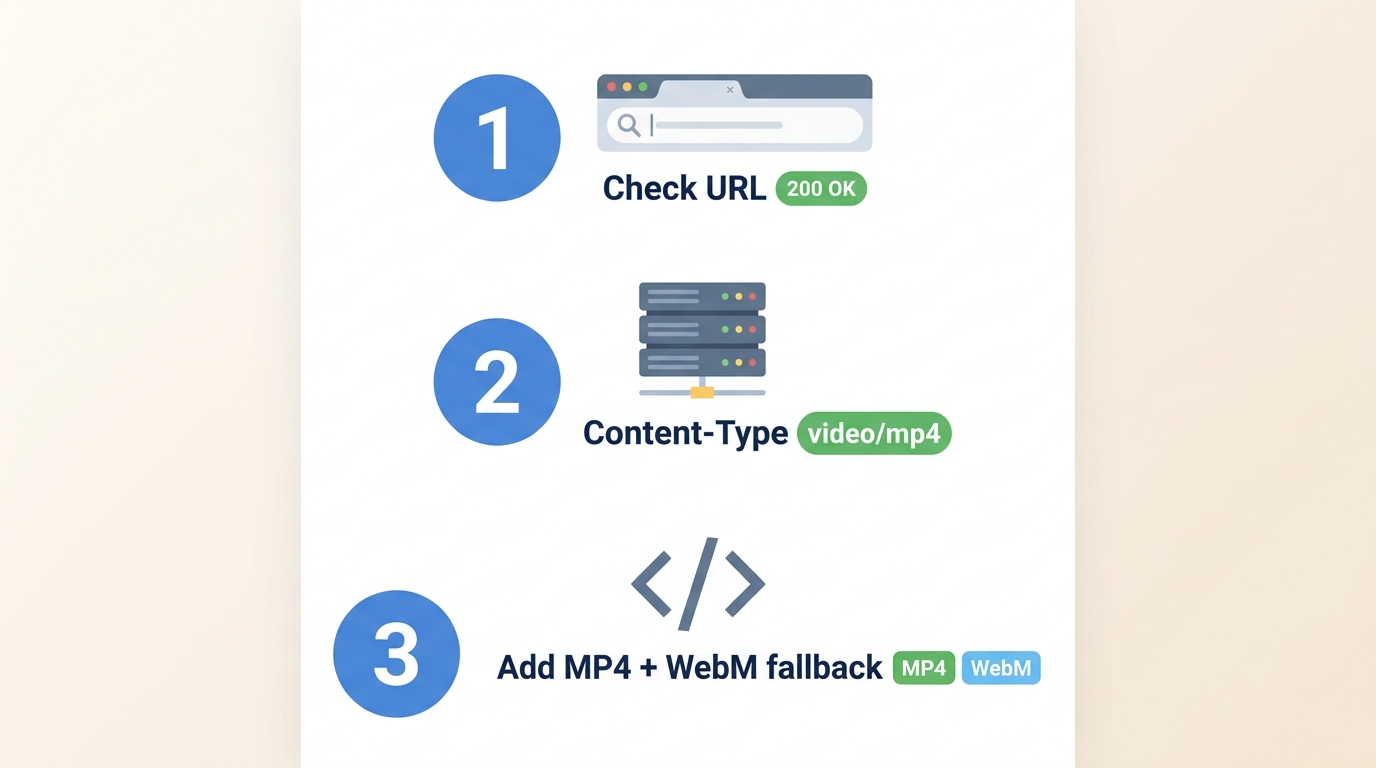
If it's your own page throwing the error, the fix is on the server side, not in the viewer's browser. Three quick checks resolve the majority of these cases:
- Verify the src path resolves. Open the exact URL in the
<video>tag'ssrcattribute in a new tab — a 404 or a redirect there means the browser will fail too. Watch for case sensitivity and stale CDN paths after a migration. - Serve the file with the correct MIME type. An MP4 delivered with the wrong Content-Type won't play. Configure your server to send
video/mp4for MP4,video/webmfor WebM, andvideo/oggfor OGG. - Supply multiple
<source>formats. Provide MP4 (H.264) as the primary source and add WebM and OGG fallbacks inside the same<video>element so the browser can pick a format it can decode.
Save a Local Copy for Reliable Offline Playback
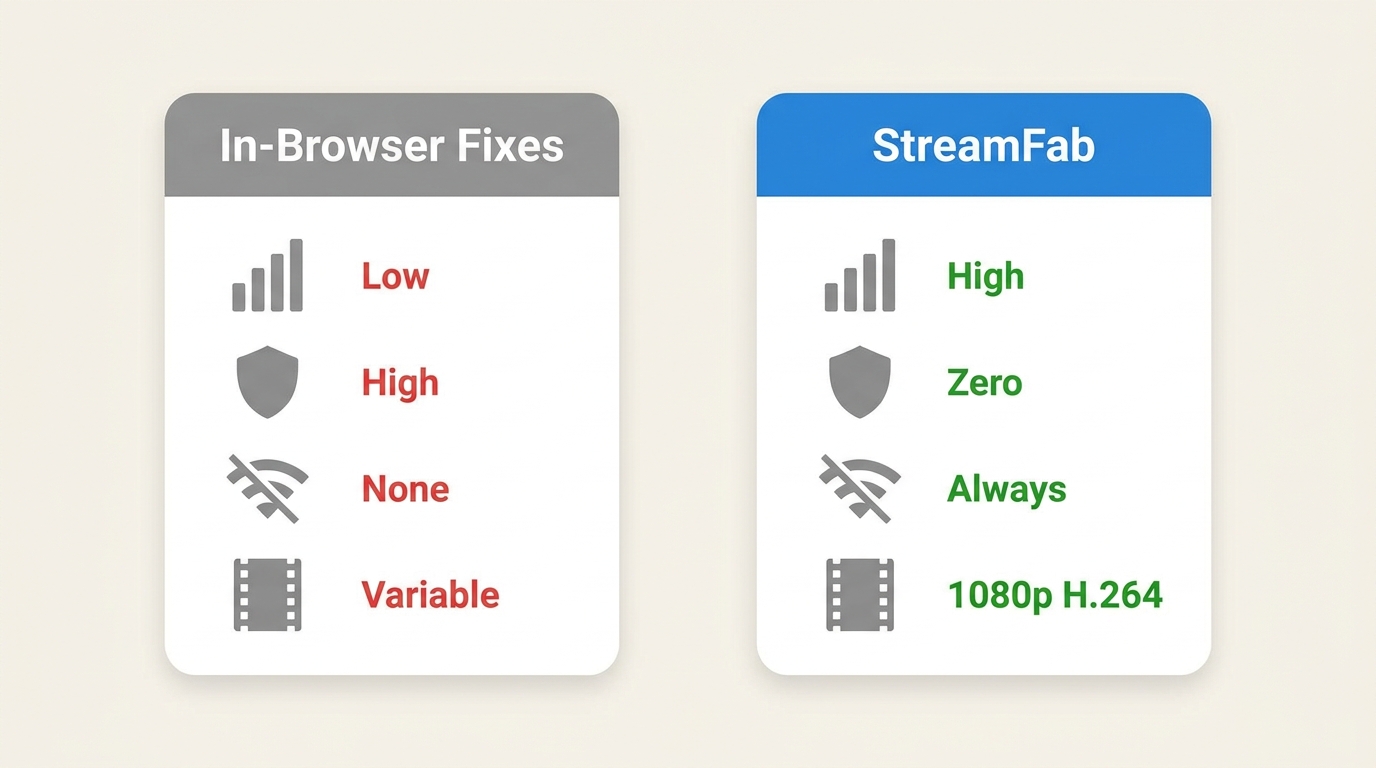
For content you're authorized to access, where permitted by platform terms and applicable law, saving a local copy is one practical workaround when a stream keeps failing. If a server's CDN keeps dropping connections or geoblocking keeps throwing "Video Not Found" errors, a desktop tool can save the file so a flaky player no longer stands between you and the video.
| Dimension | In-Browser Fixes & Tweaks | StreamFab Local Copy |
|---|---|---|
| Success Rate | Low (Fails on true CDN node drops) | High (Parses raw M3U8/MPD manifests directly) |
| Ad-blocker Vulnerability | High (Scripts easily broken) | Zero (Operates independently of browser extensions) |
| Offline availability | None (video disappears if the page or link expires) | A saved local copy stays playable offline |
| Output quality | Subject to dynamic bitrate drops | True 1080p, choice of H.264 or H.265, EAC3 5.1 or AAC 2.0 audio, embedded subtitles and metadata, MP4 or MKV |
Once the copy is saved to your drive, browser cache limitations, iOS WebKit restrictions, and flaky website servers stop getting in the way of playback.

StreamFab All-In-One Downloader
- Save videos at true 1080p with a choice of H.264 or H.265 (HEVC) to balance quality and file size.
- Keep EAC3 5.1 or AAC 2.0 audio tracks alongside the video.
- Output standard MP4 or MKV files that play across desktop and mobile devices, iPhone included.
- Preserve embedded subtitles and media metadata.
- Schedule downloads so new episodes are saved as they publish.
How to save a local copy with StreamFab All-In-One Downloader
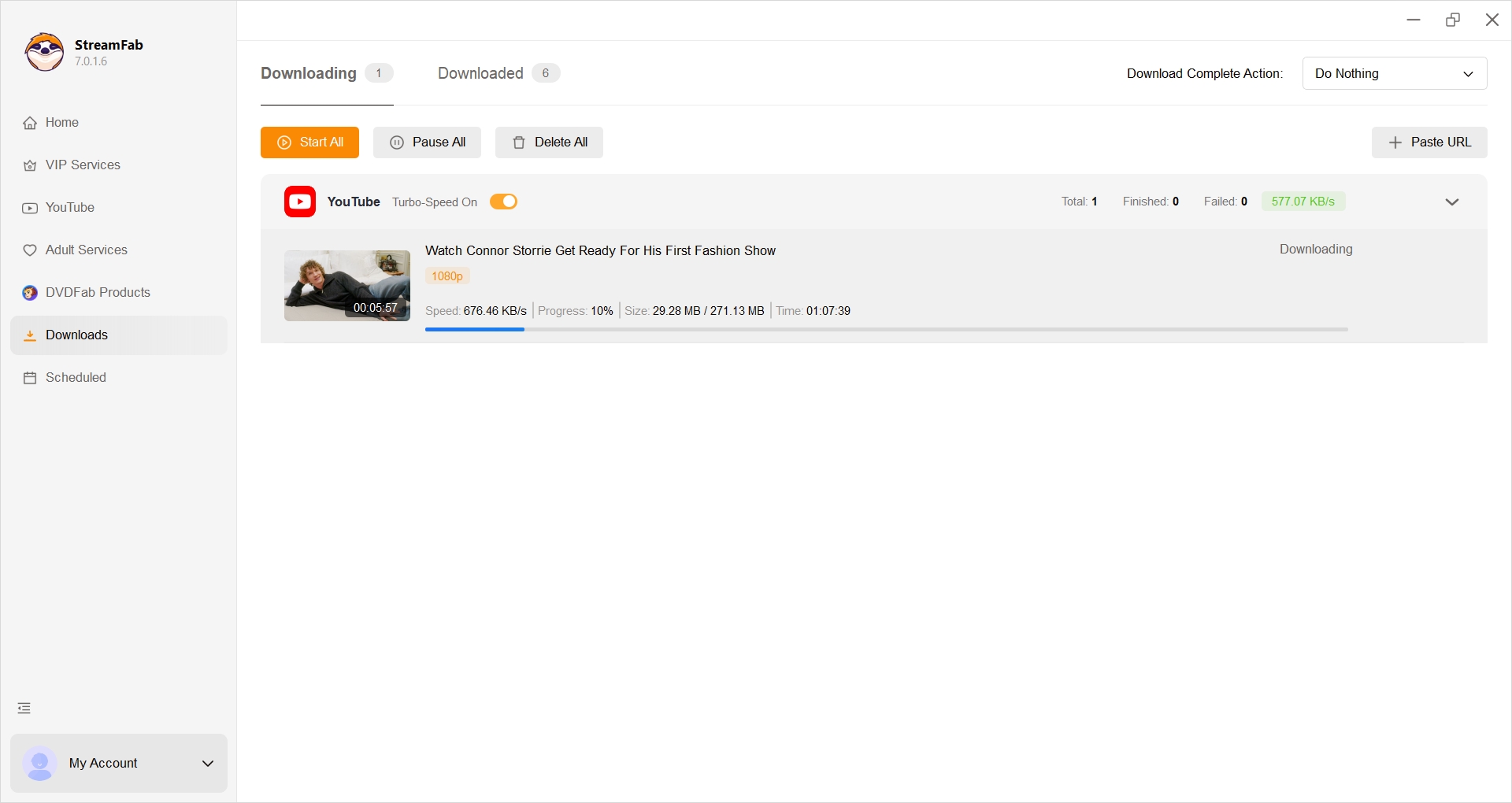
Choose the streaming service
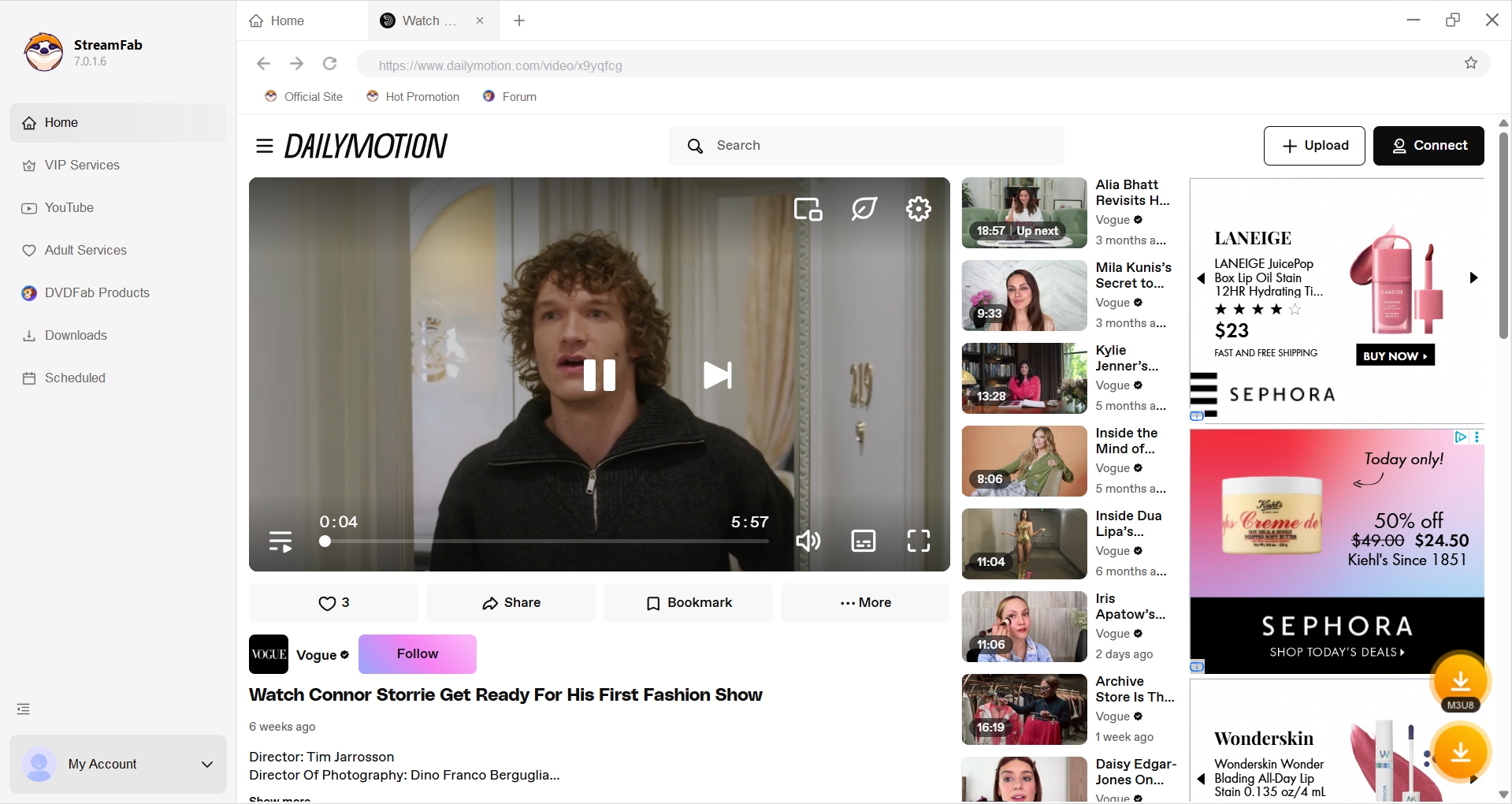
Tap the VIP Services or the YouTube icon on the left channel to find the streaming website you want. Or, you could just copy your video's URL and paste it right into the address bar on the homepage.
Customize the file
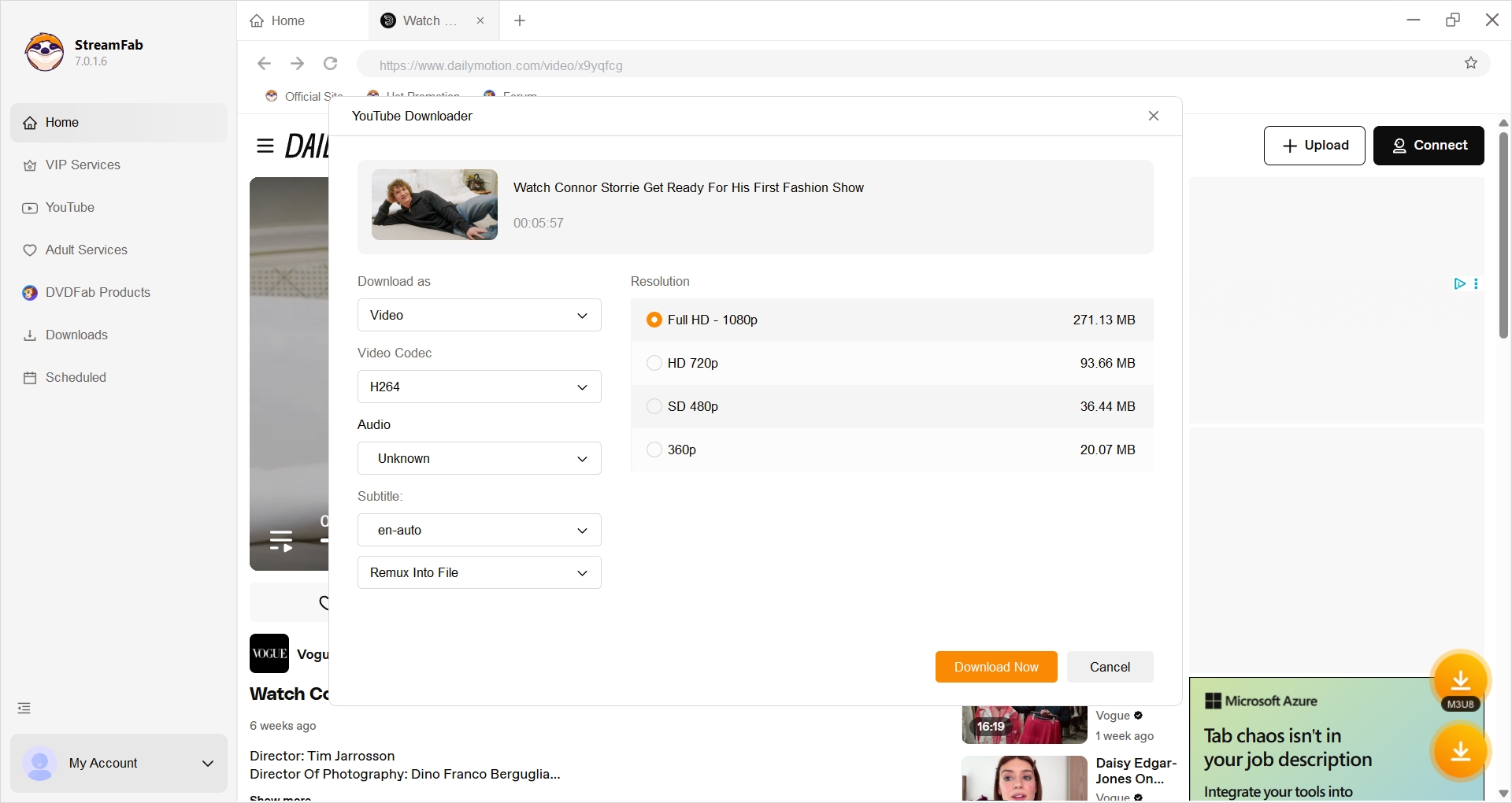
Search up your video and hit play. A little pop-up window is going to appear asking for your preferences, where you can easily pick your audio and subtitle languages.
Click the download button
Once you've got the settings right, you can either download it immediately or just toss it into your queue for later.
FAQ
How do I fix an HTML5 video that isn't properly encoded?
The source uses a codec (HEVC/H.265 or AV1) your browser engine or GPU can't decode. Update the browser to its latest 2026 build, switch to one that natively supports the codec (Safari handles HEVC), or save a local H.264 MP4 copy that plays on any device.
Can I recover a deleted HTML5 video?
If the server returns a true HTTP 404 status (meaning the source file was physically purged from the host server), recovery directly from the player is impossible. However, if it's merely a dynamic link expiration or geoblock masking the file, you can recover playback by extracting the M3U8 manifest via developer tools or utilizing specialized local downloading software to reconstruct the playlist tokens before they permanently invalidate.
Why does reloading the page fix HTML5 video errors?
A hard refresh re-initiates the connection to the CDN and requests a fresh authentication token, clearing a stale or timed-out Edge-node route. Many video platforms use temporary Edge routing, so if the initial connection dropped packets or the token expired, the player fails to render — reloading gives it a clean session to try again.
Can a VPN trigger HTML5 Video Not Found errors?
Yes. Some platforms detect VPN traffic and withhold the video manifest for geoblocking, so the surrounding page HTML loads fine, but the player shows "Video Not Found." Turning the VPN off, or switching to a residential connection, usually clears the block right away.
Conclusion
Disclaimer: Extracting and archiving content, particularly DRM-protected media or private hosting streams, should solely be for personal, offline backup purposes for content you legally have access to. Never distribute or monetize downloaded media.
My take after working through this in 2026: basic browser fixes—hard refresh, cache clear, browser update, and cross-browser test — resolve most "HTML5 video not found" cases and are the right first step. When a stream keeps failing after that, the cause is usually a codec mismatch (HEVC or AV1), iOS 26 tracking prevention, or a CDN Edge node dropping tokens; each has a targeted fix above. When a specific stream keeps failing and you're authorized to access the content, saving a local copy on Windows or Mac with a tool like StreamFab is one practical workaround so playback no longer depends on a fragile session.
Update log (July 2026): added first-line browser fixes, a site-owner server-side check block, an AV1 codec-failure note, WebKit iOS 26 tracking-prevention diagnostics, and a rewritten local-copy section.

Identify protected and unprotected M4V files, use authorized Apple TV playback, convert compatible files, or choose a separate supported-streaming workflow.
By Erika Leen - Sep 8, 2026
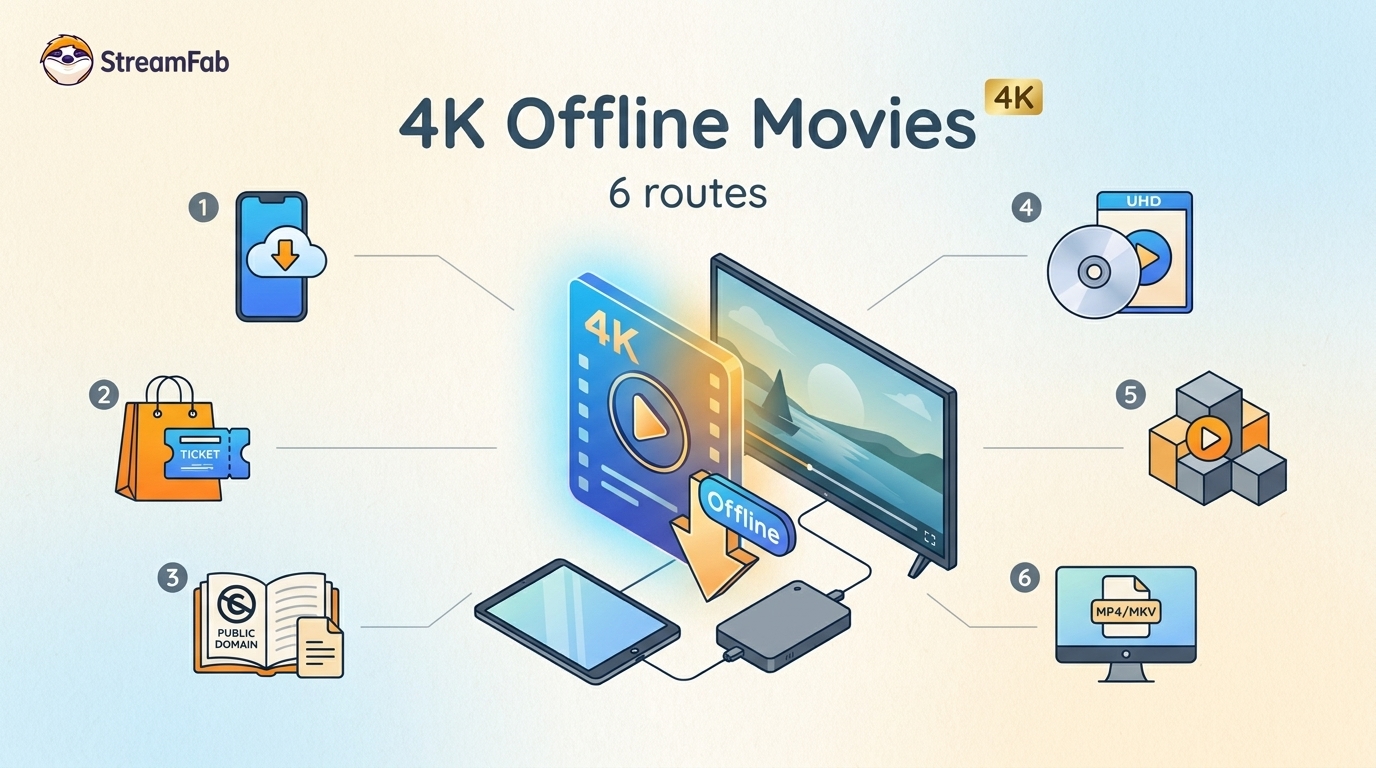
Legal 4K movie downloads do not all provide the same kind of offline access. Most mainstream services offer app-locked downloads, while portable movie files, UHD Blu-ray, public-domain media, and authorized desktop workflows involve different quality, cost, device, and licensing limits.
By Jacob Harrison - Aug 12, 2026
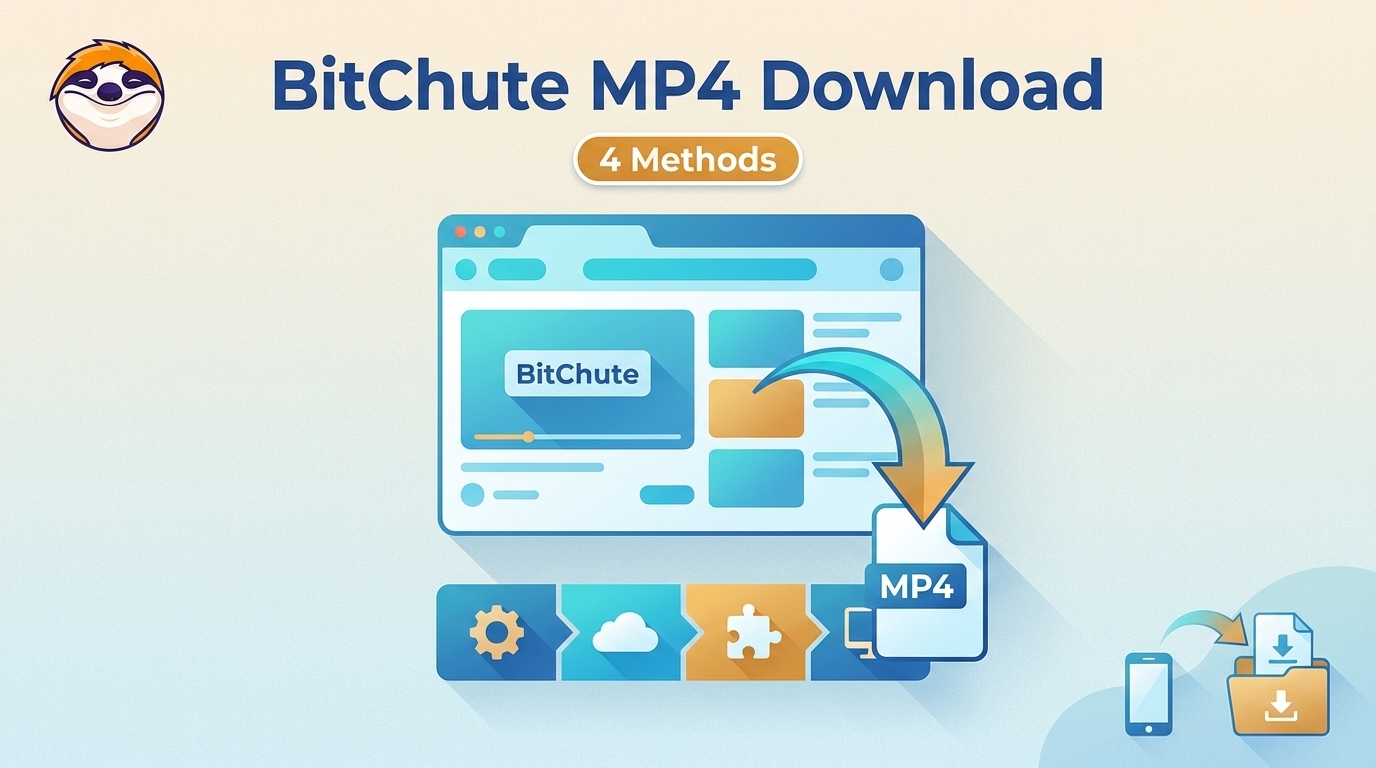
To get straight to the point, you can download a BitChute video as MP4 through its download icon: open the video, then use Save As. For authorized content where permitted, this guide explains when desktop, Android, or browser alternatives make sense.
By Marcia Hatcher - Aug 11, 2026

Looking to convert a link to MP4 in 2026? I've systematically tested top desktop and online converters to bypass Widevine DRM, dynamic tokens, and geoblocking for seamless PC and Android extraction.
By Jacob Harrison - Aug 7, 2026