
Solve "No Valid Sources Are Available for This Video" Error: 8 Fixes

Summary: Browser shows "no valid sources are available for this video" and the video won't play? In July 2026, I reproduced this error on six different streaming sites and identified the exact cause in each case. Here's the triage path that resolves 95% of cases.
When a streaming video won't play and shows "no valid sources are available for this video," the player cannot use an available source. The cause may involve source access, browser compatibility, or the connection. For playback errors, start with site-specific browser checks before changing network settings.
Checking JavaScript settings, extensions, cached site data, browser updates, reset options, and the connection provides a troubleshooting path for videos that will not play. Change one setting at a time so each retry shows which adjustment helped, without leaving privacy protections disabled.
Still seeing the error in a private window? Check another accessible video, a supported browser, and a permitted connection before deciding whether the problem follows the title, browser, or network.
StreamFab All-In-One is a desktop option separate from a site's official player. For personal offline viewing of content you're authorized to access, where permitted by platform terms and applicable law, Try StreamFab Free → provides an optional download path.
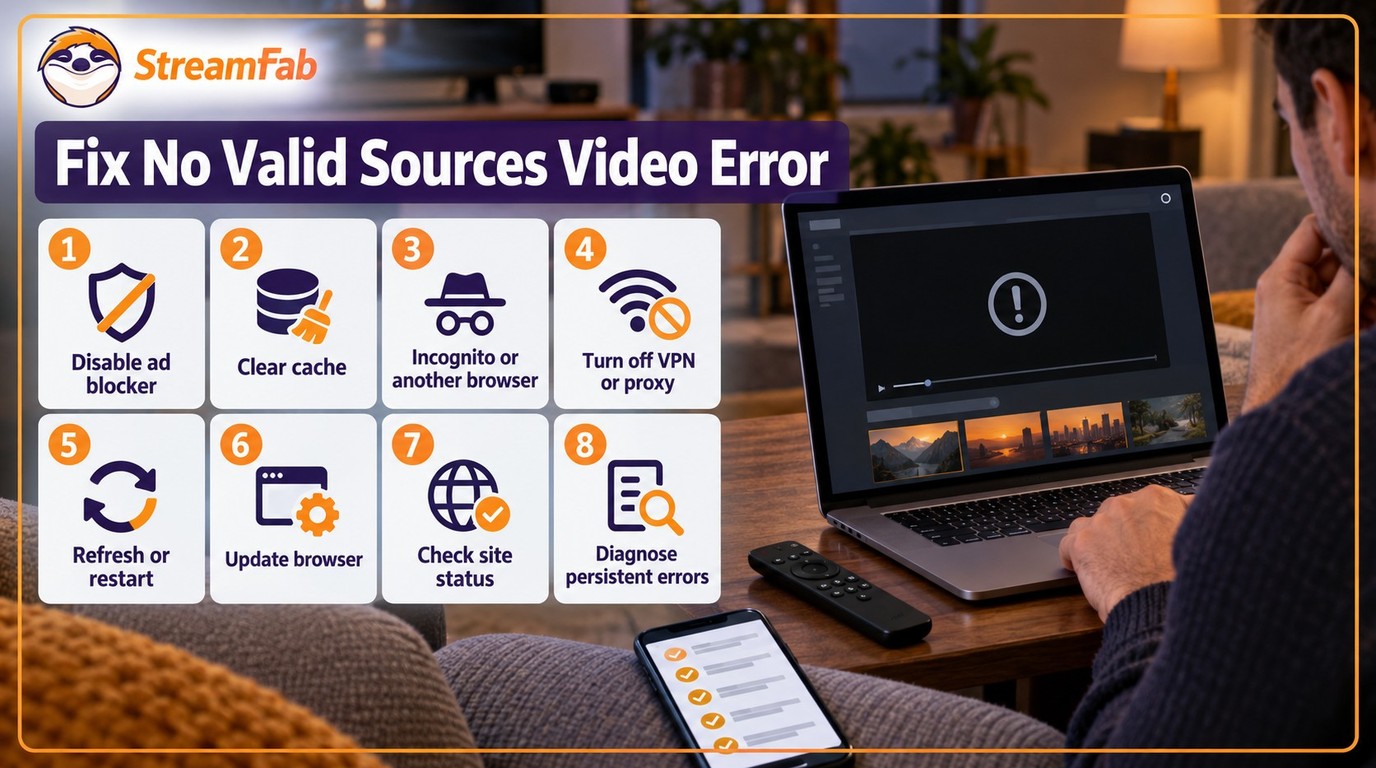
"No Valid Sources": Meaning and Fixes
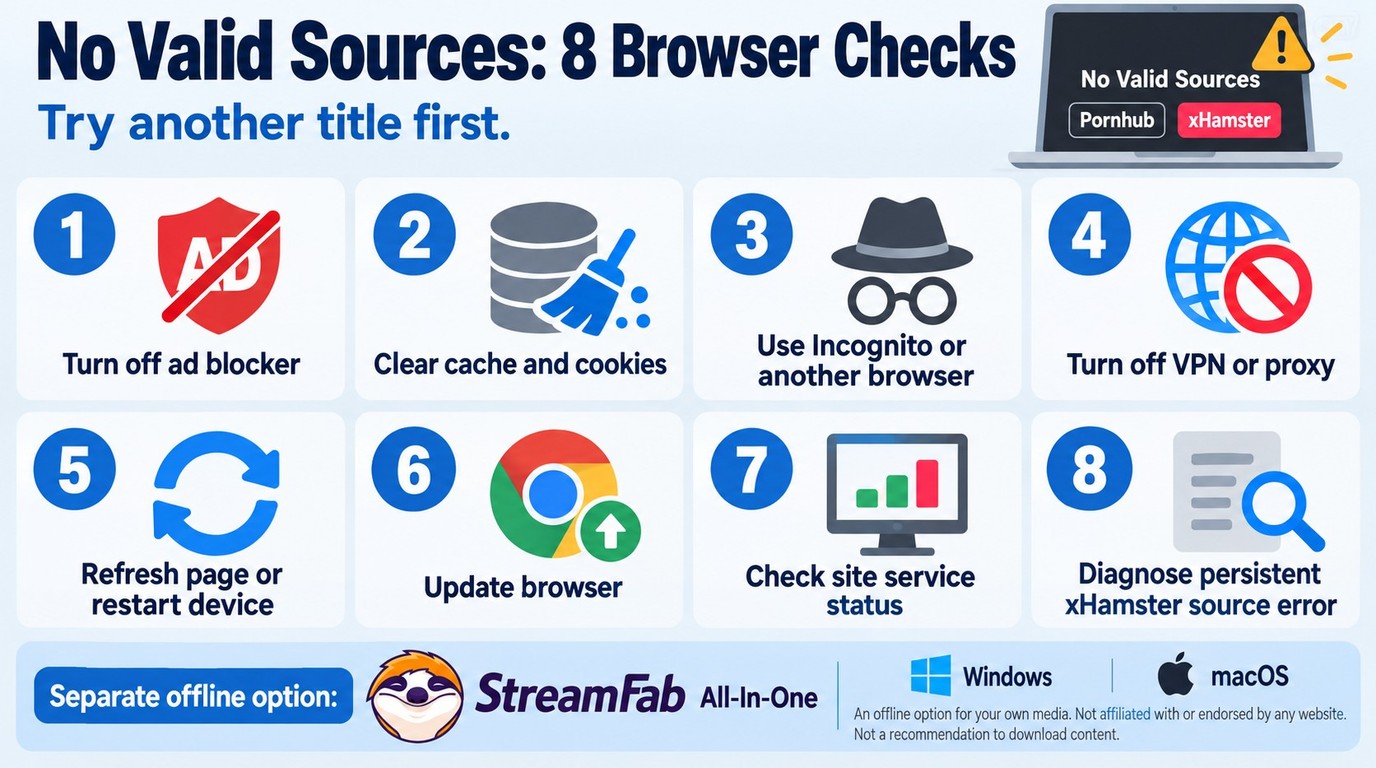
The player has no usable source, but several failures produce that result. HTML media errors distinguish network failures, decoding failures, and unsuitable sources. The message alone does not identify a DRM licensing failure. An HTML5 video not found message or a playback error calls for the same browser, connection, and availability checks; neither message alone confirms an outage.
Adult-site troubleshooting is for readers 18 and older. Keep the site's age and access requirements in place.
Start by comparing where the error appears. Keep the video and other settings unchanged during each comparison:
- Try another accessible title on the same site to distinguish a single-video problem from broader playback failure.
- Compare normal and private browsing, checking which extensions remain enabled in the private window.
- Try the same video on another supported device or permitted connection to narrow down compatibility and network problems.
The table gives you a next check, not a confirmed diagnosis. A page opening successfully does not mean its underlying media file is accessible.
| Observed symptom | Next check | What the result suggests |
|---|---|---|
| Plays in private mode | Check extensions and site data | Session or extension clue |
| Fails on one browser | Update; compare a supported browser | Browser or codec clue |
| Fails with VPN enabled | Compare your usual permitted connection | Connection clue |
| Only one video fails | Compare another video or quality | Source or encoding clue |
| Fails on one device | Compare browser and codec support | Device compatibility clue |
| Fails across devices | Check site status; contact support | Service or source clue |
Fix 1: Disable Your Ad-Blocker for the Site
A content blocker can interrupt a request the video player needs. Pause it for the individual site and retry. If playback returns, review that site's exception rather than turning off protection across every site you visit.
A working retry points you toward the blocker configuration. It does not identify the exact blocked request. Keep any exception limited to the site and the permission needed for playback.
Fix 2 — Clear Browser Cache and Cookies
Stored site data can interfere with a new playback session. Start by clearing data for the affected site; use the broader browsing-data option only if the site-specific cleanup does not help. Cookies also hold sign-in information, so clearing them signs you out of affected sites; sign in again before retrying a video that requires authorized access.
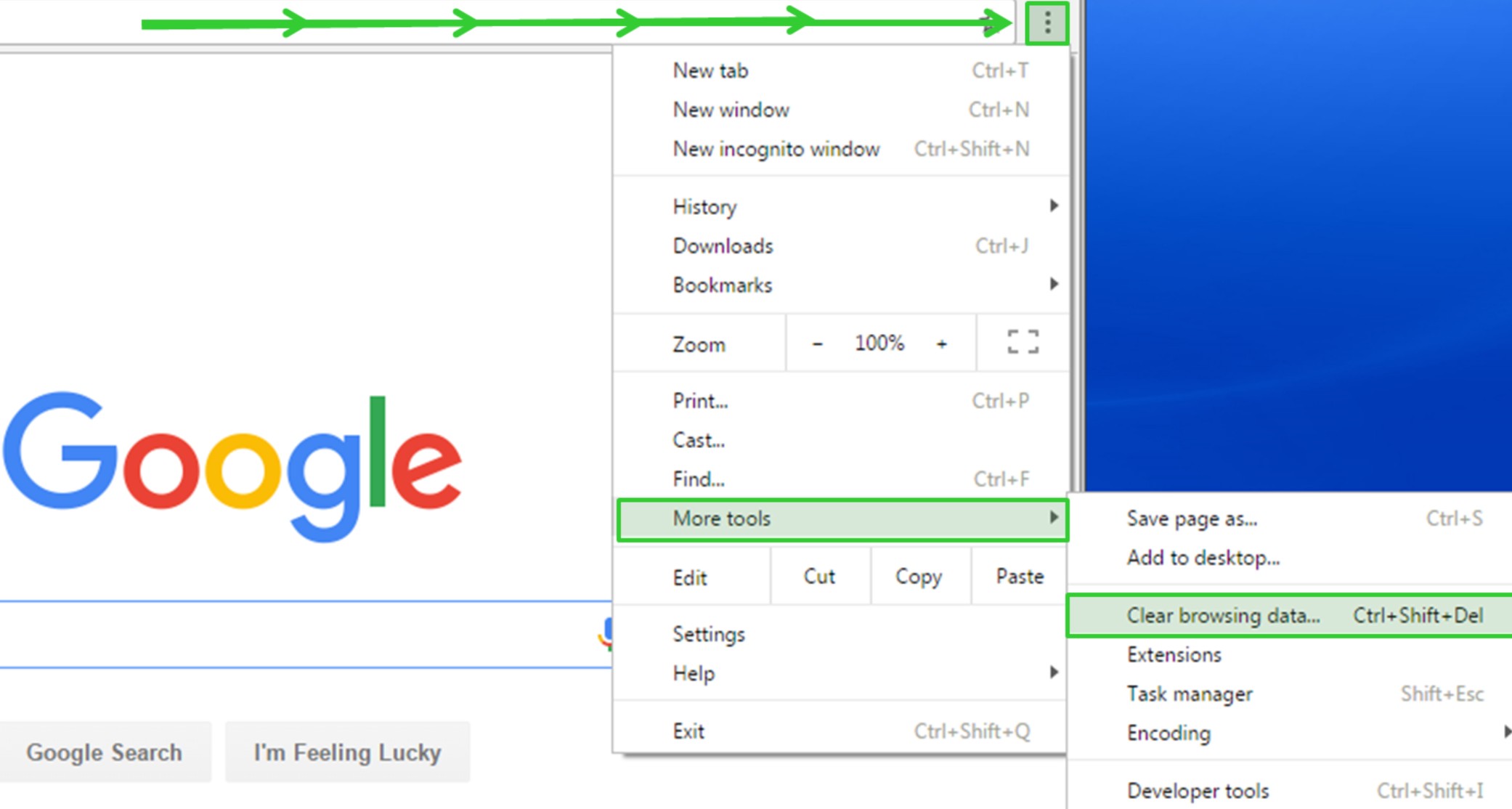
- Open Chrome's Settings, then Privacy and security.
- Open Delete browsing data, labeled Clear browsing data in some versions.
- Select Cached images and files and Cookies and other site data, then confirm deletion.
- Reopen the original video page and sign in again if required.
A hard refresh is a lighter first attempt. Use Ctrl+Shift+R on Windows or Cmd+Shift+R on Mac to reload without relying on cached page resources. It does not clear cookies or replace the sign-in check.
Fix 3 — Try Incognito Mode or a Different Browser
A private window helps compare your regular session with a separate one. Check which extensions are allowed in private mode and confirm that JavaScript is enabled for the trusted site. A video working there suggests a session or extension issue; failure there leaves network access, media availability, and playback compatibility among the next checks.
Another updated, site-supported browser is a useful comparison. A codec is the method used to encode and decode video, and your browser and device need to support it. Different browser configurations have different playback capabilities; one successful browser does not pinpoint the failed browser's cause.
Messages such as "format is not supported or source is unavailable" and "media source is not playable" also call for compatibility and access checks. Keep the comparison simple: use the same accessible title, on the same device and connection, before changing anything else.
Fix 4 — Disable VPN or Proxy
A VPN or proxy changes the path between your browser and the video server. A CDN, or content delivery network, is a distributed network that delivers video from multiple servers. Connection trouble along that path can prevent the player from retrieving usable media.
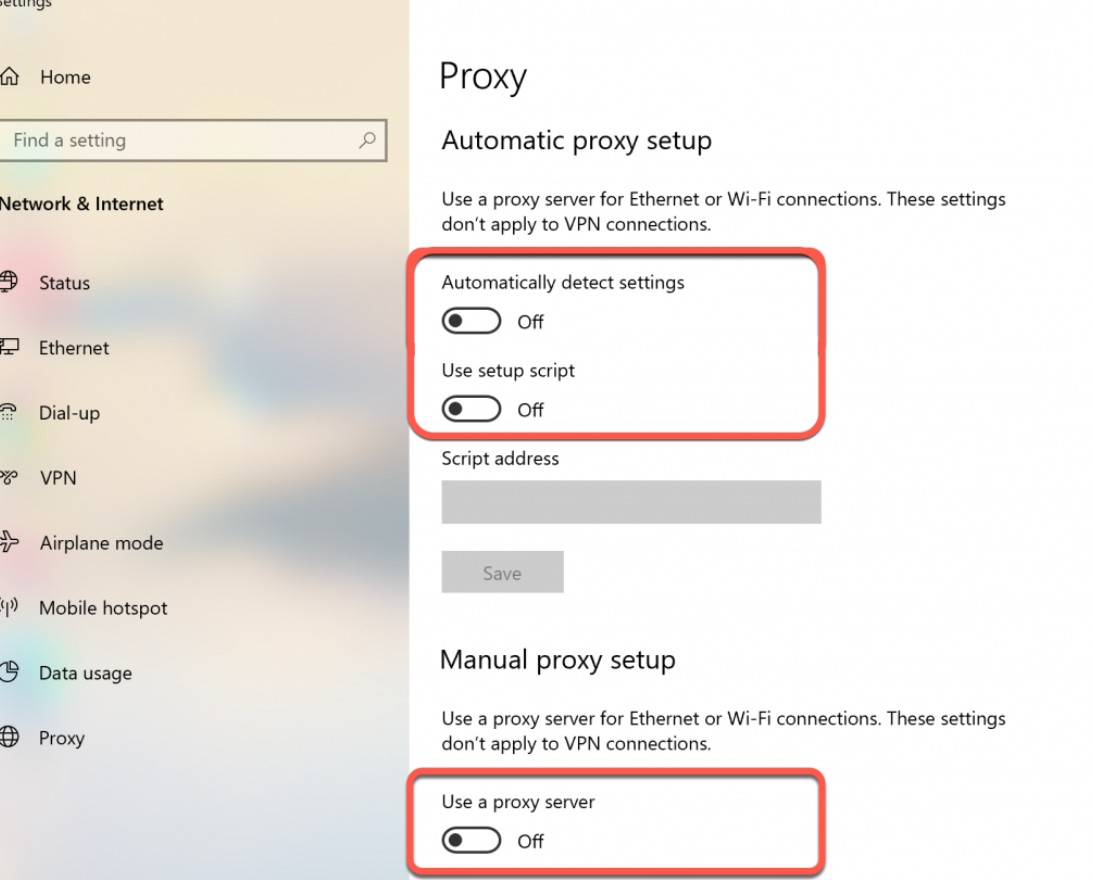
An optional VPN or proxy is worth checking when your connection permits it. Temporarily disconnect it and retry the same video, then restore your preferred settings. Do not change countries to evade access restrictions or alter a required workplace connection.
I would keep this check separate from the blocker check. If you change both at once, a successful retry tells you little about which setting needs attention. Preserve site-scoped privacy controls while you narrow down the connection problem.
Fix 5 — Refresh Page or Restart Device
A fresh page load retries the player's media requests. Refresh once, then close all browser Windows and reopen the original page if the error remains. Restart the device next to clear a stuck session. A continuing error still warrants network and source checks.
Fix 6 — Update Your Browser
An updated browser includes current fixes for playback and security. In Chrome, open Settings > About Chrome, install any pending update, and relaunch when prompted. Retry the same title afterward; an update does not guarantee support for a particular video format. If the error remains, confirm that JavaScript is allowed for the trusted site. After the earlier checks, Chrome's settings reset preserves bookmarks and saved passwords, resets browser preferences, and disables extensions. If playback still fails, compare another permitted connection.
Fix 7 — Check If the Site Itself Is Down
A service-side problem belongs with the site's support team. Look for an official service-status notice where the site offers one. Failure across several browsers on your computer is not enough to establish an outage, because those browsers still share your device and connection.
A persistent title failure is useful information for site support. Report the affected page, the error message, your browser and device, and whether another accessible title plays. Avoid sending passwords or account credentials.
Fix 8: Diagnose a Persistent xHamster Source Error
A persistent xHamster source error needs further browser, network, and source checks. Failure after the earlier fixes does not identify DRM licensing as the cause. Work through the remaining settings before treating an inaccessible title as a download task.
- Allow JavaScript for the site. In Chrome, open Settings > Privacy and security > Site settings > JavaScript and check that the site is not blocked. JavaScript runs the player's page logic; keep the permission scoped to the site.
- Retry the connection. Restart your connection equipment when you control it, reconnect, and retry. Compare another permitted connection if available, without changing regions to evade restrictions.
- Reset Chrome settings as a later option. Open Settings > Reset settings > Restore settings to their original defaults. The reset changes browser settings and disables extensions; bookmarks and saved passwords remain. Review permissions afterward and sign in again after cookies are cleared.
The site's supported player or app is the simplest route for streaming. StreamFab All-In-One runs on Windows and macOS and saves supported, accessible content as local MP4 or MKV files. It also supports batch saving and subtitle selection when you download xHamster video files that you are authorized to access and save for personal offline viewing.
Use authorized access, and save locally only content you are authorized to watch, with a valid subscription when the service requires one. Do not use illegal DRM-removal methods or treat local saving as unrestricted or guaranteed permanent storage. Keep files for personal use without redistribution. Follow applicable law and platform terms; the permitted use depends on your content rights and specific use case.

Save supported, accessible videos as MP4 or MKV files on Windows and macOS for authorized personal offline viewing. MP4 and MKV are containers; playback also requires support for the video codec encoded inside the file.
Service and device support may change. Use the 30-day trial, with a cumulative allowance of 3 video downloads per service during the trial, and the update log or troubleshooting guide to check compatibility. A source that remains inaccessible needs the site's support path rather than repeated download attempts.
Frequently Asked Questions
Why does "no valid sources are available" appear on some videos but not others on the same site?
Individual videos can use different media URLs and encodings. Try another accessible title and a lower-quality stream if the player offers one. The page loading does not establish that its video file is accessible, and a single failed title does not identify a DRM problem.
Does "no valid sources" mean the video is deleted or private?
No. A visible video page does not establish that its media source is available or playable. Source access and decoding support are separate checks. Open the original page, sign in with an authorized account if required, and look for the site's availability or access notice. A page can remain visible even when its underlying video source is unavailable.
Can this error happen on Android or iPhone mobile browsers?
Yes. Android phones, including Samsung devices, iPhones, and VR browsers can show "no playable video source found" or similar errors. Update the browser and device, compare a standard video with a VR video, review site permissions and content blocking, and use the site's supported player or app when offered. Your device needs support for both the container and the video codec.
Why does the error appear on one computer but not another?
Computers differ in browser versions, supported codecs, extensions, graphics drivers, and network settings. Compare the same accessible video, browser version, and permitted connection on both computers, then review those differences. That comparison helps you narrow the problem without assuming a particular DRM level or license failure.
Editor's Verdict
I would start with a site-scoped extension and data check, then compare a supported browser or connection. For ordinary streaming, use the site's supported player or app. An authorized desktop offline workflow offers local MP4 or MKV playback when the content is accessible and supported.
The optional desktop installers are available through Windows Download and macOS Download.
Conclusion
"No valid sources are available for this video" calls for a sequence of checks, not a single-cause diagnosis. Retry after each change. A problem confined to your browser points you toward settings or compatibility; an inaccessible source that persists across devices and permitted connections belongs with site support.

FuboTV lacks an official download feature, but tools like StreamFab (for on-demand shows) and RecordFab (for live events) let you save videos in high quality. This guide compares both methods, explains setup steps, and covers Fubo’s pricing and legal safety—ideal for sports fans who want offline access to World Cup games and highlights.
By Jacob Harrison - Oct 12, 2026
Tested in June 2026 — here are the 7 best Firefox video downloader extensions ranked by Manifest V3 compatibility, max quality, and real-world performance, plus a desktop alternative for DRM-protected streams that browser add-ons simply cannot handle.
By Jacob Harrison - Oct 12, 2026
Are you looking for the best media converter Mac software to address iTunes playback restrictions? Having a reliable video tool at hand will enable you to enjoy your iTunes movies and music for offline play flexibly. You have come to the right page. This post lists the top 5 best converters for Mac used to back up iTunes videos, audiobooks, and Apple Music on Mac easily.
By Nicole Lopez - Sep 29, 2026
Streaming video content is often protected by DRM (Digital Rights Management) technology to prevent users from downloading and recording. This article explains what DRM-protected content is and how to save videos for personal offline viewing.
By Nicole Lopez - Sep 28, 2026