
Kigo Video Downloader Review 2026: 1080p Cap, Safety, and a Faster Alternative

Summary: I've spent the past few weeks running the Kigo downloader across the services buyers ask about most — Netflix, Amazon, Max, Hulu — plus the Movie One aggregator. Below: how it works, what each service really caps at, pricing and the trial, safety, an honest pros and cons, and where a desktop alternative makes more sense.
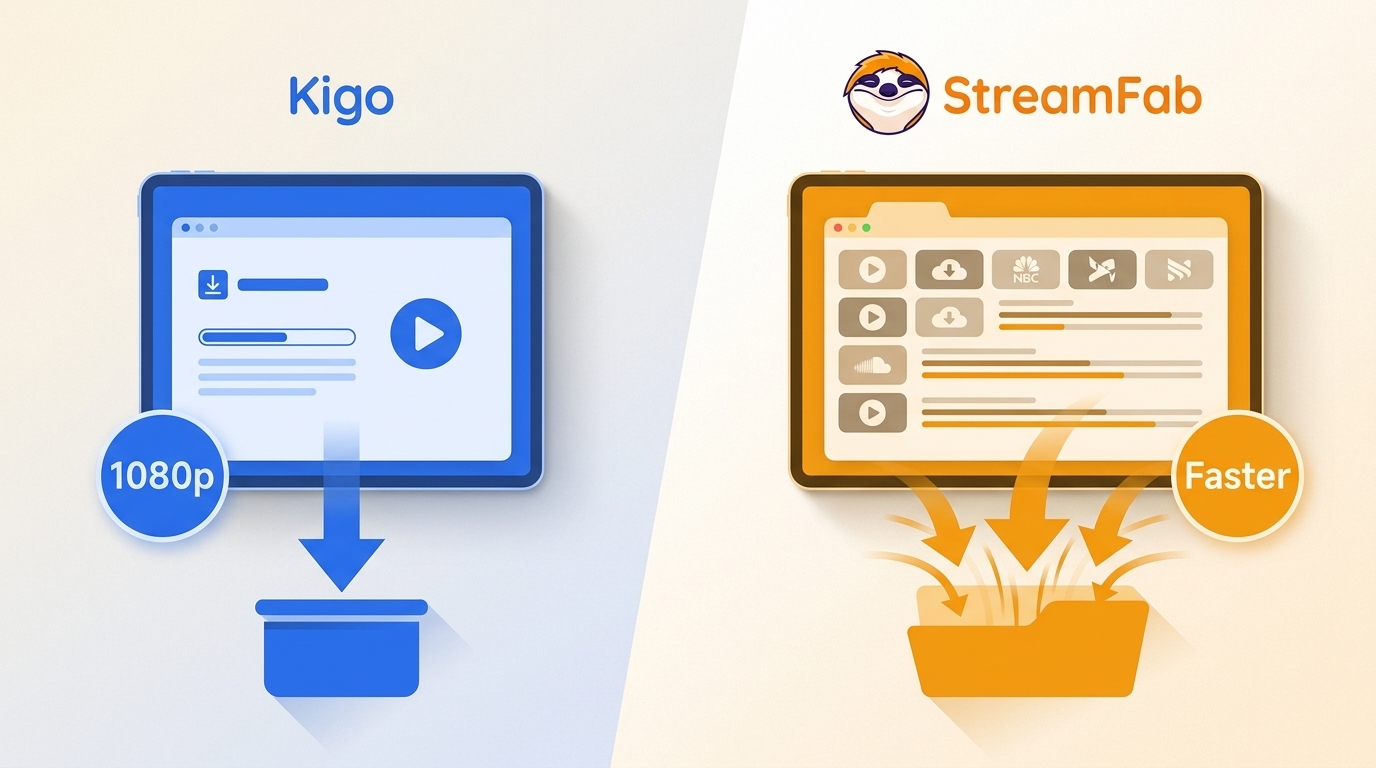
How Kigo Works in 2026: Recording, Not Decryption
Since the streaming-DRM tightening that began in early 2024, consumer tools in the Kigo class no longer pull a decrypted master file from the platform. They play the stream inside a bundled browser and record it, then re-encode the result into MP4.
That recording-based approach is the real reason quality is capped at 1080p and why some titles fail to analyze — it isn't a decryption key the software quietly defeats.
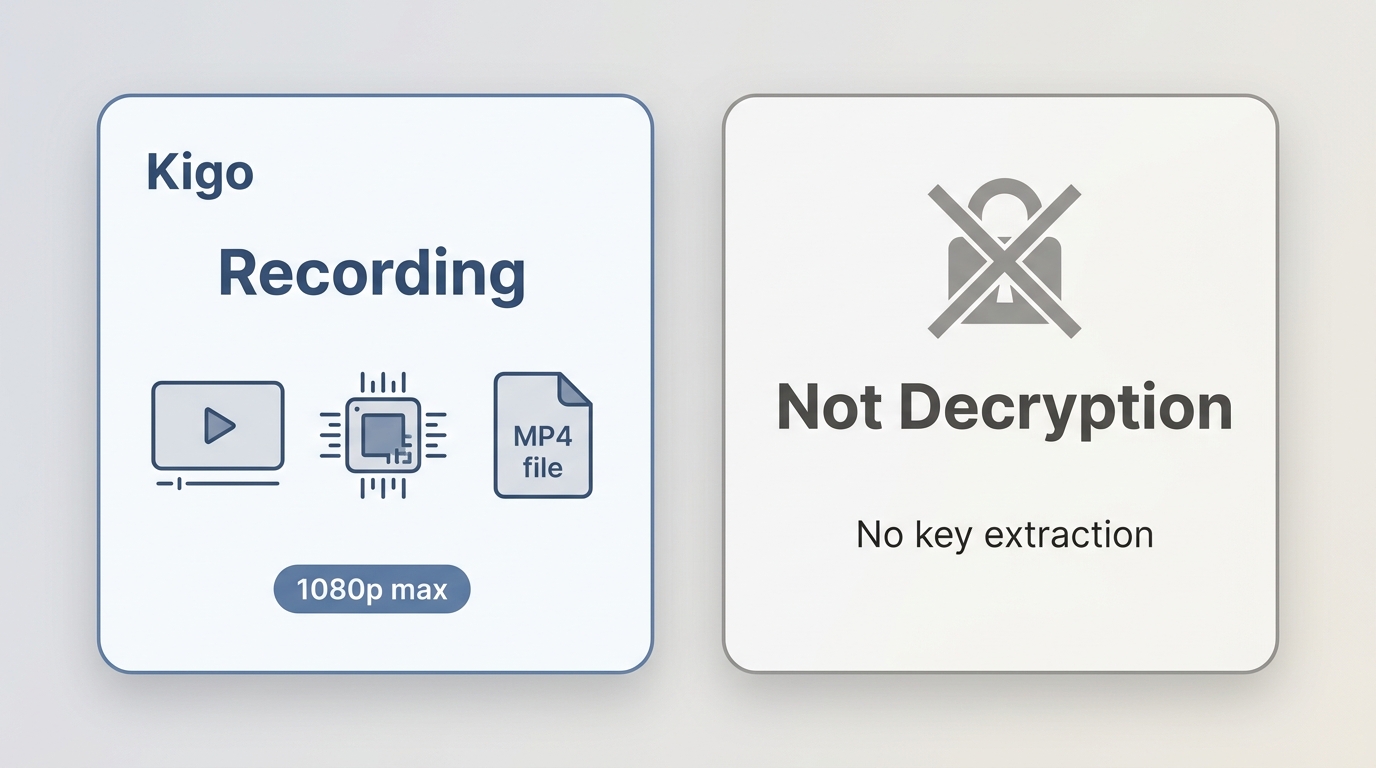
This matters when you're picking between tools. If a competitor promises "true 4K downloads" from a mainstream subscription service in 2026, treat it as marketing copy, not a spec.
Kigo's honesty in staying at 1080p is actually a point in its favor; the trade-off is that you're paying for convenience and batching, not for a resolution ceiling you couldn't otherwise reach.
Kigo Features and Specs by Service
Kigo Movie One vs. Standalone Modules
Kigo's older model was one app per service: a separate license for Netflix, one for Prime Video, one for Disney+, and so on.
Movie One bundles many of those services into a single app with a shared queue, which is the more sensible purchase if you download from more than one platform. The trade-off is memory: running several service tabs in one window pushes RAM use noticeably higher than a single-service standalone would.
Resolution and Audio: What Each Service Caps At
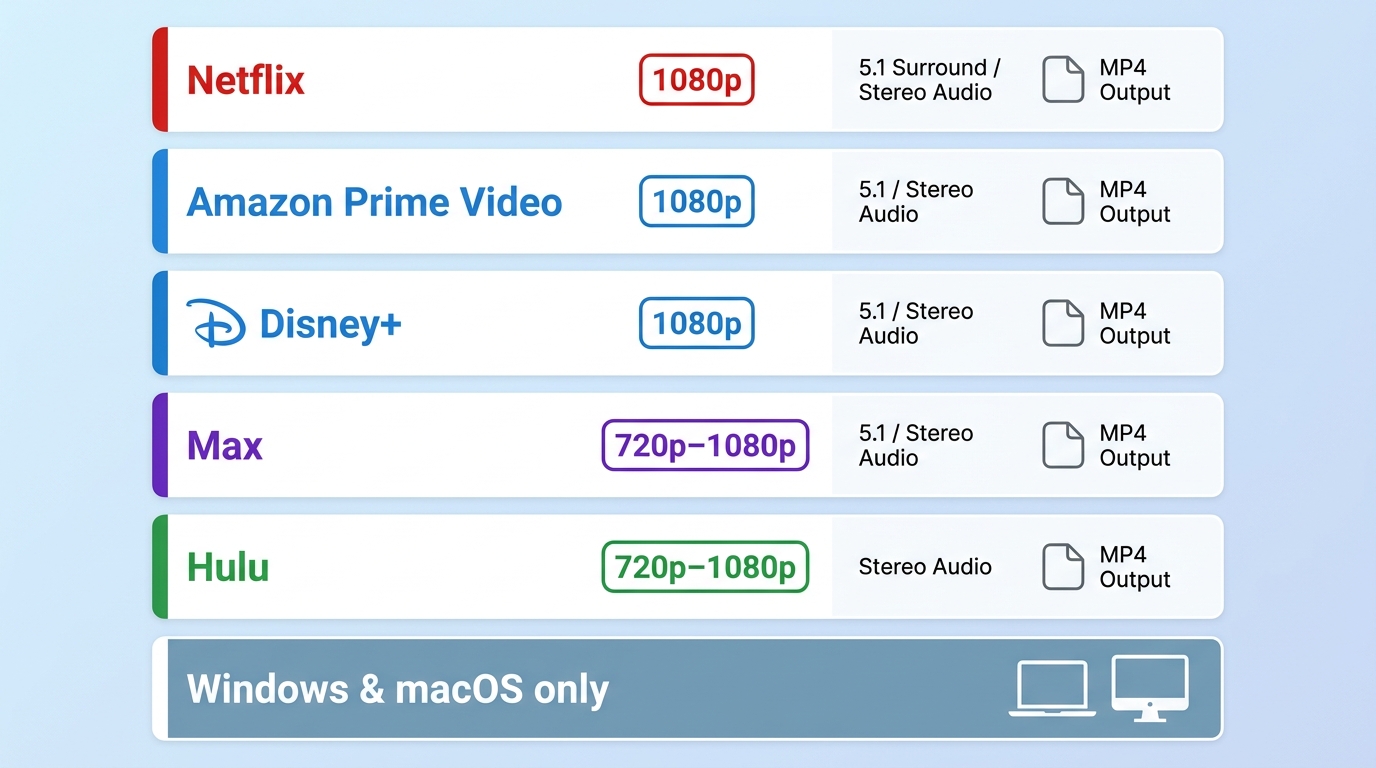
In 2026, 1080p is the effective ceiling for Kigo-class downloaders across the mainstream DRM services, with stereo or 5.1/AAC-class audio depending on the title.
4K claims don't hold up for protected streaming, so the table below reflects what you can realistically expect on disk. Kigo runs on Windows and macOS only — there's no native Linux build.
| Service | Max resolution | Audio | Output | Subtitles |
|---|---|---|---|---|
| Netflix | 1080p | Stereo / 5.1 (AAC-class) | MP4 | SRT / embedded |
| Amazon Prime Video | 1080p | Stereo / 5.1 | MP4 | SRT / embedded |
| Disney+ | 1080p | Stereo / 5.1 | MP4 | SRT / embedded |
| Max | 720p–1080p | Stereo | MP4 | SRT / embedded |
| Hulu | 720p–1080p | Stereo | MP4 | SRT / embedded |
| OS support | Windows 10/11 and macOS only — no Linux | |||
A separate Kigo module targets OnlyFans; I'd treat that as a niche use case rather than a headline feature, and it's subject to each platform's terms of service. For a deeper look at how Kigo handles Disney's catalog specifically, our Kigo Disney Plus Downloader review goes into per-title behavior.
Kigo's Download Workflow, Step by Step
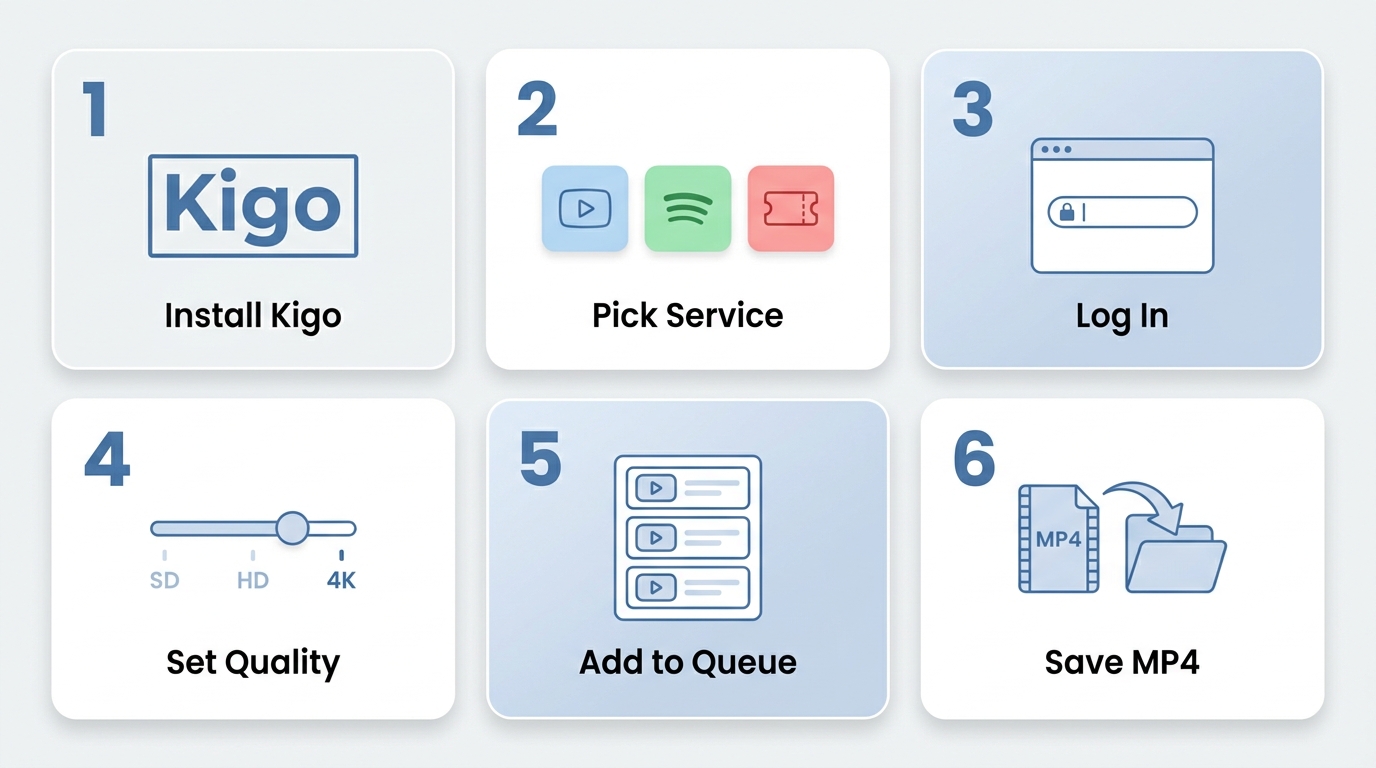
The workflow is the same across the standalone apps and Movie One. Assuming you already have a paid account on the service you're saving from:
- Install Kigo (or Movie One) from the official site and open the app.
- Pick the service tile — Netflix, Prime, Disney+, Max, etc. — inside the built-in browser.
- Sign in to your own account for that service; Kigo does not unlock content you aren't subscribed to.
- Open the title you want. Kigo analyzes the stream and shows available resolution, audio track, and subtitle options.
- Choose your quality, audio language, and subtitle preferences, then add the title to the download queue.
- Start the queue and let it finish. The saved file lands in your chosen output folder as an MP4.
Kigo Pricing and Free-Trial Limits
Kigo licenses each service module separately under the older model, and Movie One consolidates several services under one license. The free trial lets you download a limited number of titles (typically the first few minutes of a small number of videos) so you can confirm the app works on your machine — but a full-length download requires a paid plan. Answering the direct question: Kigo is not free for real use, only for evaluation.
Because per-service pricing shifts often and Kigo runs frequent promotions, check the current tiers on Kigo's official pricing page before you buy (as of July 2026). If you download from more than one service, the Movie One bundle is usually the better value than stacking two or three standalone licenses.
Is Kigo Safe? Official Site vs Unofficial Builds
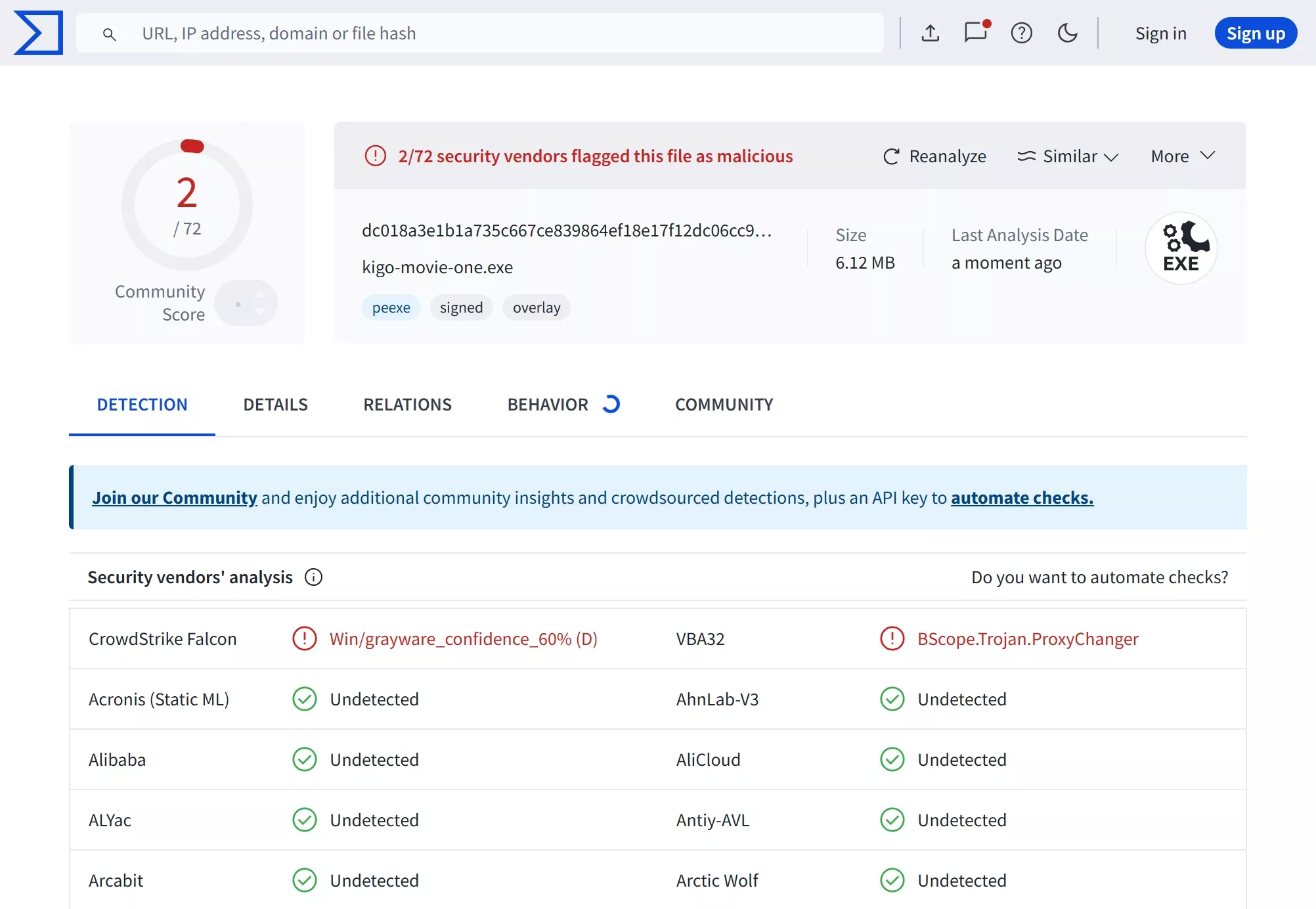
The build from Kigo's official site is the safe one. It's a signed installer, clears standard antivirus checks, and doesn't bundle adware. What you should avoid are the "free" cracked or keygen copies that circulate on forums and file-sharing sites — patched installers for paid software are a well-known malware vector, and DRM-adjacent tools like Kigo are prime bait for repackaged installers carrying miners or trojans. It's the kind of "savings" that costs you a reimage.
Bottom line: install Kigo only from the official site, and if the free trial doesn't cover what you need, pay for the license rather than hunt for a patch.
Kigo Pros, Cons, and Who It Suits
Pros
- Clean, service-by-service workflow with a built-in browser — low learning curve.
- Movie One consolidates many services into a single app and shared queue.
- Reliable 1080p MP4 output across the mainstream DRM services.
- Subtitle and audio-track selection at download time.
Cons
- 1080p ceiling — no genuine 4K on protected services.
- Windows and macOS only; no Linux build.
- Older standalone model is one product per service, which adds up if you use several platforms.
- Analysis can fail after service updates; re-login and cache clearing are part of ownership.
Best for: casual Windows or Mac users saving 1080p personal copies from a service they already pay for.
Not ideal for: anyone who needs 4K, runs Linux, or wants a single app to cover many services with fewer trade-offs.
What Real Users Report
Reading through community threads on Reddit and streaming forums, the pattern is consistent: buyers actively cross-shop Kigo against StreamFab and Vidicable, and the recurring questions are whether 1080p on Mac holds up over long queues, and how quickly the parser is patched after a Netflix or Amazon update.
My own take lines up with that sentiment — Kigo is dependable for what it does, but it isn't the tool you pick if you want the widest platform coverage in a single license.
StreamFab: A Desktop Alternative for Local Backups
For content you're authorized to access, where permitted by platform terms and applicable law, StreamFab is the desktop alternative I reach for when Kigo's per-service model gets tedious.
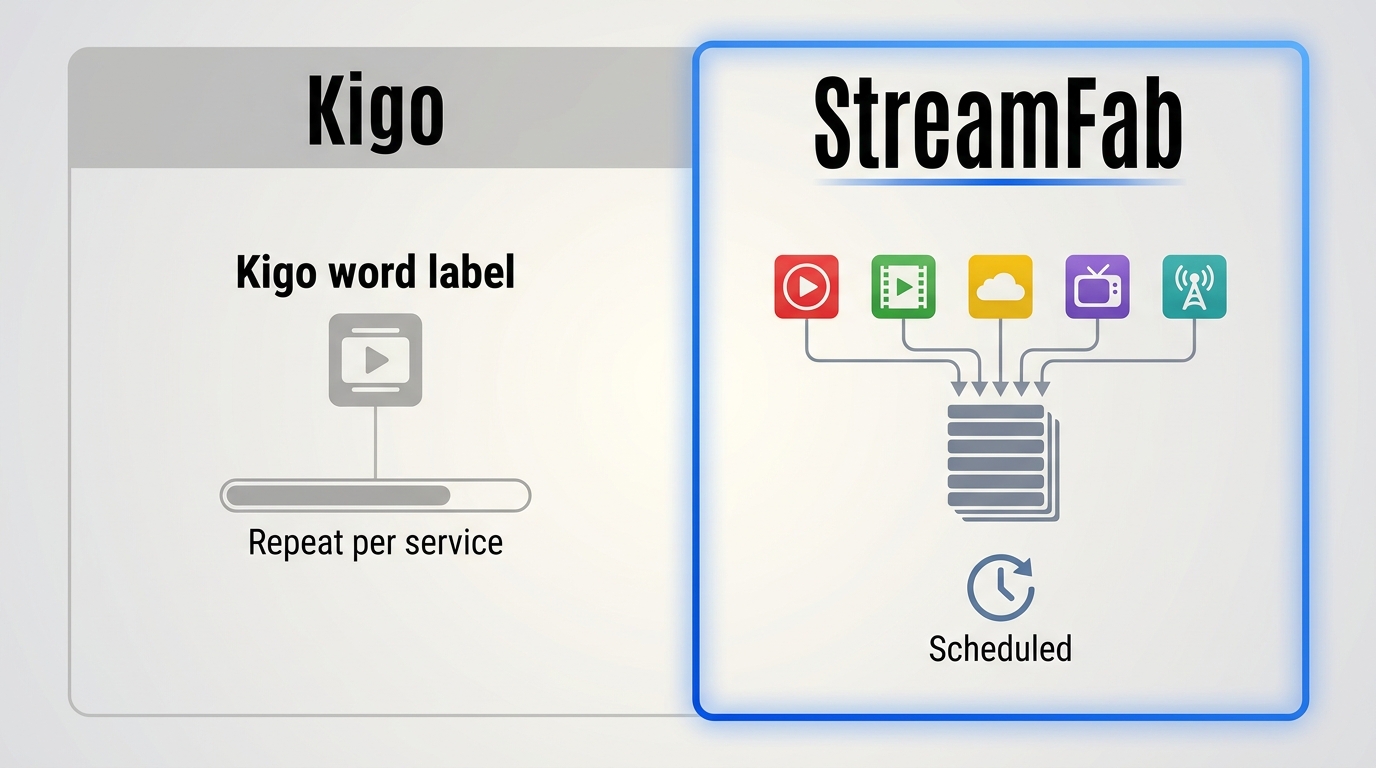
What I actually rely on it for: one app that covers many services, MP4/MKV output that plays in any player, and a batch queue that can run scheduled downloads overnight instead of you babysitting a single title. For the wider capability picture, our full StreamFab field test walks through the queue behavior in more detail, and if Netflix is your primary use case the StreamFab Netflix downloader guide covers the service-specific quirks.
Who should pick StreamFab over Kigo: anyone downloading from three or more services who doesn't want to juggle standalone licenses, or anyone who wants scheduled overnight queues rather than manual, per-title clicks.
Utilizes direct bitstream interception, pulling the raw MP4/MKV files straight from the CDN server without re-encoding, preserving Dolby Digital 5.1 and dynamic subtitle tracks flawlessly.
| Dimension | StreamFab All-In-One | Kigo (Movie One) |
|---|---|---|
| Max resolution (2026) | Up to 4K on supported services; 1080p on Netflix and Prime | 1080p ceiling across supported services |
| Output formats | MP4 / MKV | MP4 |
| Services per license | Many services in one app | Per-service license (Movie One bundles several) |
| Batch and scheduled downloads | Yes, with overnight scheduling | Yes, batch queue (no scheduled overnight) |
FAQs
Is Kigo free to use?
Kigo runs on a paid license with a limited free trial — typically a handful of short downloads so you can confirm it works on your machine. Full-length downloads require a paid plan; see the pricing block above for current tiers.
Can Kigo download in 4K, or is 1080p the ceiling?
1080p is the effective ceiling for Kigo-class downloaders on mainstream DRM services. Marketing that promises true 4K on protected streaming in 2026 doesn't match how these tools actually record the playback stream.
Do I need an active streaming subscription to use Kigo?
Yes. Kigo requires your own active paid account for each service you download from — it does not unlock content you aren't subscribed to.
Does Kigo run on Linux?
Windows and macOS only. There's no native Linux build, and community reports confirm it doesn't run reliably under Wine.
Why does Kigo fail to analyze a video?
Usually one of three things: your login session expired inside the built-in browser and needs a re-login, the local cache is stale, or the current build hasn't caught up to a recent service update. Try signing back into the service tab, clearing the app's cache, and retrying — that clears most parsing failures.
Conclusion
Kigo is a competent Windows and Mac tool for saving 1080p personal copies from a service you already pay for, and it's safe as long as you install from the official site. Where it falls short is what you'd expect from a recording-based approach: no genuine 4K, no Linux, and a per-service model that adds up if you download from several platforms.
If that describes your use case, StreamFab's all-in-one desktop app is the more efficient path; if you only pull from one service and prefer a lightweight single-purpose app, Kigo does the job.

Evaluating the Audials One 2026 free trial? I tested its 720p caps, examined if is audials legal under Fair Use
By Erika Leen - Sep 29, 2026
Are you thinking of purchasing NoteBurner and unsure if it’s worth the investment? In this NoteBurner review, let’s delve into its product lines, particularly the NoteBurner Video Downloader’s pros and cons.
By Marcia Hatcher - Sep 28, 2026
Read our in-depth Audials review for 2026. Is Audials safe and legal for Amazon Prime? Discover actual test results, Widevine DRM fixes, and better alternatives.
By Erika Leen - Sep 28, 2026
TuneFab’s Amazon downloader suits a focused desktop routine, while VideOne covers multiple services. Compare their workflows, license structures, and output checks with StreamFab, then use the numbered setup and maintenance steps for authorized personal offline viewing.
By Erika Leen - Sep 24, 2026