
PlayOn Cloud Features: A Comprehensive Review 2026 Latest

Summary: Here's the short answer: PlayOn Cloud is a cloud-based DVR that records what your streaming subscriptions can already play, then hands you an MP4 to download. It's useful when you don't want to leave a PC running, but the credit-per-recording math, uneven reliability, and 1080p surcharge are what most people underestimate. This playon cloud review covers how it works, what it costs, how it compares to PlayOn Home, and when a desktop tool fits better.
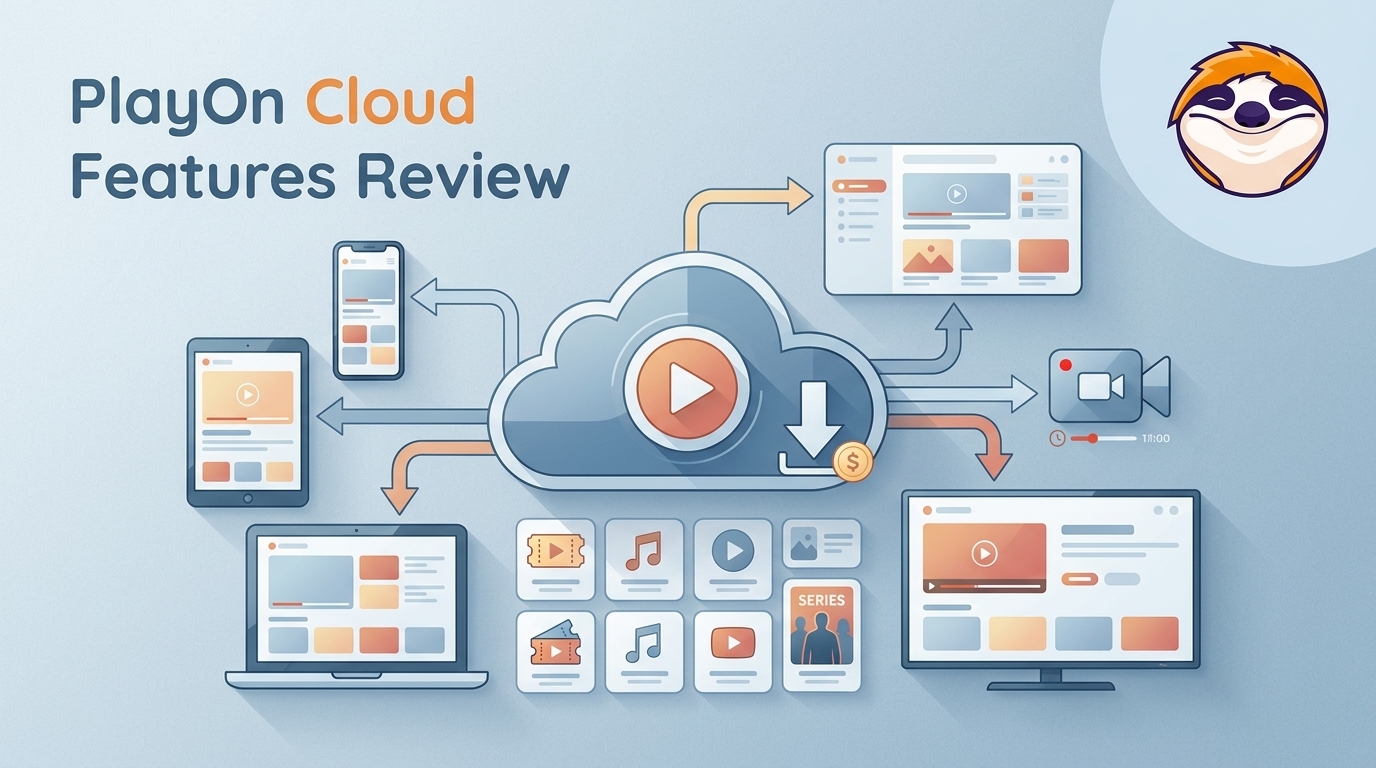
What PlayOn Cloud Is and How It Records
PlayOn Cloud is a cloud DVR. It spins up a virtual machine on PlayOn's servers, signs into your streaming account, plays the title in real time, and captures that playback into an MP4 you can download.
Because everything runs in the cloud, your PC doesn't have to be on and your local GPU isn't in the loop — the trade-off is that you're saving a re-encoded recording, not the original file, so bitrate takes a hit and dark scenes tend to show compression noise first.
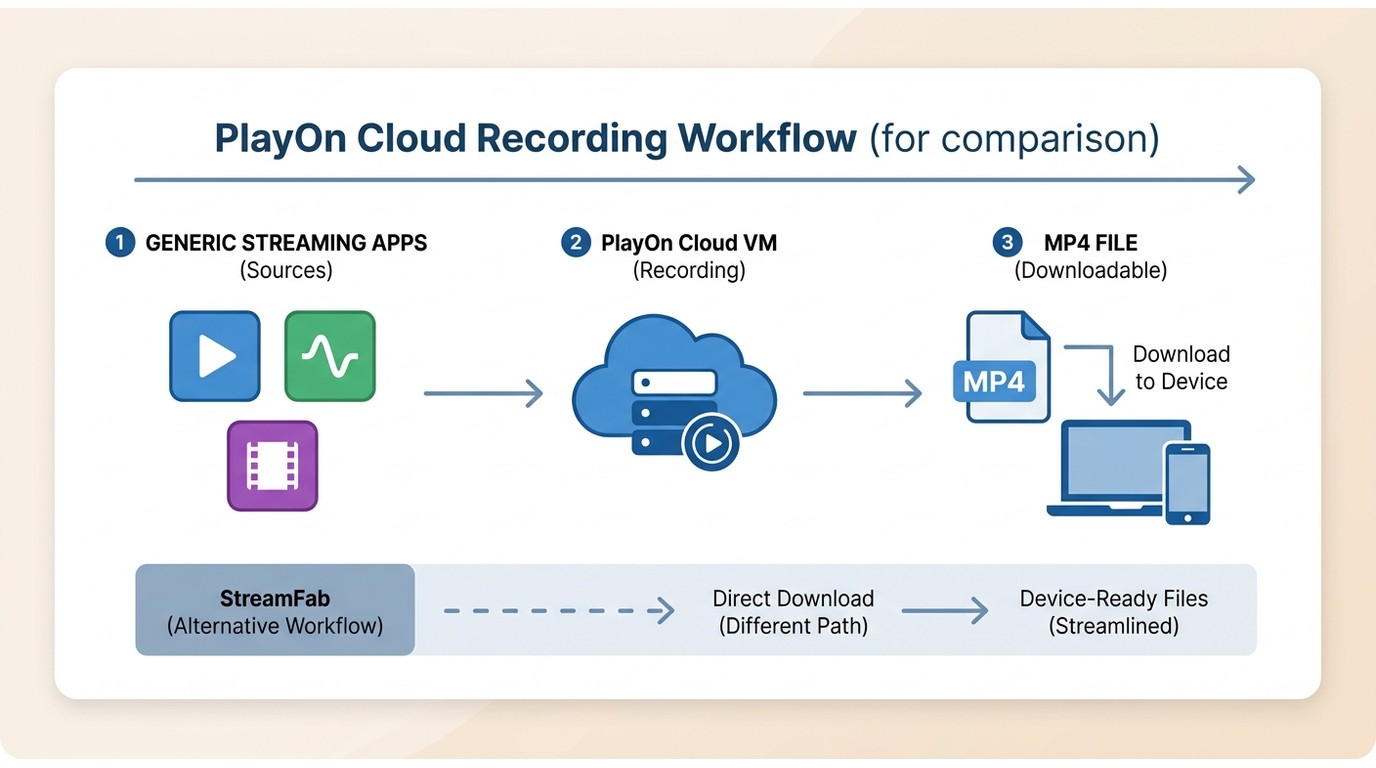
Streaming Services PlayOn Cloud Can Record
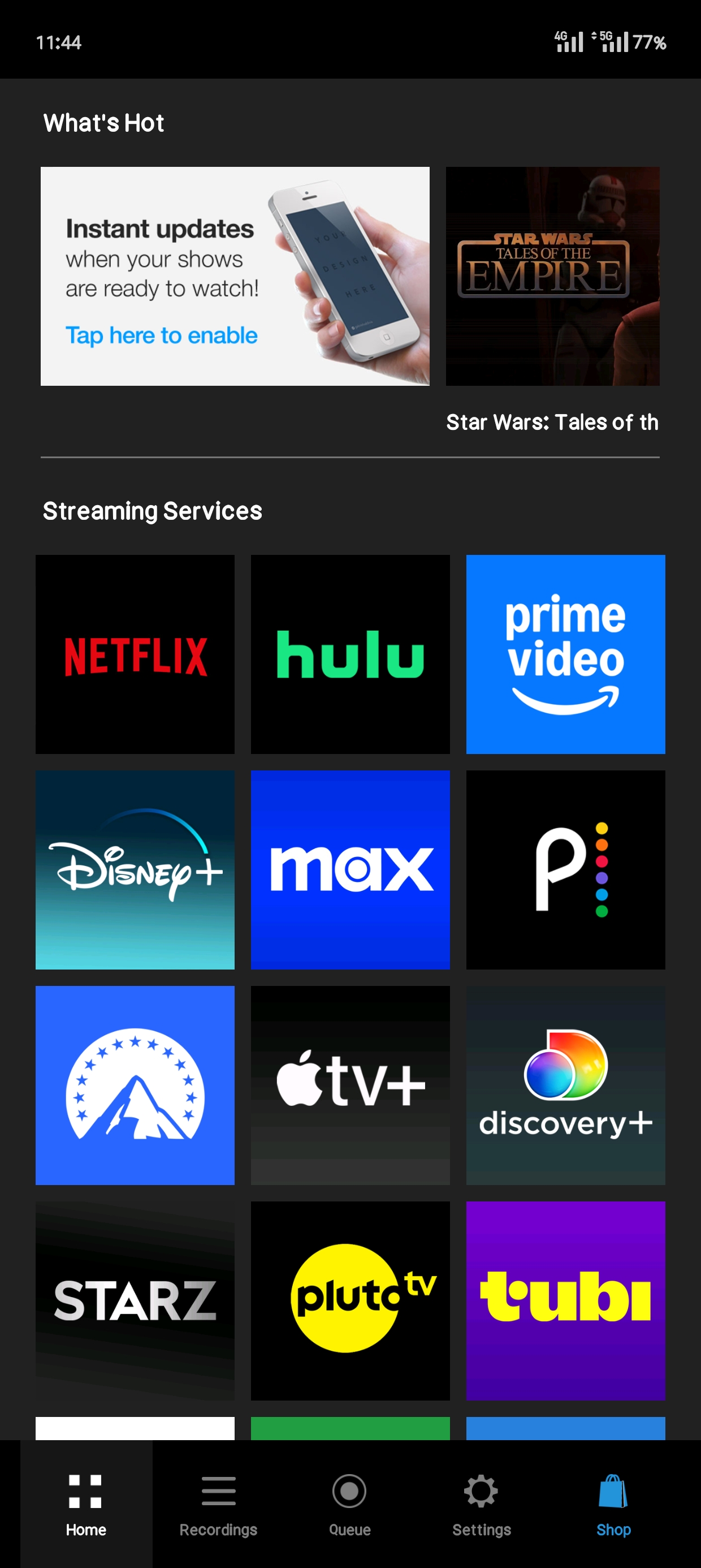
PlayOn Cloud records from most of the major subscription streamers people actually keep — Netflix, Hulu, Prime Video, Max, Disney+, Peacock, Paramount+, Apple TV+, Discovery+ and around 20+ services in total. You still need an active, paid subscription to whatever platform you're recording from; PlayOn Cloud only records what your account is authorized to stream.
PlayOn Cloud Credits, Pricing, and Resolution Tiers
Is PlayOn Cloud free? No — it runs on a freemium credit model. You get a small trial batch of credits, and after that every recording spends credits from a bundle you buy. The part people miss until the bill lands: resolution isn't free.
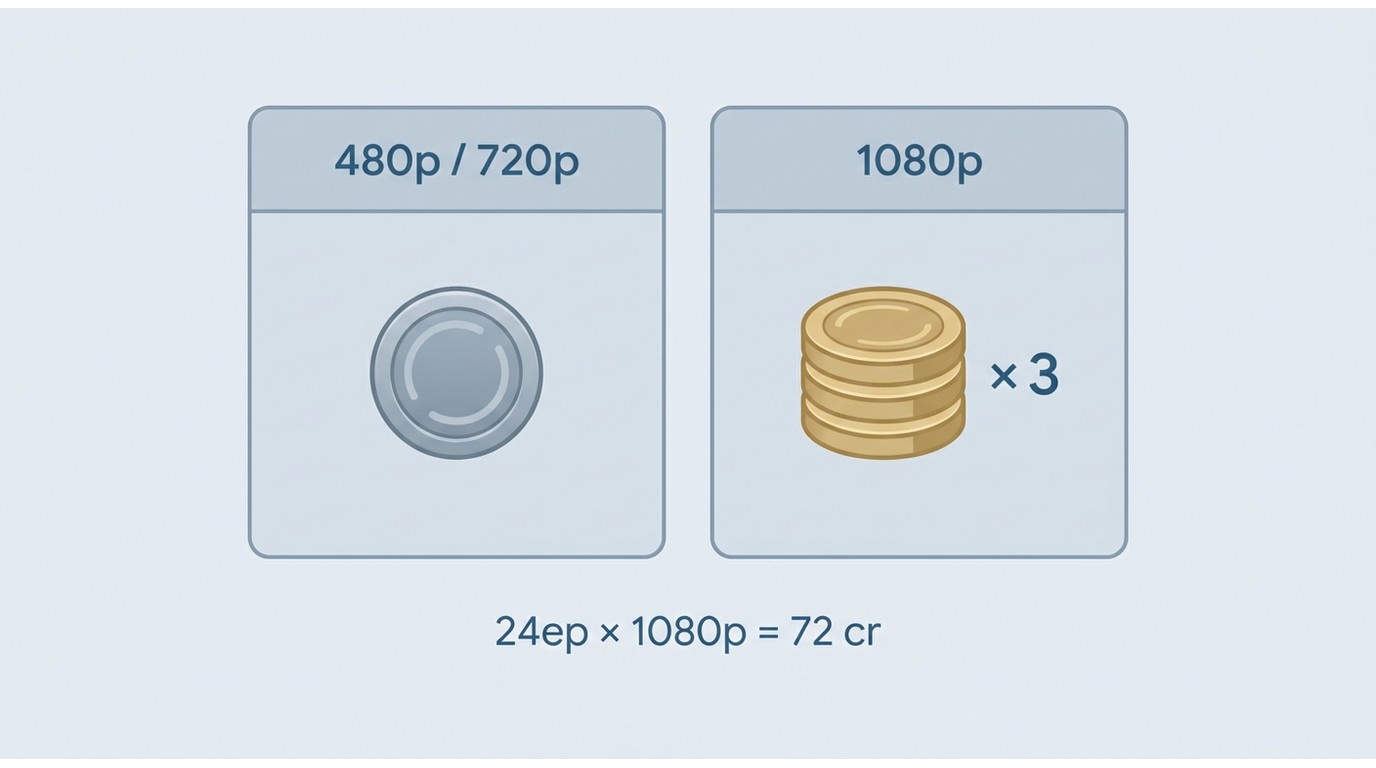
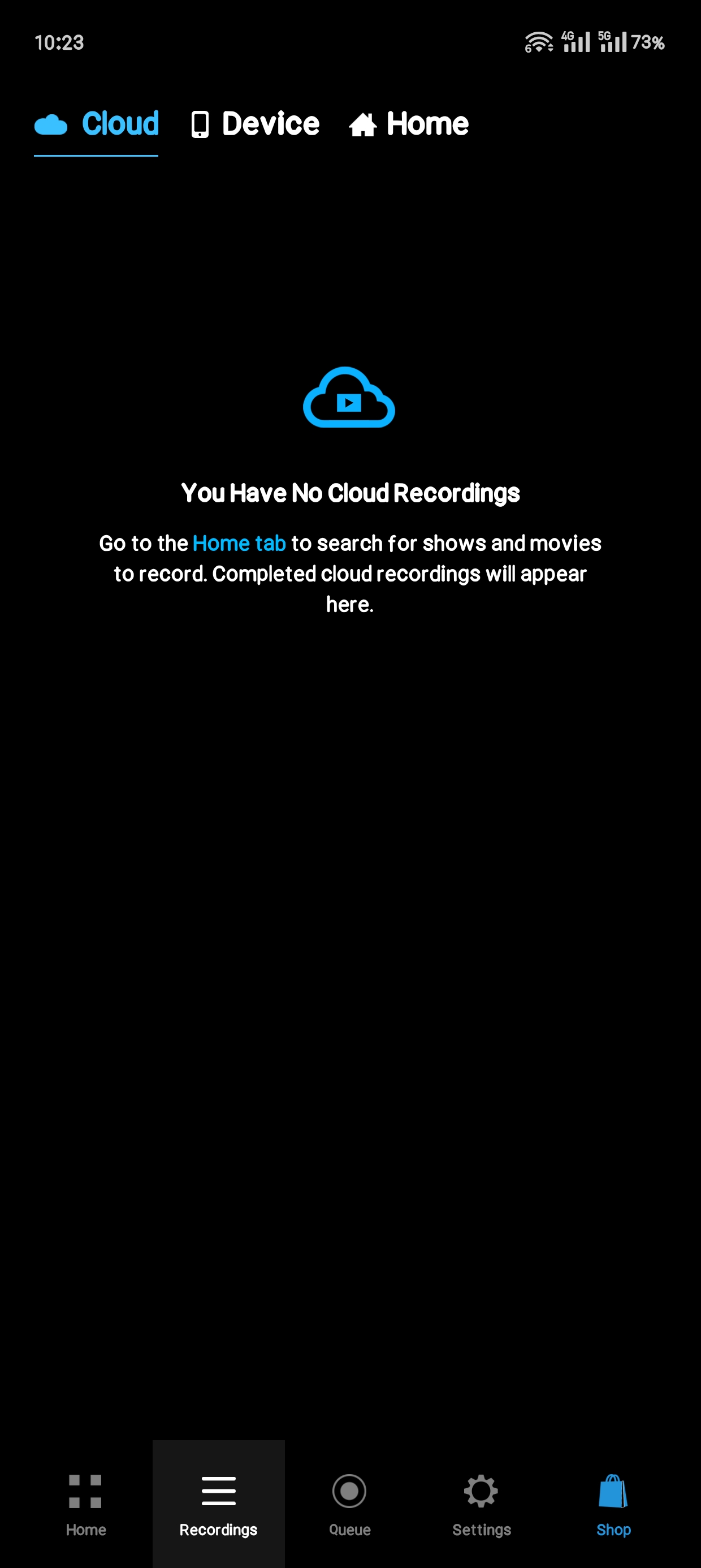
A 480p or 720p recording costs 1 credit, but a 1080p recording costs 3 credits. Archive a 24-episode season in 1080p and that's 72 credits before you've touched a second show. Recordings sit in complimentary cloud storage for roughly 7 days; to keep a title, download the MP4 to your own drive before it ages out.
| Spec | PlayOn Cloud |
|---|---|
| Output format | MP4 |
| Max resolution | 1080p |
| 480p / 720p recording | 1 credit |
| 1080p recording | 3 credits |
| Complimentary cloud storage | About 7 days, then download to keep |
| Devices | iOS, Android, web download to PC/Mac |
The trade with 1080p isn't only cost. Because PlayOn plays the title on a virtual machine and re-encodes the capture into H.264, a 1080p file from PlayOn Cloud won't look as clean as native streaming at the same resolution — expect softer motion in fast scenes and some banding in dark gradients. That's the real reason 1080p feels expensive: you're paying triple credits for a file that's still a re-encode.
PlayOn Cloud vs PlayOn Home in 2026
A lot of the confusion online is people comparing PlayOn Cloud to PlayOn Desktop — but PlayOn Desktop was discontinued in September 2021 over Windows 11 compatibility issues, and PlayOn Home launched in October 2021 as its replacement.
So the honest 2026 question isn't Cloud vs Desktop; it's Cloud vs Home. Home records locally on a Windows PC that you leave running; Cloud records on PlayOn's servers so your machine can be off. My take: if you already have a Windows box that idles overnight, Home saves you the per-recording credit spend; if you record from a phone or don't want to babysit a PC, Cloud is the one that fits your life.
PlayOn Cloud vs PlayOn Home at a Glance
PlayOn Cloud does the recording work on its own servers, so your PC's hardware isn't a factor. The catch: once the cloud finishes recording in real time, you still have to download the resulting MP4 to a local drive to actually keep it.
That's the part nobody warns you about — a two-hour movie means roughly two hours of real-time cloud recording, then a second wait for the download to finish. Home skips the download step because the file already lives on your PC.
| Features / Aspects | PlayOn Cloud 📱 | PlayOn Desktop/Home 💻 |
|---|---|---|
| Supported Devices | iOS / Android | Windows PC |
| Storage Method | Cloud + Local | Local Hard Drive |
| Subtitle Support | ✅ Most platforms | ❌ Not supported |
| Video Quality | Default 720P, 1080P requires extra credits | 1080P available but unstable |
| Ad-Skipping | ✅ Supported | ❌ Not supported |
| Stability | Fewer crashes, cloud-dependent | Frequent Playon not working |
| Development & Updates | Actively maintained | Barely updated anymore |
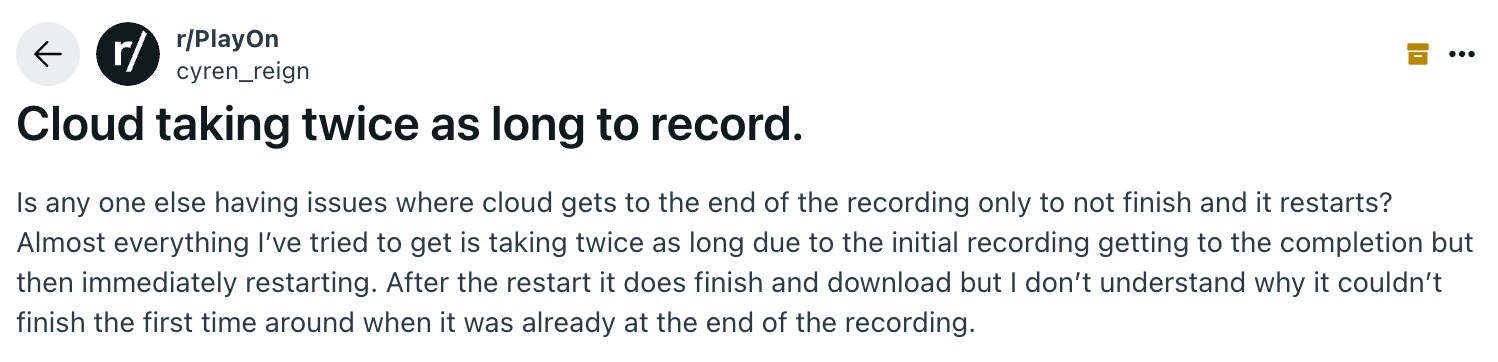
Community threads in 2026 read the same way: PlayOn Home gets far fewer updates than the Cloud app, and long-time users routinely bump into recurring PlayOn errors and failed recordings on both sides. If reliability is your top requirement, that community read is worth weighing before you commit credits.
Recording with PlayOn Cloud, Start to Finish
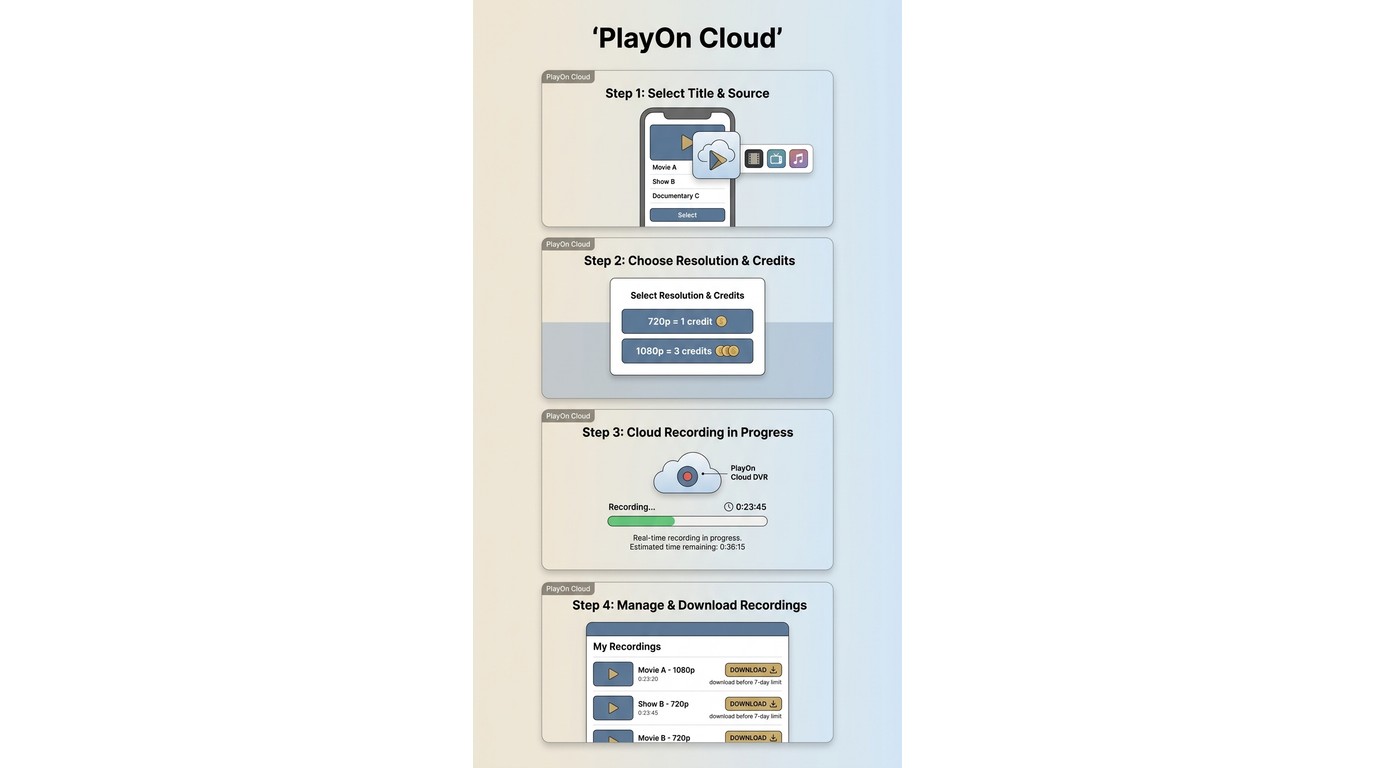
Once your account is set up, using PlayOn Cloud is mostly picking a title, choosing resolution (remember: 1080p costs 3 credits, 480p/720p costs 1), letting the cloud record it in real time, then downloading the MP4 from the My Recordings list before the 7-day complimentary storage window closes.
On iOS the PlayOn app can cast a finished recording to Apple TV, which is convenient for phone-first users — though some re-encoded files show occasional micro-stutter in high-motion scenes, possibly because the cloud capture doesn't always align cleanly with the source frame rate.
Is PlayOn Cloud Legal and Safe?
The honest answer: it depends on where you live, the platform's terms of service, and what you do with the file. U.S. courts have historically treated personal time-shifting (including the Cablevision remote-DVR model) as fair use, but that framework doesn't automatically extend to every streaming service — some platform agreements explicitly prohibit recording, and technical protection measures carry their own legal weight in several jurisdictions.
My working rule: only record content you're authorized to access under an active subscription, keep the file for personal use, and don't share, upload, or use it to keep watching after cancellation. This isn't legal advice — if you're recording at any real scale, check your local law and the platform's current terms.
Two limitations worth knowing about the recordings themselves — they're not compliance issues, just product realities. Subtitle timing sometimes drifts out of sync on the finished MP4, and PlayOn Cloud grabs a single audio track by default with no easy way to swap the original for a dub later. Both come from the fact that it's a screen-capture recorder, not a manifest-level downloader.
What Real Users Say About PlayOn Cloud
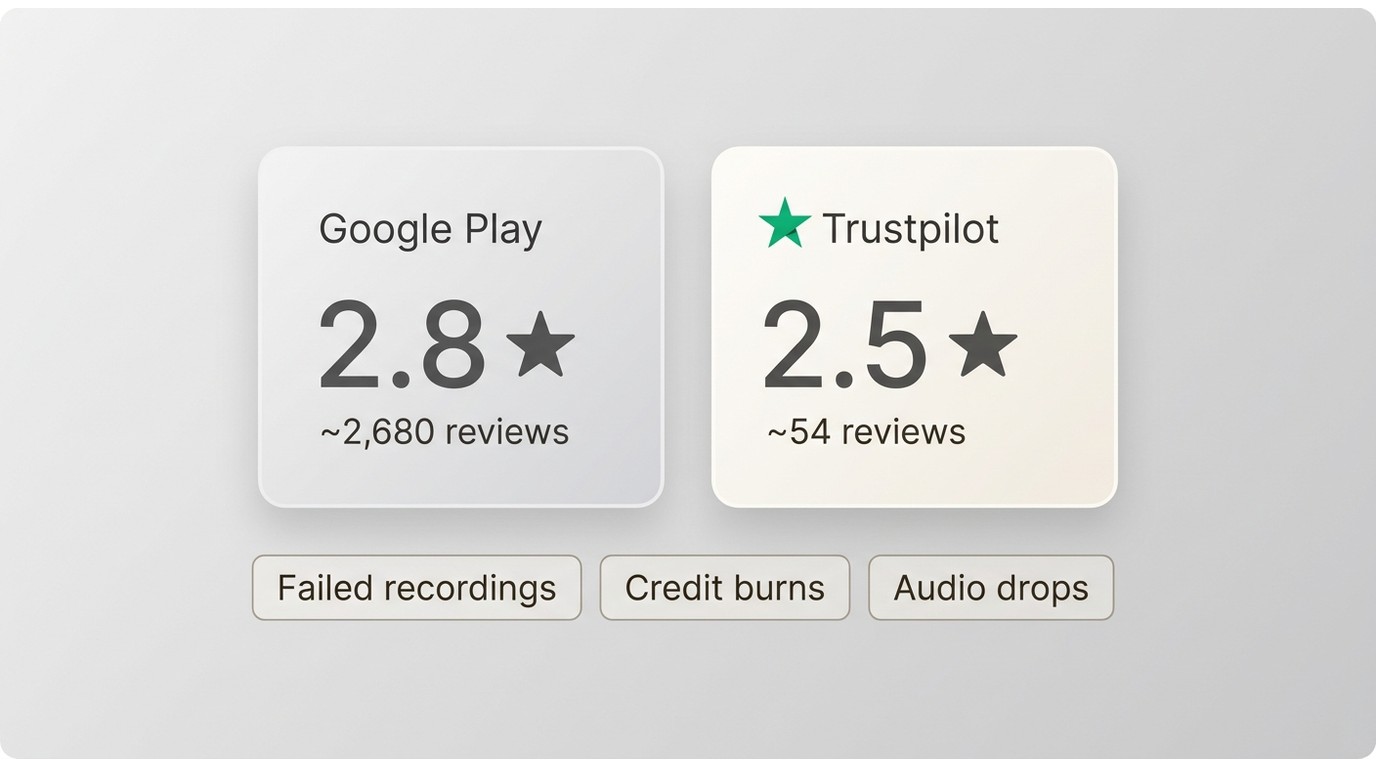
Looking past the marketing pages, the 2026 sentiment is mixed at best. PlayOn Cloud sits around 2.8 stars on Google Play across roughly 2.68K reviews, and about 2.5 on Trustpilot across ~54 reviews (as of July 2026).
The recurring complaint across community threads is reliability: a meaningful share of cloud recordings fail partway through or come back with audio drops, and users end up burning credits re-recording the same episode. Some of the loudest frustration is from lifetime-license holders unhappy that the credit model replaced the old one-time model — worth knowing before you commit to a credit bundle.
When a Desktop Downloader Fits Better
For content you're authorized to access, where permitted by platform terms and applicable law, a desktop tool is often the calmer choice — especially when a 1080p recording keeps costing you 3 credits per attempt and failed recordings are a recurring complaint. StreamFab is one practical desktop option for Windows and Mac users who want a broader set of PlayOn alternatives that skip the credit math.
In my read of what actually matters to readers here: local saves in MP4 or MKV that play in anything, the original multi-track audio kept intact rather than flattened to stereo, and a workflow that doesn't queue behind a 7-day storage timer. It's a desktop app, so it's Not ideal for people who only record from a phone and don't own a PC or Mac — that's exactly where PlayOn Cloud earns its keep.
StreamFab grabs original A/V streams straight from the OTT servers, totally bypassing the annoying limits of real-time screen recorders. It actually guarantees clean 1080p/4K bitrates, keeps all your multi-language audio tracks intact, and pulls original SRT subtitles—stuff that cloud DVRs just can't really do.
PlayOn Cloud and a Desktop Alternative Compared
| Dimension | PlayOn Cloud | StreamFab (desktop) |
|---|---|---|
| Recording approach | Cloud DVR, real-time capture on PlayOn servers | Local desktop save on Windows or Mac |
| Typical time for a 2-hour title | About 2 hours to record, plus download time | Faster than real-time playback |
| Max resolution | Up to 1080p (3 credits per recording) | Up to platform's own maximum |
| Audio and subtitles | Single audio track, subtitle sync varies | Original multi-track audio, SRT subtitles |
Download the software
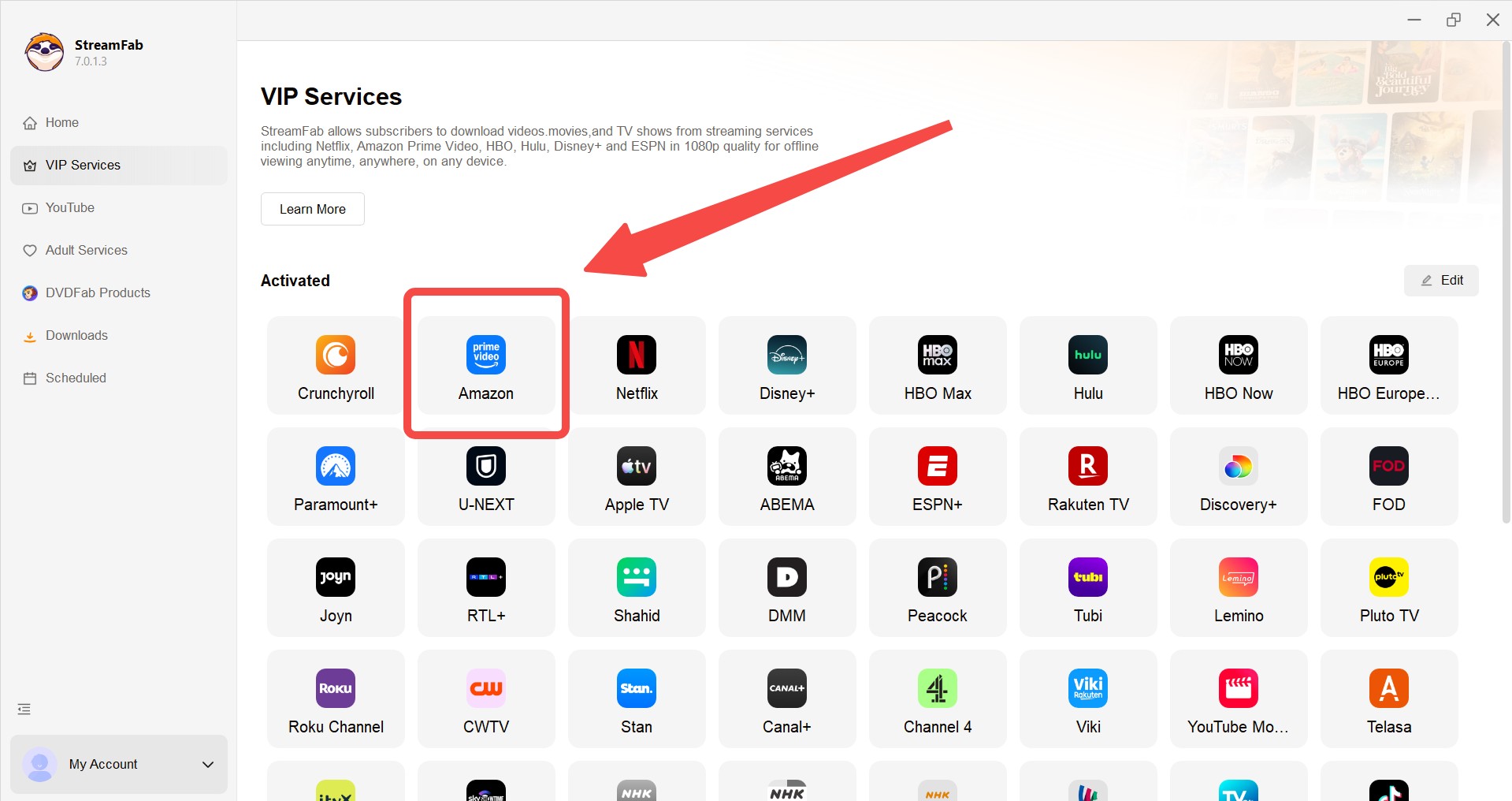
Install the software on your computer and pop open the main interface. Just click on whatever streaming service you want, and log in with your credentials.
Customize the file
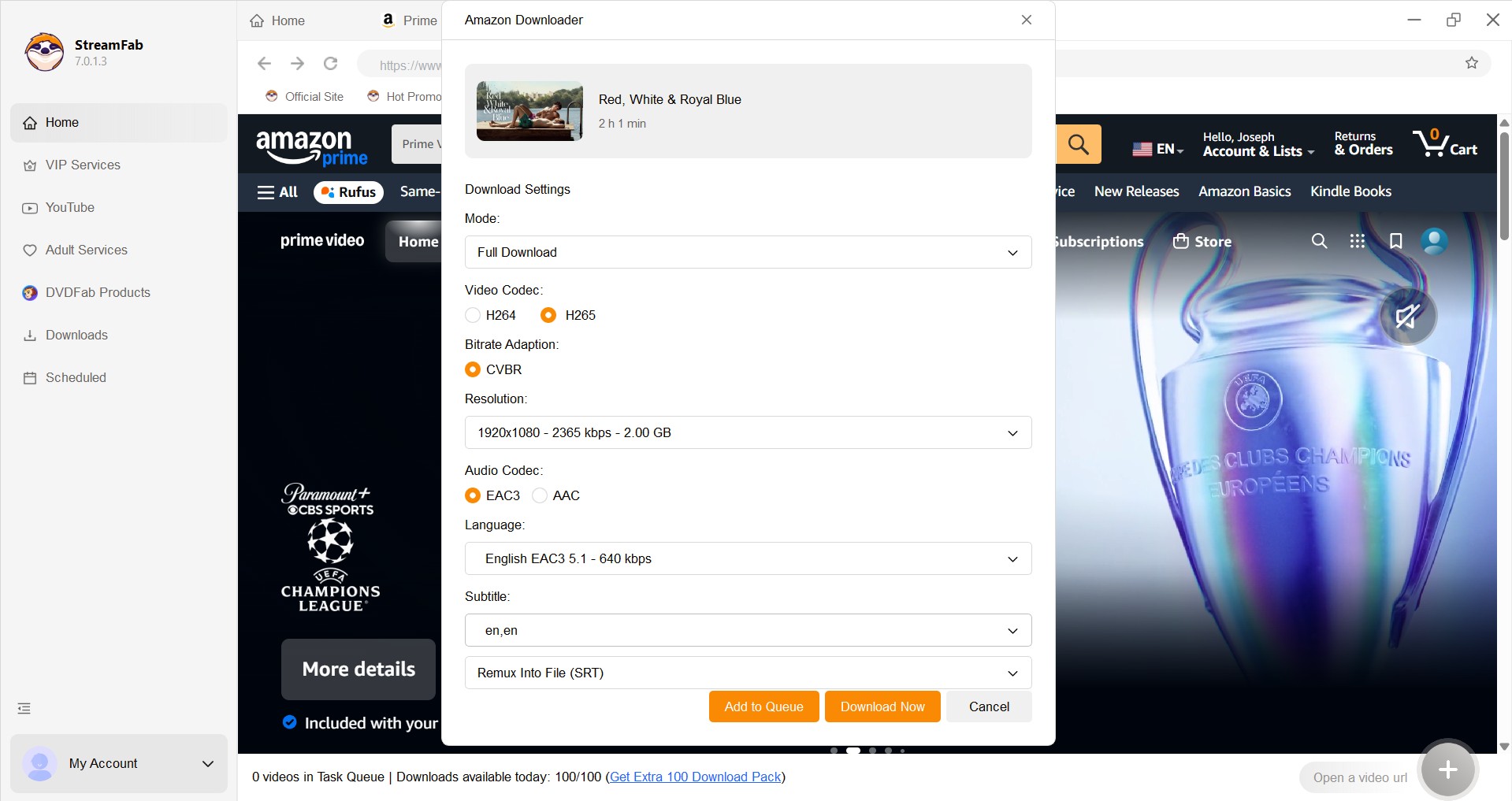
Once you track down the video you want, hit 'download'. StreamFab gives you a ton of flexible settings for the resolution, audio tracks, specific episodes, and subtitles.
Confirm and wait
When you're done tweaking the settings, you can either start the task right away or just add it to your download queue for later.
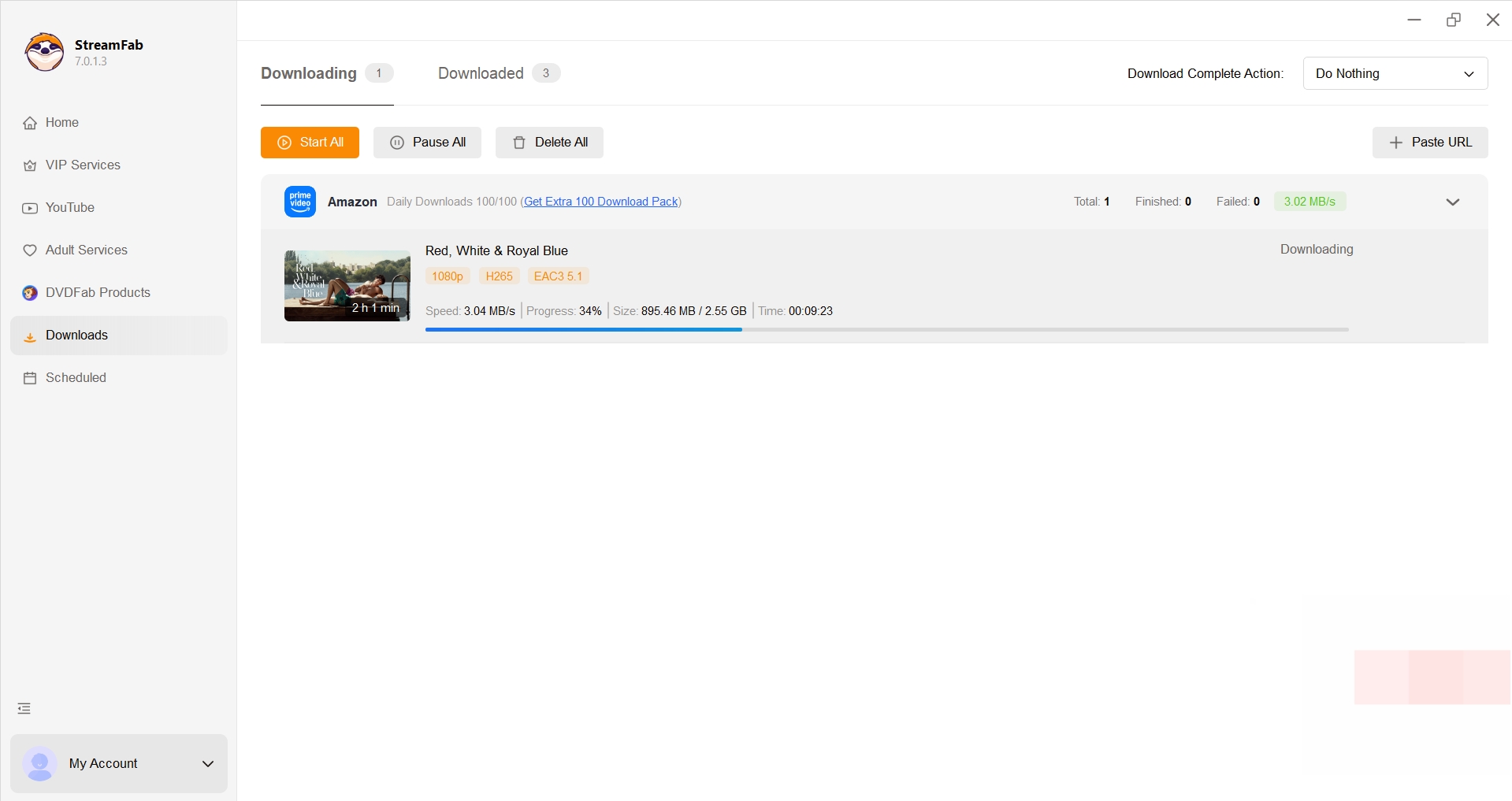


My honest suggestion: try the free tier of PlayOn Cloud and StreamFab's trial on your own library first. Record one 1080p episode with each, look at the file size, the audio tracks, and how long the whole workflow took — the right tool for you falls out of that one test.
PlayOn Cloud FAQ
Is PlayOn Cloud free?
No. PlayOn Cloud is freemium — you get a small batch of trial credits, then you buy credit bundles to keep recording. Every recording spends credits from that bundle, and resolution matters: 480p or 720p costs 1 credit, 1080p costs 3. There's no plan where recording is genuinely unlimited.
Can I transfer PlayOn Cloud recordings to PlayOn Desktop?
There's nothing to transfer to — PlayOn Desktop was discontinued in September 2021 and replaced by PlayOn Home. The current path is: from the PlayOn Cloud app, download your finished recordings as MP4 files to a PC or Mac and keep them locally, or point PlayOn Home (or a Plex/Jellyfin library) at that folder. Treat "Desktop" mentions in old forum threads as historical.
Do PlayOn Cloud Recordings Expire?
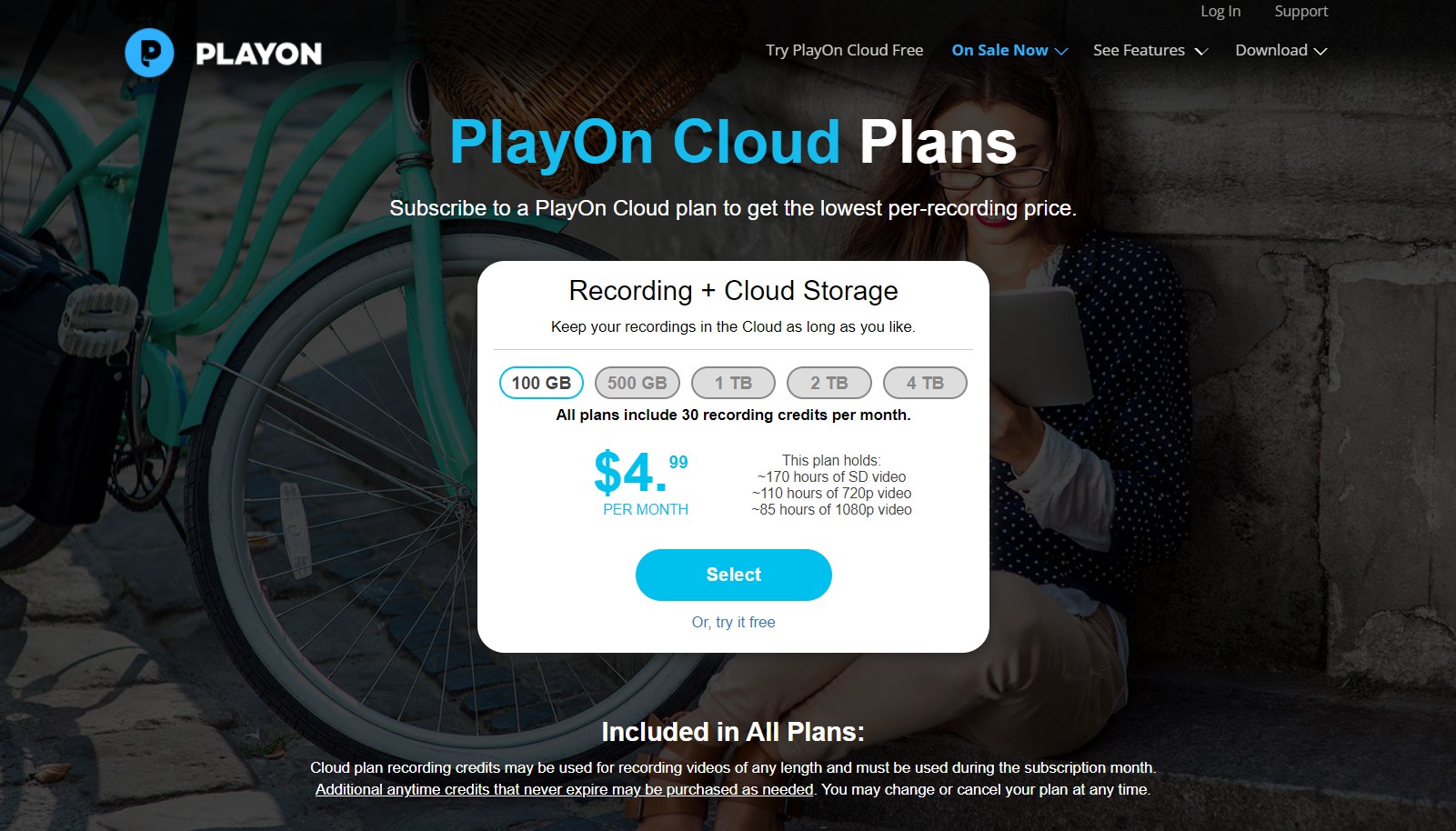
Yeah, they do. By default, any recordings sitting on PlayOn Cloud servers are set to automatically expire and get wiped after 7 days, unless you cough up the cash for a premium cloud storage sub (like their 100GB or 4TB plans). If you actually want to keep your media forever, you have to manually download the file from their cloud to your local hard drive before that 7-day timer runs out.
Will PlayOn Cloud files scrape correctly in Plex or Jellyfin?
Often not without help. PlayOn Cloud writes basic filename metadata, but it usually doesn't match the TMDB/IMDB naming conventions Plex and Jellyfin scrapers expect, so posters and episode data can come in wrong. Running the files through a renamer like FileBot before adding them to your library fixes most of it. If a clean poster wall matters to you, plan for that step.
Conclusion
PlayOn Cloud earns its spot for one specific reader: someone recording from a phone or tablet who genuinely doesn't want a PC in the loop, only needs the odd episode, and can live with 1:1 recording time plus the 7-day storage window. For that person, it's a real convenience. For everyone else, the math gets harder — 3 credits per 1080p recording, the failed-recording complaints reflected in a 2.8/2.5 rating pair, and the fact that keeping any of it long-term still means downloading MP4s to your own drive.
If you already run a Windows or Mac that can stay on overnight, PlayOn Home or a desktop tool skips the credit math entirely and gives you a local file on your own drive on the first try. Pick the one that matches how you actually watch — not the one with the prettier marketing page.

Evaluating the Audials One 2026 free trial? I tested its 720p caps, examined if is audials legal under Fair Use
By Erika Leen - Sep 29, 2026
Are you thinking of purchasing NoteBurner and unsure if it’s worth the investment? In this NoteBurner review, let’s delve into its product lines, particularly the NoteBurner Video Downloader’s pros and cons.
By Marcia Hatcher - Sep 28, 2026
Read our in-depth Audials review for 2026. Is Audials safe and legal for Amazon Prime? Discover actual test results, Widevine DRM fixes, and better alternatives.
By Erika Leen - Sep 28, 2026
TuneFab’s Amazon downloader suits a focused desktop routine, while VideOne covers multiple services. Compare their workflows, license structures, and output checks with StreamFab, then use the numbered setup and maintenance steps for authorized personal offline viewing.
By Erika Leen - Sep 24, 2026