
How to Download MPD Video to MP4: 3 Practical Methods

Summary: Learn how to download MPD videos when standard downloaders fail. This guide explains how MPD streaming works, why DRM protection can cause download issues, and which practical tools and methods can help you save MPD videos for offline viewing.
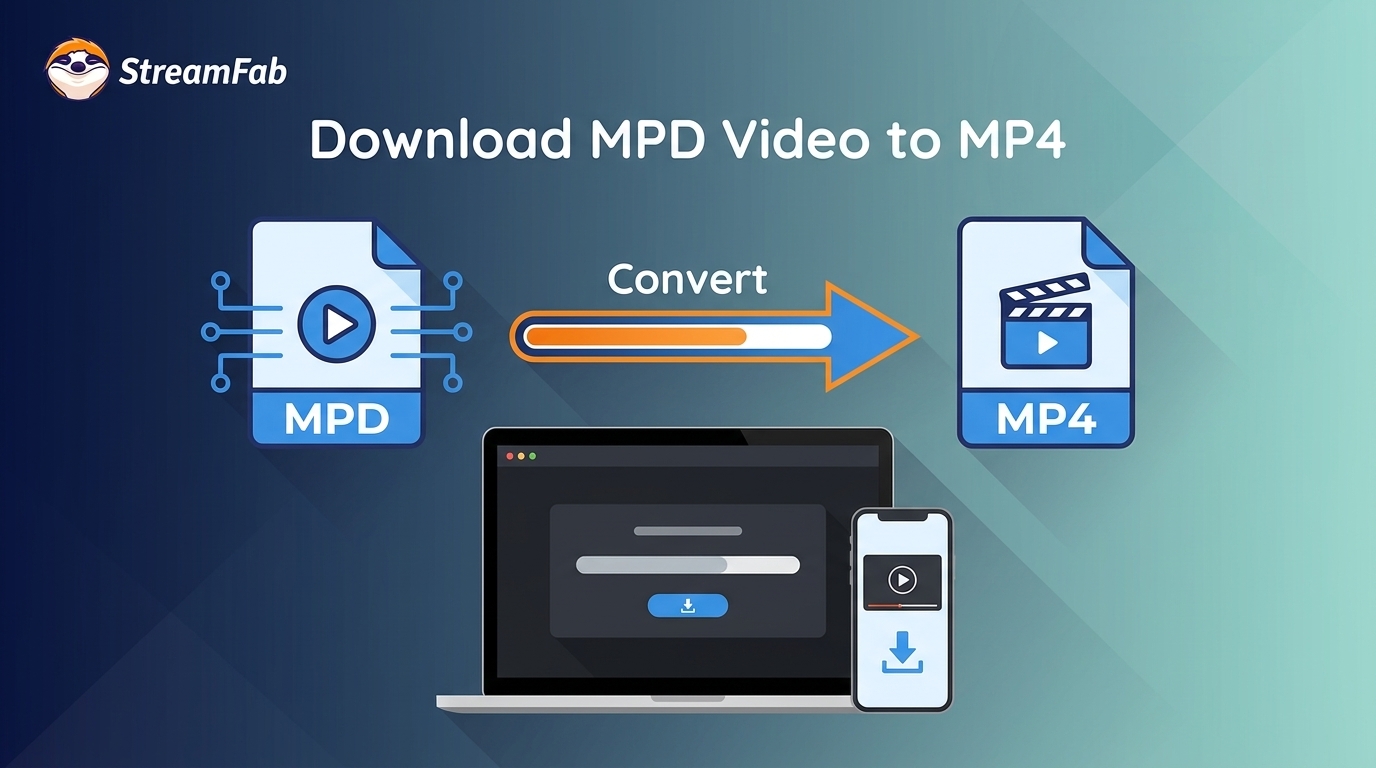
Here's the short answer: an MPD file is not a video, it's an XML manifest that points a player at segmented audio and video streams, which is why saving one as a playable file takes more than a right-click. The first time I hit this wall I was staring at a 403 in Chrome DevTools, convinced my downloader was broken, when in fact the manifest itself was doing exactly what it was designed to do.
Below I walk through how to locate the manifest, decide whether the stream is unencrypted or protected, save it to MP4 with yt-dlp, FFmpeg, or a guided desktop workflow, then verify the file and troubleshoot the failure modes I run into most often.
An MPD Is a Streaming Manifest
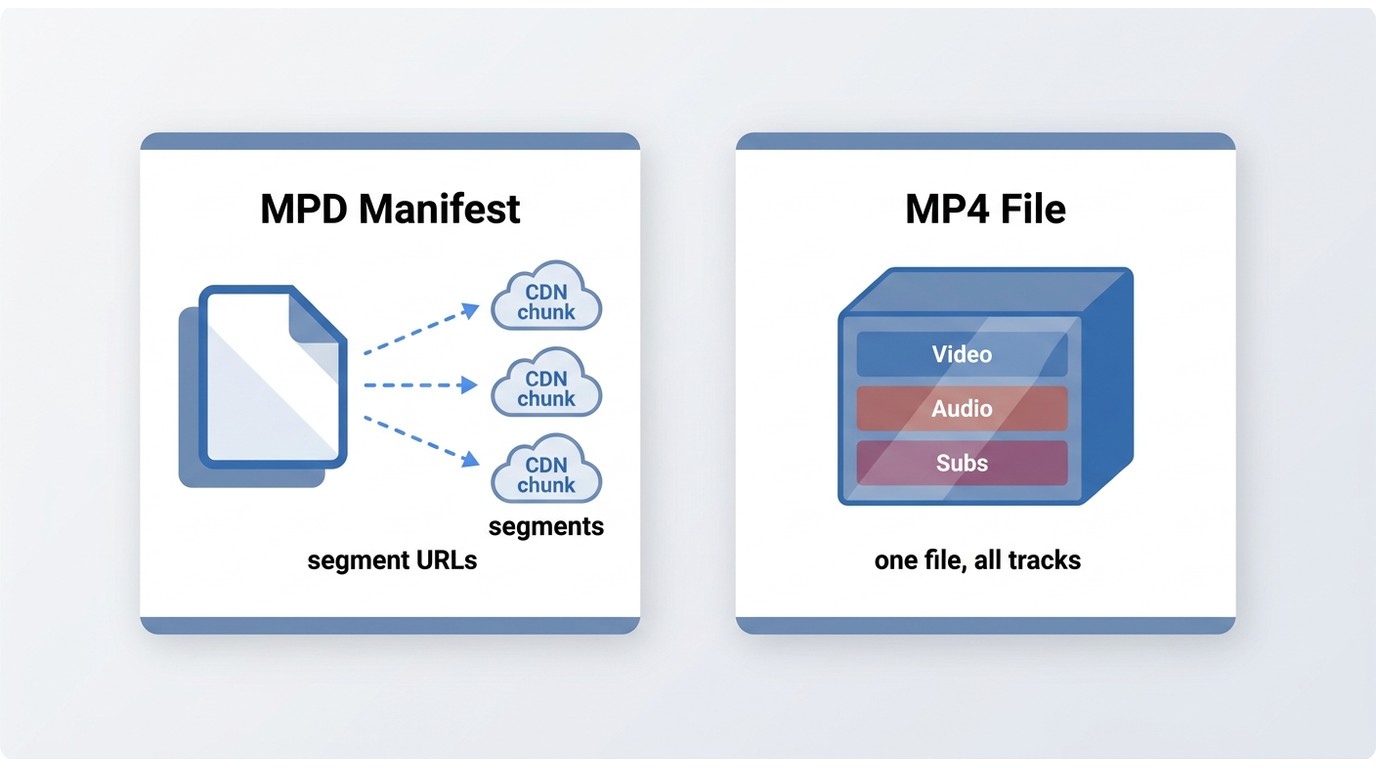
An MPD (Media Presentation Description) is an XML manifest that describes segmented DASH streams, including which audio and video representations are available and where to fetch each segment. MP4, by contrast, is a container that holds the actual playable audio and video. That distinction shapes every method below: you cannot rename an .mpd file to .MP4 and expect it to play, you have to fetch the segments the manifest points to and mux them into a container.
MPD and MP4 Serve Different Jobs
| Feature | MPD (DASH Streaming) | MP4 (Local File) |
|---|---|---|
| Definition | Streaming instructions (not the video itself) | Complete video file container |
| Contents | Metadata describing segmented video streams | Video, audio, subtitles in one file |
| Primary Use | Adaptive quality streaming | Local storage and playback |
| Playback Method | Streams video segments in real-time | Plays complete file from storage |
| Platform Usage | Used by many DASH-based streaming services | Universal device compatibility |
| Internet Required | Yes (for streaming) | No (fully offline) |
| Quality Adjustment | Dynamic based on connection | Fixed quality |
| Flexibility | High (adapts to conditions) | Fixed (one quality level) |
- Offline access anywhere: Keep watching on planes, trains, or spots with unreliable connections, without buffering
- Personal media library: Keep local copies of content you're authorized to access, for personal offline viewing
- Format compatibility: Turn segmented DASH streams into a single MP4 or MKV that any player can open
- Predictable playback: A local file plays at a fixed quality without adaptive bitrate swings
- Travel-friendly: Load a season onto a laptop or tablet before a trip where connectivity is unknown
Find the MPD Manifest URL
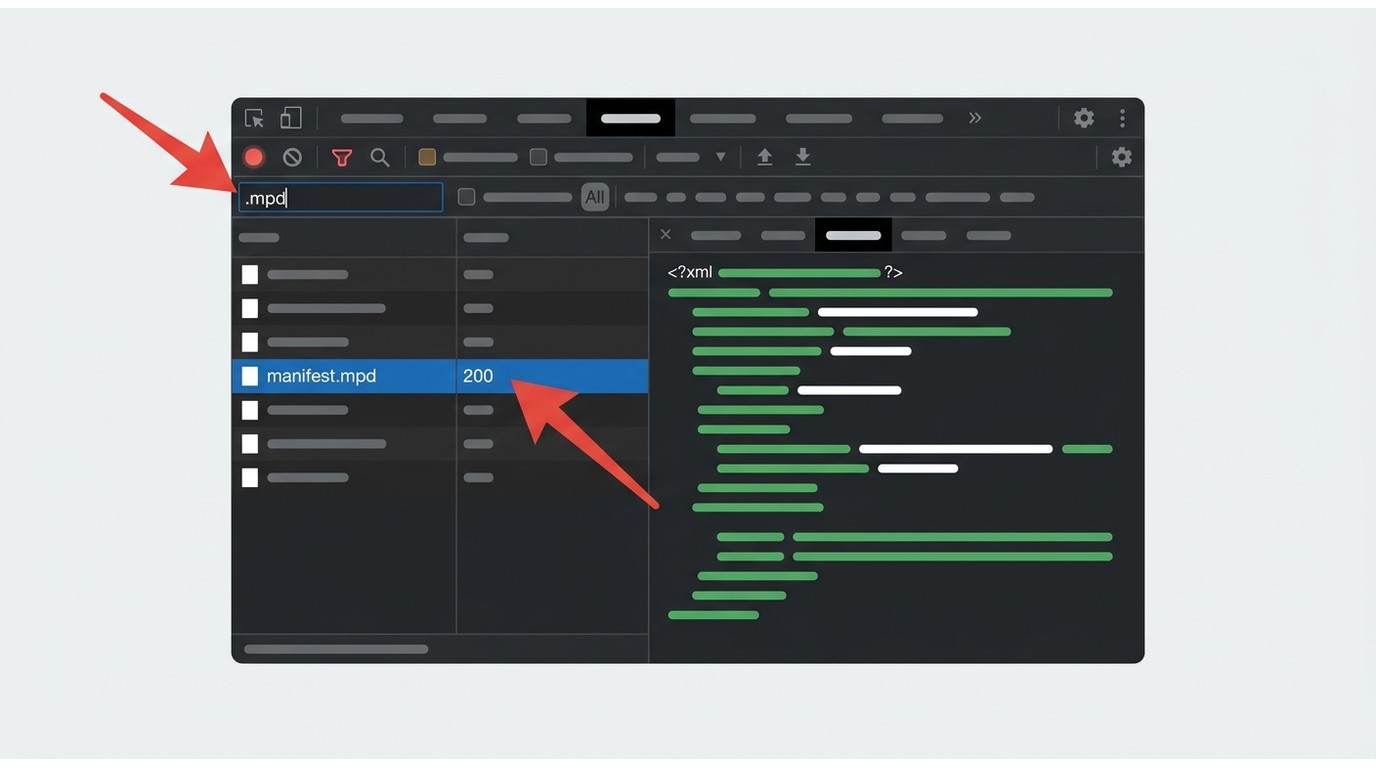
Before you pick a tool, you need the manifest URL. Every method below assumes you can hand it a working .mpd address, and this is where most readers get stuck first.
Inspect Network Requests in DevTools
Open the page in Chrome or Firefox, press F12 to open DevTools, switch to the Network tab, enable Preserve log, then start or refresh playback. Type mpd into the filter box and watch for a request whose response is XML. Right-click that request and copy the full URL, headers included if the site requires them.
If no .mpd request appears at all, the site may be using HLS (.m3u8) instead, generating the URL client-side, or gating playback behind a session that DevTools can see but a standalone tool cannot reuse. That last case is the one that used to send me in circles, until I learned to check the response headers before blaming the downloader.
Copy and Test the Request URL
Paste the copied URL into a new browser tab. If it returns readable XML, the manifest is reachable without extra session context and a command-line tool has a real chance. If you get a 403, an empty response, or a redirect to a login page, the manifest is bound to your session, and no amount of retrying the URL alone will fix it.
Choose the Right MPD Workflow
MPD streams split into two very different cases, and mixing them up wastes hours. Public, unencrypted manifests are what yt-dlp and FFmpeg were built for: fetch the segments the manifest lists, mux them into MP4, done. Protected streams reference encrypted segments; ordinary command-line tools can still download the bytes, but the output plays back as garbage or refuses to open at all. That is not a bug in the tool, it is the protection working as designed.
Legal boundary before you go further: only save content you are authorized to access, where permitted by the platform's terms and applicable law, and keep local copies for personal offline viewing. For content you're authorized to access, where permitted by platform terms and applicable law, a desktop workflow can save a local copy for personal offline viewing, and I'll cover that path below after the two command-line methods.
2. YT-DLP
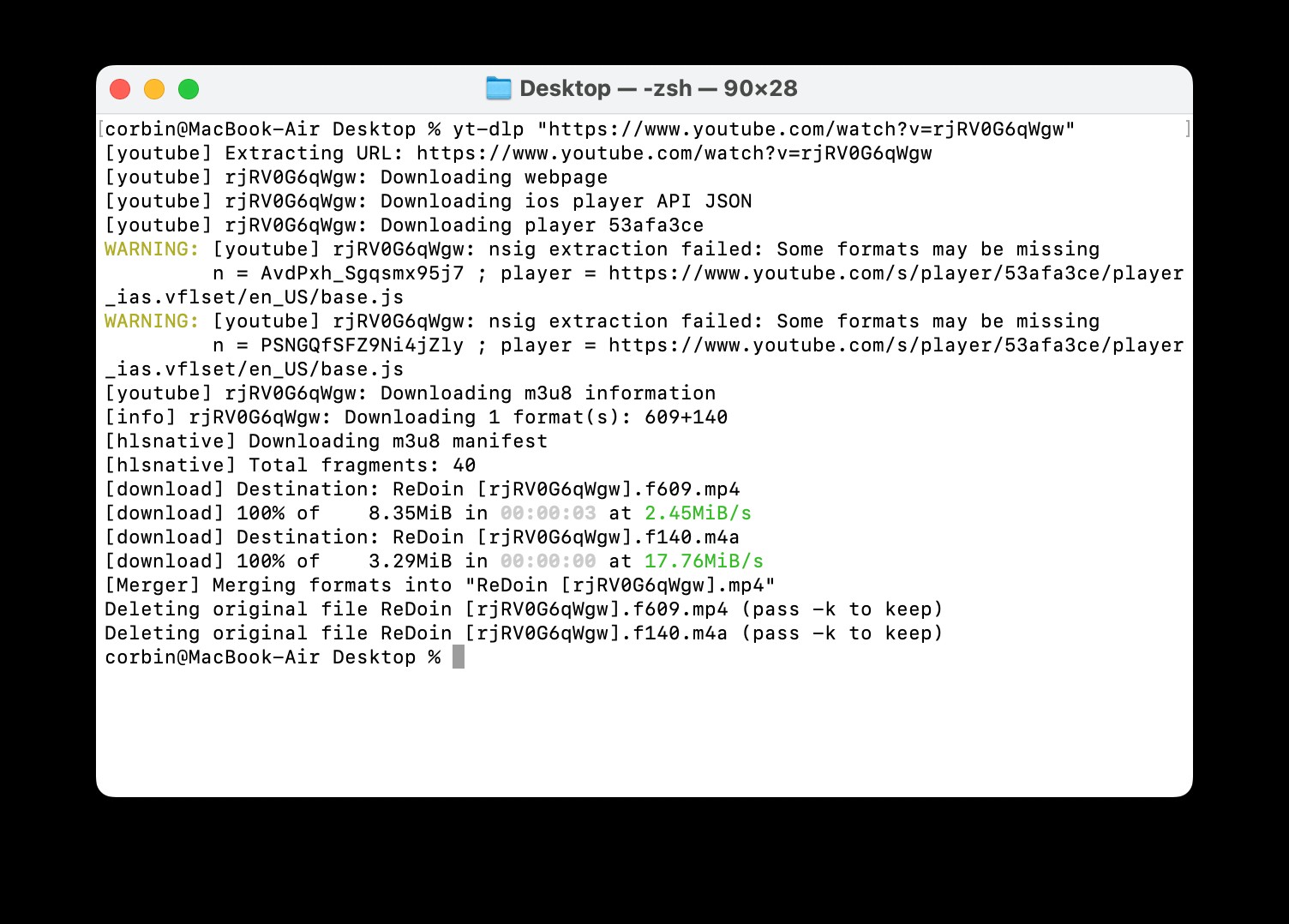
yt-dlp is the free, open-source workhorse I reach for whenever a manifest looks public and unencrypted. It parses the MPD, lists the available DASH formats, and hands the merge step off to FFmpeg, which you'll need installed and on your PATH.
A basic invocation looks like this:
yt-dlp "https://example.com/path/manifest.mpd" -o "output.%(ext)s"
To grab the highest-quality video and audio separately and let FFmpeg merge them into one MP4:
yt-dlp -f "bv*+ba/b" --merge-output-format mp4 "https://example.com/path/manifest.mpd"
Best for readers comfortable in a terminal who want fine-grained format selection and don't mind diagnosing site-specific quirks. Not ideal for protected streams (the download will look successful and the file will still be unplayable) or for anyone who wants a guided interface. One judgment I've learned the hard way: a green progress bar isn't proof of a working file. yt-dlp will happily finish downloading encrypted segments and hand you a broken .MP4, so I verify playback before I trust any output.
Save Unencrypted MPD with FFmpeg
Copy Streams into an MP4 Container
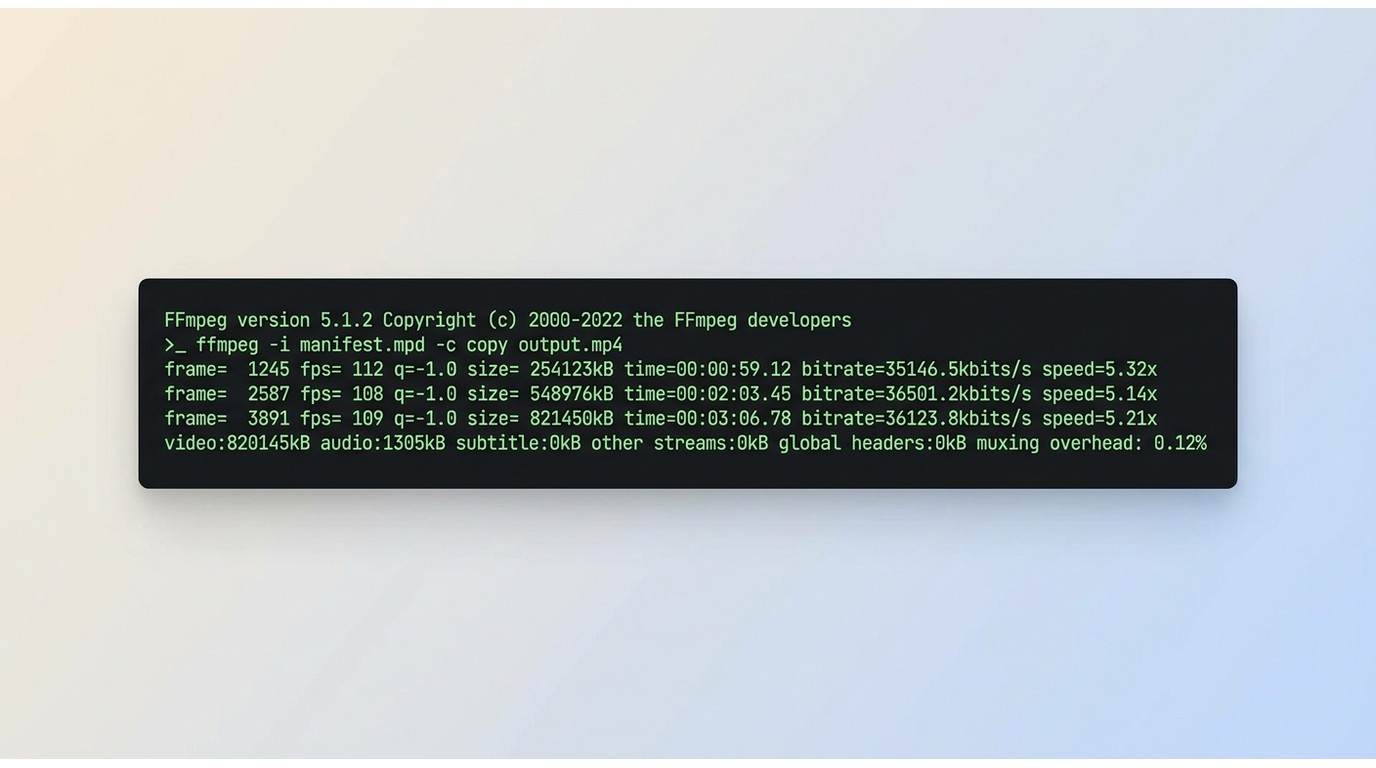
When the manifest is accessible and unencrypted and I don't need yt-dlp's format menu, FFmpeg alone is faster and easier to reason about. This pattern remuxes the DASH streams straight into MP4 without re-encoding:
ffmpeg -i "https://example.com/path/manifest.mpd" -c copy output.mp4
Because -c copy skips re-encoding, the result finishes in a fraction of the source's runtime and preserves the original quality, provided the codecs (typically H.264/H.265 video with AAC audio) fit an MP4 container. If a request needs authentication, pass headers or cookies with -headers or -cookies. FFmpeg is my go-to for quick diagnostics: if it can't remux an unencrypted manifest, the problem is upstream (access, headers, codec mismatch) and switching tools rarely helps.
Use StreamFab for Authorized Offline Copies
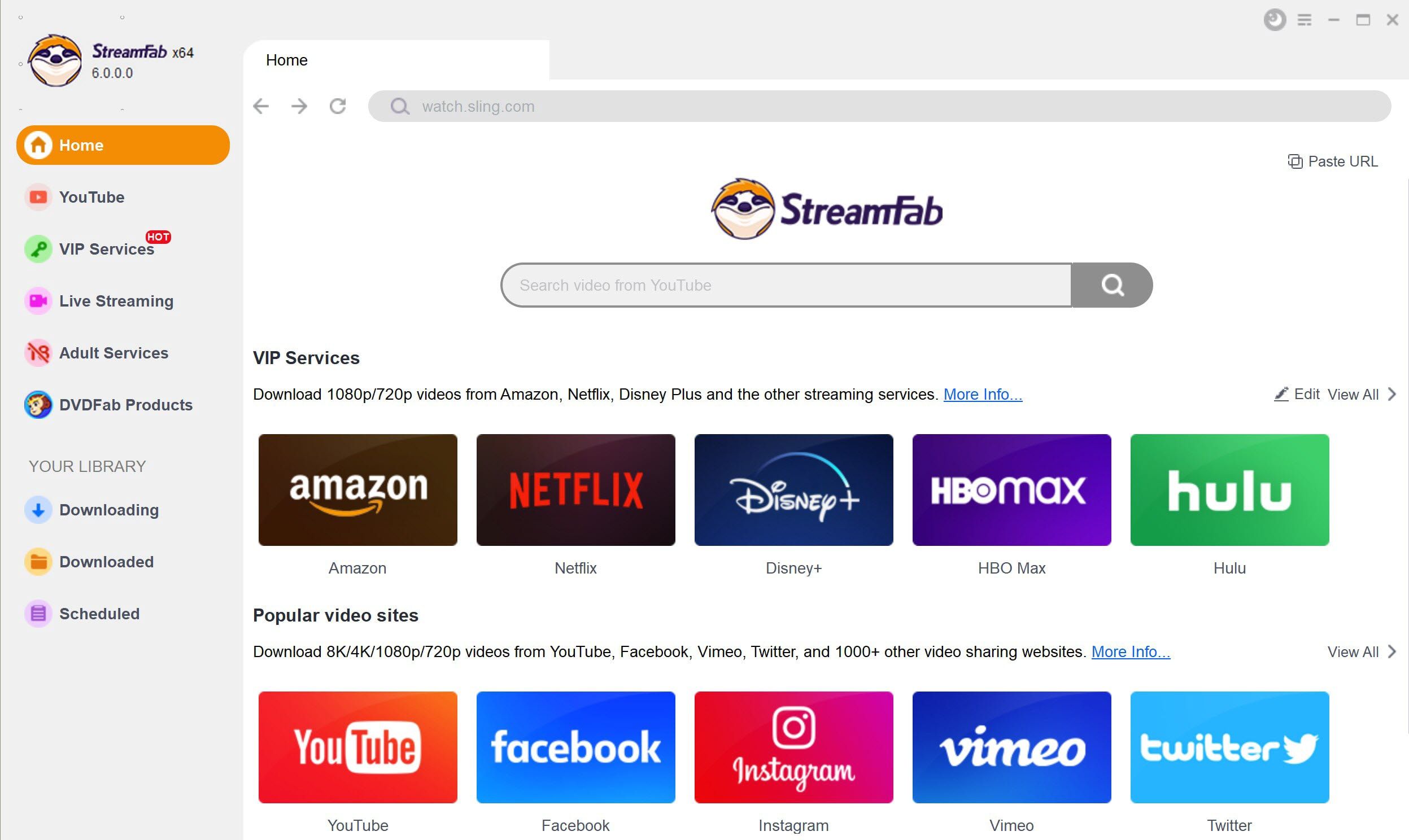
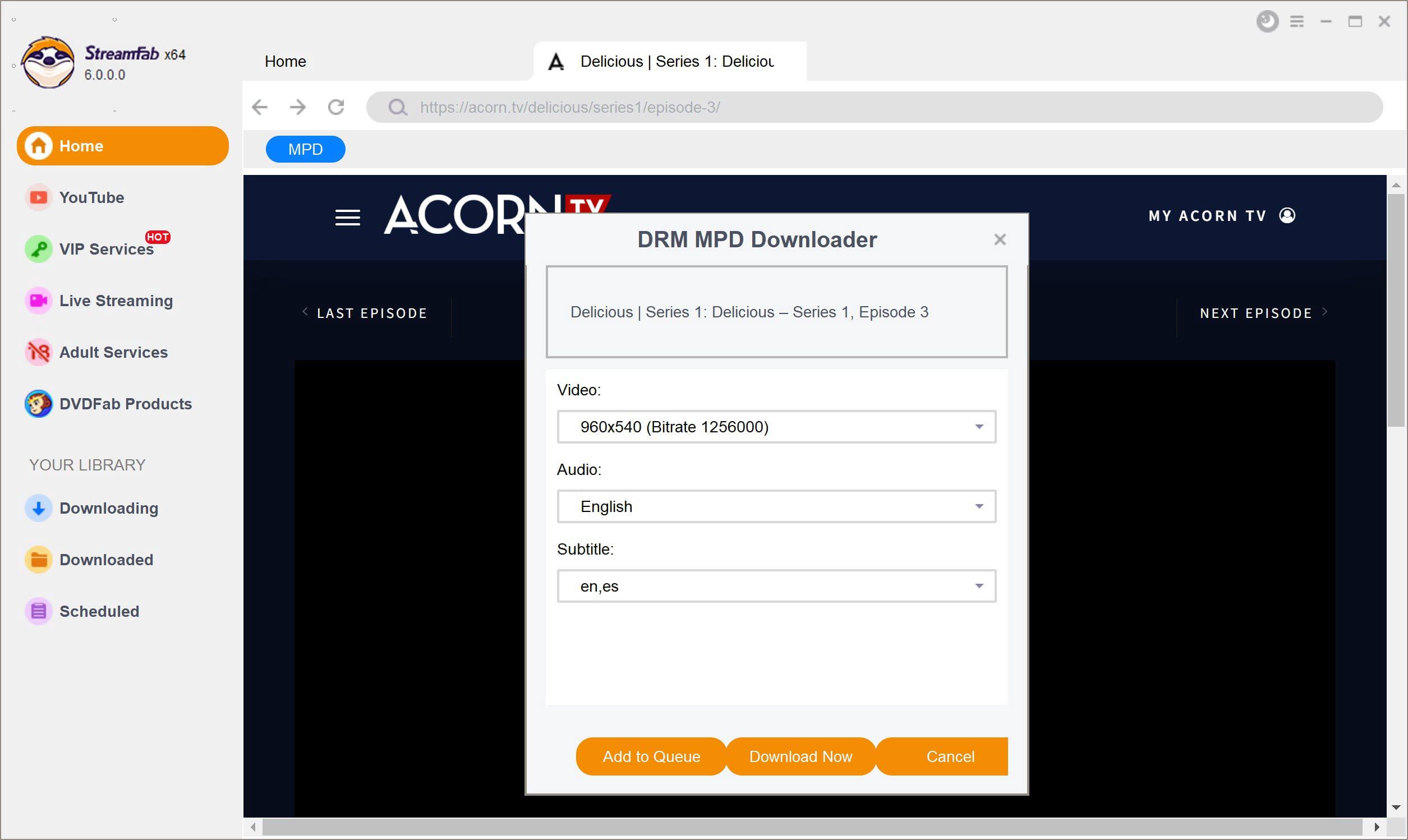
When the manifest is protected and yt-dlp or FFmpeg produce unusable output, an authorized desktop workflow is the next step. StreamFab DRM MPD Downloader is the tool I use here: a Windows and macOS app that pairs an in-app browser with a guided selection panel so you sign into the service, pick the episode, and choose the output before saving.

Download videos from 1000+ MPD streaming sites, including My5, RTS, Mediable, and more. The best quality reaches 4K resolution on compatible platforms, with audio support for EAC3/AC3/AAC formats.
- High-Resolution Output: Saves at the resolution the platform offers on your plan (up to 1080p on this product)
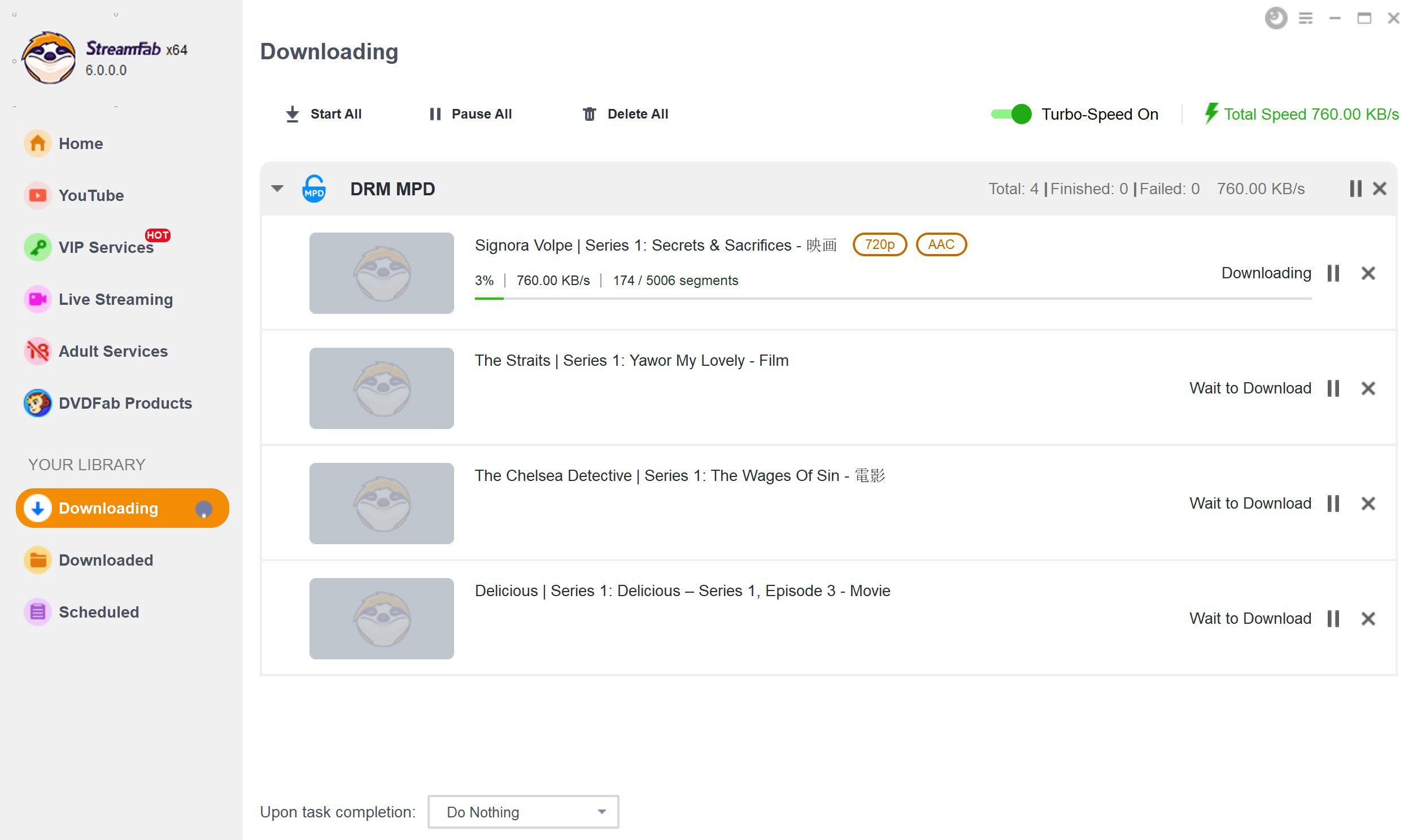
- Batch Processing: Queue entire series or playlists in one pass
- Subtitle Handling: External SRT or embedded subtitles in multiple languages
- Guided Interface: In-app browser for signing into the source service and selecting titles
- Multi-Threaded: Parallel segment transfers for faster completion on capable connections
- Format Choice: Output to MP4 for universal playback or MKV to preserve multiple tracks
Select Quality, Audio, and Subtitles
Inside the app you sign into the source service in the built-in browser, open the title, and StreamFab reads the available streams. You choose the resolution the platform offers on your plan, the audio track and language, and whether subtitles come out as an external SRT file or burned into the video. Output is MP4 for universal playback or MKV when you want to keep multiple audio and subtitle tracks in one file. Batch mode queues entire seasons so I can leave a series to run overnight.
Where the Desktop Workflow Fits
Suits Windows or Mac users with a valid subscription to a supported service who prefer a guided interface over command lines. Site support and behavior can vary by platform, account, and software version, so I check the current supported-sites list before assuming a service will work. Not ideal for readers on mobile-only setups, for services the app doesn't currently support, or for anyone expecting universal compatibility across every DASH stream on the web. Follow the full walkthrough in the StreamFab MPD Downloader guide for step-by-step screens.

Pro Tips
- Keep StreamFab updated for maximum compatibility with new DRM schemes
- Log into premium accounts directly in StreamFab's browser when required
- Use batch mode for downloading entire seasons or playlists
- Check the supported sites list for newly added platforms
Status:
- Actively maintained with regular releases
- Broad MPD/DASH support through built-in extractors
- Highly customizable download and format-selection parameters
- Large open-source community and documentation
Advanced example with quality selection: yt-dlp -f "bestvideo+bestaudio" [MPD_URL]
How to Verify the Finished MP4
Check Duration, Tracks, and Playback
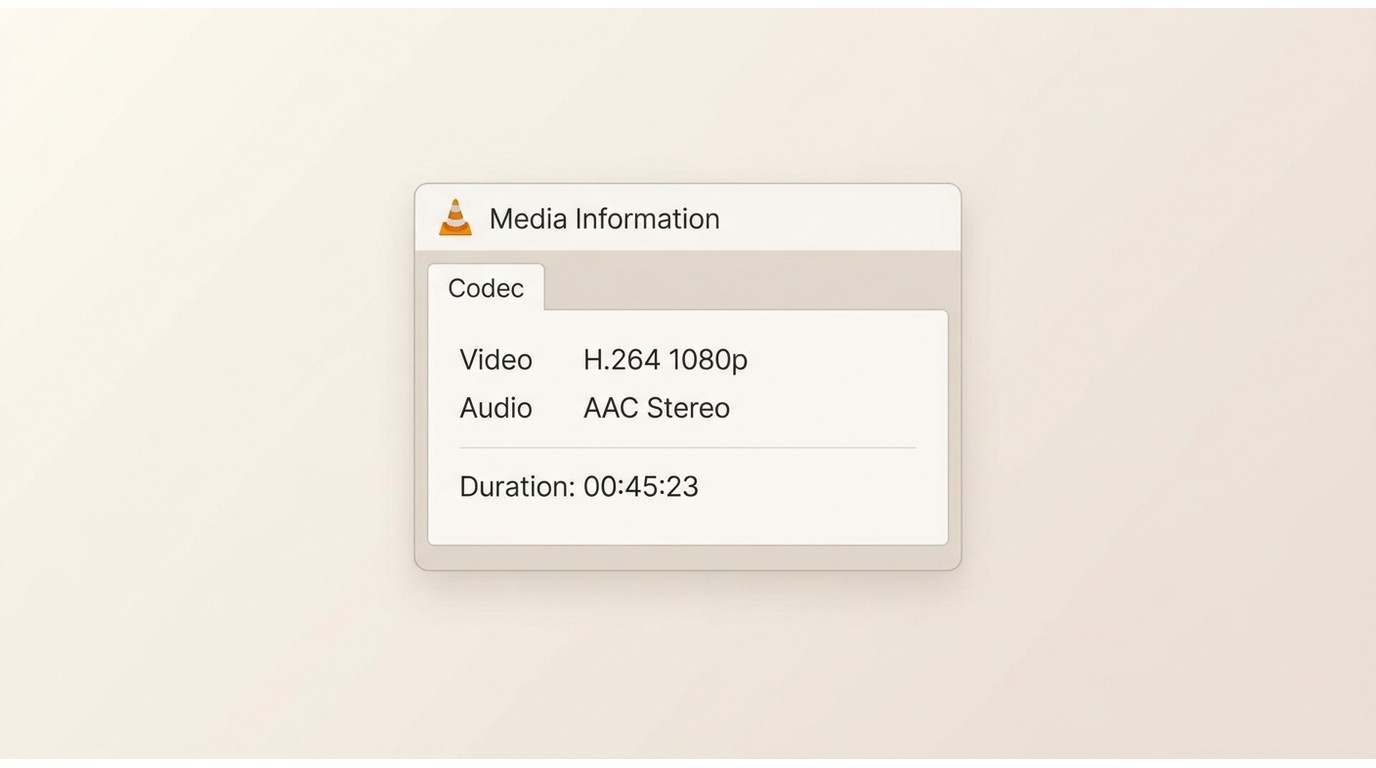
A completed download is not the same as a usable file, and merge failures are harder to spot than download failures, which is exactly why they catch people out. After every save I run the same short check: compare the file duration against the source, scrub through the beginning, middle, and end to catch truncation, confirm both a video and an audio track are present (VLC's Media Information panel shows this in seconds)) and confirm FFmpeg is installed for the merge. Truncation usually means a segment failed mid-download; re-run the command and compare the new file's duration against the source.
Analysis or Final Processing Fails
The download seems to hang on "analyzing" or fails at the remux stage. Long analysis often points to a slow or unreliable manifest response, not the tool itself, so retry with a stable connection before changing anything else. A remux failure at the end usually means the source contains a codec the target container doesn't accept (for example, Opus audio into MP4); switching output to MKV, or transcoding audio to AAC, resolves most of these. If the segments themselves are encrypted, no post-processing choice will produce a playable file, and that is the point where yt-dlp or FFmpeg is not the right tool.
The same manifest-and-verify approach also applies when you're saving titles from services like STARZ.
FAQs
Conclusion
Match the method to the stream, not the other way around. Reach for yt-dlp when the manifest is public and unencrypted and you want automated format selection from a terminal. Use FFmpeg for the same conditions when you want direct remuxing and fast diagnostics without another layer. Choose StreamFab when you're on Windows or Mac with a valid subscription to a supported service and prefer a guided interface for authorized offline copies. Then verify the file before you trust it, and stay inside what the platform's terms and your local law allow.

The Criterion Channel is full of classic movies, and there is no official way to get them. This article introduced several third-party tools to help you dealing with this problem. And the downloader is the best one with advanced functions and outstanding quality.
By Nicole Lopez - Sep 16, 2026
Looking to download ctv video content for unrestricted offline viewing? Based on my 2026 technical tests, here is the ultimate guide to permanently archive CTV videos in crisp 1080p MP4 formats.
By Erika Leen - Aug 19, 2026
Can you watch Udemy offline? How to watch Udemy courses offline on PC? This guide covers everything you want to know about Udemy offline viewing on different devices.
By Jacob Harrison - Aug 19, 2026
Can you save Udemy DRM videos as a local personal backup? Why do you only get a black screen file? This guide addresses the technical hurdles of creating a personal backup, specifically explaining the latest methods in 2026.
By Jacob Harrison - Aug 18, 2026