17 PBS Kids Shows From the 2000s We Still Remember

Summary: I revisits the most iconic PBS Kids shows of the 2000s, sharing heartfelt recommendations and formative memories of each series,
Table of Contents
Searching for PBS Kids shows from the 2000s gets messy fast: memory blends true 2000s premieres with older reruns. This guide sorts 17 favorites by air years and era, then explains where selected classics may still be available through official options.
That distinction matters when early 2000s PBS shows sit beside 1990s series that remained familiar through reruns. The list below keeps the nostalgia, but labels the timeline clearly so a remembered Saturday-morning lineup does not turn into a misleading decade claim.
Why These 2000s PBS Shows Still Matter
Old PBS Kids shows paired memorable characters with practical lessons in reading, math, science, empathy, and problem-solving. Their slower pacing also gave each idea room to land, which is why many of these 2000s educational kids shows remain easy to revisit.
The useful way to judge the era is not by nostalgia alone. Some series debuted during the decade, while others became 2000s staples through reruns. That mix explains why two viewers can remember the same PBS lineup and still disagree about which decade a show belongs to.

17 Memorable PBS Kids Shows From the 2000s
These early 2000s PBS shows and 2000s PBS cartoons cover the titles most closely tied to the decade, plus a few older reruns that viewers still associate with the same era. Each entry identifies its PBS years, decade status, and learning focus.
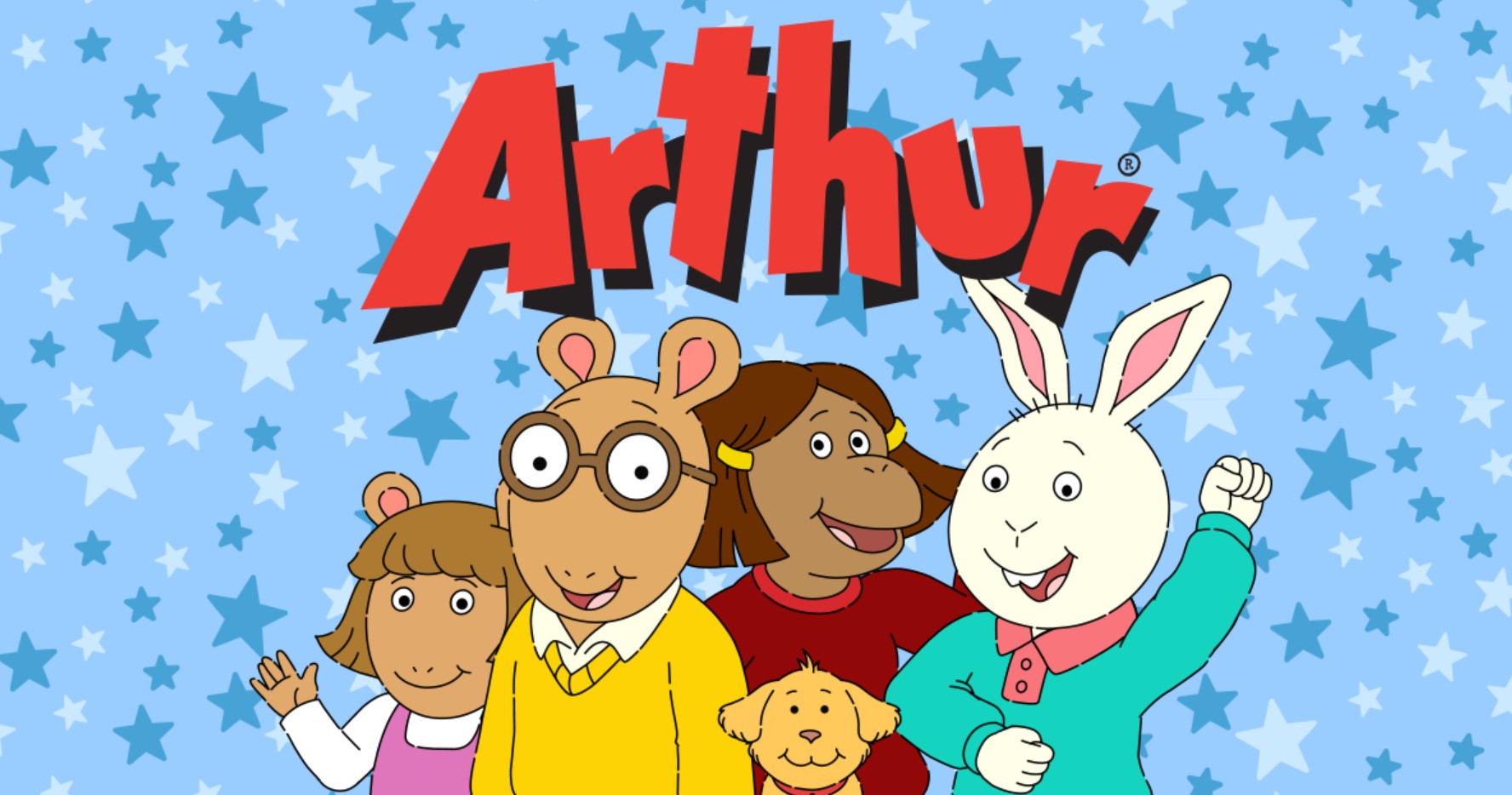
1. Arthur
Arthur made ordinary school problems feel worth discussing. Arthur Read, D.W., Buster, and their classmates dealt with friendship, bullying, anxiety, honesty, and conflict without turning every episode into a lecture.
- PBS years: 1996–2022.
- Era: 1990s premiere and a major 2000s staple.
- Learning focus: social-emotional skills, reading, and problem-solving.
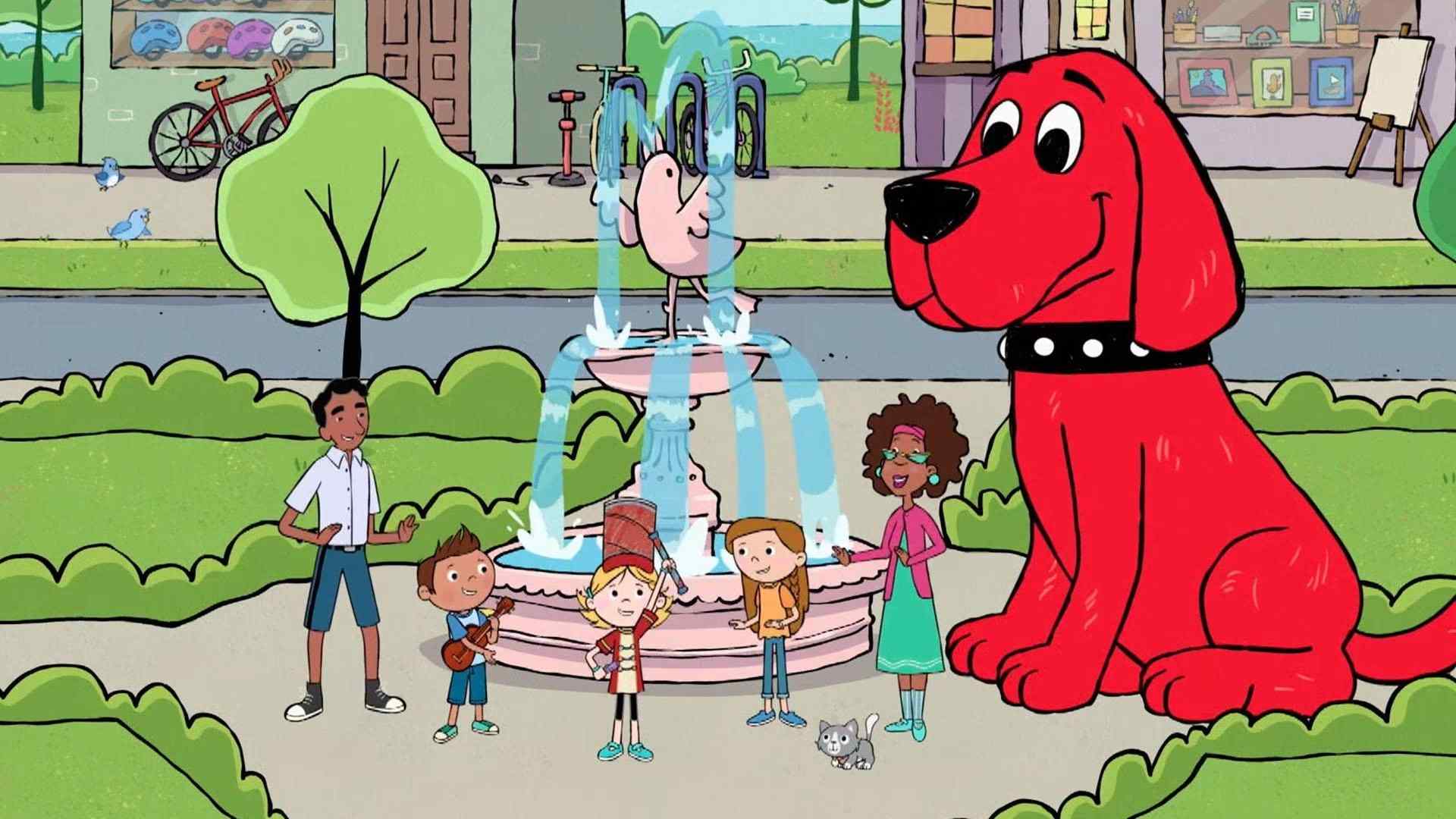
2. Clifford the Big Red Dog
Clifford and Emily Elizabeth turned loyalty, patience, and accountability into stories that younger viewers could follow without losing the humor. The giant red dog was the hook, but the choices characters made carried the lesson.
- PBS years: 2000–2003 for the original series.
- Era: 2000s original.
- Learning focus: friendship, responsibility, and community.
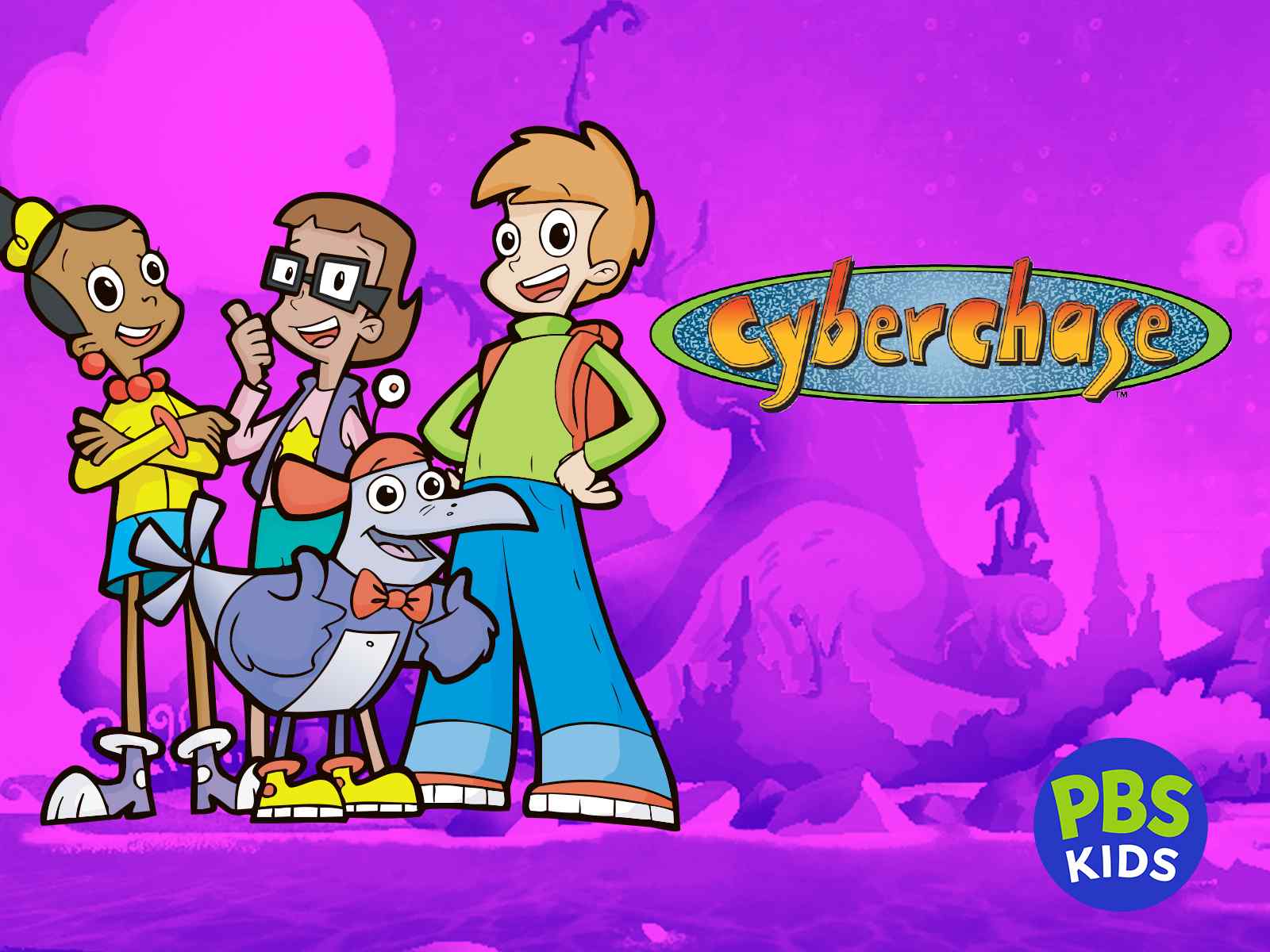
3. Cyberchase
Cyberchase built adventures around math instead of pausing the story for a lesson. Jackie, Matt, Inez, and Digit used patterns, measurement, logic, and estimation to solve problems in Cyberspace.
- PBS years: 2002–present.
- Era: 2000s original.
- Learning focus: mathematics, logic, and applied problem-solving.
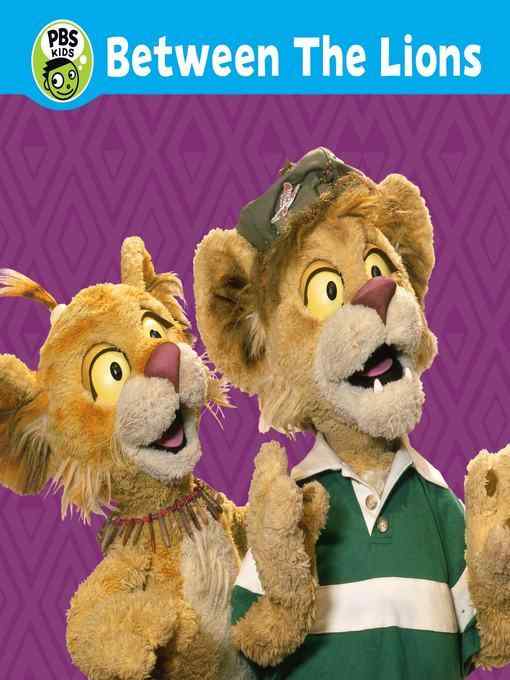
4. Between the Lions
Between the Lions made phonics and wordplay feel like part of the comedy. The library setting gave the series a simple premise: words unlock stories, and learning how they work makes reading less intimidating.
- PBS years: 2000–2010.
- Era: 2000s original.
- Learning focus: phonics, vocabulary, and reading comprehension.
5. Curious George
George's curiosity usually caused the problem and then helped solve it. The show worked because it treated mistakes as information, pairing gentle humor with observation, basic science, and cause-and-effect thinking.
- PBS years: 2006–present.
- Era: 2000s original.
- Learning focus: early science, math, and inquiry.
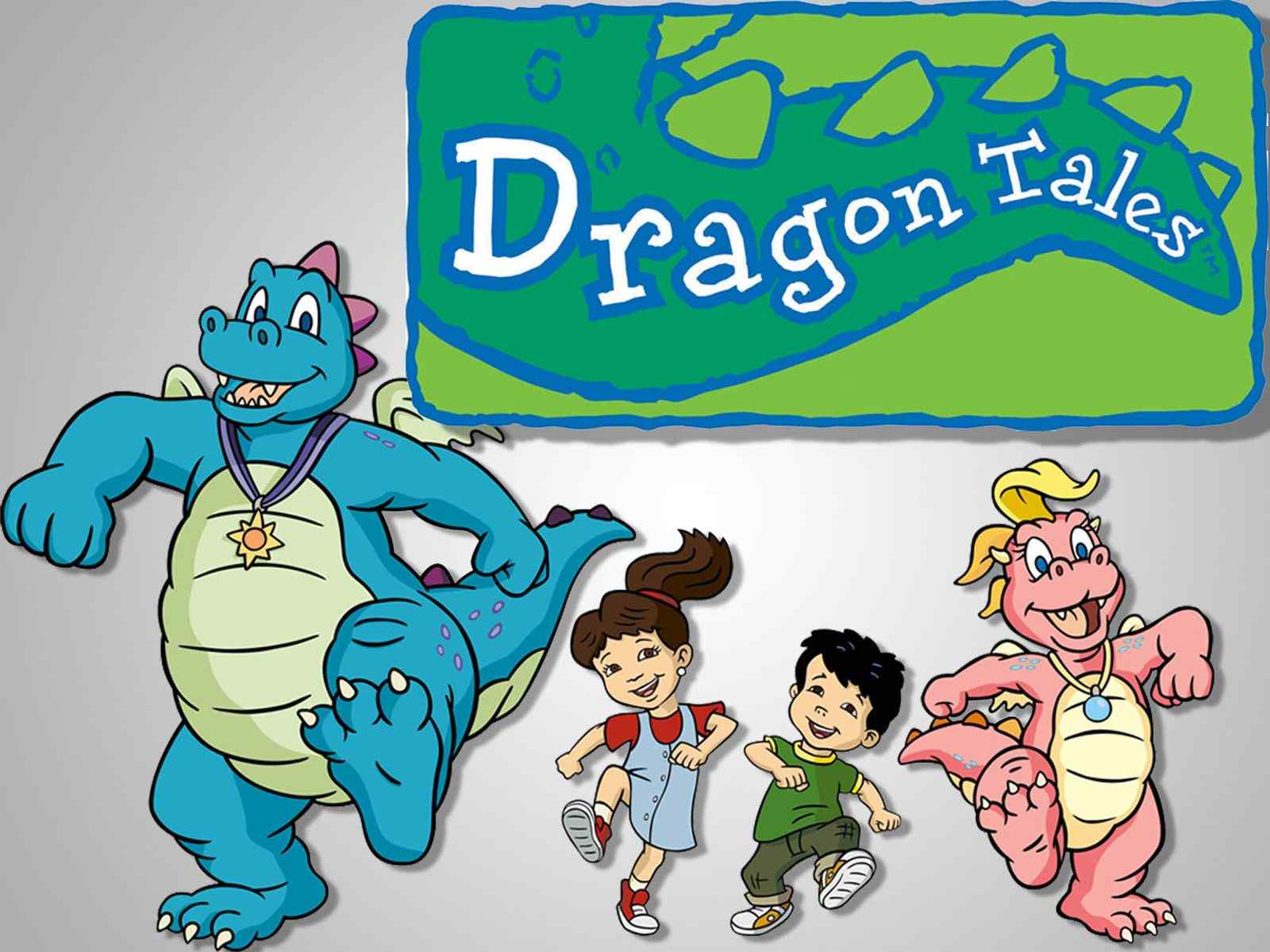
6. Dragon Tales
Dragon Tales used a fantasy world to make everyday emotional challenges easier to understand. Emmy, Max, Ord, Cassie, Zak, and Wheezie learned to cooperate, manage fear, and respect different strengths. Rewatching an episode as an adult, I’m amazed by how gently the show introduced concepts like sharing, teamwork, and celebrating each friend’s differences.
- PBS years: 1999–2005.
- Era: late-1990s premiere and early-2000s staple.
- Learning focus: teamwork, confidence, and emotional development.
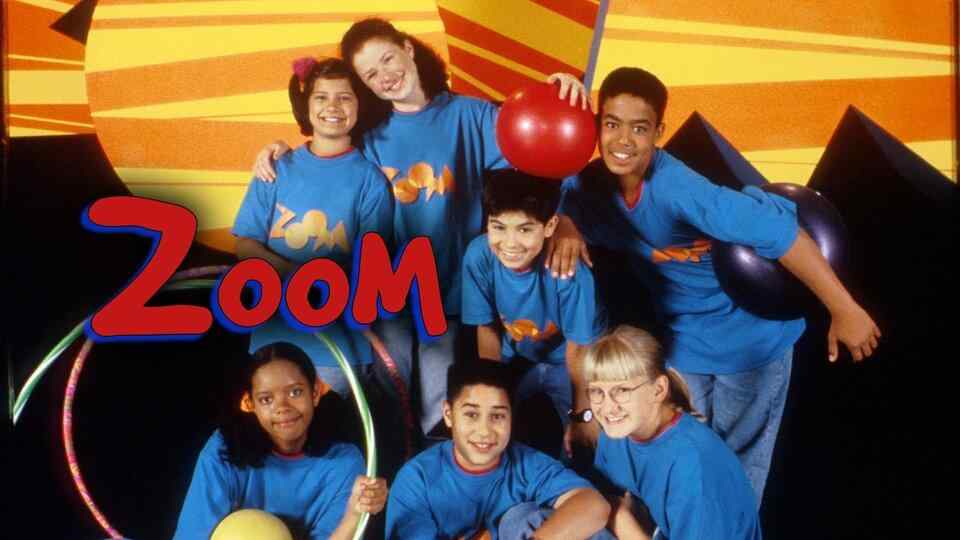
7. Zoom
Zoom stood out because real young hosts demonstrated experiments, recipes, games, and challenges submitted by viewers. Its hands-on format made participation feel more important than polished presentation.
- PBS years: 1999–2005 for the revival.
- Era: late-1990s revival with a strong 2000s run.
- Learning focus: science, creativity, and collaborative projects.
8. Zoboomafoo
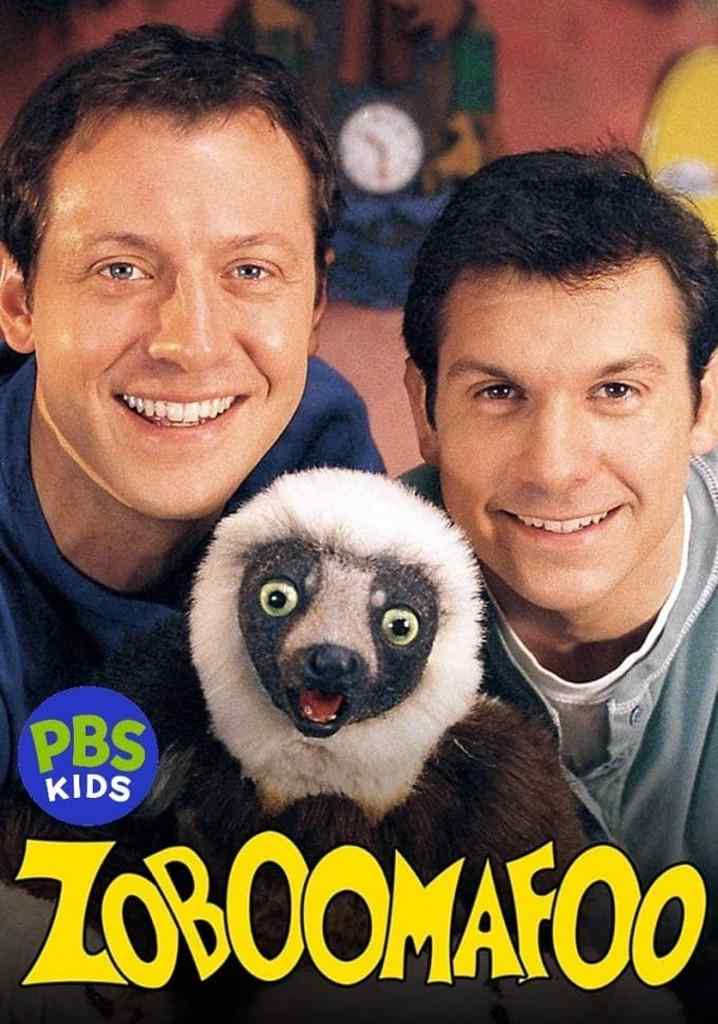
Chris and Martin Kratt used Zoboomafoo and Animal Junction to introduce animal behavior, habitats, and conservation. The live-animal segments gave the show an immediacy that still separates it from a standard cartoon.
- PBS years: 1999–2001.
- Era: late-1990s premiere remembered as an early-2000s show.
- Learning focus: zoology, habitats, and conservation.
9. Fetch! with Ruff Ruffman
Fetch! combined a game show with real-world science and teamwork challenges. Ruff's jokes kept the format light, while contestants had to test ideas rather than guess. It also became one of the defining PBS Kids Go shows for older elementary viewers.
- PBS years: 2006–2010.
- Era: 2000s original.
- Learning focus: science, teamwork, and practical problem-solving.
10. Martha Speaks
A bowl of alphabet soup gave Martha a voice, but vocabulary was the real engine of the show. New words appeared in context, were repeated naturally, and mattered to the plot.
- PBS years: 2008–2014.
- Era: late-2000s original.
- Learning focus: vocabulary, communication, and reading readiness.
11. Maya & Miguel
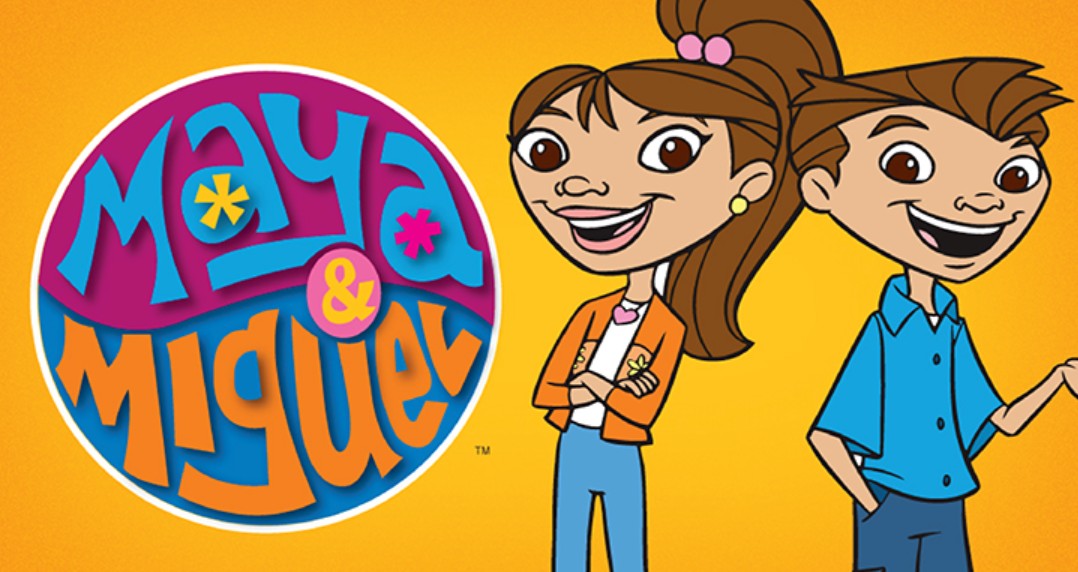
Maya & Miguel centered bilingual characters and a culturally varied neighborhood without making identity feel like a side lesson. Its strongest episodes connected communication, empathy, and the consequences of Maya's ambitious plans.
- PBS years: 2004–2007.
- Era: 2000s original.
- Learning focus: cultural awareness, language, and social skills.
12. Sagwa, the Chinese Siamese Cat
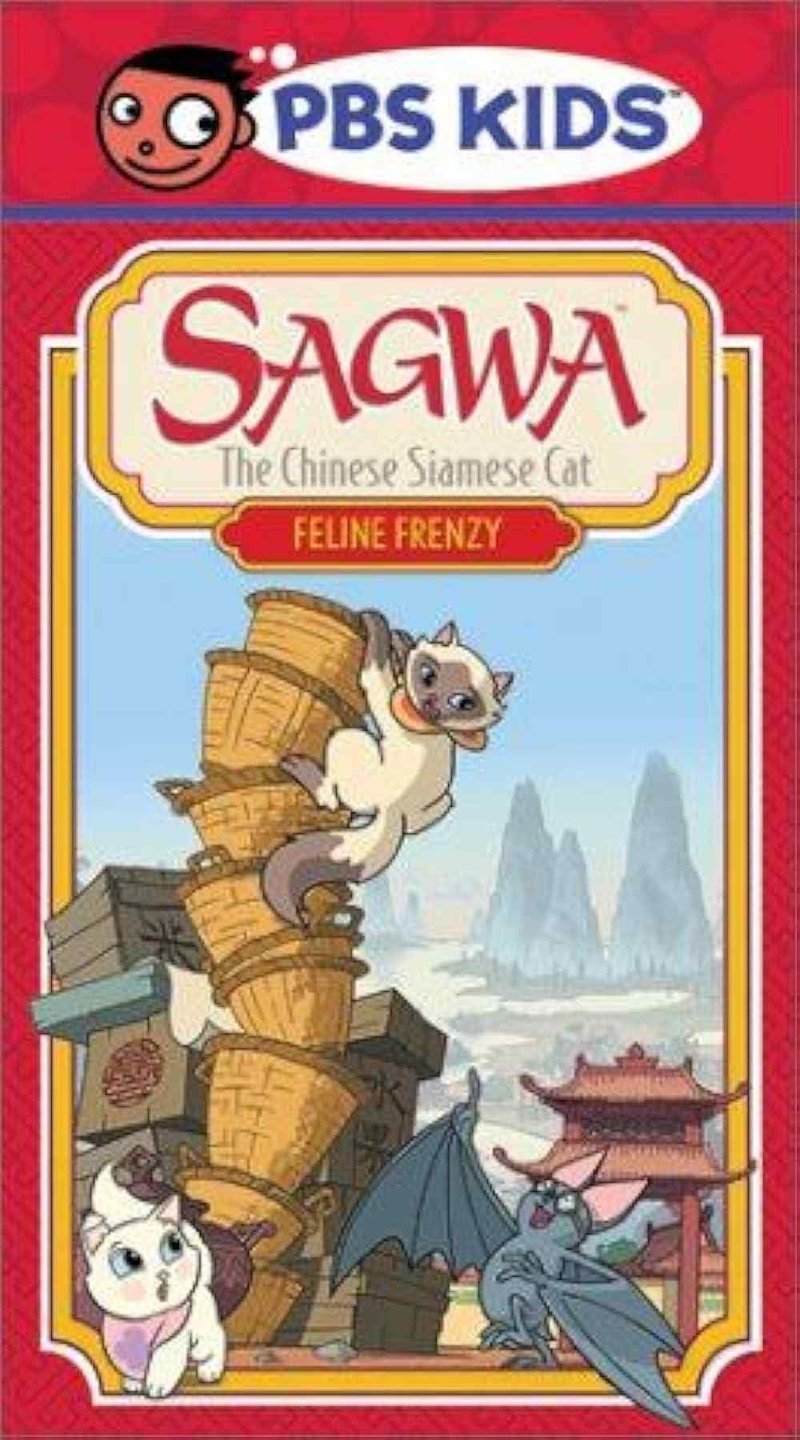
Sagwa followed a curious cat in a historical Chinese household, using her adventures to explore calligraphy, responsibility, fairness, and cultural traditions. The setting gave the series a visual identity unlike most PBS animation of the period.
- PBS years: 2001–2002.
- Era: 2000s original.
- Learning focus: culture, ethics, calligraphy, and communication.
13. Postcards from Buster
Postcards from Buster expanded the world of Arthur by sending Buster across the United States and beyond. As an Arthur spin-off, it connected a familiar animated character with documentary-style visits featuring real communities and daily life. Buster's friendship with Arthur Read gave viewers an easy entry point, while the travel format encouraged curiosity about regional traditions, languages, and different ways people live.
- PBS years: 2004–2008.
- Era: 2000s original.
- Learning focus: geography, culture, and empathy.
14. Reading Rainbow
Reading Rainbow premiered long before the 2000s, yet it remained part of the decade's PBS memory. LeVar Burton connected books with field trips, ideas, and reader recommendations, showing that reading could lead into the wider world.
- PBS years: 1983–2006.
- Era: older original with 2000s episodes and reruns.
- Learning focus: reading motivation, comprehension, and curiosity.
15. The Berenstain Bears
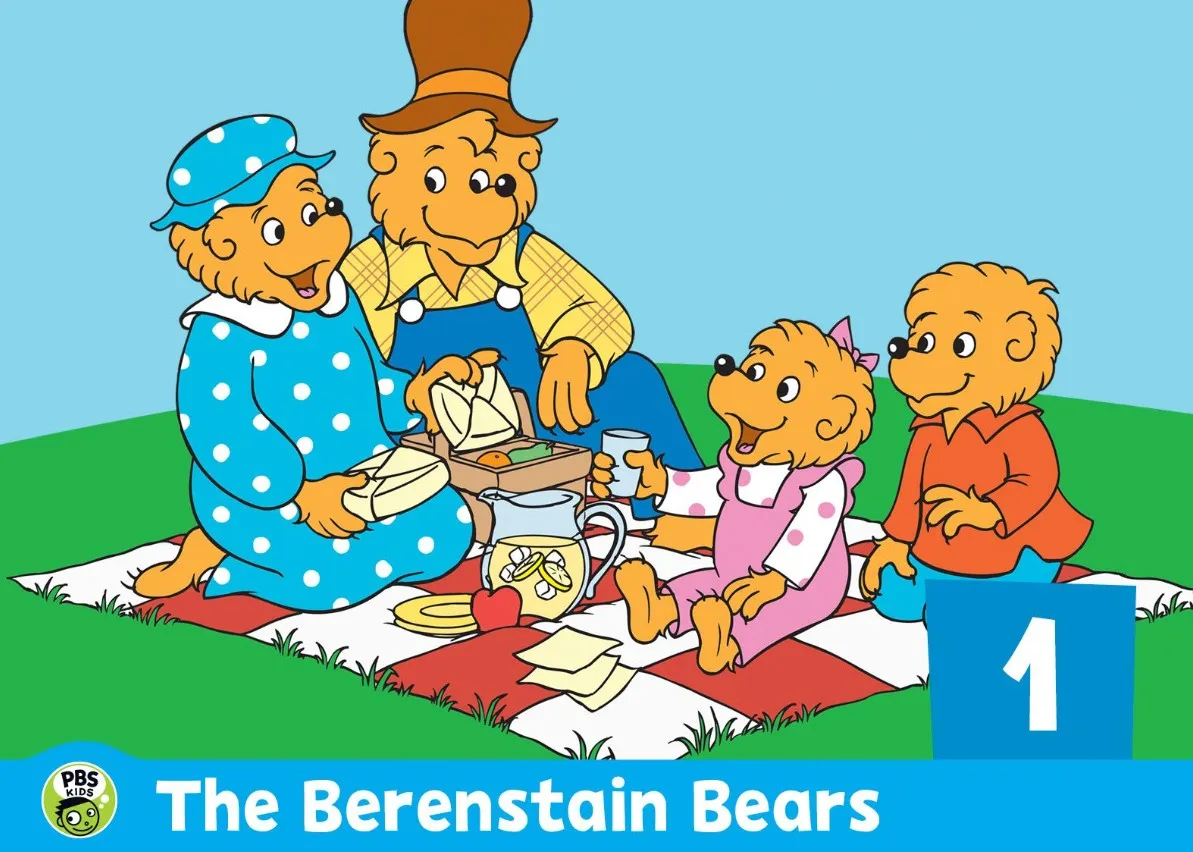
The Berenstain Bears used small conflicts to discuss honesty, responsibility, patience, and cooperation. The stories were predictable in a useful way: a poor choice caused friction, and the characters had to recognize it and make amends. I rewatched it recently with my younger cousin and was struck by how timeless (and soothing) its messages about honesty, responsibility, and kindness are.
- PBS years: 2003–2004 for the PBS series.
- Era: 2000s original.
- Learning focus: responsibility, honesty, and social behavior.
16. The Magic School Bus
The Magic School Bus was a 1990s series, not a 2000s premiere, but reruns kept Ms. Frizzle's class in the decade's viewing mix. Its strength was turning abstract science into a visual trip with a question, a risk, and an explanation.
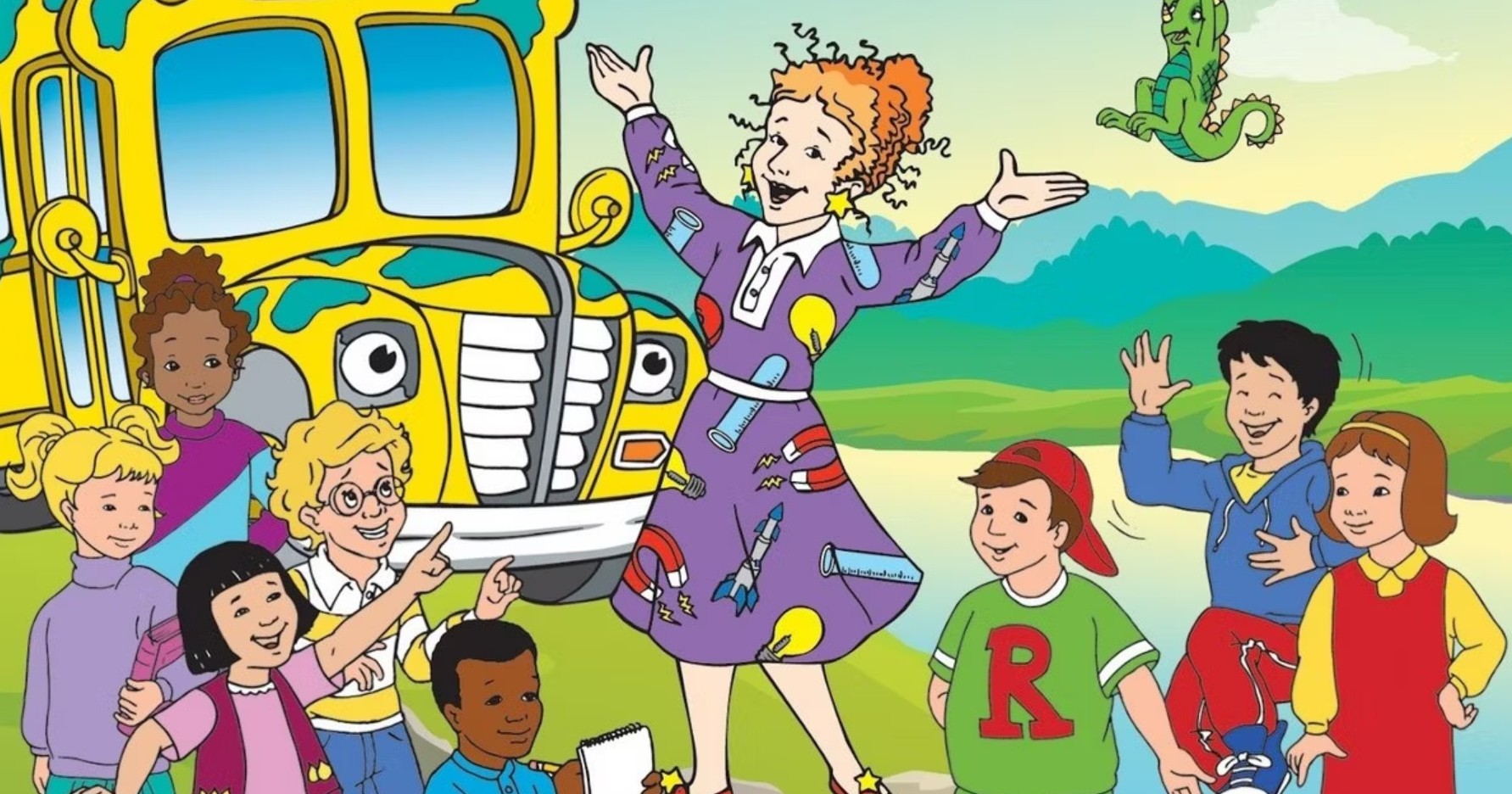
- PBS years: 1994–1997 for the original run, followed by rerun familiarity.
- Era: 1990s original associated with 2000s reruns.
- Learning focus: biology, earth science, physics, and inquiry.
17. WordGirl
WordGirl made vocabulary part of superhero comedy. Becky Botsford defeated villains by understanding what words meant and applying them at the right moment, which gave the definitions a reason to stick.
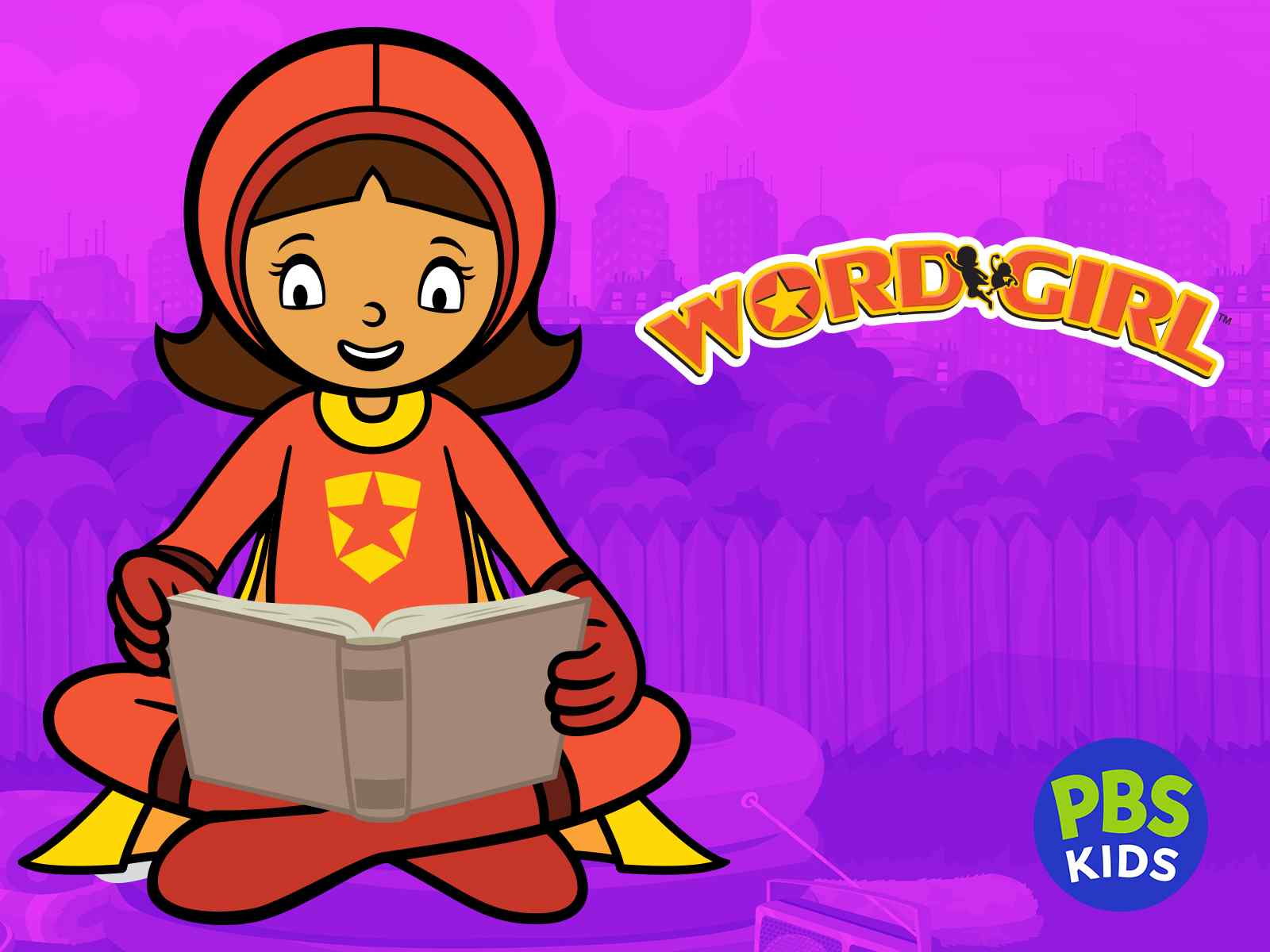
- PBS years: 2007–2015.
- Era: late-2000s original.
- Learning focus: vocabulary, context clues, and verbal reasoning.
When Each Show Aired on PBS Kids
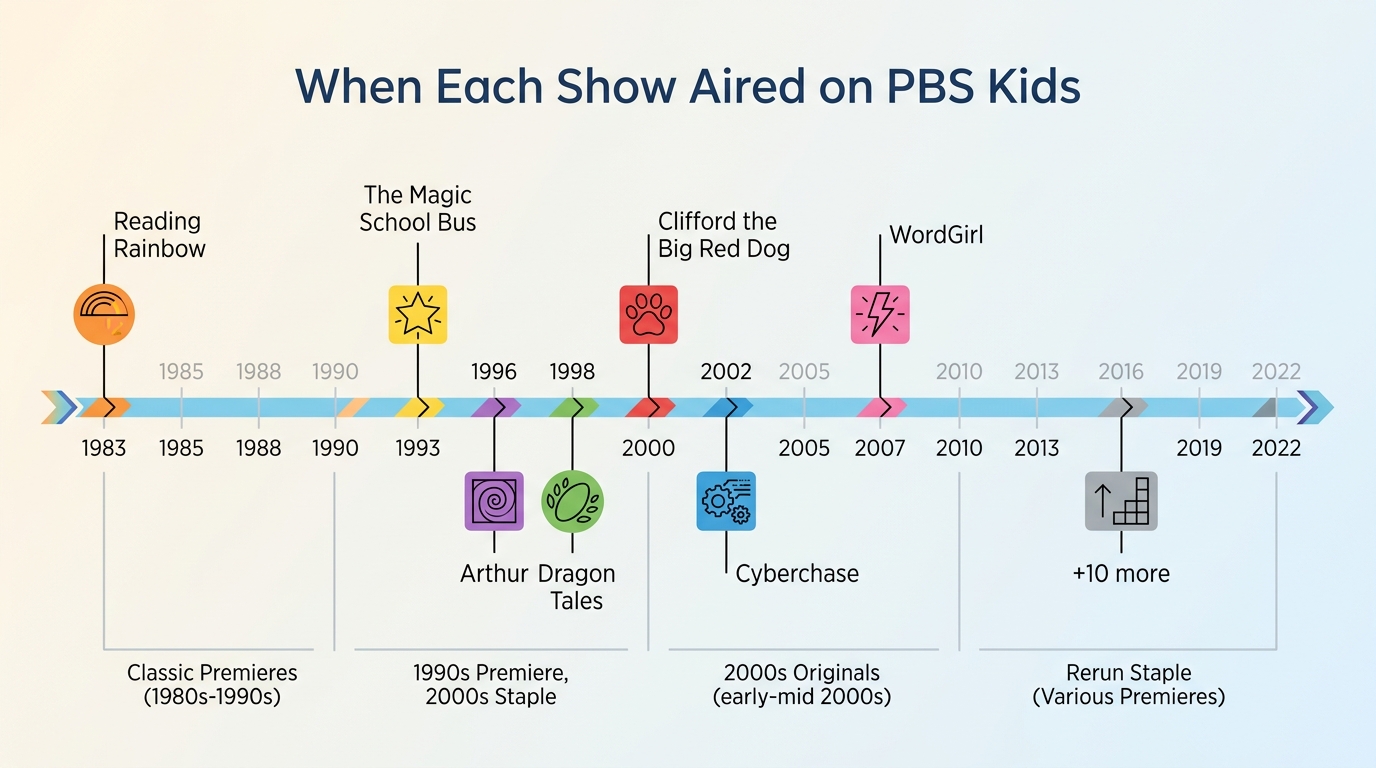
The PBS show air dates below separate 2000s premieres from older favorites. That distinction makes the list useful for readers comparing PBS originals and reruns instead of treating every remembered title as a new series from the same decade.
| Show | PBS years | Era status | Learning focus | Official availability |
|---|---|---|---|---|
| 1. Arthur 2. Clifford the Big Red Dog 3. Cyberchase | 1. 1996–2022 2. 2000–2003 3. 2002–present | 1. 1990s; 2000s staple 2. 2000s original 3. 2000s original | 1. Social-emotional skills 2. Responsibility 3. Math and logic | 1. Selected PBS KIDS pages 2. Selected PBS KIDS pages 3. PBS KIDS |
| 4. Between the Lions 5. Curious George 6. Dragon Tales | 4. 2000–2010 5. 2006–present 6. 1999–2005 | 4. 2000s original 5. 2000s original 6. 1990s; 2000s staple | 4. Reading 5. Science and math 6. Emotional skills | 4. Former program 5. PBS KIDS 6. Former program |
| 7. Zoom 8. Zoboomafoo 9. Fetch! with Ruff Ruffman | 7. 1999–2005 8. 1999–2001 9. 2006–2010 | 7. 1990s revival; 2000s staple 8. 1990s; 2000s staple 9. 2000s original | 7. Hands-on learning 8. Animals and habitats 9. Science and teamwork | 7. Former program 8. Selected PBS pages 9. Former program |
| 10. Martha Speaks 11. Maya & Miguel 12. Sagwa | 10. 2008–2014 11. 2004–2007 12. 2001–2002 | 10. 2000s original 11. 2000s original 12. 2000s original | 10. Vocabulary 11. Culture and language 12. Culture and ethics | 10. Selected PBS KIDS pages 11. Former program 12. Former program |
| 13. Postcards from Buster 14. Reading Rainbow 15. The Berenstain Bears | 13. 2004–2008 14. 1983–2006 15. 2003–2004 | 13. 2000s original 14. Older original; 2000s run 15. 2000s original | 13. Geography and culture 14. Reading motivation 15. Social behavior | 13. Former program 14. Former PBS program 15. Former program |
| 16. The Magic School Bus 17. WordGirl | 16. 1994–1997 17. 2007–2015 | 16. 1990s original; rerun memory 17. 2000s original | 16. Science 17. Vocabulary | 16. Former PBS run 17. Selected PBS KIDS pages |
Availability reflects official PBS and PBS KIDS listings as of August 2026. “Former program” means the series is not part of the current core listing, not that every authorized episode has disappeared from every official outlet.
Where to Watch Classic PBS Kids Shows
If you want to watch classic PBS shows, begin with PBS and PBS KIDS. Availability varies by title, episode, location, and current licensing, so an old favorite may have a show page, selected clips, full episodes, or no active listing.
Start With Official PBS Options
Search the PBS KIDS video catalog, PBS.org, and the page for the specific series before looking elsewhere. Current shows usually have the clearest path; discontinued PBS Kids shows often have a smaller selection or an archived program page.
This official-first route is the right fit for viewers who want free streaming and do not need a separate local file. It also avoids assuming that a title's past PBS run means full episodes are currently available.
A Desktop Option for Authorized Viewing: StreamFab Video Downloader
- Best fit: viewers who already have authorized access and need local MP4 or MKV files, batch queues, or selectable tracks.
- Not ideal for: anyone who wants free official streaming or needs a single episode that PBS already offers directly.
For personal offline viewing of content you're authorized to access, where permitted by platform terms and applicable law, a desktop workflow can help when an official source does not provide the file controls you need.

Runs on Windows and Mac and can save supported sources as MP4 or MKV, add individual episodes or batches to a queue, and retain available audio or subtitle selections. The practical advantage is file control, not a promise that every PBS page or provider is supported. Start with the official catalog, then use the desktop route only when the source is supported and the viewing rights are clear.
Saving an Authorized Local Copy
Use a supported service and a title you are authorized to access. Choose the available audio, subtitles, and MP4 or MKV output, then add one episode or a batch to the queue. Source support and available tracks depend on the service.
Batch scheduling, in my experience, is when I queue up an entire season overnight.
Choose your streaming service
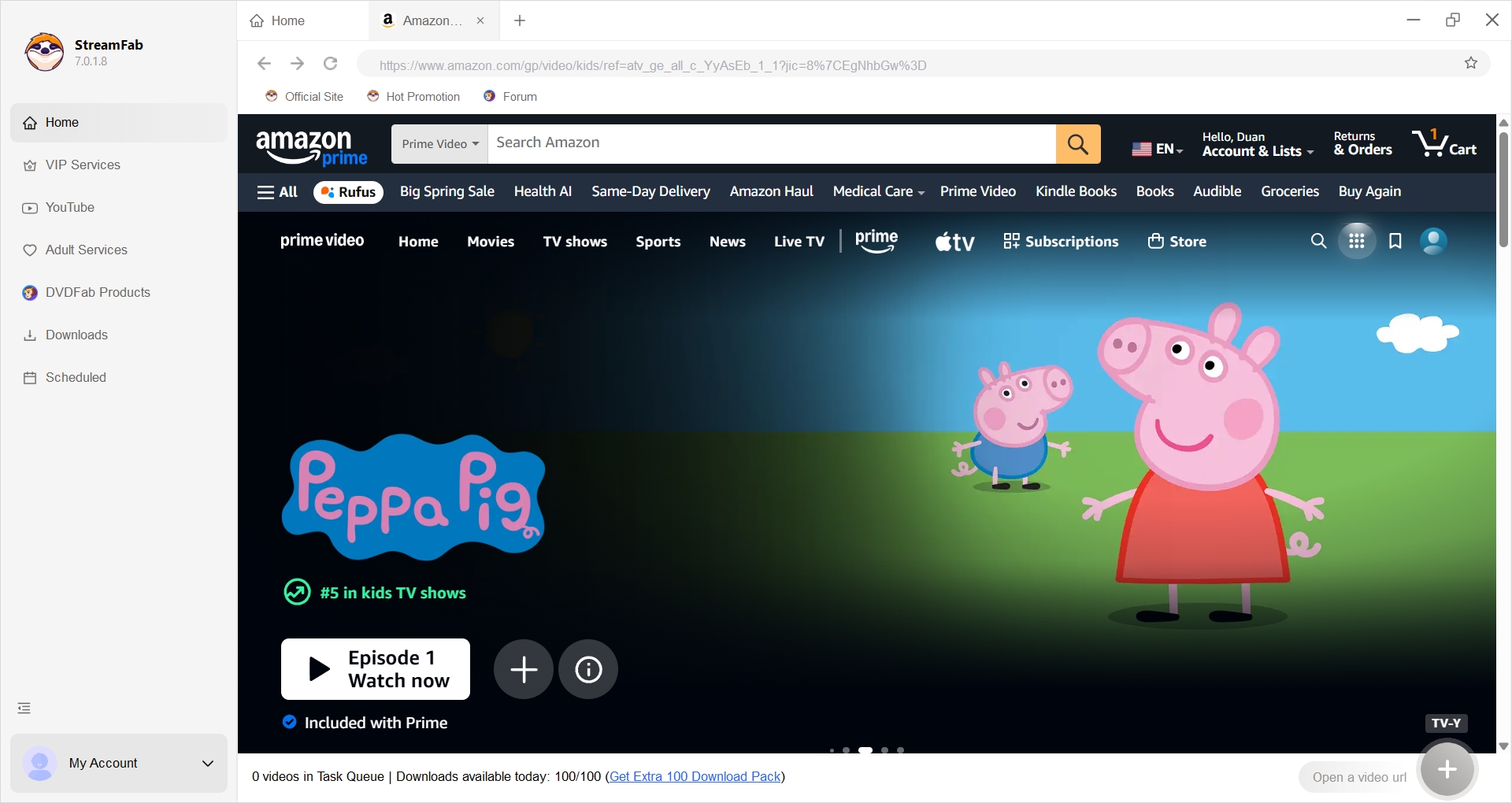
Choose Amazon Prime Video and find the "PBS KIDS" channel, or visit the official PBS website. You can also simply copy and paste the PBS video URL into the top search bar.
Customize your video settings
When you play the video, StreamFab will analyze it automatically. A pop-up window will then prompt you to select your preferred video options, including audio format and subtitle language.
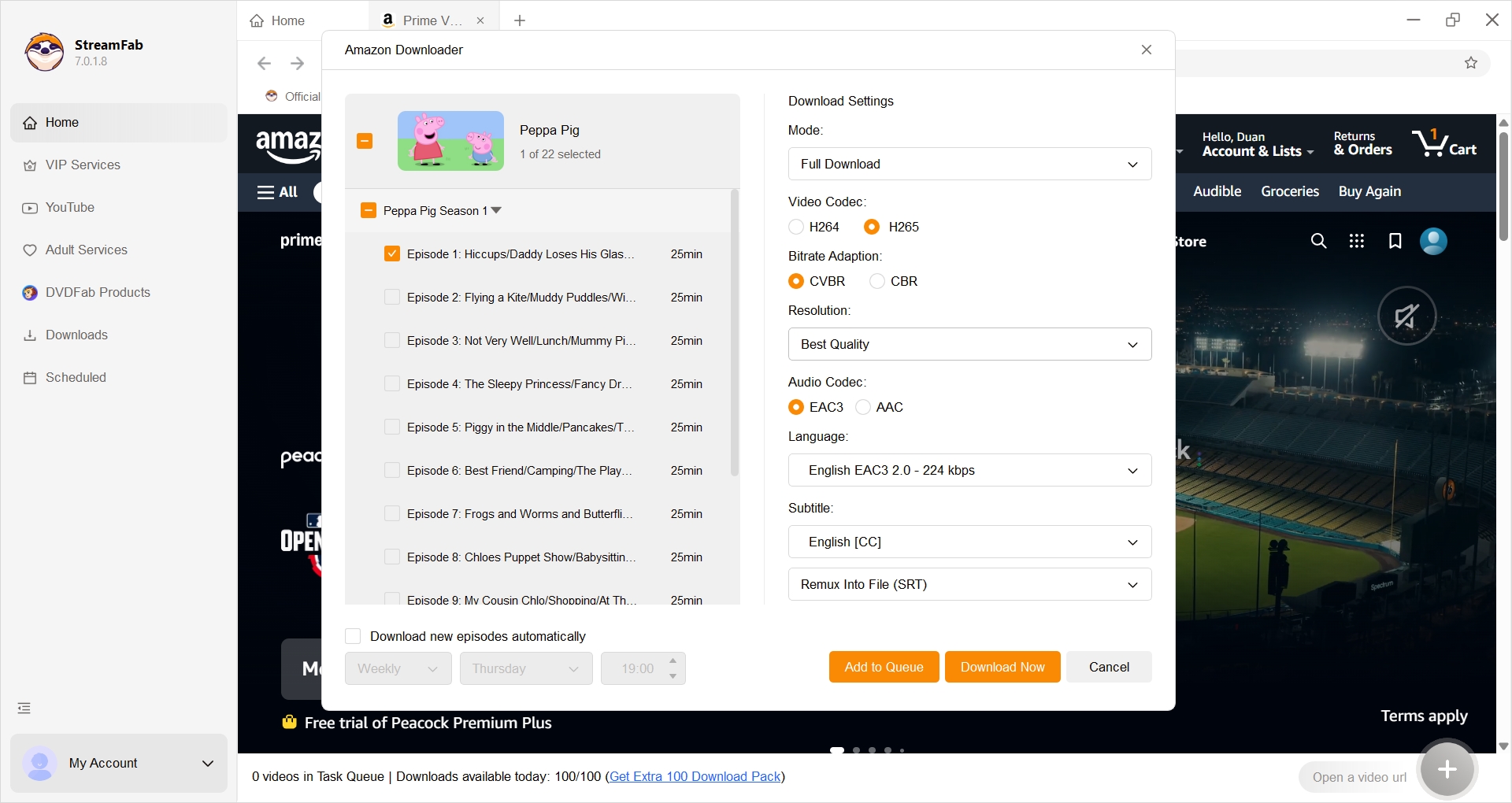
Start downloading
After customizing your preferences, you can download the video immediately or add it to your download queue for later.
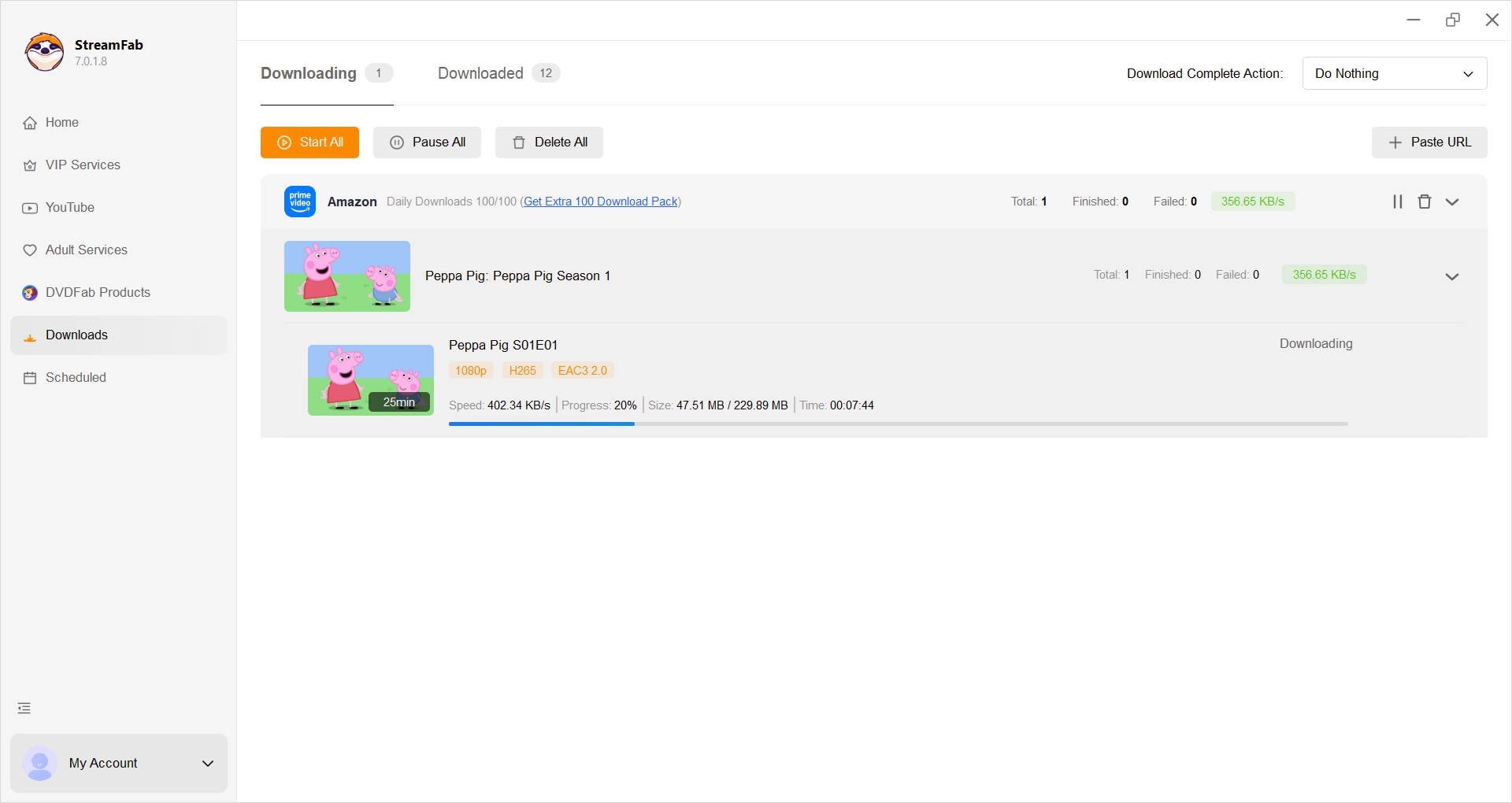
Frequently Asked Questions
Which PBS Kids shows from the 2000s were discontinued?
Between the Lions, Dragon Tales, Zoom, Fetch! with Ruff Ruffman, Maya & Miguel, Sagwa, Postcards from Buster, and several others are former programs. That status describes the current PBS schedule or catalog; it does not prove that every episode is unavailable through all authorized outlets.
Was The Magic School Bus a 2000s PBS Kids show?
Not by premiere date. The Magic School Bus began in the 1990s, but reruns kept it familiar to viewers who grew up with PBS in the 2000s. It belongs here as an older rerun memory, not as a 2000s original.
Which PBS Kids shows were airing around 2009?
Arthur, Curious George, Fetch! with Ruff Ruffman, WordGirl, Martha Speaks, Cyberchase, and Between the Lions were among the recognizable titles around 2009. The mix shows why that year's lineup included both established series and newer 2000s originals.
Can I still watch old PBS Kids shows through legal sources?
Yes, selected titles remain available through PBS, PBS KIDS, or other authorized services, but the catalog varies. Start with official access. Any local-copy workflow should be limited to personal offline viewing of content you are authorized to access, where platform terms and applicable law permit it.
Conclusion: The Shows Worth Revisiting First
For an era-accurate starter list, begin with Arthur, Cyberchase, Between the Lions, Curious George, and WordGirl. Together they capture the decade's mix of social learning, reading, math, science, and vocabulary without pretending every remembered show premiered after 2000.
My next picks would be Fetch! for the PBS Kids Go era and Postcards from Buster for the way it extended Arthur's world through real communities. Availability is uneven, so the sensible order is official PBS access first, followed by a qualified desktop option when authorized content needs local file controls.


Yes, you can directly download Amazon Prime video on Mac through the official macOS app (subject to a strict 30-day limit) or utilize third-party downloders to export permanent local MP4 files. Explore my 2026 technical tests to avoid blackout restrictions.
By Erika Leen - Aug 26, 2026

Amazon Prime Video Channels like Starz, AMC+, and Acorn TV offer extra shows beyond standard Prime. But their downloads face time and device limits. This guide explains the key difference between Prime vs Channels and shows how to safely download Channel videos.
By Erika Leen - Aug 25, 2026
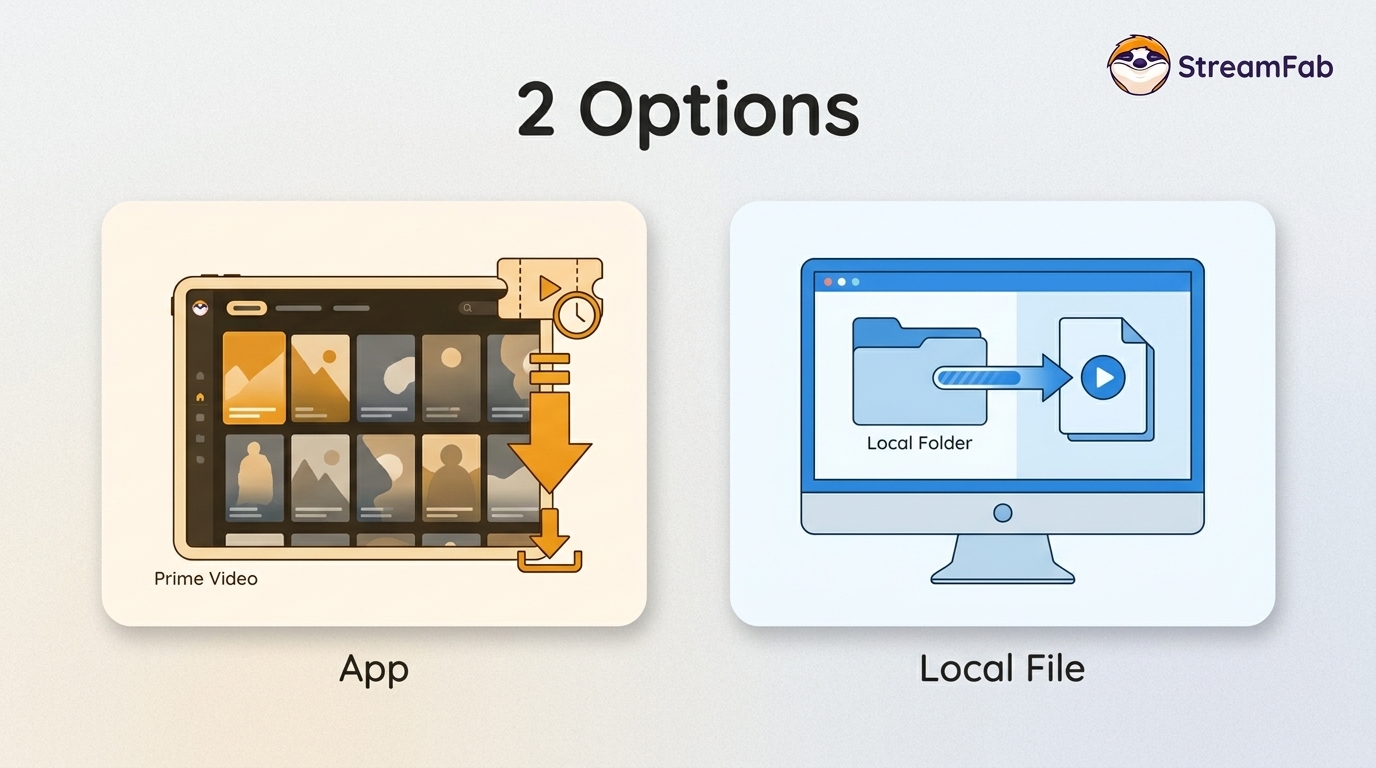
You can download eligible rented Amazon movies and purchased titles through the Prime Video app, but rentals have limited viewing Windows and app-managed storage. This guide explains the official route first, then a desktop local-file workflow for authorized viewing when format, audio, or playback flexibility matters.
By Nicole Lopez - Aug 11, 2026
Discover how to watch 4K movies on Amazon Prime Video, and understand the difference between 4K streaming and offline downloads. This guide also explains why Amazon downloads are generally limited to 1080p and how to save eligible videos with customizable audio, subtitles, codecs, and output formats for personal offline viewing.
By Jacob Harrison - Aug 5, 2026