
Fix ClipGrab Not Working 2026: 'Cannot Retrieve Video' & Mac Errors

Summary: If you landed here searching for why ClipGrab is not working, you're probably staring at one of three things: a "no downloadable video could be found" message, a "could not retrieve video" error, or a Mac build that freezes on launch. I hit the same wall last week while archiving a batch of authorized clips, and I want to save you the hours I spent chasing the wrong root cause.
Before anything else, one ground rule for this whole guide: only download content you're authorized to access, and follow each platform's terms of service and applicable law. ClipGrab itself is still actively maintained — the current builds are Windows 3.9.15, macOS 4.0.0-beta1, and Linux 3.9.14 — so when clipgrab not working 2026 shows up in a search, the fix is almost always a version, proxy, dependency, or output-path issue rather than the tool being dead.
Below I'll walk through the fixes in the order I actually try them, from least invasive to last resort.
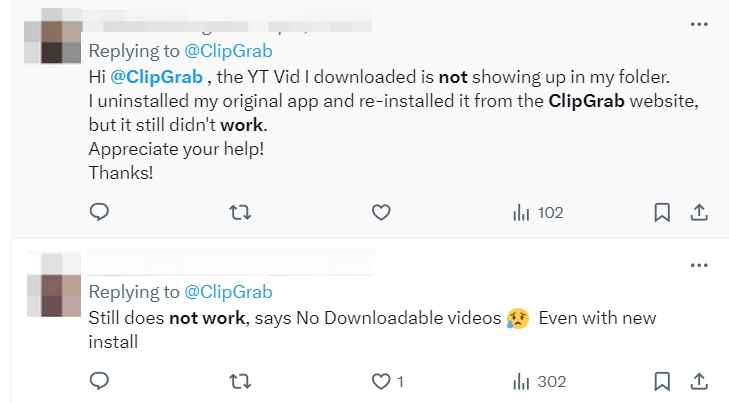
2026 ClipGrab Failures: Core Reasons
When ClipGrab misbehaves in 2026, it's rarely one big DRM story — it's usually one of six ordinary things stacked on top of each other. My rule of thumb: work down this list from cheapest to most invasive, and stop as soon as downloads come back. Don't reinstall before you've checked a setting.
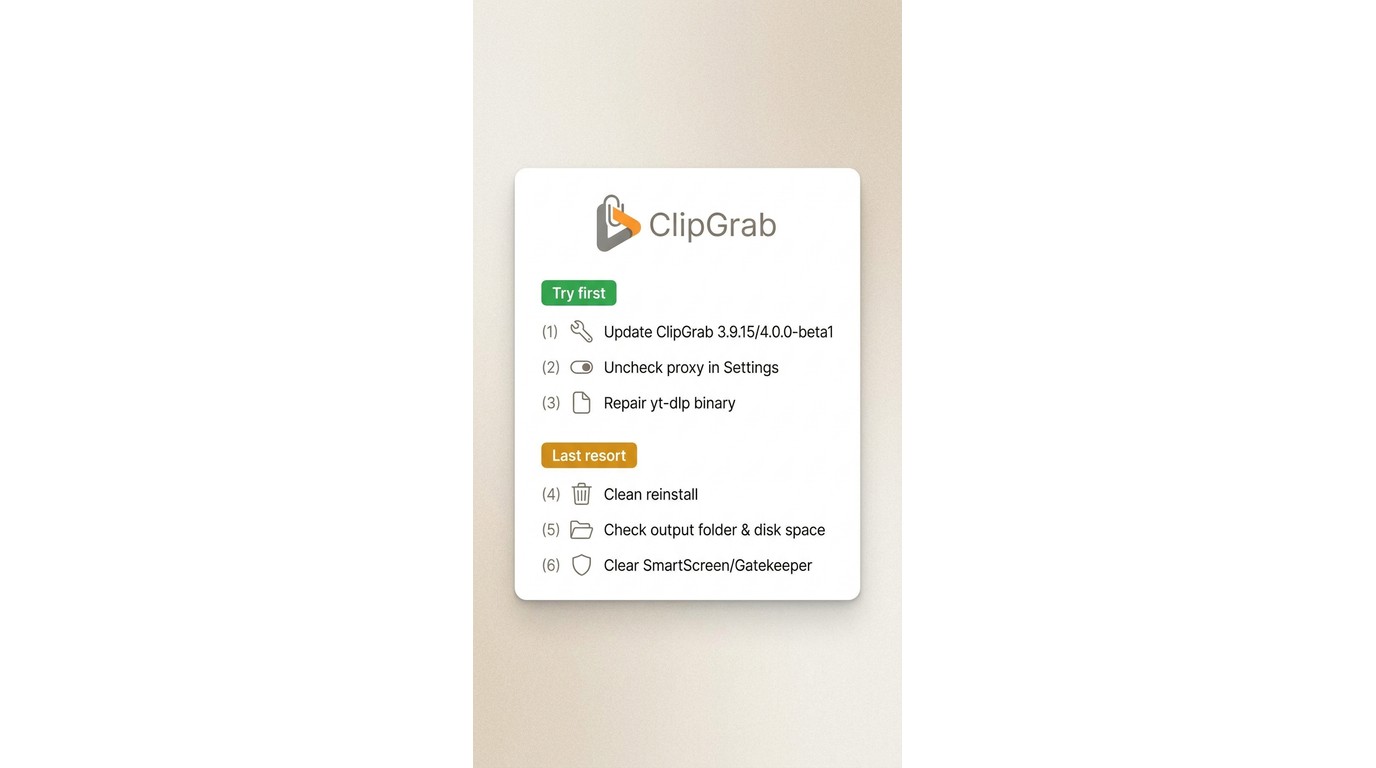
- Update to the current official build (Win 3.9.15 / macOS 4.0.0-beta1 / Linux 3.9.14) from clipgrab.org.
- Open Settings and confirm "Use a proxy server" is unchecked unless you actually run one.
- Repair the yt-dlp dependency if the app can't fetch it or left a zero-byte file.
- Do a clean reinstall and clear leftover app data only after the three steps above fail.
- Check the output folder, write permissions, and free disk space.
- Clear the OS-security prompt (Windows SmartScreen / macOS Gatekeeper) that's blocking launch.
Nine times out of ten, steps 1–3 are enough. Reach for the alternative in the second half of this guide only if steps 4–6 also come up empty, or if a site you rely on simply isn't supported anymore.
- Confirm your connection is stable and can reach clipgrab.org and github.com — ClipGrab fetches its yt-dlp helper from GitHub at runtime.
- Install the current official build from clipgrab.org (Windows 3.9.15, macOS 4.0.0-beta1, Linux 3.9.14 as of July 2026); an outdated version is the single most common cause.
- If a fresh install still misbehaves, quit the app, remove leftover app data, then reinstall from the official download.
Resolving "No Downloadable Video Found"
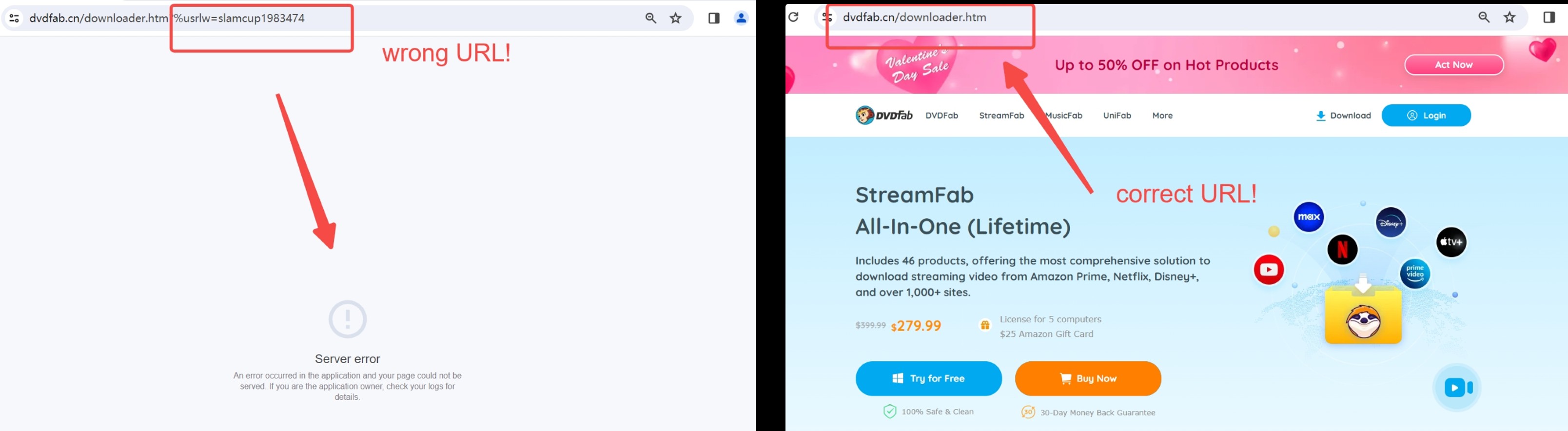
"No downloadable video could be found" looks scary, but the most common cause is embarrassingly simple: a proxy checkbox left on inside ClipGrab.
Open Settings and make sure "Use a proxy server" is unchecked unless you actually have a working proxy configured. On my machine, that single toggle was the whole fix.
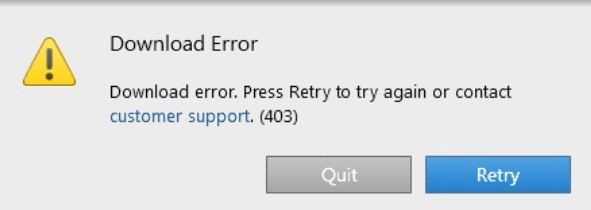
If the proxy setting is already off, work through this short sequence before you assume the site itself is blocking you: update ClipGrab to the current official build, paste a clean URL (strip tracking parameters after the &), and retry.
If a 403 Forbidden still comes back on every site, that points to regional restrictions or a temporary parser mismatch for that specific platform — not proof that clipgrab not working with YouTube is permanent.
Fixing "Could Not Retrieve Video Link"
ClipGrab relies on a yt-dlp helper that it tries to fetch at runtime. When you see "could not retrieve video link" — especially alongside a "Host Github.com not found" message, or when a download finishes in a second with nothing to show — that helper is usually missing or has been written to disk as a zero-byte file. This is a repair job, not a reason to give up on the app.
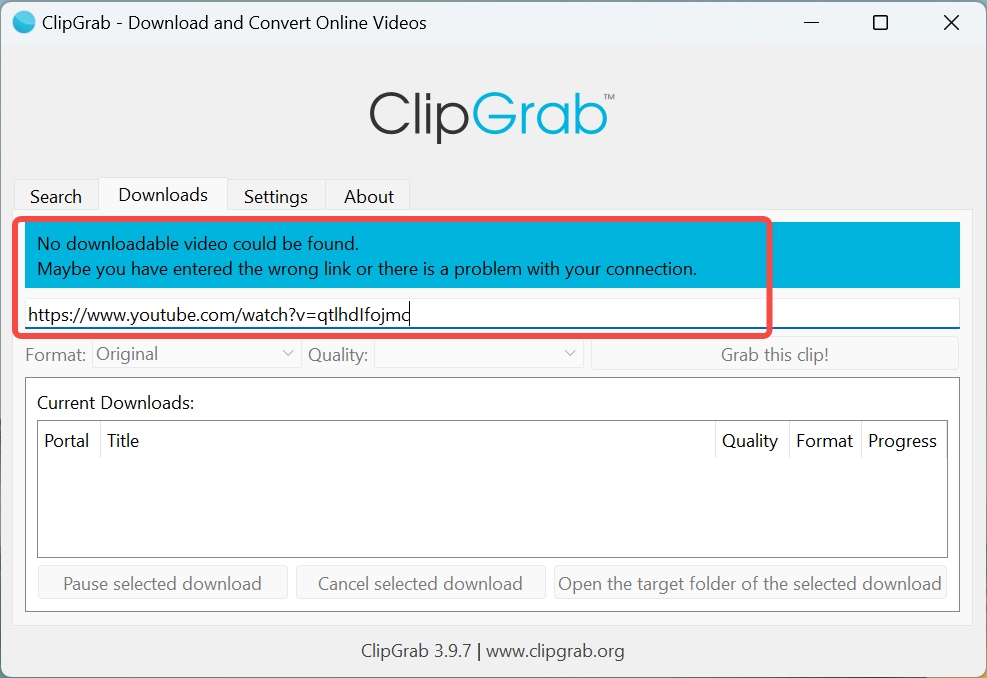
Here's the sequence I use, in order:
- Quit ClipGrab.
- Locate ClipGrab's app data folder and find the
yt-dlpbinary. If it's 0 bytes or missing, that's your culprit. - Download a current
yt-dlpbuild from its official releases page and drop it into that same folder, matching the expected filename. - Confirm your network can reach GitHub (many corporate or region-restricted networks can't) — that's often why the auto-fetch fails in the first place.
- Relaunch ClipGrab and retry.
Keep a copy of the previous binary before you swap, in case a newer yt-dlp release regresses on a site you care about. This is one reliable fix among several — a plain update or clean reinstall solves the same symptom for some users.
Finished but No File or No Audio: Output Fixes
Sometimes ClipGrab itself looks fine — the progress bar reaches "Finished" — but nothing usable lands on disk. These are output-side problems, not parser problems, and they need a different checklist.
- Instant "Finished" with no saved file. Confirm the output folder actually exists and that ClipGrab has write permission; check free disk space; then confirm the source site is still on ClipGrab's supported list. If all three are fine, this usually points back to the yt-dlp helper — repair it using the steps in the previous section.
- File saved somewhere unexpected. Open ClipGrab's settings and set an explicit download directory instead of relying on the default; on macOS in particular, permissions can silently redirect the write target.
- MP4 downloads with video but no audio (common on recent macOS). This is a stream-merge issue in the helper, not a format limit — ClipGrab does support audio-only extraction. Replace the yt-dlp binary with a current build, then re-download the clip; if audio is still missing, try a different output format.
My rule: if the app finishes cleanly but the file is wrong, look at output settings and the yt-dlp helper first. If the app errors out before finishing, look at version and proxy first.
Mac OS Fix: Stuck on Starting
On a Mac — especially Apple Silicon — "clipgrab not working on mac" usually means the app never gets past its launch screen. The current macOS build is 4.0.0-beta1, and the freeze is almost always macOS Gatekeeper refusing an unsigned launch rather than anything wrong with your download. Handle it in this order:
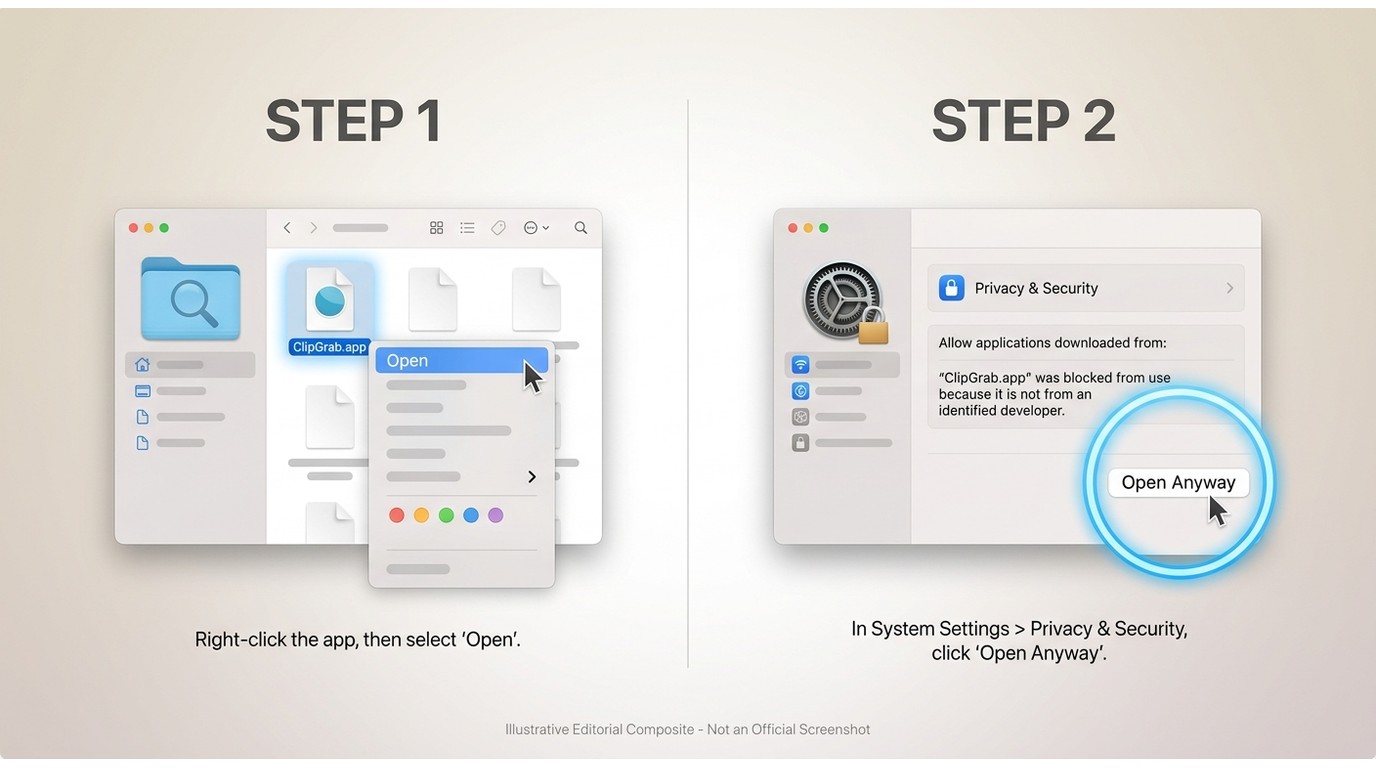
- Clear the ClipGrab Gatekeeper prompt. In Finder, right-click the ClipGrab app and choose Open, then confirm. If that still refuses, open System Settings → Privacy & Security, scroll to the blocked-app notice for ClipGrab, and click Open Anyway.
- Reset stale app data. Quit ClipGrab, then remove the
de.clipgrab.ClipGrabfolder under~/Library/Caches/to clear leftover state from an earlier crash. Relaunch. - Grant permissions deliberately, not broadly. If ClipGrab prompts for access to a folder you download into, allow it in Privacy & Security. Only widen permissions further if that specific folder isn't enough — treat each grant as a permission you're knowingly giving, not a workaround.
- Clean reinstall. If it still won't launch, uninstall, redownload the current build from clipgrab.org, and repeat step 1.
If you replace the bundled yt-dlp binary on a Mac, remember to run chmod +x on the new file in Terminal before launching ClipGrab. Without the execute bit set, macOS will refuse to run the helper and downloads will silently time out with no obvious error.
Use Stable Alternative: StreamFab Video Downloader
Here's my honest threshold for switching tools: if the version update, proxy toggle, yt-dlp repair, and output-path check all fail across more than one site — or the site you need simply isn't on ClipGrab's supported list — that's when it's worth trying a different desktop app instead of chasing dependencies. Just remember the same ground rule: only save content you're authorized to access, and check the platform's terms and your local law before you archive anything.
StreamFab Video Downloader (part of the StreamFab All-In-One suite; you can also install it as a standalone module) is one practical option in that scenario, and a common landing spot for people browsing broader ClipGrab alternatives. It focuses on higher-quality output and playlist/subtitle handling — two areas where ClipGrab is deliberately simpler.
- 100% safe and clean, checked and verified by over 80M users.
- Grab ad-free downloads from anywhere in the world, without a time limit.
- Download as many videos as you want at up to 8K resolution with crisp EAC3 5.1 or AAC 2.0 audio.
- Easily save YouTube HDR and VR 360° videos.
- Try it for free and unlock the downloaders for Netflix, Disney+, and Amazon.
Compare: StreamFab vs ClipGrab
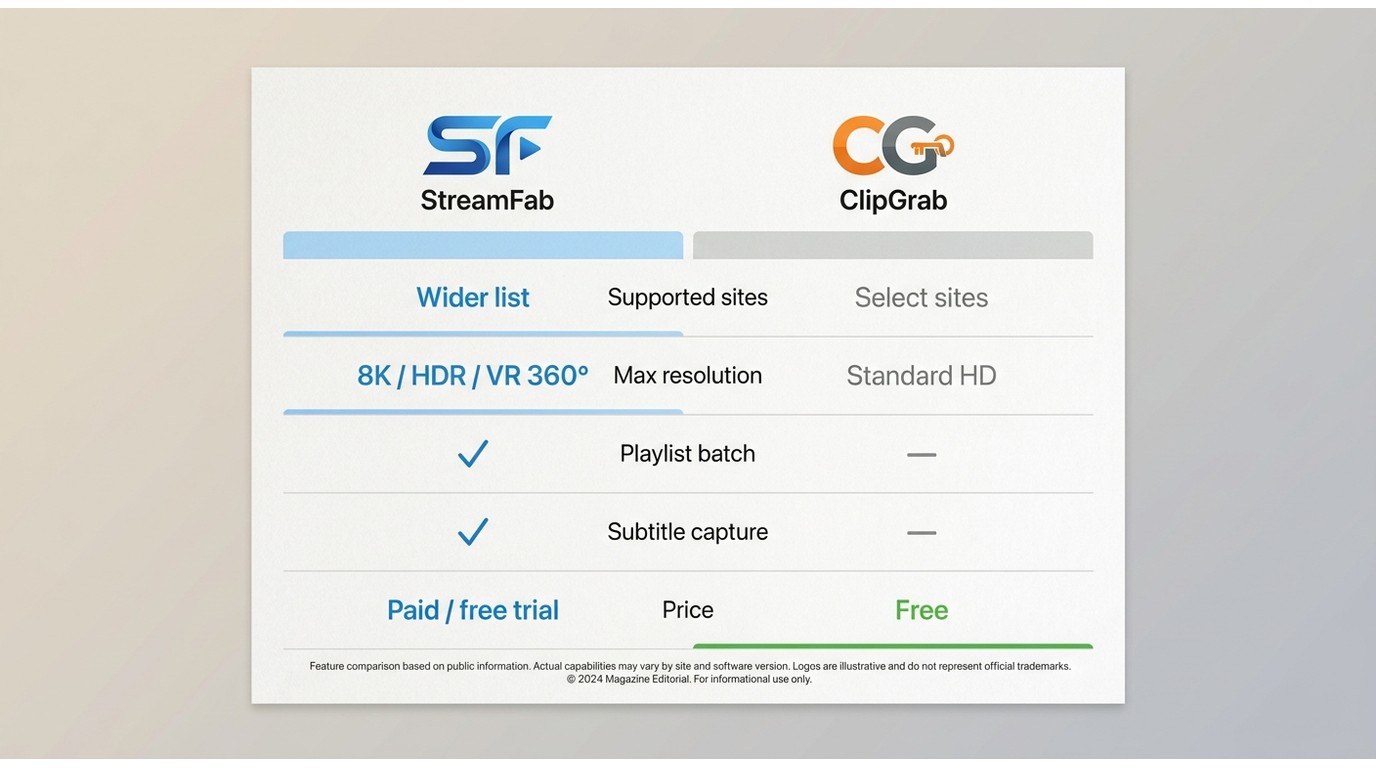
ClipGrab is active, free, and a solid pick for quick single-video grabs from the sites it supports. StreamFab covers a wider list, higher output ceilings, and playlist/subtitle workflows. The table below sticks to the practical differences — treat any spec or price as "check the official site to confirm," since both apps ship updates on their own cadence.
| StreamFab | ClipGrab | |
|---|---|---|
| Supported sites | 1000+ sites across mainstream video and social platforms | YouTube, Vimeo, Dailymotion and a handful of similar sites |
| Max output quality | Up to 8K on supported sources | Up to 1080p |
| Output formats | MP4 / MKV / MP3 | MP4 / WMV / OGG / MP3 |
| Playlist download | Yes | No |
| Subtitles | Yes | No |
| Price / free tier | Free trial available, paid plans — see official site | Free to download and use |
Operation Steps
Best for: users who need higher-resolution output, playlist batches, subtitle capture, or a wider list of supported sites.
Not ideal for: users who just want a lightweight free grab of the occasional YouTube clip — ClipGrab is already fine for that.
If you've hit the switching threshold above, here's the basic flow with StreamFab.
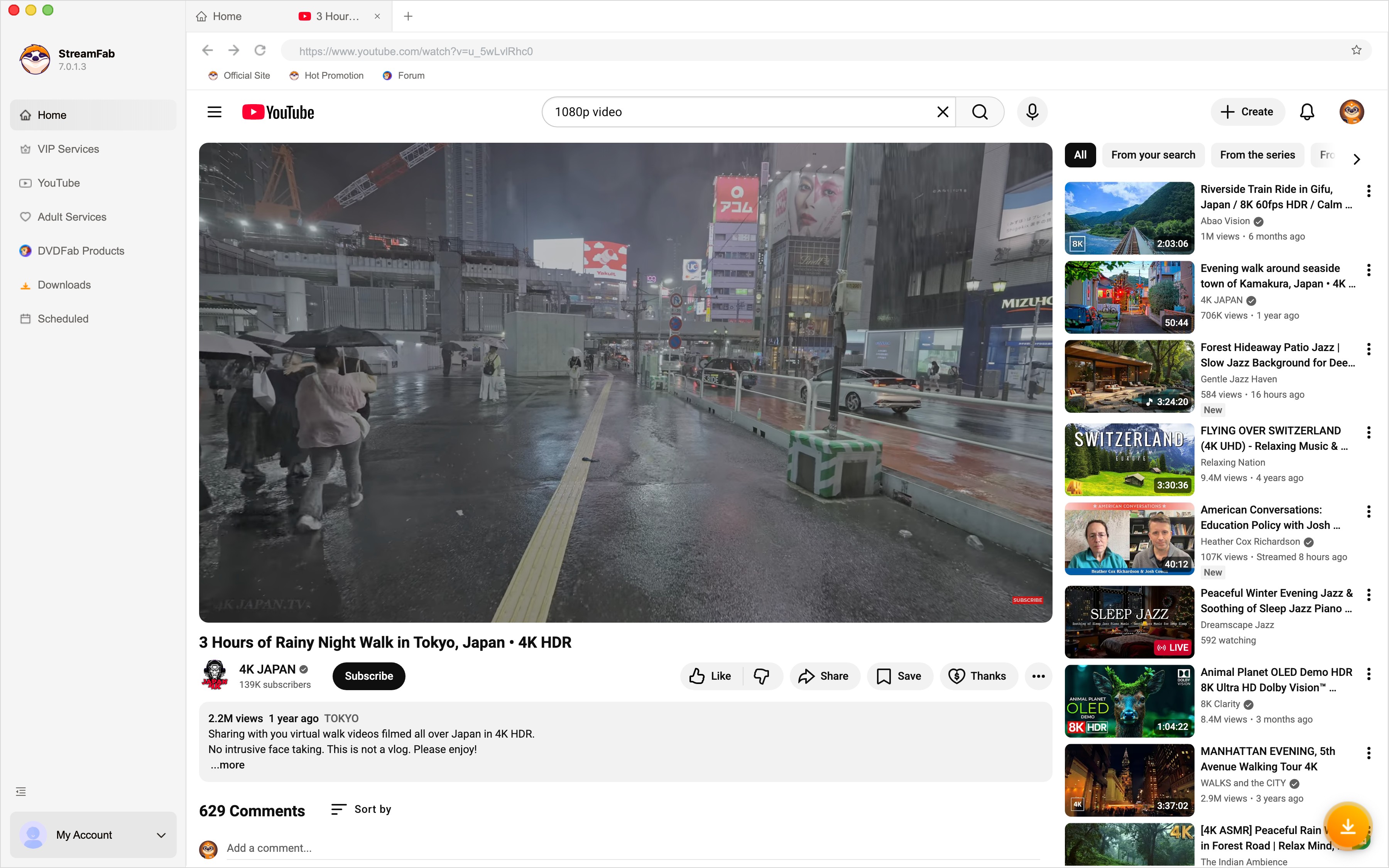
Choose the streaming service
Pick the streaming site from the menu on the left, or just copy and paste the video URL straight into StreamFab.
Customize the file
Once you hit play, a little window will pop up with your video settings. From there, you can pick your quality—it depends on the original video, but you can sometimes bump it all the way up to 8k.
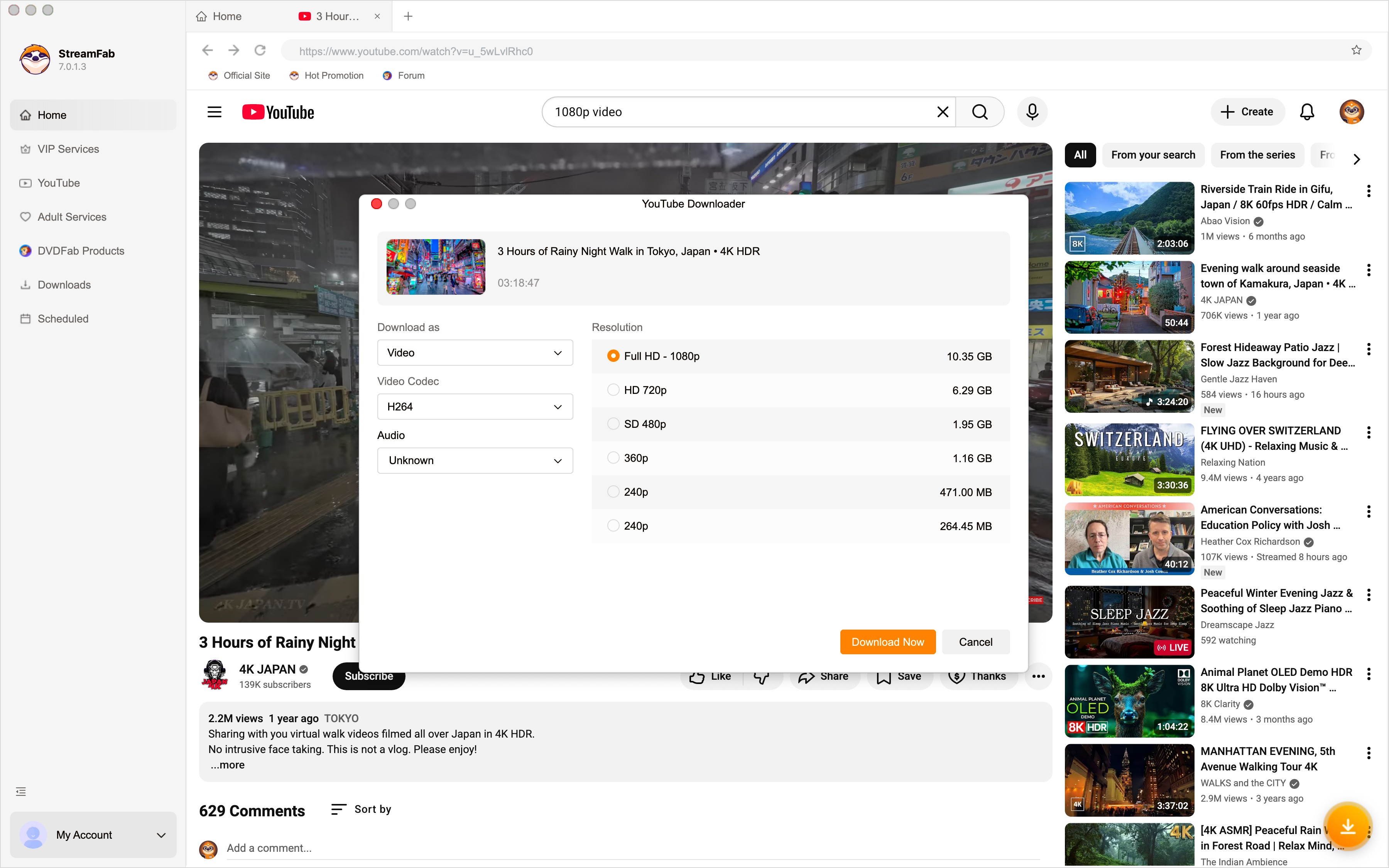
Click the download button
After you get the settings how you like them, you can start downloading it right then, or just throw it into your queue for later.
FAQ
Yes, but it's site- and version-specific. A given build may handle YouTube cleanly while failing on another platform, and the reverse also happens after a helper update. Before assuming it's broken, install the current official ClipGrab build, uncheck any leftover proxy setting, and repair the yt-dlp file inside its app data folder. Only download videos you have the right to save. Only download the installer from clipgrab.org. Windows SmartScreen or Smart App Control, and some antivirus tools, may show a PUP or unknown-publisher warning on the ClipGrab installer — that's a signing-related prompt, not automatically proof of malware. Verify you're on the official domain and the installer's hash before proceeding, rather than blanket-disabling protection. If you want a second opinion on the app itself, this ClipGrab review covers the trade-offs in more detail. Yes. ClipGrab supports audio-only extraction to formats such as MP3 and OGG. If a download finishes instantly with no file, or an MP4 comes back with no audio track, treat that as an output or yt-dlp dependency issue — not a format limit — and follow the output-fix steps above.Does ClipGrab still work with YouTube in 2026?
Is ClipGrab safe to download, or will Windows flag it?
Can ClipGrab download audio only?
Conclusion
Working through this in order — update the build, check the proxy toggle, repair yt-dlp, then look at output settings and OS-security prompts — brings ClipGrab back for most people on most sites. It's still an actively maintained free tool, and for occasional single-video grabs there's no reason to change what already works.
My verdict: only escalate to a different desktop app like StreamFab Video Downloader once those fixes stop holding across multiple sites, or once you specifically need higher-quality output, playlist batches, or subtitles — and always within what the source platform's terms and your local law allow.

Videoder now refers to multiple packages, so identity comes before any safety verdict. This guide checks the publisher, package ID, version, permissions, source, and update signals, then explains current feature limits and compares desktop, browser, Android, and authorized paid-streaming alternatives. It also clarifies why older YouTube instructions should not be treated as current.
By Nicole Lopez - Sep 4, 2026
Audials One does not offer a native macOS desktop release. This guide separates the Intel Windows-VM route from Apple Silicon limits, explains why Audials Play is for radio and podcasts, and maps native Mac choices for streaming video, ordinary screen capture, and MP4/MKV offline files. It also gives a restrained StreamFab fit judgment for authorized personal viewing.
By Erika Leen - Sep 3, 2026
As a Mac user with a need to download online videos, I explored Videoduke, and shared my reviews and opinions about this software in this article.
By Nicole Lopez - Sep 3, 2026
This guide maps eight VideoProc alternatives to the job they are meant to replace, from local conversion and AI enhancement to editing, recording, and authorized service-aware downloads. It also covers HandBrake, FFmpeg, and Video2X, explains restoration limits, and provides a compact workflow matrix and FAQ for choosing a practical fit.
By Marcia Hatcher - Sep 3, 2026