
Tunelf Netflix Downloader Review 2026: Claims, Checks, and Limits

Summary: Tunelf Netflix Video Downloader advertises a Windows and Mac route to MP4 and MKV files, but its quality claims need file-level verification. For travel or unreliable internet, Netflix’s official download list does not include Windows PCs. My conclusion: inspect a saved file, not a product-page badge.
Table of Contents
This Tunelf Netflix Downloader review covers the advertised workflow, the evidence worth collecting from a real download, reported reliability concerns, and a desktop alternative. For content you’re authorized to access, where permitted by platform terms and applicable law, use local copies for personal offline viewing.
2026 Tunelf Netflix Downloader Review: Claims and Workflow
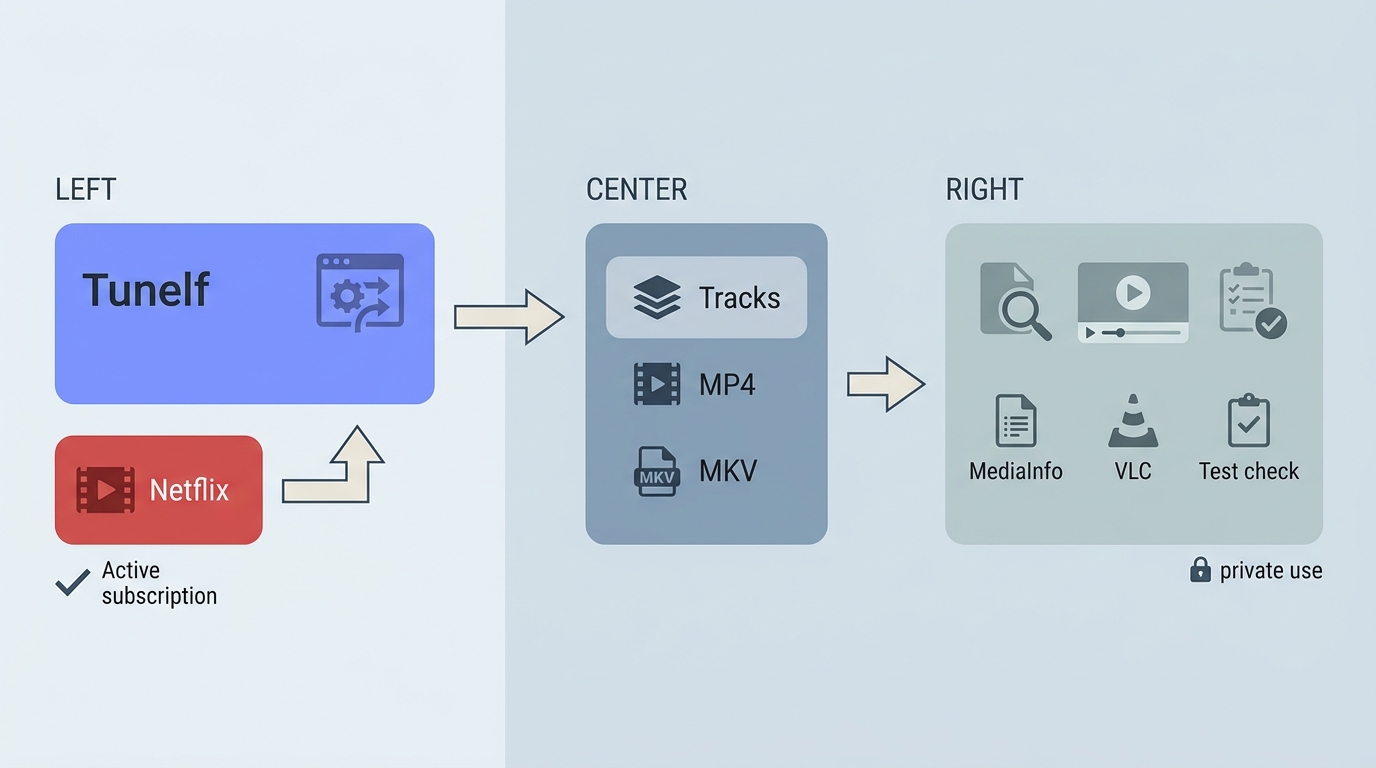
Tunelf currently presents its Netflix Video Downloader for Windows and Mac, with MP4/MKV output, selectable tracks, batch downloading, and built-in playback listed as product features. It also promotes a trial, although Tunelf's trial limitations, including the exact allowance and whether a trial result reflects every paid-use scenario, are not established in this review.
What to confirm before using it: Start with an active Netflix subscription and authorized access. Netflix’s official download help lists Android phones and tablets, iPhone and iPad, Amazon Fire tablets, and Google Chromebooks, not Windows PCs. Desktop availability and supported titles may change.
Tunelf Features and Trial Limits
Tunelf’s advertised MP4/MKV output may help with playback on other devices, but the meaningful proof is the saved file itself: its container, resolution, codec, audio tracks, subtitle behavior, and whether it plays in your intended player. That is the evidence I would prioritize before committing to a purchase.
The Tunelf Workflow and Test Setup
The advertised workflow is straightforward:
- Install the desktop app.
- Sign in with authorized Netflix access.
- Search for a title or paste its URL.
- Select available video, audio, and subtitle options.
- Download the item.
- Inspect the saved file in your intended player and a media inspector.
For a reproducible check, record the app version, computer model, operating system, network speed, title, selected tracks, elapsed time, file size, and metadata.
Tunelf Audio Converter Background
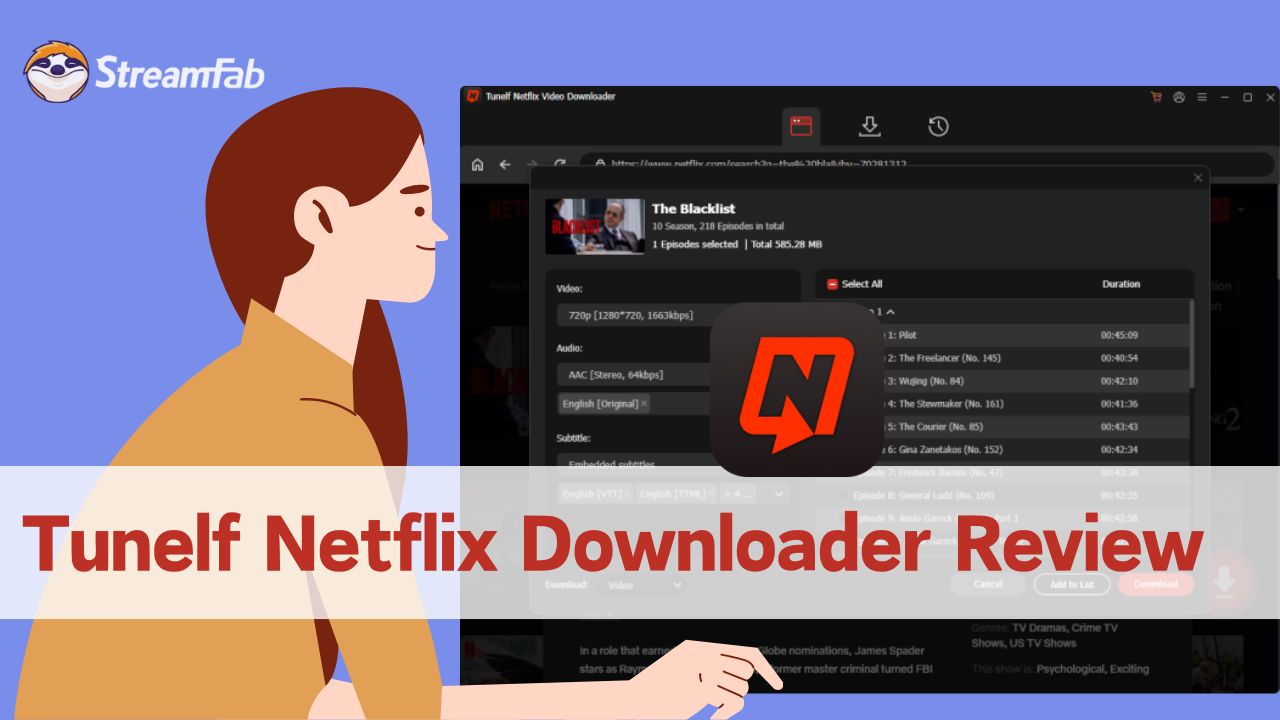
Tunelf is also known for audio-focused products, but that background does not establish how its Netflix product handles video or what quality a specific title will produce. Treat product history as context, not evidence of a video workflow.
For a Netflix download, the useful questions are practical: Did the file finish, which tracks were saved, what does the metadata report, and does it play where you need it? Those checks answer more than an architecture theory ever will.
What the Current Evidence Proves
Tunelf advertises desktop downloads, MP4/MKV output, selectable tracks, and quality options. Those claims do not, by themselves, prove a particular recording method, codec, bitrate, or resolution for every title.
Use saved-file evidence instead: inspect the container, codec, resolution, bitrate, frame rate, audio tracks, subtitle mode, file size, and playback result. GPU activity alone cannot establish how a file was created. Keep any offline saving within personal use and authorized access.
Tunelf Quality, Reliability, and User Reports
Quality and reliability should be assessed through saved-file evidence and documented user experiences, not through a resolution label alone.
Claim Versus Saved-File Evidence
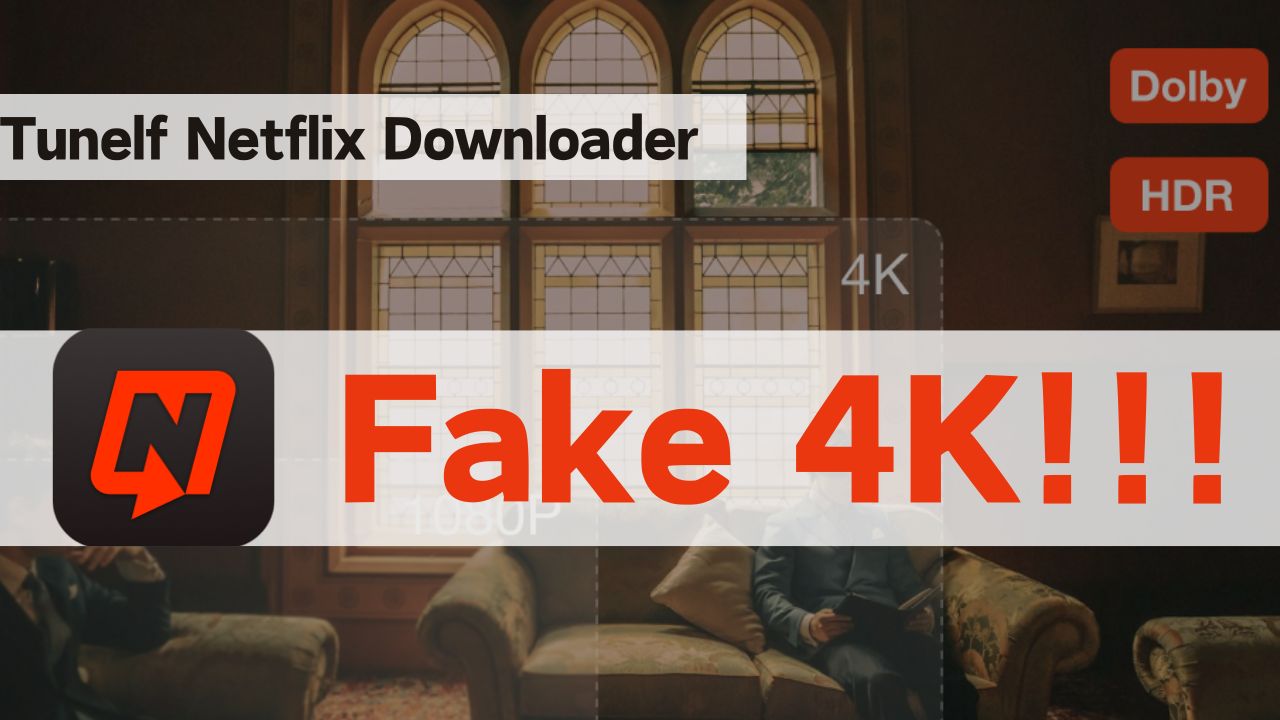
Tunelf advertises quality options that can reach 4K/HDR. This article does not contain a reproducible Tunelf saved-file result that confirms the resolution, codec, bitrate, frame rate, audio, subtitles, size, or elapsed time for a particular title.
That distinction matters. A file’s metadata and playback result provide a purchase-relevant answer; a marketing label does not. If quality is your deciding factor, save a representative title during the available trial and compare its metadata with the settings you selected.
Download Failures and Support Complaints
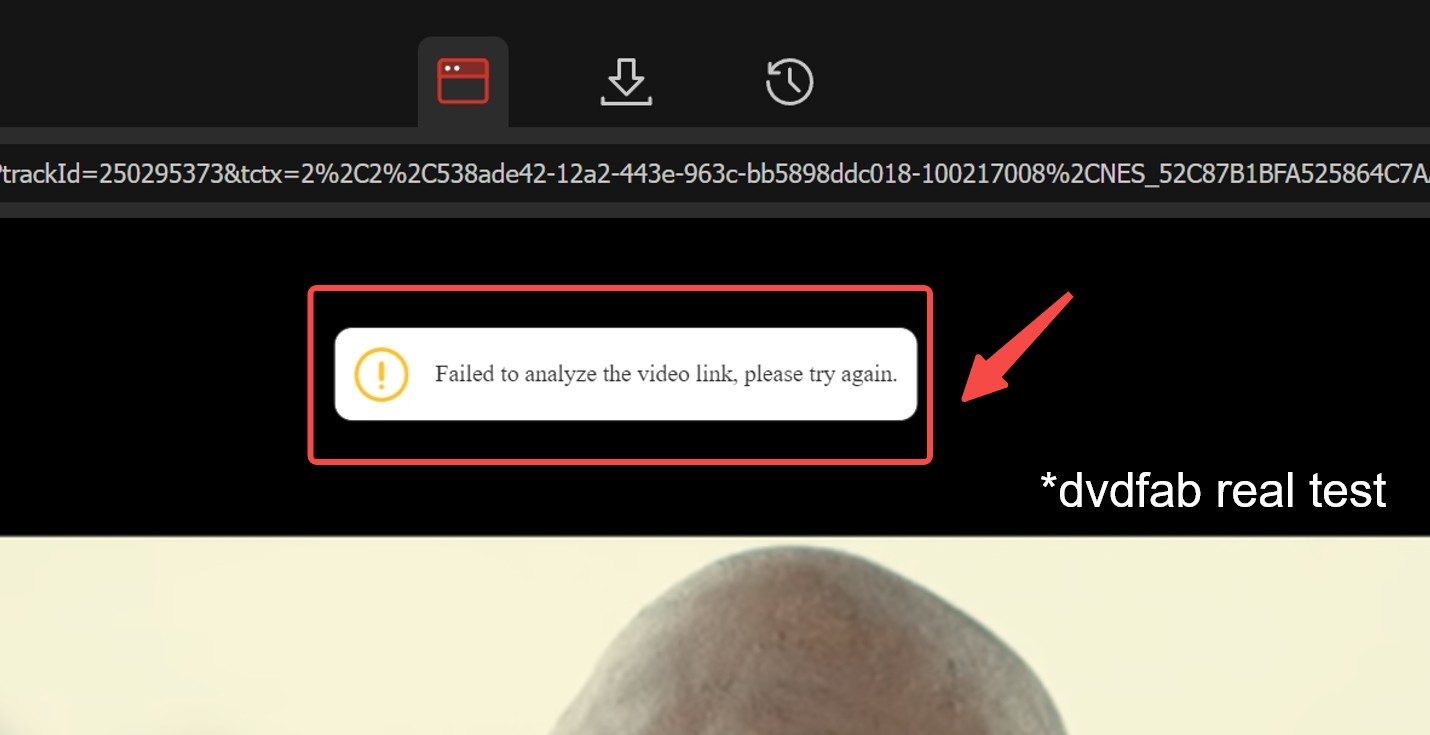
Individual Tunelf user reviews describe conversion stalls, zero-percent hangs, repeated errors, reinstalls, automated or unresponsive support, and refund friction. These are decision signals, not proof that every user, title, or failure has the same cause.
If a download fails, document the product version, title, time of failure, error message, screenshots, order record, and support correspondence before asking for help or requesting a refund. A clean record makes it easier to distinguish a one-off setup issue from a recurring problem.
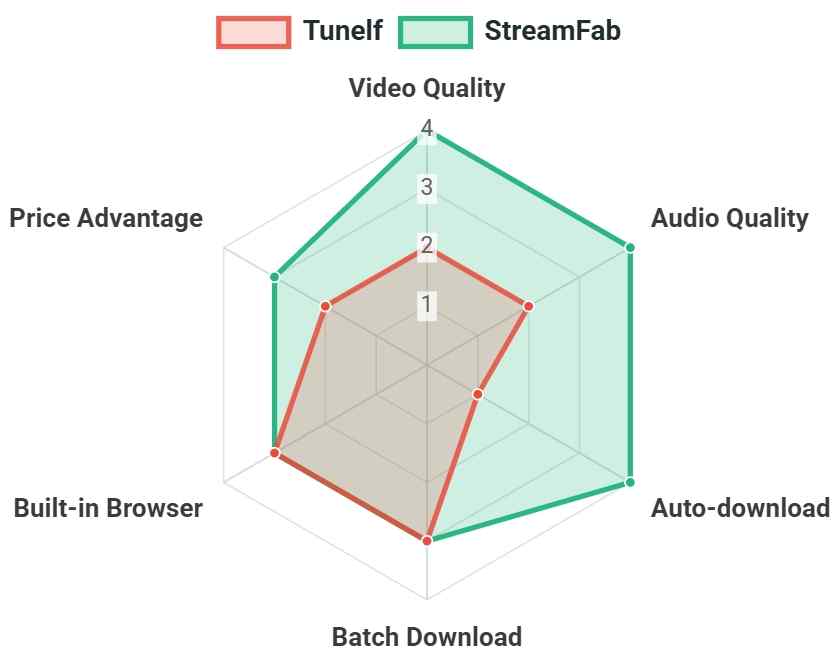
Tunelf vs StreamFab: File and Workflow Differences
For authorized Netflix access where permitted by platform terms and applicable law, StreamFab offers a desktop workflow outside Netflix’s official mobile download feature. It is designed for readers who need local files and episodic queues; it is not the right fit for readers satisfied with Netflix’s supported mobile offline mode or unable to use a desktop app.

A practical alternative focused on efficiency and output quality, with options up to 1080p and support for multiple audio/subtitle tracks (feature availability may vary by title, plan, and region). Use should remain within a valid subscription and comply with the platform’s policies.
Output Quality and Track Options
As of August 2026, StreamFab Netflix Downloader is a Windows and Mac desktop app that documents up to 1080p output in MP4 or MKV, selectable tracks, EAC3 5.1 audio, and supported HDR formats. Availability can vary by title, plan, region, and source; supported devices and options may change, so consult the official product page for current status and use the saved file as final evidence for a specific selection.
For readers comparing streaming quality with StreamFab downloads, compare the output container, video metadata, selected audio, and subtitle behavior rather than assuming that two quality labels mean the same result.
Batch and Episodic Workflows
For series viewing, StreamFab documents batch downloading and automatic episode workflows alongside track selection. Its StreamFab Netflix Downloader guide explains the desktop workflow in more detail.
My practical dividing line is simple: choose a desktop workflow when local-file control and episode queues are central to your use case. Choose Netflix’s official mobile option when managed offline viewing on a supported device is enough.
| Decision factor | Tunelf documented claim | This review’s evidence | StreamFab documented option |
|---|---|---|---|
| Desktop support | Windows and Mac | Workflow not independently reproduced here | Windows and Mac |
| File container | MP4 or MKV | Inspect the saved file | MP4 or MKV |
| Quality | Up to 4K/HDR | No reproducible file result published | Up to 1080p; HDR support |
| Tracks | Selectable options | Confirm selected tracks in metadata | Selectable tracks; EAC3 5.1 |
| Series workflow | Batch downloading | Test several episodes, not one | Batch and automatic episodes |
| Reliability | Not rated here | Reports note stalls and support friction | Not ranked in this review |
Author note: System activity can help spot a bottleneck, but it cannot prove how a file was produced. Metadata, playback checks, and a written failure log are more useful evidence when you are deciding whether to buy.
FAQs
Does Tunelf Netflix Downloader version 3.0.0 fix the crash issues?
Can I play a Tunelf download on another device?
Tunelf advertises MP4 and MKV output, but portability depends on the actual saved container, codec, audio, and the player on the other device. Test the finished file where you plan to watch it.
Can I use Tunelf without an active Netflix subscription?
No. An active Netflix subscription and authorized access are required for personal offline viewing.
What should I document before using Tunelf's refund policy?
Keep your order record, product version, error screenshots, title details, and support correspondence. Reports of refund friction are individual experiences, so clear documentation matters.
Is a free Netflix downloader for Windows realistic?
A limited trial is different from unrestricted free use. Netflix’s official download help does not list Windows PCs among its supported download devices, so desktop tools operate separately from Netflix’s managed mobile offline mode.
Conclusion
Tunelf may suit readers who want to evaluate its Windows or Mac workflow, MP4/MKV claims, selectable tracks, and batch options on a representative title before buying. It is less suitable for anyone who needs verified quality metadata, predictable series-level results, or responsive help before committing, because those points are not established by the product claims alone and user reports raise questions worth documenting.
My buying rule is to validate the title, tracks, and saved file you actually need before treating any quality label as a deciding factor. If you need a broader best streaming video downloader review, compare tools using the same file checks and authorized-use boundaries. Choose the workflow that fits your devices and personal offline-viewing needs.

TuneFab’s Amazon downloader suits a focused desktop routine, while VideOne covers multiple services. Compare their workflows, license structures, and output checks with StreamFab, then use the numbered setup and maintenance steps for authorized personal offline viewing.
By Erika Leen - Sep 24, 2026
Experiencing PlayOn Amazon not working issues like black screens, audio sync failures, or Error 201? Discover why 2026 Widevine DRM updates break screen recording and how to fix them for high-quality offline playback.
By Erika Leen - Sep 24, 2026
Audials One supports Netflix recording, but a black saved file calls for targeted browser, display, and capture checks. Follow a five-step recording workflow, compare short samples, and understand how official app downloads differ from desktop files. The guide also covers audio sync, subtitle handling, and local playback.
By Erika Leen - Sep 24, 2026
Many users are considering tools like MovPilot Netflix Video Downloader to supplement Netflix's download feature. In this article, we summarize our thoughts on using MovPilot Netflix Video Downloader, including the advanced features, limitations of the free version, and detailed instructions on its usage.
By Erika Leen - Sep 24, 2026