
5 Ways to Download Audio From a Website

Summary: I want to directly download audio files from websites, such as some music or pure audio from movies. I have tried some methods before, but they were too time-consuming. Recently, I found a new way and tested it in practice. I’m sharing it here with everyone.
Table of Contents
Choose the Right Audio Download Method
To download audio from a website, start with the least complex method that fits the page: a visible download link for an open file, browser tools for accessible static media, an online extractor for a supported public URL, or a local workflow for authorized content. The same principle applies when you need to download audio from a webpage on desktop or mobile.
Match the Method to the Source and Device
A playable page is not necessarily a downloadable file. Check first for a visible download link, then look for an accessible static request in the browser. If neither route fits, choose a supported public-link service or a local-file workflow based on your device, privacy needs, and authorization to access the content.
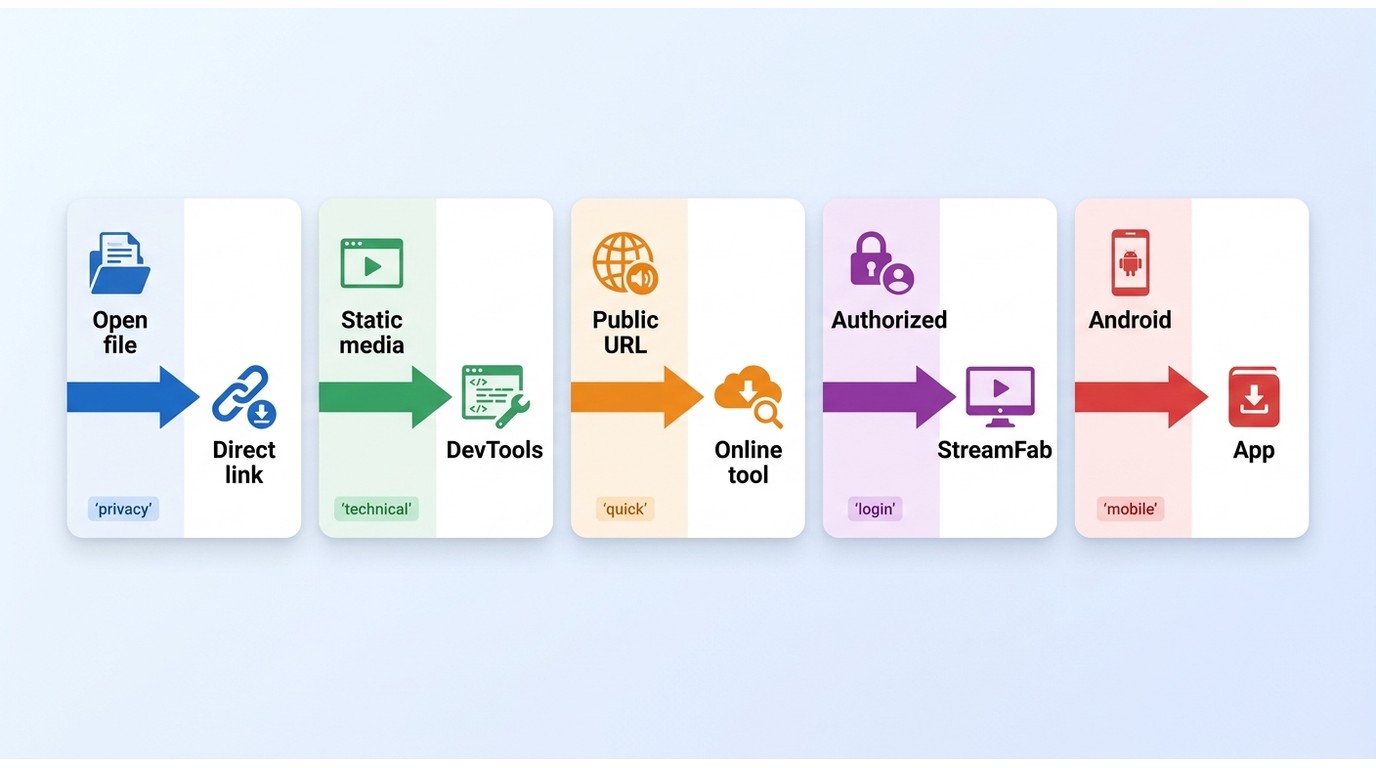
| Method | Best source type | Typical output | Privacy exposure | Common failure |
|---|---|---|---|---|
| Visible download link | Open audio files | Original file when offered | Low | No download link is provided |
| DevTools static request | Accessible embedded media | Source-dependent file | Low | Blob URLs or segmented playback |
| Browser extension | Direct or static browser media | Source-dependent file | Depends on permissions | Unsupported, live, or segmented media |
| Online URL extractor | Supported public links | Format offered by the service | Higher when a server processes the URL | 403 errors, rate limits, or maintenance |
| StreamFab desktop workflow | Authorized content that needs a local workflow | Available local-file options | Local workflow | Service support or account conditions may change |
| Android direct link or app workflow | Open links or supported authorized media | Source- or app-dependent file | Depends on the method | Hidden files or unsupported codecs |
The practical priority is source type and privacy, not a headline bit-rate claim. When an original accessible asset is available, it is generally a better starting point than converting it to MP3.
Related topics for videos:
Extract Audio With Browser Tools
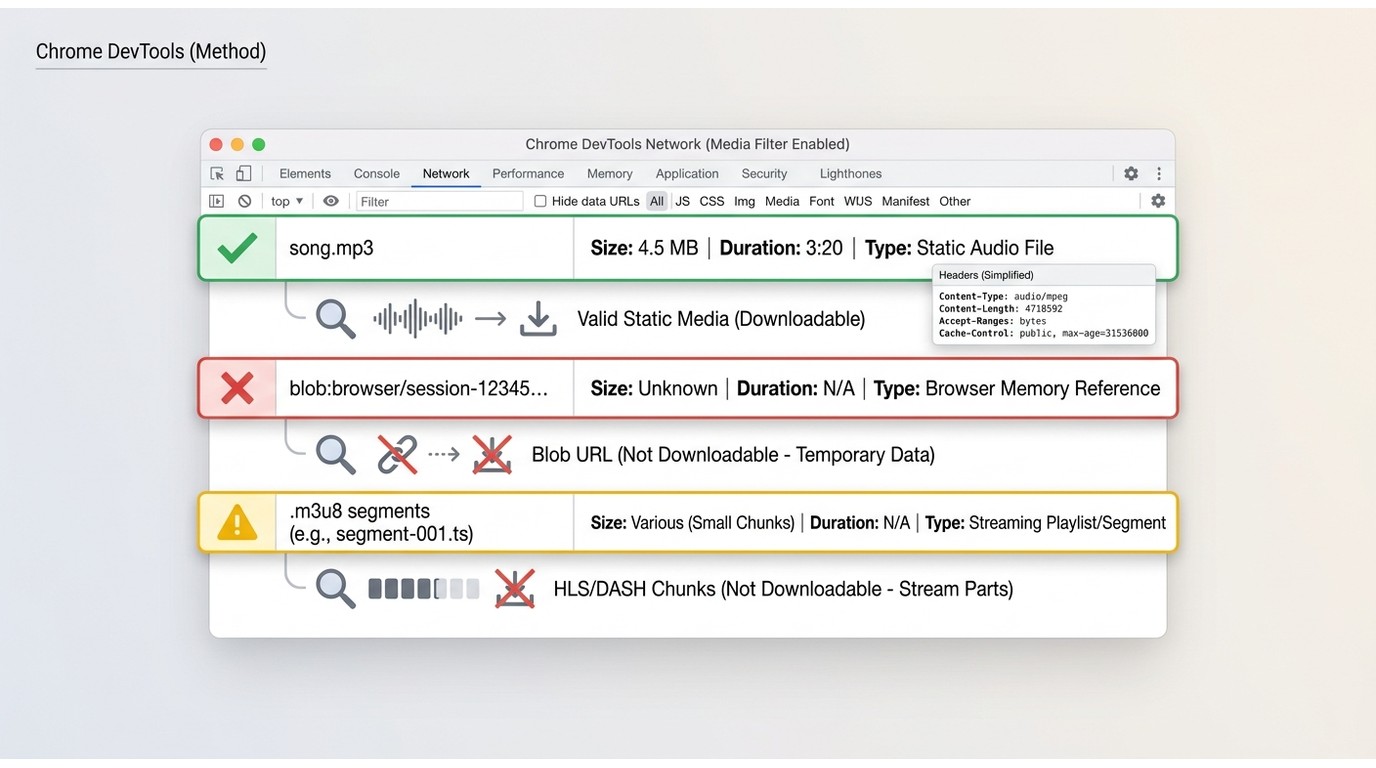
To download audio from browser environments directly without installing standalone software, inspecting the background network requests is the most reliable free method. However, this strictly applies to unencrypted HTML5 media nodes.
Find the Correct Request in DevTools
DevTools can reveal an accessible static media request when the page exposes one. Open the page in a desktop browser, press F12, select Network, reload the page, and replay the audio. Filter by Media, then compare requests by file type, size, duration, and response headers. Open a genuine .MP3, .m4a, .AAC, or .webm file request in a new tab only when it resolves to an actual media file. If you see blob URLs or many HLS or DASH chunks, stop there: the page is not exposing a normal downloadable audio file. The largest request is not automatically the audio track.

Know When a Browser Extension Works
Current browser extensions can still detect direct or static audio assets, but support varies by site and player. They may not detect live, segmented, cross-origin, encrypted, or otherwise unsupported media. They are best for accessible browser media, not for private or sensitive pages when the requested permissions are excessive.
Before installing an extension, check the publisher identity, recent update history, requested permissions, privacy disclosure, and whether processing happens locally or on a server. Download only content you are authorized to access, where permitted by platform terms and applicable law.
Use Online URL Audio Extractors
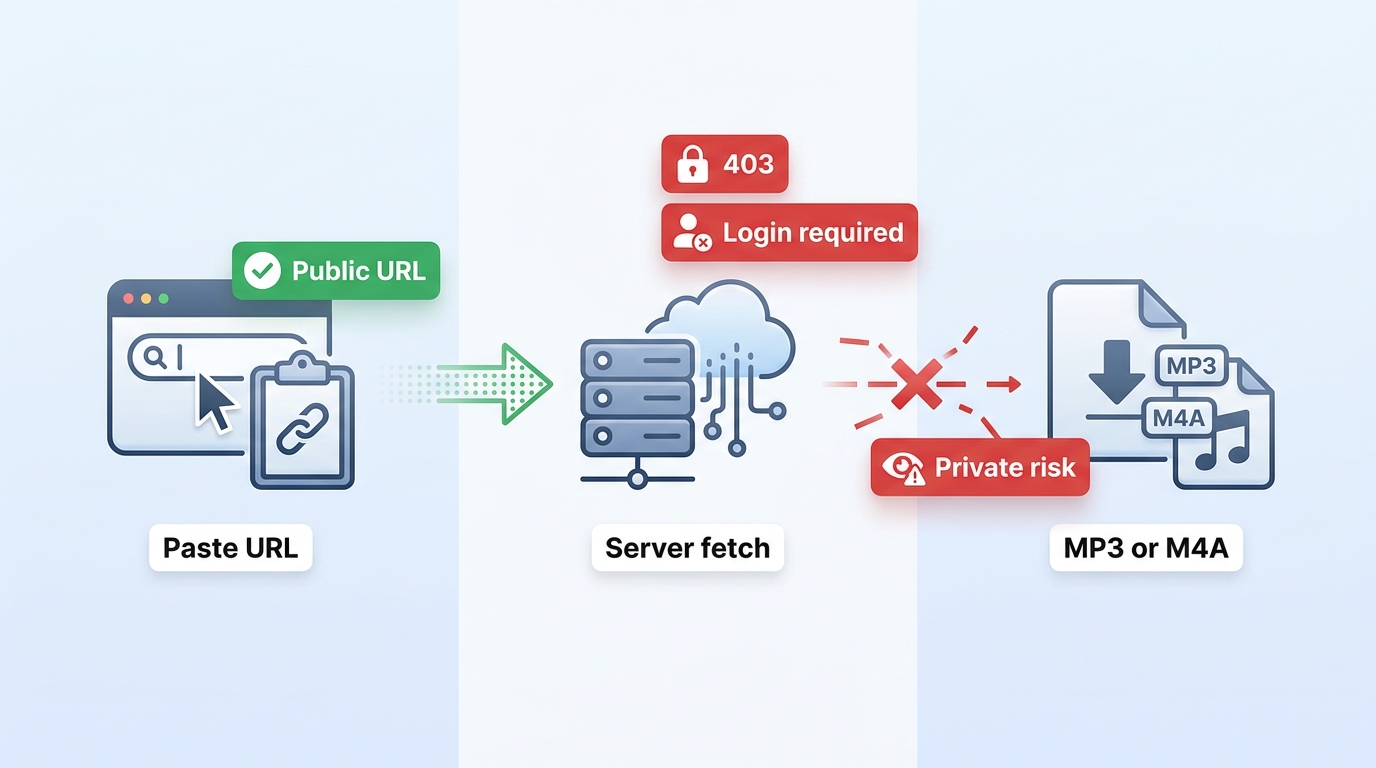
When searching for a way to download audio from webpage online free, most users turn to web-based URL parsing tools. These web apps require you to paste the target link, after which their backend servers attempt to fetch the media and return a downloadable file.
Download Supported Public Audio Links
To download audio from a link with an online extractor, paste a supported public URL and review the available output options before saving. These services vary: some fetch public URLs on their servers, while others process media in the browser. Their supported sites, formats, and privacy exposure differ, so they are a better fit for public pages than for private, login-gated, or sensitive media.
Handle 403 Errors and Privacy Risks
A 403 error can result from an unsupported source, a rate limit, an expired link, a login requirement, or a service-side outage. If an online tool stops working, try this fallback order: use a visible download link, inspect accessible static media in DevTools, consider a reputable extension, try another supported URL tool, or use a local workflow for authorized content. Do not submit passwords, session links, or private media to an untrusted service. Privacy is a stronger reason to switch methods than convenience alone.
Compare Desktop and Android Workflows
Desktop and Android workflows are useful when a direct link, browser request, or supported public URL tool does not fit the source. Choose them for authorized content when you need a local-file workflow or batch handling; they are not ideal when you only need one openly downloadable audio file.
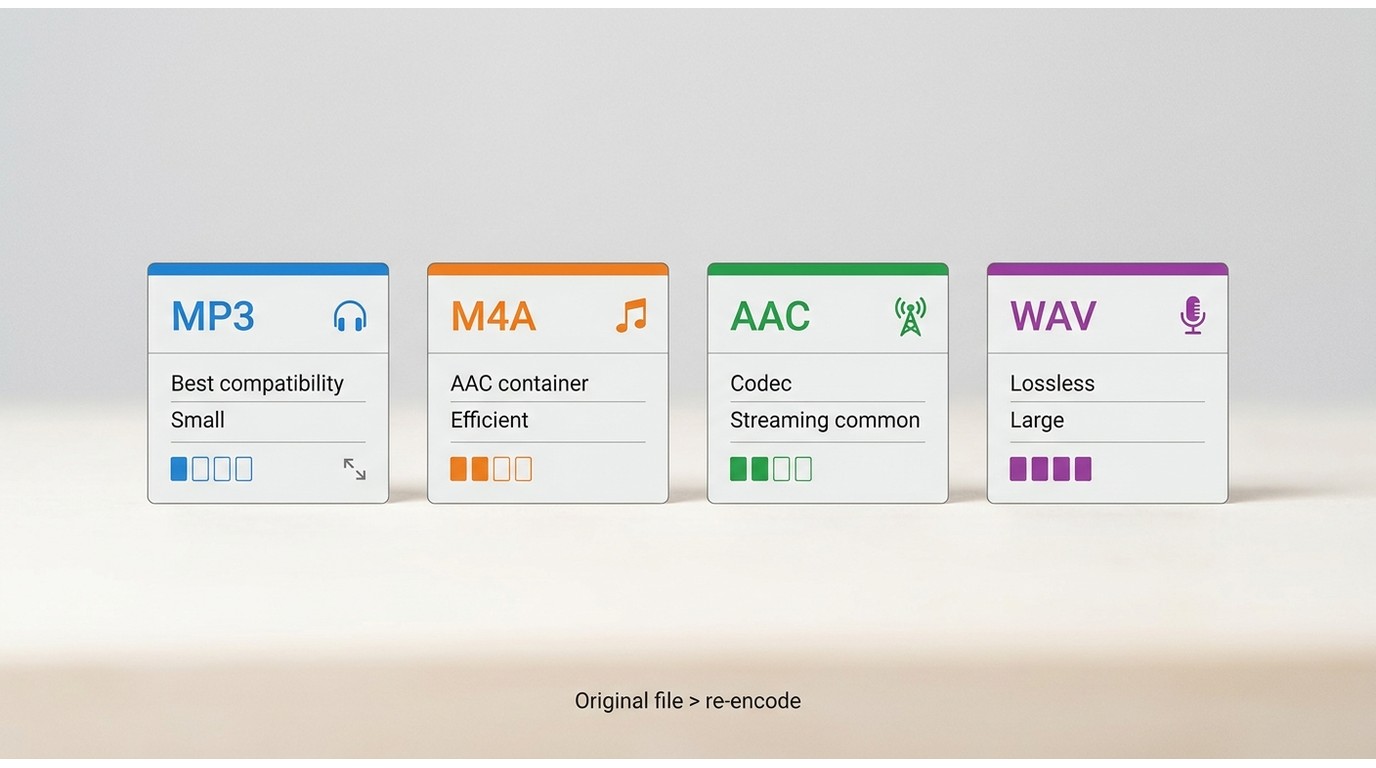
Choose MP3, M4A, AAC, or WAV
Format labels describe different tradeoffs. MP3 is widely compatible but lossy, even at 320 kbps. M4A commonly contains AAC audio and may preserve an accessible source file without another conversion; AAC is the codec itself, while WAV is an uncompressed container that can create much larger files.
Copying an original accessible file or remuxing it into another container does not add audio detail, and re-encoding can reduce it. Check the extension, codec, sample rate, bitrate mode, and a media-info utility after saving. When compatibility does not require conversion, the original accessible asset is generally the better choice.
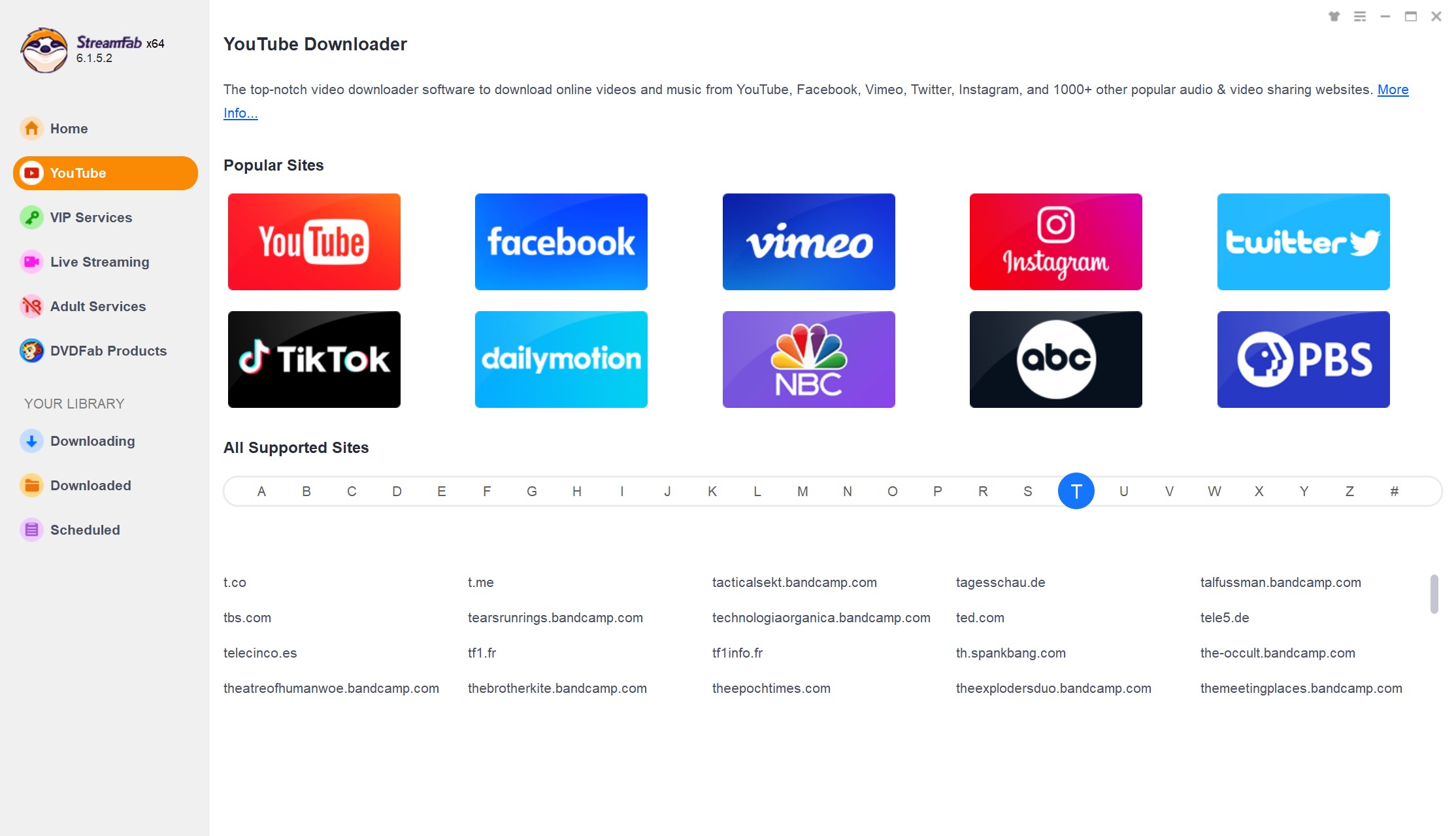
For content you are authorized to access, where permitted by platform terms and applicable law, StreamFab provides a local-file workflow on Windows and Mac. It supports MP4 and MKV output, batch downloads, audio-language selection, subtitle downloads, and metadata writing. Downloading DRM-protected videos from a website is a separate, video-specific topic and is not covered in detail here. Supported sites and device availability may change; see StreamFab's official site for current status.

Use a local-file workflow for content you are authorized to access when a public link or browser-based method does not fit the source.
Save Authorized Audio With StreamFab
StreamFab is suitable for readers who want a desktop workflow and batch handling for authorized content. It is not the first choice for a single open MP3 with a visible download link.
Step 1: Launch StreamFab and open the built-in browser panel. Sign in only to services where you have authorized access, and navigate to the media page.
Step 2: Open the target media and select the available audio option in the profile window. Choose a format based on compatibility needs rather than assuming that MP3 preserves the original quality.
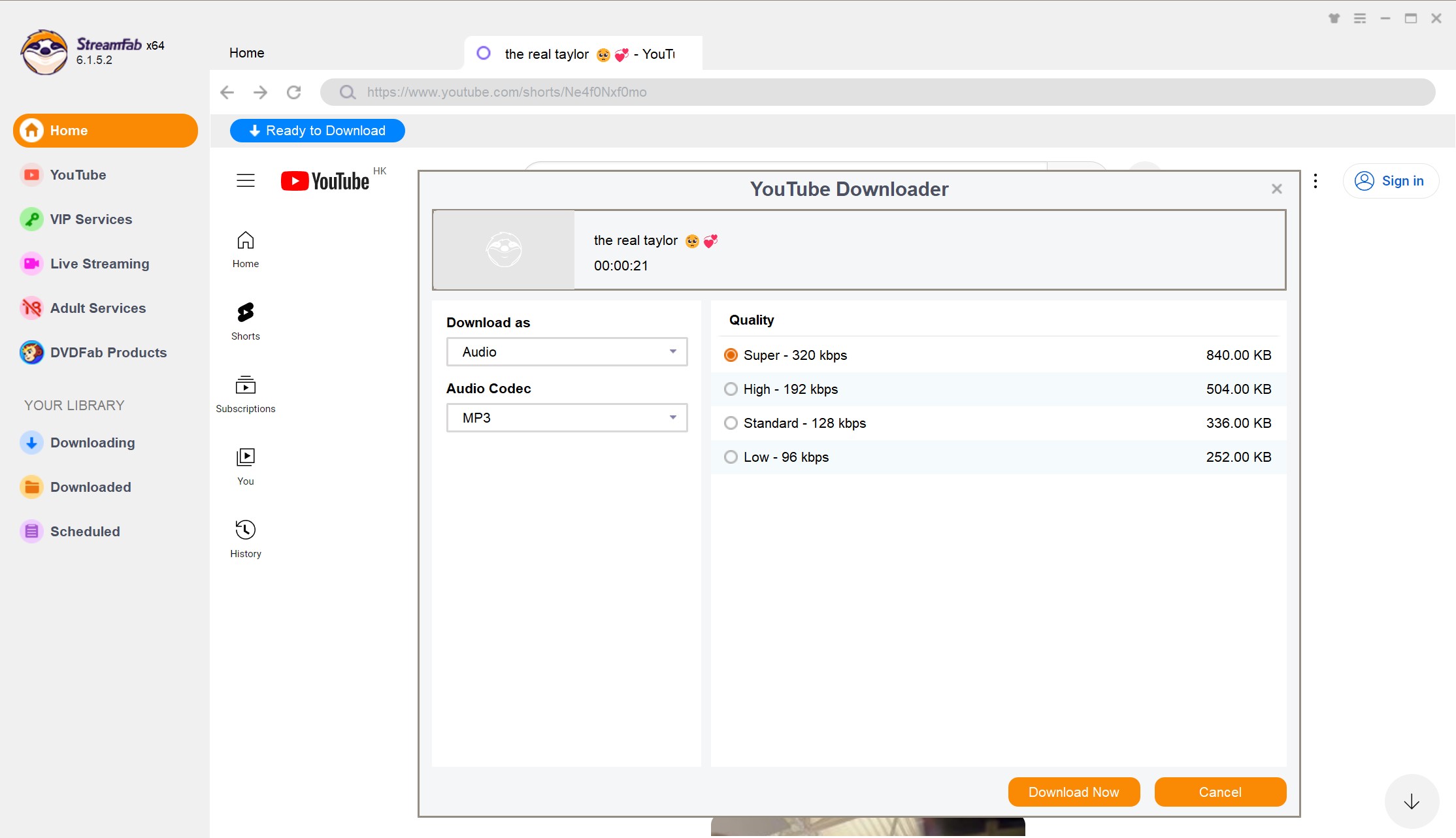
Step 3: Click "Download Now" and save the available local file for personal offline viewing. The resulting file's format and playback compatibility depend on the source and selected option. For product details, see StreamFab reviews.
To download audio from a website on Android, start with a visible download link in Chrome. Chrome on Android does not use desktop browser extensions, so a supported URL tool or dedicated app is a fallback when the page does not offer a direct file.
Download Audio on Android

A dedicated Android app can be a fallback for supported authorized media when Chrome does not expose a visible download link.
- Start with a visible download link in Chrome, then check the Downloads folder before trying another tool.
- A supported app can help organize multiple authorized items when a direct-link route is unavailable.
- Choose the available format with the target player's codec support in mind.
- Install apps only from a trusted official source, and review permissions and privacy information before signing in.
Find and Import Mobile Audio Files
Step 1: After a direct Chrome download on Android, check Files or My Files, then open Downloads. If you use an app workflow, check that app's selected save folder.
Step 2: Confirm the file extension and try opening the file in a media player. An editing app may not show a downloaded file if its folder, extension, container, or codec is unsupported.
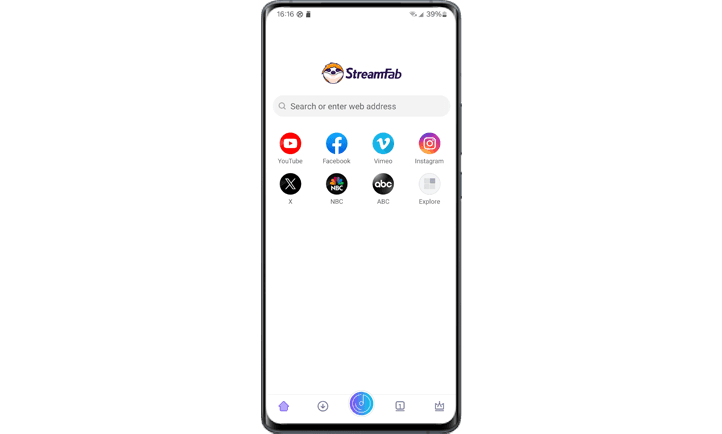
Step 3: On iPhone, look in the Files app under Browse > Downloads, or the browser's chosen download location. A successful download is useful only when the target app recognizes its container and codec.
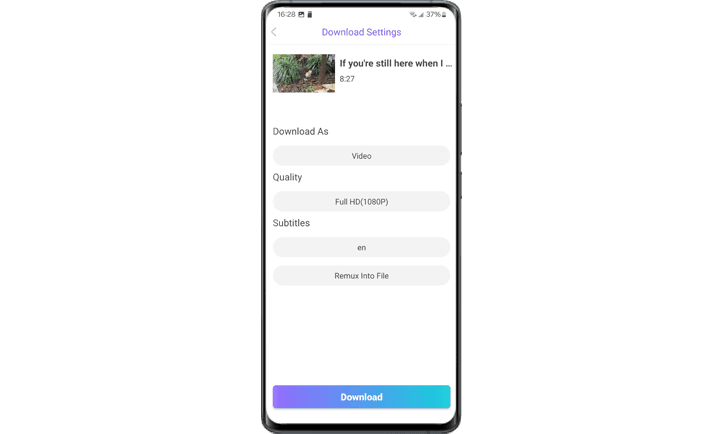
Before importing audio into another app, keep the original filename and extension visible. If the file does not appear, use the app's import picker to browse to Downloads, or convert it only when the destination app requires a different supported format.
FAQs
Where did the downloaded audio file go on my phone?
On Android, check the Downloads folder in Files or My Files, then look in the browser or app's selected save location. On iPhone, open Files and go to Browse > Downloads. If an editing app cannot see the file, its folder, extension, container, or codec may be unsupported.
Is it safe to paste a private page URL into an online downloader?
It is safer not to submit private URLs, credentials, session links, or sensitive media to an untrusted server-based tool. Prefer a browser-native method or a local workflow when the page contains personal or account-related information, and download only content you are authorized to access.
Why can a 320 kbps MP3 still sound worse than the source?
MP3 is a lossy format, so a 320 kbps setting cannot restore detail removed by an earlier compressed source or another conversion. When available and compatible, keep the original accessible M4A/AAC file or choose WAV when you need an uncompressed output and can accept a larger file.
What should I try when an online audio downloader stops working?
Try a visible download link first, then DevTools for accessible static media, a maintained extension, or another supported URL tool. If the content is authorized but these routes do not fit, consider a local desktop or mobile workflow. A 403 error can also reflect an expired link, rate limit, login requirement, or service maintenance.
Conclusion
Start with the least complex method that fits the source: use a direct link for open files, DevTools or a maintained extension for accessible static media, and an online tool for supported public URLs.
For authorized content where those routes do not fit, a local desktop or mobile workflow can make sense. StreamFab suits readers who need that kind of local workflow and batch handling; readers who only need one openly downloadable audio file generally do not need it.

This guide separates modern Apple TV video, Apple Music audio, and legacy iTunes libraries so readers can choose a realistic playback or export path. It covers MP4, M4V, and MKV compatibility, official redownload and iTunes Match eligibility, StreamFab and MusicFab workflows, hardware limits, and the boundaries for authorized personal use in the United States.
By Nicole Lopez - Sep 20, 2026
Identify protected and unprotected M4V files, use authorized Apple TV playback, convert compatible files, or choose a separate supported-streaming workflow.
By Erika Leen - Sep 8, 2026
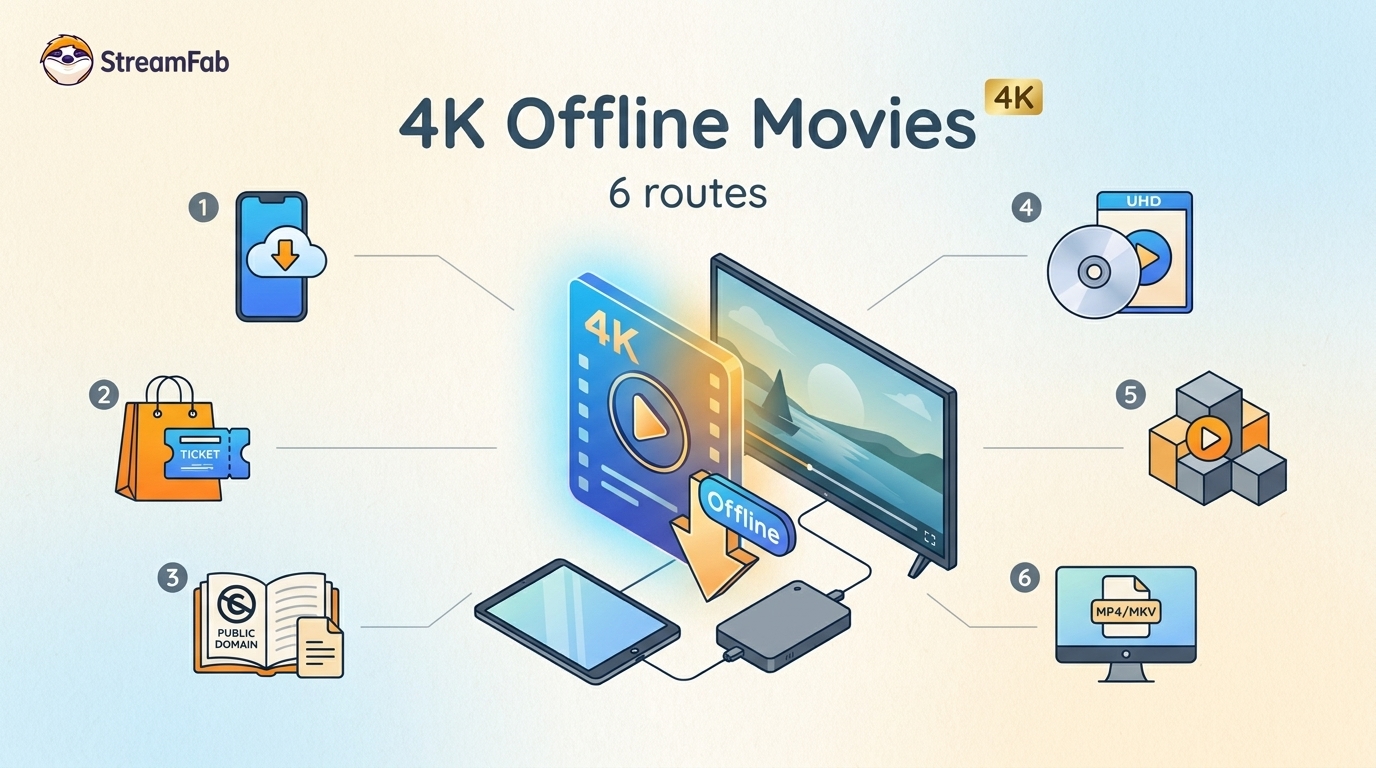
Legal 4K movie downloads do not all provide the same kind of offline access. Most mainstream services offer app-locked downloads, while portable movie files, UHD Blu-ray, public-domain media, and authorized desktop workflows involve different quality, cost, device, and licensing limits.
By Jacob Harrison - Aug 12, 2026
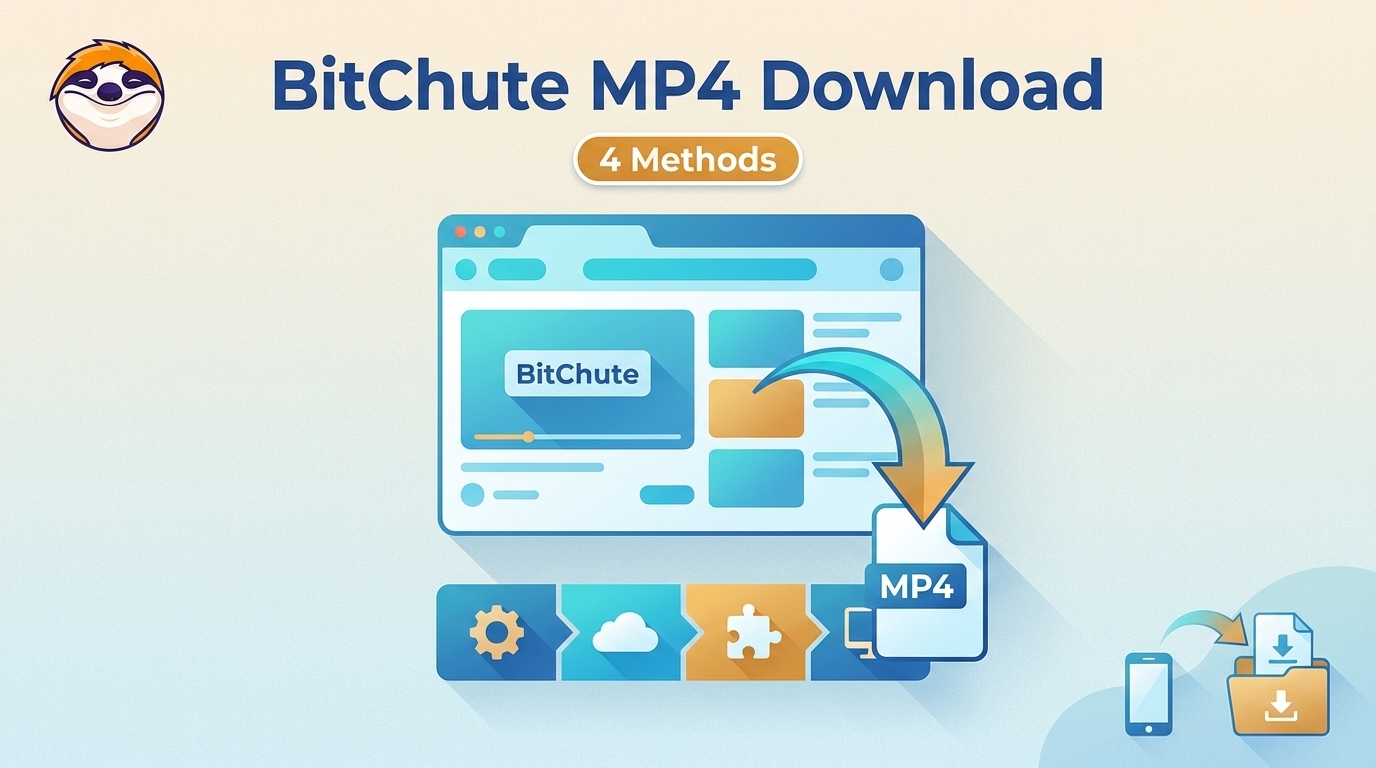
To get straight to the point, you can download a BitChute video as MP4 through its download icon: open the video, then use Save As. For authorized content where permitted, this guide explains when desktop, Android, or browser alternatives make sense.
By Marcia Hatcher - Aug 11, 2026