
Netflix Movies to USB: What Works and 4 Transfer Steps

Summary: Are you looking for reliable ways to download Netflix movies to USB? We will offer the best way on how to download movies from Netflix to USB in this article.
Table of Contents
Searching for Netflix movies to USB usually means you need more storage or TV playback, but official Netflix downloads are app-bound and cannot be copied as normal videos. The workable answer depends on your device: use official mobile downloads, or prepare a compatible local file on Windows or Mac.
- iPhone, iPad, Android, and Fire devices can use eligible official downloads, but those titles stay inside the Netflix app.
- Windows and Mac users who need a USB-ready video need a desktop local-file workflow.
- Successful Netflix USB playback depends on the TV supporting the file container, video codec, audio track, subtitles, and USB file system. Test one short file on the target TV before downloading a larger queue. Official instruction: how to store downloads on an SD card.
This guide starts with a device matrix, then covers one four-step local-file workflow and the compatibility checks that prevent a copied movie from failing on the TV.
Why Official Netflix Downloads Do Not Transfer
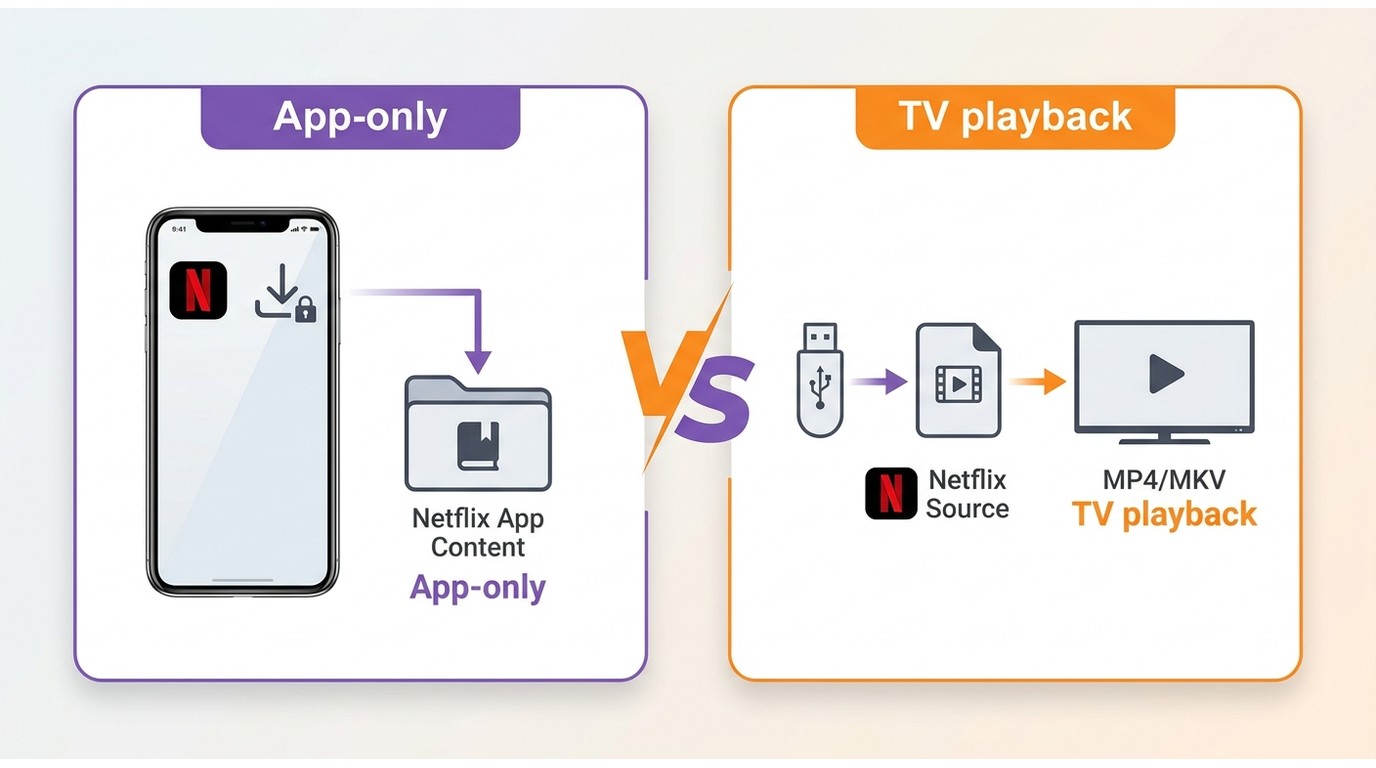
Official Netflix downloads are designed for offline viewing inside the Netflix app. They are not normal video files that can be dragged to a USB drive, opened from a folder, or transferred to a television as portable media.
App-Bound Files Are Not Portable Videos
The storage location and the file type are separate issues. You may save Netflix movies for offline viewing on an eligible device, but Netflix still manages those downloads inside its app rather than creating a standard MP4 or MKV file.
Moving app data to another storage location does not turn it into portable video. A USB-ready file needs a container, video codec, audio track, and subtitle format that the target player can read.
Windows Has No Official Offline Downloads
No more Netflix offline downloads on Windows in its app. macOS also has no official desktop download path, so changing a browser folder or attaching a USB drive will not reveal a download button.
This is why Netflix downloads on Windows require a different decision from downloads on a phone or tablet: the official desktop path is streaming, while eligible mobile devices retain app-bound offline viewing.
Official Download Options by Device
Device support determines whether official offline viewing is available, but none of the official paths creates a USB-ready media file. The matrix below reflects US device support as of August 2026.
| Device | Official offline downloads | External storage | USB-ready file | Key caveat |
|---|---|---|---|---|
| Windows PC | No | Not applicable | No | App no longer downloads titles |
| iPhone or iPad | Eligible titles | No portable storage | No | Files stay app-bound |
| Android or Fire device | Eligible titles | Device-dependent SD card | No | SD storage is still app-bound |
| Supported Chromebook | Device-dependent | Device-dependent | No | Android app behavior varies |
Windows and Mac Computers
Windows and Mac computers do not offer official Netflix downloads that can be copied to external storage. A USB drive can store normal files, but it cannot change the capabilities of the Netflix app or browser.
iPhone, iPad, Android, and Fire
Eligible titles can be downloaded inside the Netflix app on supported mobile devices. Android and Fire devices may offer an SD-card storage choice, but that remains app-managed storage rather than a portable MP4 or MKV.
Availability also follows title, device, and plan rules covered by the Netflix download limit. Those rules affect app viewing; they do not create a file for USB playback.
The Limited Chromebook Caveat
Some supported Chromebooks can run the Android Netflix app and may expose device-dependent storage choices. Treat that as an app-storage exception, not a general Chromebook promise and not a route to a portable MP4.
A Local-File Workflow for USB
For content you're authorized to access, where permitted by platform terms and applicable law, a Windows or Mac desktop workflow can prepare a standard file for USB playback. The result still has to match the target TV and drive.
When a Desktop Workflow Fits
This route fits Windows or Mac users who need a normal local file and can check playback compatibility before building a larger queue. StreamFab Netflix Downloader outputs MP4 or MKV at up to 1080p where available, with selectable audio and subtitles.
A Netflix movie download on a laptop setup can serve as the starting point when the final task is USB preparation. Readers comparing desktop options can also use the Netflix video downloader comparison.
It is less suitable for readers satisfied with mobile app downloads, anyone who needs verified 4K output, or anyone who has not confirmed that the intended use is authorized. I would not choose a desktop workflow until I knew what the target TV could actually decode.
Download Netflix videos in up to 1080p HDR with Dolby Vision, H.265, and EAC3 5.1 audio—ready for USB transfer and offline playback anywhere.
- Best for Windows or Mac users who need a standard local-file workflow and have checked the target player's compatibility.
- Not ideal for mobile users satisfied with app downloads, readers who require verified 4K output, or unauthorized use.
- MP4 and MKV output with H.264, H.265, VP9, or AV1 where available.
- Up to 1080p with HDR10 or Dolby Vision where the title, plan, and playback chain support it.
- Selectable audio and subtitles, plus metadata for library organization.
- Batch or scheduled queues for multiple titles.
In our June 2026 Windows 11 test at 100 Mbps and 1080p, one title completed in about eight minutes. That result is useful as a scoped reference, not a promise for a different network, computer, title, or service condition.
Download and Transfer in Four Steps
Prepare the destination first, choose conservative playback settings, complete the download, and verify one file before expanding the queue.
- Use an active Netflix subscription and choose content available to that account.
- Confirm that the USB drive is writable and has enough free space.
- Check the target TV manual for supported containers, codecs, audio, subtitles, and file systems.
- Keep enough computer storage available if you plan to download locally before copying.
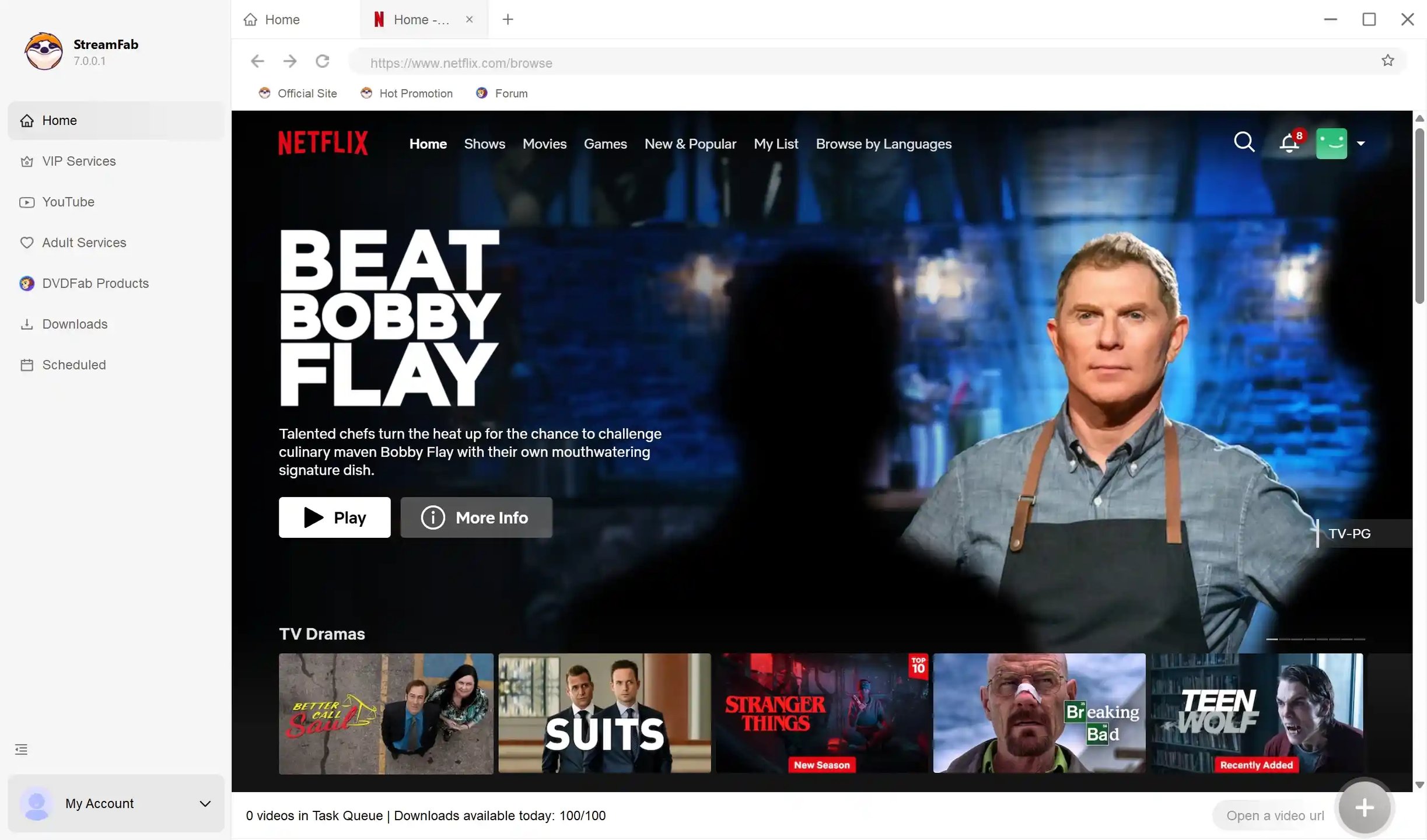
Play a Netflix video
Select a video on Netflix and begin playback. StreamFab Netflix Downloader will analyze it automatically before downloading it to your computer.
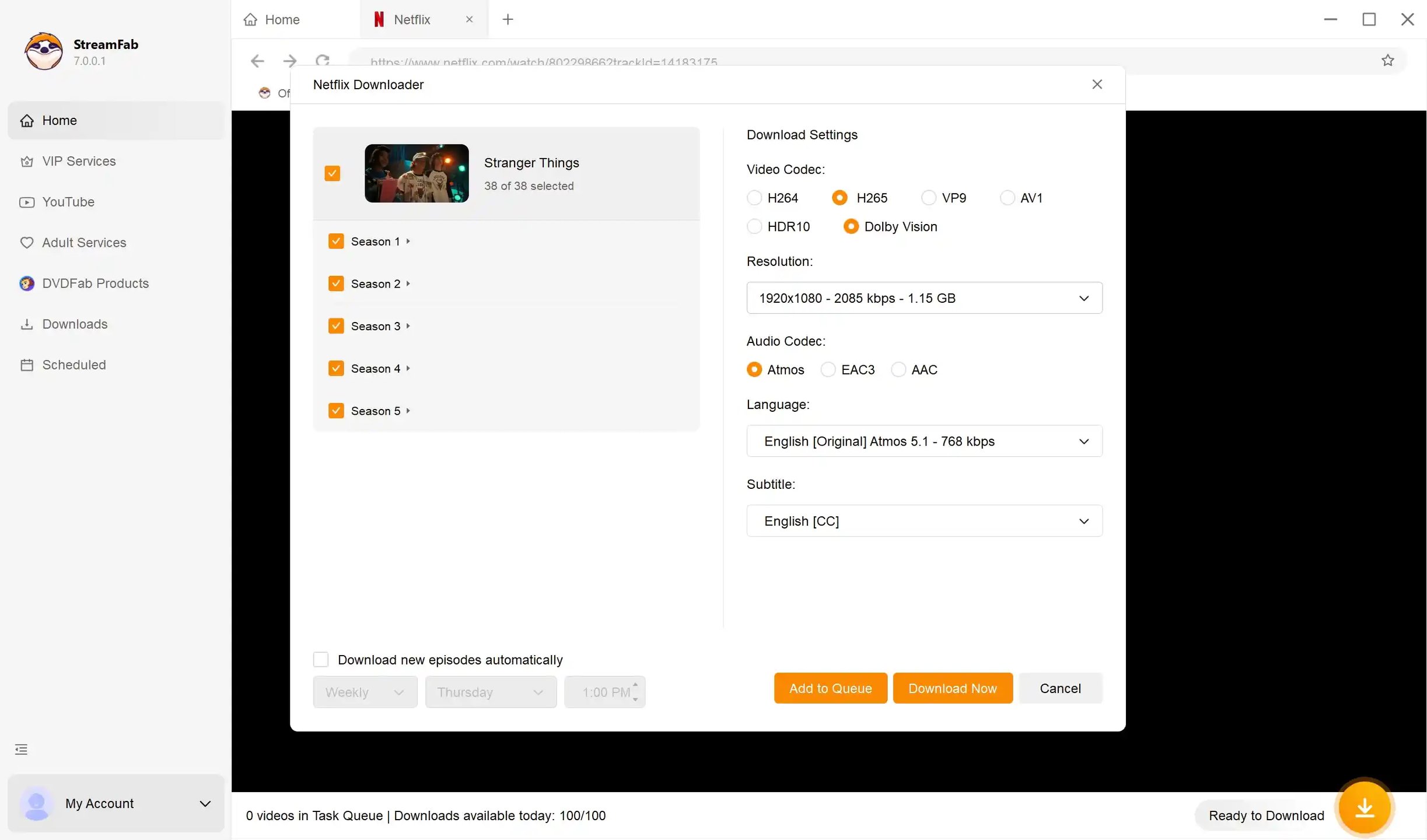
Customize and download the video title
In the download panel, choose your output format (MP4 is recommended for USB compatibility), video quality, audio track, and subtitle preferences. Click Download Now to save the file, or add multiple titles to the queue for batch downloading.
Transfer to a USB stick
Once downloaded, the files are standard MP4/MKV videos on your computer. Plug in your USB drive, find the output folder, and copy or drag the video files onto the USB. After that, you can watch Netflix offline on any device with a USB port.
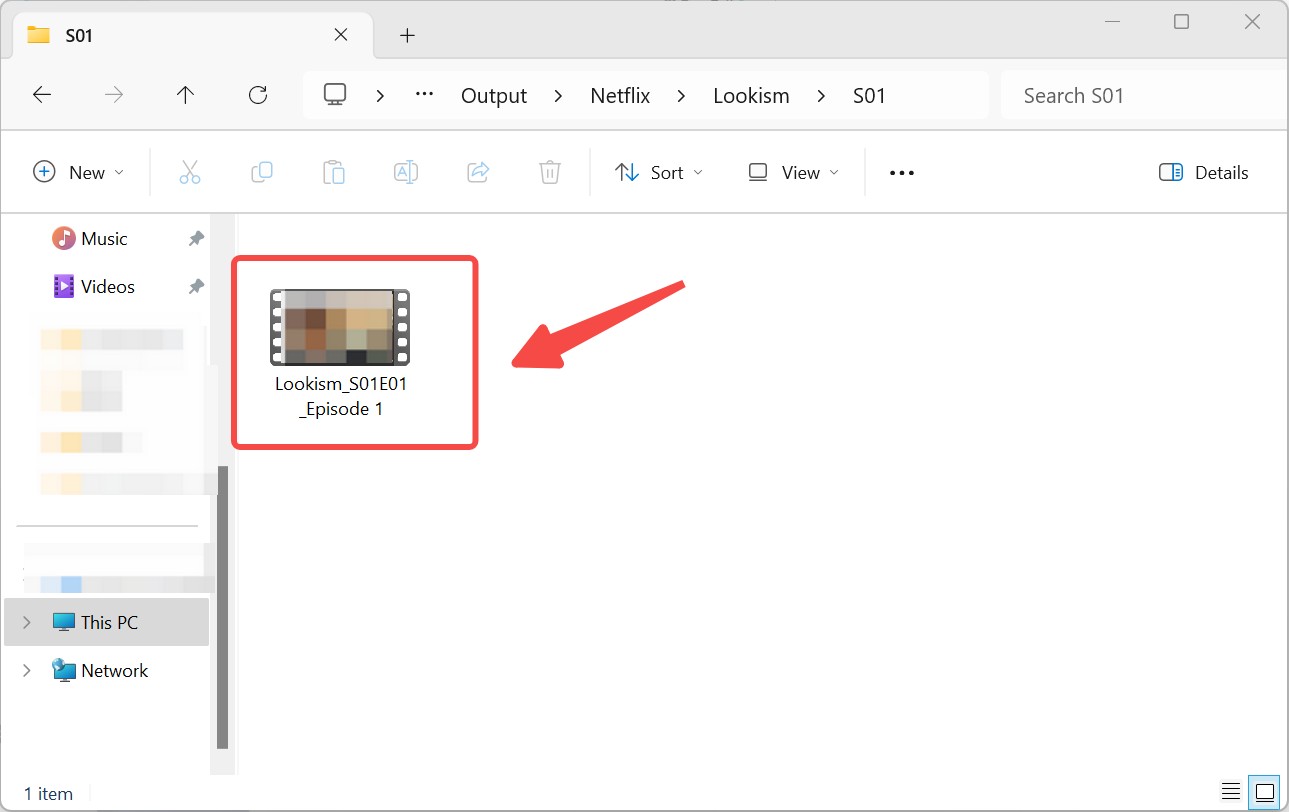
My practical rule is to test one representative file on the target TV before queuing a season. That catches container, codec, audio, subtitle, and file-system mismatches before they waste storage and download time.
Direct USB Output or Computer First
Direct USB output saves a copy step, while computer-first output gives you a stable staging location. Both can work when the destination is writable and the completed file passes the same playback checks.
- Direct to USB: Use this when the drive stays connected, writes reliably, and has sufficient free space.
- Computer first: Download locally, verify completion, then copy the file to USB. I prefer this path when the USB connection is unreliable or the drive writes slowly because an interrupted copy is easier to repeat than an interrupted download.
Choose Formats Your TV Can Play
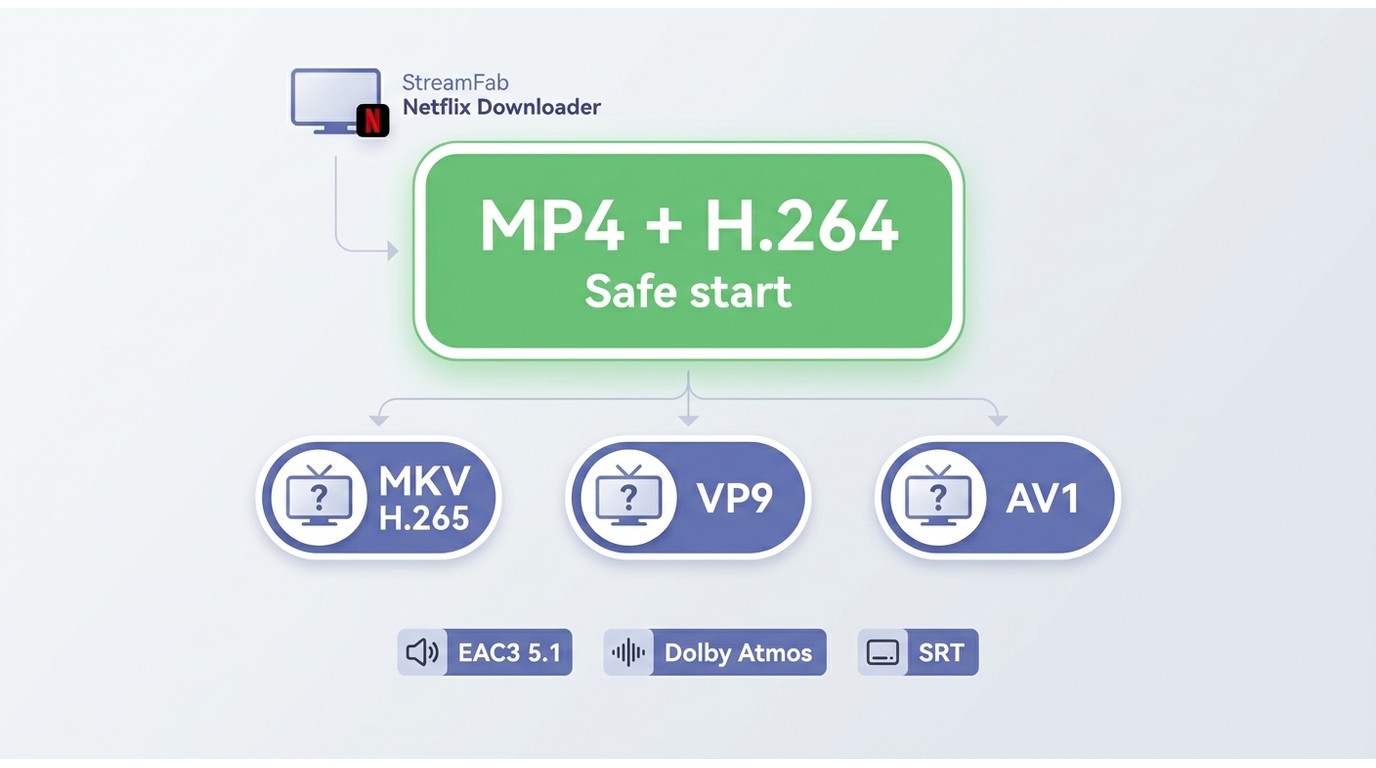
MP4 with H.264 is the safest starting point for Netflix USB playback because many TVs recognize that combination. MKV and newer codecs can offer useful features, but support depends on the exact television, media player, or receiver.
MP4 and H.264 Are the Safe Default
A Netflix-to-MP4 workflow paired with H.264 usually gives the broadest USB compatibility. It is the setting I would try first when the TV manual lists MP4 but gives little detail about newer codecs.
In our June 2026 macOS test at 24 Mbps, a 15:07 episode of Love, Death & Robots produced a roughly 538.6 MB 1080p HDR10 file with Dolby Atmos and DD+5.1. That test shows the settings can coexist; the target player still decides what it can reproduce.
When MKV or Newer Codecs Fit
A Netflix video in MKV can be useful when you want multiple audio or subtitle tracks in one container. H.265, VP9, or AV1 may reduce file size or retain a preferred source format, but older TVs may reject them.
Choose MKV for USB only after confirming that the target player supports both the container and the selected codec. A recognized MKV container does not guarantee that every video or audio stream inside it will play.
Check Audio and Subtitle Support
USB playback succeeds only when the full chain agrees: file, TV, receiver, and connection. A TV may play the picture but fall back to stereo if it cannot pass EAC3 5.1 or Dolby Atmos to the audio system.
- Container: Start with MP4; use MKV when the player supports it and you need extra tracks.
- Video: Start with H.264; choose H.265, VP9, or AV1 only for a compatible target.
- Audio: Select a compatible fallback track when the TV or receiver cannot pass through the preferred format.
- Subtitles: Embedded tracks and separate SRT files behave differently by TV model, so test the exact arrangement.
Match the USB Drive to Your TV
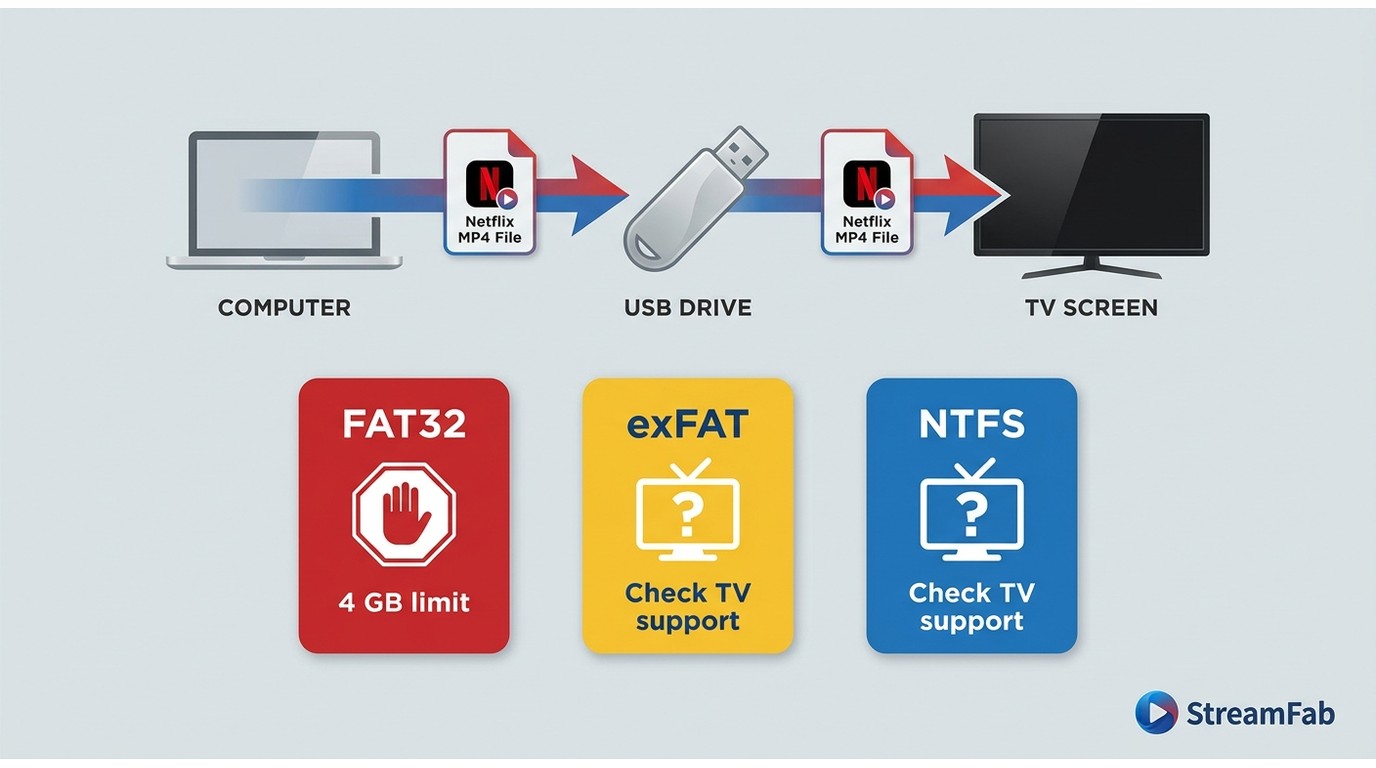
The USB file system matters as much as the video format. A compatible movie can still fail to copy or appear on the TV if the drive format conflicts with file size or the television's storage support.
FAT32 Has a 4 GB File Limit
The FAT32 file size limit is 4 GB per file. A movie larger than that cannot be copied to a FAT32 drive as one file, even when the drive has plenty of total free space.
Check the completed file size before copying. If it stays below the limit and the TV accepts FAT32, the format remains a practical compatibility choice for older equipment.
exFAT and NTFS Need TV Support
exFAT TV compatibility and NTFS support vary by model. Reformatting a drive may solve the 4 GB copy limit, but it will not help if the television cannot mount that USB file system or decode the video.
Check the TV manual, back up existing files before reformatting, and test a small video first. The decision order is simple: confirm the drive format, then the container and codecs, then audio and subtitles.
Limits, Terms, and Practical Tradeoffs
Official downloads remain the safest option under Netflix's terms when app-bound viewing meets the need. A desktop local-file workflow is a narrower fit for authorized Windows or Mac use and requires more compatibility planning.
Official Downloads Remain the Safest Option
Use the Netflix app when its supported device, title availability, download rules, and app-managed playback meet your needs. Those downloads are designed for Netflix's offline experience and avoid the extra file-format decisions required by USB playback.
Keep any local-file use personal and do not distribute the output. Account access, title availability, and service behavior can vary, so a saved file should not be treated as a promise about future platform access.
Who the Desktop Workflow Suits
As of August 2026, the desktop route suits readers who need MP4 or MKV on Windows or Mac, accept an output ceiling of up to 1080p where available, and are willing to test the target player. Mobile-first viewers usually gain less from the extra setup.
The StreamFab Netflix Downloader trial runs for 30 days and allows three trial downloads per streaming service. The output settings match the paid workflow, but the trial count is limited, so use the sample allowance to test the exact TV and USB combination.
In our June 2026 Windows 10 Pro test with an i5-9400F, 16 GB of RAM, and StreamFab 7.0.1.7, a season queue produced files of 212.80 MB, 381.43 MB, and 586.46 MB as episode lengths changed. The practical lesson is to plan free space from actual completed files.
Frequently Asked Questions
Is there a free way to save Netflix movies to a USB drive?
Eligible official app downloads are included with a Netflix subscription, but they are not ordinary USB-playable files. StreamFab offers a 30-day trial with three trial downloads per streaming service; the full desktop workflow is not an unlimited free product.
Why does my TV not recognize an exFAT USB drive?
The TV model may not support exFAT, even if a computer reads the drive normally. Check the TV's supported USB file systems; changing the drive format will not fix an unsupported video or audio codec.
Why does a movie play from USB without 5.1 sound?
The file, television, receiver, and connection must all support the selected audio format and passthrough path. Choose a compatible audio track when EAC3 5.1 or Dolby Atmos does not reach the receiver correctly.
Conclusion: The Practical Choice for USB Playback
Official Netflix downloads are the simplest choice when app-bound viewing is enough. When authorized Windows or Mac use requires a standard local file, the desktop route can fit, but successful Netflix USB playback still depends on conservative settings and a tested drive.
My verdict is straightforward: confirm the target TV first, create one MP4/H.264 sample, and scale up only after video, sound, and subtitles pass. If that workflow matches your needs, try StreamFab Netflix Downloader with one title before starting a larger queue.

Protected Netflix video can appear black in Discord screen shares. Set up a synchronized watch party with Teleparty and use Discord for voice chat, with eligible access for each participant. Learn how personal offline playback differs and how to troubleshoot ordinary, unprotected screen sharing.
By Nicole Lopez - Sep 28, 2026
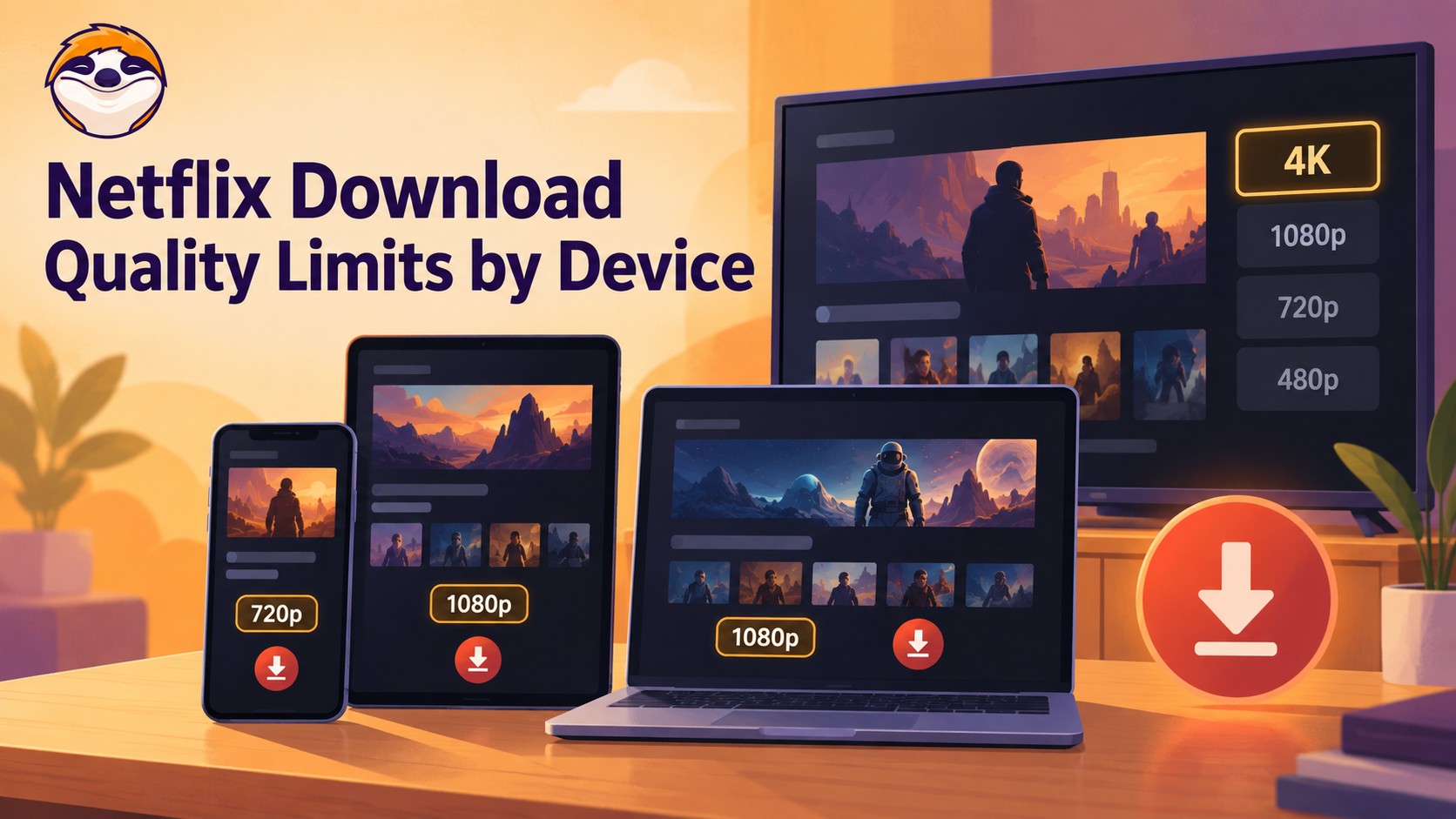
Netflix streams eligible titles in 4K, but official offline downloads stop at up to 1080p and are unavailable on Windows and Mac. Compare supported devices, check title eligibility, and understand how app-managed downloads differ from local MP4 or MKV files for personal offline viewing.
By Jacob Harrison - Sep 24, 2026
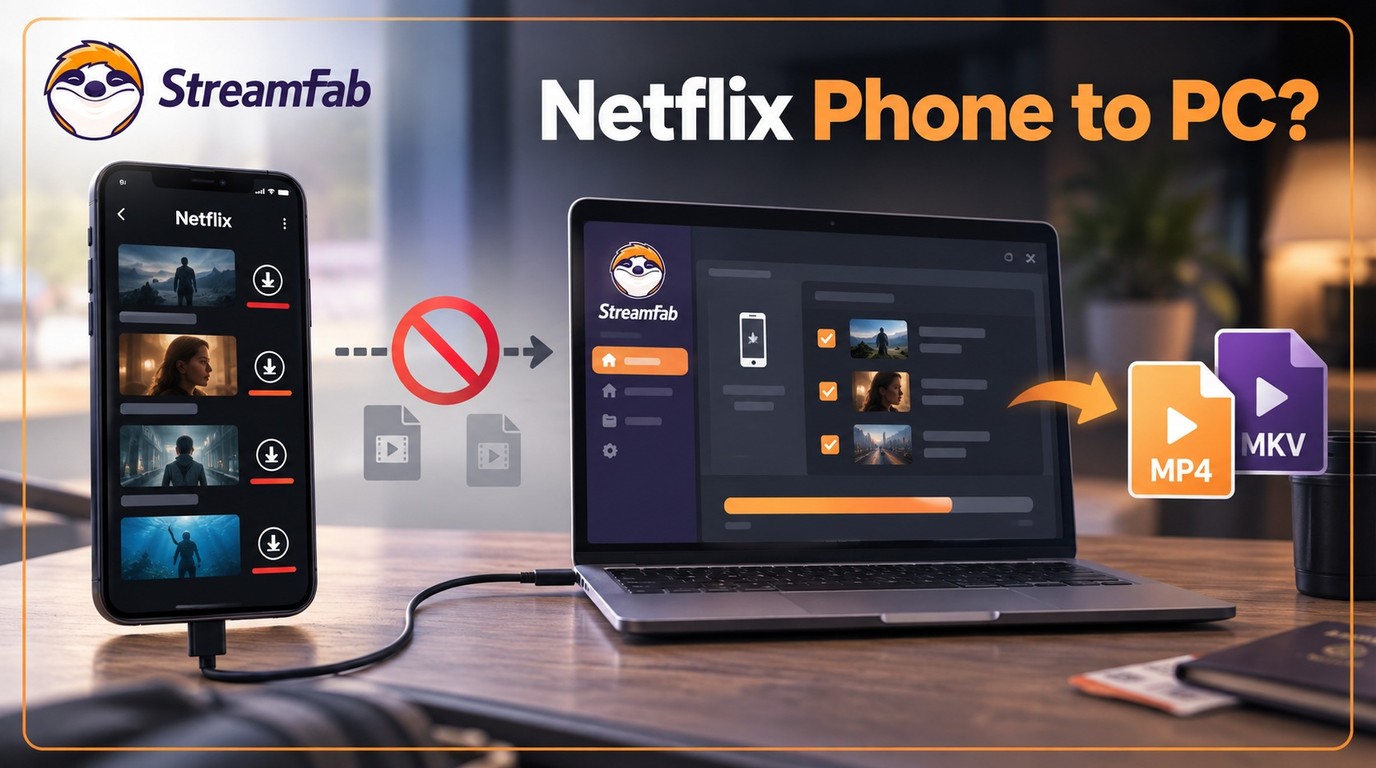
Can I transfer Netflix downloads from phone to computer? No direct method exists due to strict DRM, but you can convert them to MP4 for permanent cross-device offline viewing.
By Jacob Harrison - Sep 16, 2026
Netflix does not provide a native download path for macOS, but Mac users still have practical offline routes. This guide compares official iPhone and iPad downloads, cloud recording, and a desktop MP4/MKV workflow, with device requirements, measured StreamFab results, BlueStacks caveats, and troubleshooting steps.
By Marcia Hatcher - Sep 3, 2026