
SameMovie Not Working? 8 Error Fixes and VideoOne Review (2026)

Summary: Experiencing the same not working errors? A digital archivist breaks down 2026 Widevine CDM updates, hardware acceleration conflicts, and tests SameMovie VideoOne for YouTube Shorts. Get real technical solutions beyond generic advice.
Why SameMovie Fails in 2026
If SameMovie just stopped working for you, the honest first move is boring: read the exact error code, update to the latest build, then reauthenticate the service. I ran into 6303 on my own machine last month and burned an hour tweaking router and disk settings before checking the version history — that was the fix. SameMovie is still active, and version 2.0.2 (released July 9, 2026) targeted HBO Max parsing and Apple TV+ error 3091 specifically. If you're searching "SameMovie not working" or trying to figure out whether SameMovie VideoOne is worth keeping, this piece walks through the current error codes, what VideoOne actually downloads, and where a broader desktop workflow makes more sense than staying on it.
One line of context: laptop users lost some convenient native offline options across a few services over the past year, which is a big reason SameMovie's crash reports spiked in community threads — not a universal rule for every platform, but real enough to explain the pressure on third-party tools.
Personal use only: keep local copies to content you're authorized to access under each service's terms and your local law. Redistribution or monetization of copyrighted material carries serious legal risk.
Widevine and HDCP Failure Points
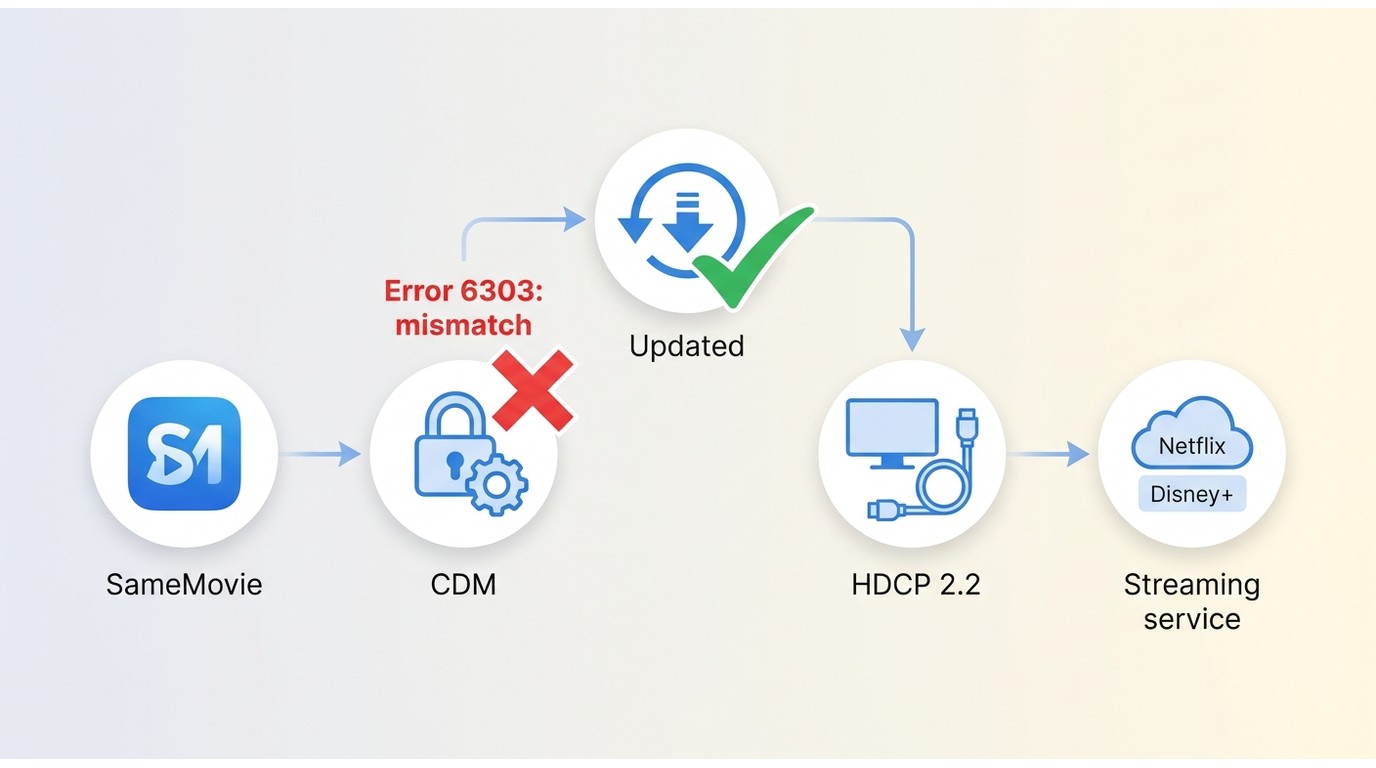
Most current failures trace back to two moving parts: Widevine CDM rotations that the tool hasn't caught up with yet, and HDCP chain validations that get stricter every few months. Error 6303 is the classic symptom — the server checks your CDM state, sees a mismatch, and drops the handshake. My take: before you rebuild your driver stack, confirm you're on the latest SameMovie build. Nine times out of ten the vendor has already shipped a CDM refresh, and the "fix" is a two-minute update rather than an afternoon of GPU tweaks.
Error 6120 sits one layer up — it's a local rendering and parsing crash inside the internal Chromium Embedded Framework, not a network timeout. Modern services use dynamic Server-Side Ad Insertion, which forces the CEF instance to refresh constantly, and Chrome 140+ hardware acceleration can spike CPU usage in the middle of that. Turning off GPU acceleration in the advanced settings pushes rendering to the CPU and usually clears the crash loop. Availability of specific platforms and codecs may change; verify current support on the official site before assuming a title will parse.
SameMovie Error Codes and Fixes
Nine error families cover most of what people are actually searching. The table below maps each to its likely trigger and the safest first move — start with the update, then work down.
| Error code | Likely trigger | First fix |
|---|---|---|
| 3091 | Apple TV+ playback/auth path change | Update to 2.0.2 or later; reauthenticate Apple ID; retry a different title to isolate |
| 4001–4106 | Service login/session token issues | Sign out and back in inside SameMovie's built-in browser; clear cached cookies for that service |
| 3213 (macOS) | macOS entitlement/system helper conflict | Reinstall the current build; grant screen recording and accessibility permissions; reboot |
| 3020 | Network handshake with the service backend | Retry on a stable connection; disable proxies or split-tunnel VPN; contact support if it repeats |
| 1608 / 1600 | Manifest or license request rejected | Update SameMovie; try a different title from the same service to check if it's account-scoped |
| M7111-1331 | Netflix-side playback error surfaced through SameMovie's browser | Confirm the title plays on Netflix.com in the same browser session; if not, the issue is upstream |
| 6303 | Widevine CDM / HDCP chain mismatch | Update SameMovie; confirm GPU driver supports HDCP 2.2/2.3; check cable and monitor chain |
| 6120 | CEF parsing crash under hardware acceleration | Disable GPU hardware acceleration in advanced settings; restart the app |
If updating and reauthenticating don't resolve it, that's when contacting SameMovie support is more useful than another round of local tweaking. For the Netflix-specific limitations behind these codes, see this samemovie Netflix video downloader review.
VideoOne Capabilities and Limits
The all-in-one module is what most "SameMovie VideoOne" searches actually land on, so the honest question is: what can it download, and where does it stop?
Formats, Resolution, Audio, and Subtitles
- Output containers: MP4 and MKV.
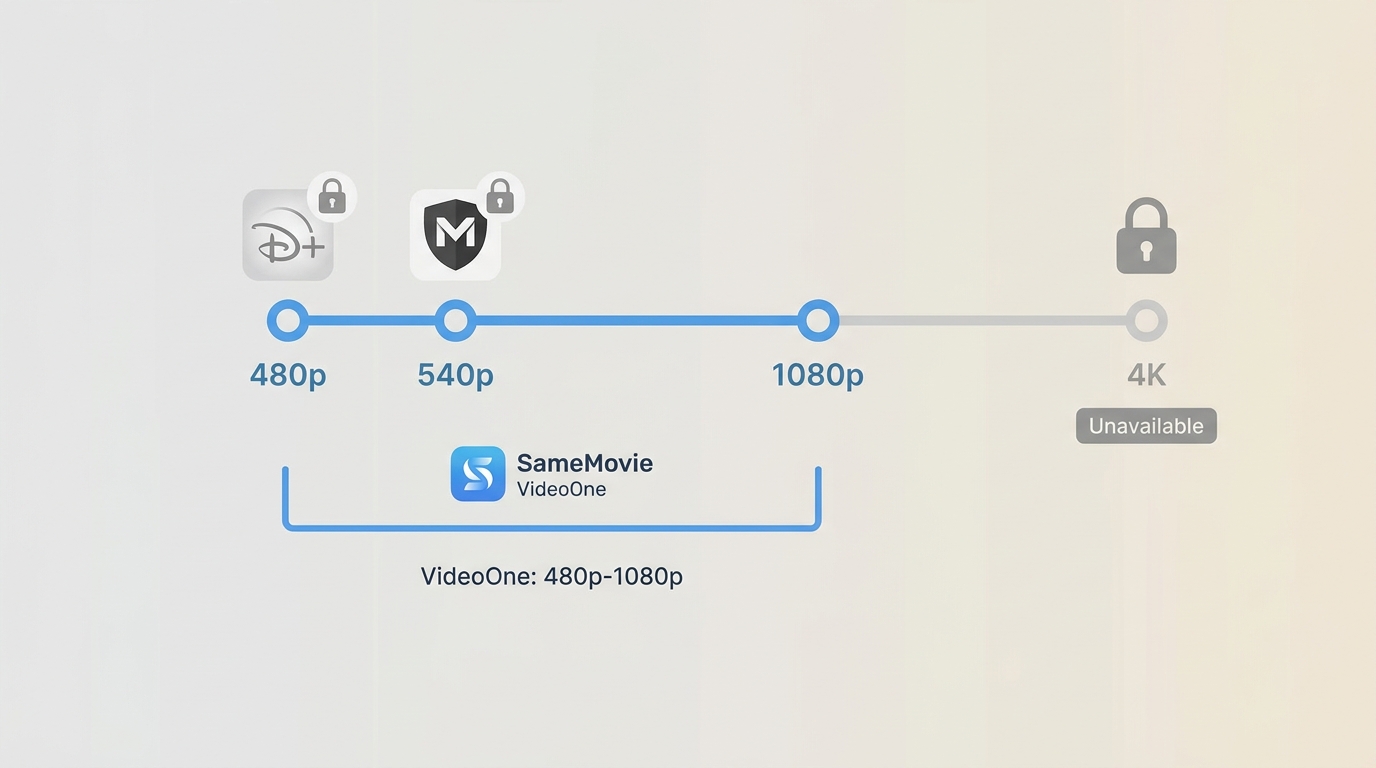
- Maximum resolution: 1080p. Some Disney, Marvel, and other protected titles may cap at 480p or 540p depending on the service's DRM tier.
- Audio: saves the service's available track, typically stereo AAC on most titles.
- Subtitles: external SRT or soft-coded, depending on availability.
My verdict: if 1080p and MP4/MKV cover your archive standard, VideoOne is a fair fit. If you were expecting a 4K or HDR ceiling here, this is the wrong tool — that's a hard product limit, not a bug.
Platform and Content Limitations
Verified capability is one thing; platform-dependent availability is another. Amazon Prime, for example, often surfaces service-side errors during the license token exchange — that's an upstream issue, not a settings problem. YouTube Shorts is another weak point: VideoOne can grab the audio track reliably but frequently drops the VP9 video stream, leaving you with a black-screen file. Short-form archiving isn't its strength. For the Amazon-specific behavior in more depth, see this samemovie Amazon video downloader review.
SameMovie Pricing and Value
SameMovie sells its per-platform downloaders and the VideoOne bundle separately. Category-typical pricing for this segment lands in a monthly, annual, and lifetime tier structure, but the current numbers move often — check the vendor site for what you'd actually pay today. The cost math that catches people out: if you subscribe to three or four services and want to archive across all of them, buying separate platform products stacks up quickly against a single multi-platform tool. My rule of thumb: buy VideoOne only if two or more of its supported services are on your active archive list; below that, standalone tools or a broader alternative make more financial sense.
SameMovie Pros and Cons
What works:
- Clean MP4/MKV output that plays anywhere without a special client.
- Subtitles preserved in usable formats.
- Active development — version 2.0.2 shipped in July 2026 with targeted fixes.
- Straightforward for single-service archiving at 1080p.
What doesn't:
- 1080p ceiling, with some protected titles dropping to 480p/540p.
- Separate products per platform inflate cost for multi-service users.
- Update-sensitive failures cluster around Widevine/HDCP shifts.
- Short-form platforms like YouTube Shorts remain unreliable.
If SameMovie's limits fit your workflow, stay on it and treat updates as the primary maintenance task. If they don't — especially if you're juggling three or more services or want higher than 1080p — that's the honest signal to look at a broader desktop workflow like StreamFab All-In-One, which we cover next.
SameMovie and StreamFab Compared
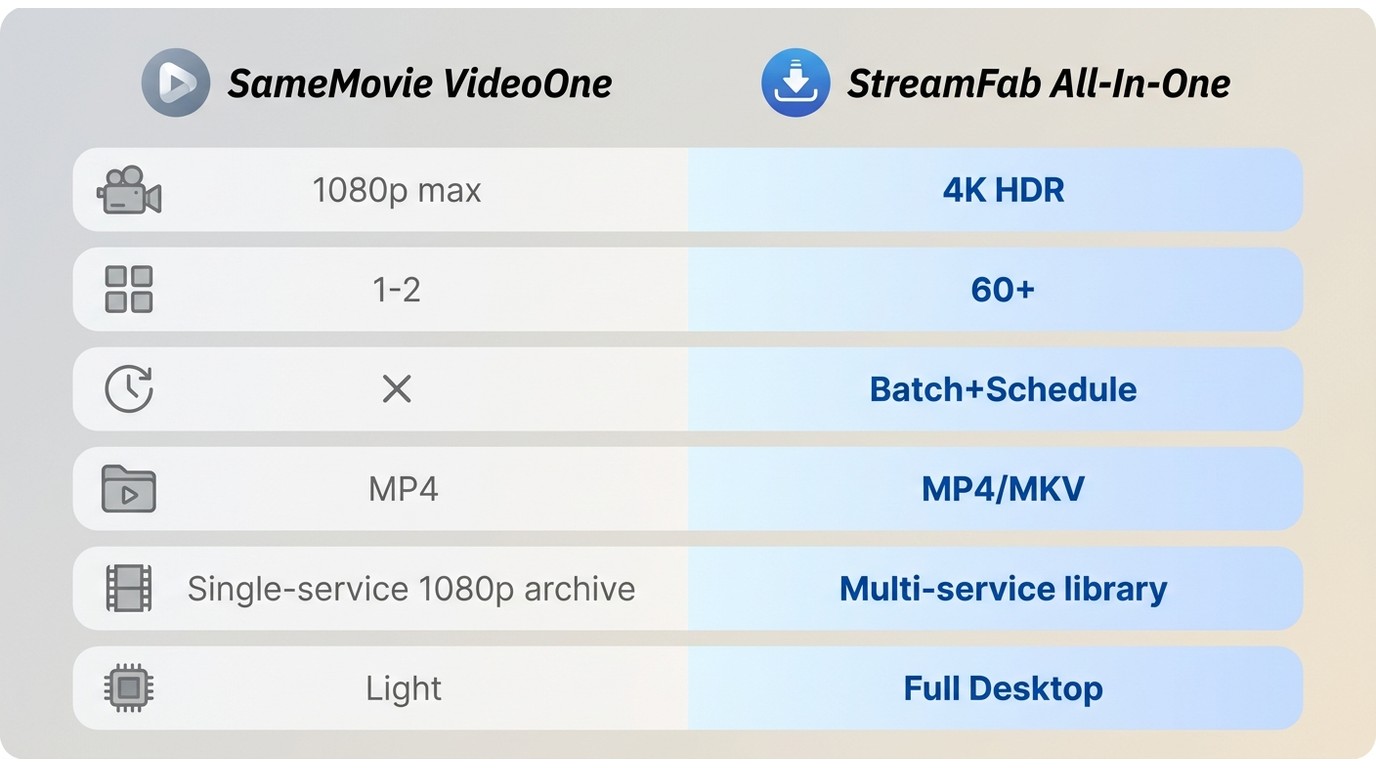
One warning first: searches for cracked versions of any downloader are a security trap — community reports and my own past audits consistently find credential-harvesting payloads bundled in those installers. Stay on legitimate builds. With that out of the way, here's how SameMovie VideoOne compares with StreamFab All-In-One on the dimensions that actually change a buying decision. See the table below.
Who Each Downloader Suits
SameMovie VideoOne fits readers who archive one or two services at 1080p, prefer a lighter single-purpose tool, and are fine tracking per-platform product updates. StreamFab All-In-One fits readers who archive across several services, want a single app with batch and scheduled workflows, and accept a heavier desktop install in exchange. Neither is universally "better" — the decision hinges on how many services you actively archive.
StreamFab as a Desktop Alternative
StreamFab utilizes advanced rapid-decryption algorithms that handle new 2026 DRM architectures in seconds, offering native EAC3 5.1 audio and true 4K/1080p resolution extraction where SameMovie falls back to 720p.
- Save titles from 60+ streaming services in one desktop app for content you're authorized to access
- Resolution up to 4K where the platform and plan allow, with original multichannel audio preserved
- Output to MP4 or MKV for playback across common players and devices
- Schedule overnight downloads for newly released episodes automatically
- Batch entire seasons in a single queue to save time
Technical Benchmark Table (2026)
| Dimension | SameMovie VideoOne | StreamFab All-In-One |
|---|---|---|
| Platform coverage | Selected services via VideoOne bundle | 60+ streaming services(broader multi-platform reach) |
| Maximum resolution | 1080p (some titles 480p/540p) | Up to 4K where the platform and plan allow(1080p on services capped at 1080p) |
| Output formats | MP4, MKV | MP4, MKV(subtitles as SRT or embedded) |
| Audio and subtitles | Service-available audio; SRT or soft subs | Preserves original multichannel audio where available(multilingual subtitles) |
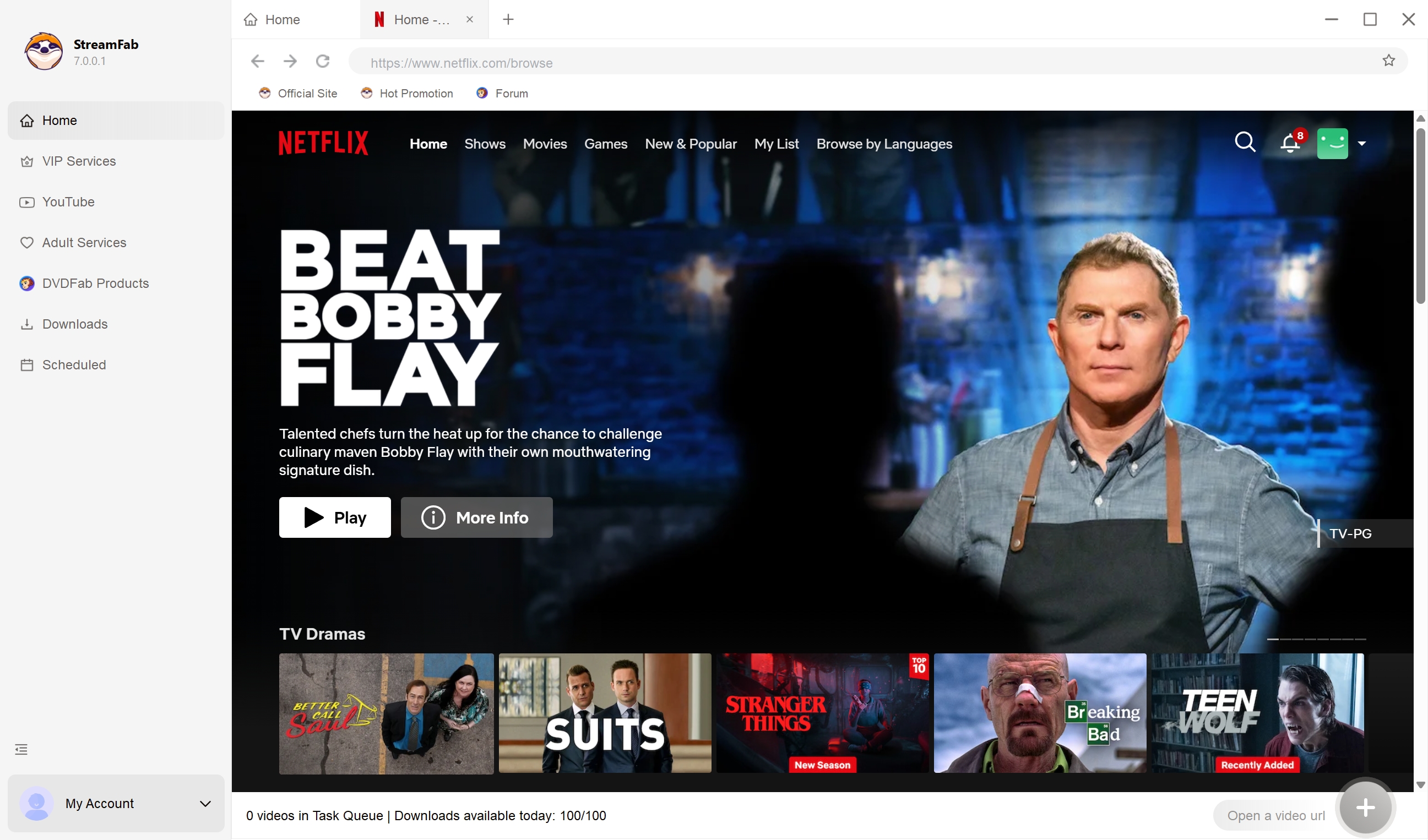
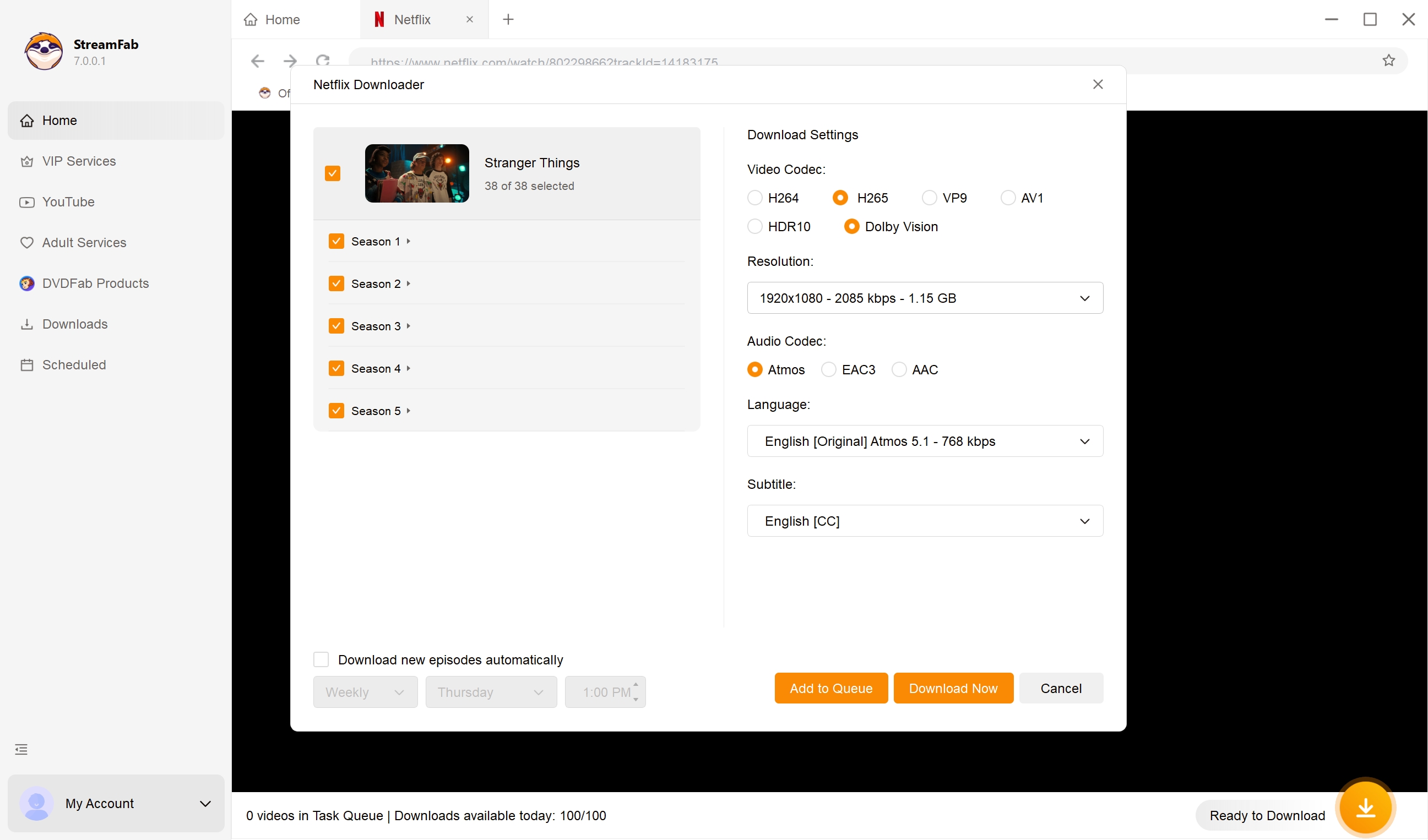
Operation steps
FAQs
Conclusion
Three moves, in order. First, find your exact error code in the table above and run the fix — updating to the current SameMovie build clears most 3091, 6303, and 6120 reports on its own. Second, if the failures fit within SameMovie's product limits (1080p, one or two services, MP4/MKV output), stay on it and treat updates as your primary maintenance task. Third, if you're hitting the same code across multiple services after updates, or you're paying for separate per-platform products to cover your library, that's the point where a broader desktop local-file workflow — the kind StreamFab All-In-One is built around — earns its place. Explore SameMovie alternatives if the fit gap keeps widening.

Evaluating the Audials One 2026 free trial? I tested its 720p caps, examined if is audials legal under Fair Use
By Erika Leen - Sep 29, 2026
Are you thinking of purchasing NoteBurner and unsure if it’s worth the investment? In this NoteBurner review, let’s delve into its product lines, particularly the NoteBurner Video Downloader’s pros and cons.
By Marcia Hatcher - Sep 28, 2026
Read our in-depth Audials review for 2026. Is Audials safe and legal for Amazon Prime? Discover actual test results, Widevine DRM fixes, and better alternatives.
By Erika Leen - Sep 28, 2026
TuneFab’s Amazon downloader suits a focused desktop routine, while VideOne covers multiple services. Compare their workflows, license structures, and output checks with StreamFab, then use the numbered setup and maintenance steps for authorized personal offline viewing.
By Erika Leen - Sep 24, 2026