
YouTube to Ringtone: Trim, Convert, and Set It on iPhone or Android

Summary: If you want any song, music, instrument, dialogue, poem, or anything else as your phone's ringtone, YouTube to Mp3 ringtone downloader is the one-stop shop.
Here's the short answer: a YouTube to ringtone workflow requires an editable source, a short recognizable clip, and an audio format your phone accepts. It does not apply to any YouTube video. Follow these steps only for content you're authorized to access and edit, where permitted by platform terms and applicable law.
YouTube lets creators download their own uploads as MP4 files, while YouTube Music offline downloads stay inside the app rather than becoming editable ringtone audio files. This guide shows how to prepare the audio, trim it, and set it on an iPhone or Android phone.
I'll flag where the road forks by device, and where a quick browser tool is fine versus where a desktop app pays off.

Step 1: Save YouTube Audio in High Quality

The first hurdle is getting an editable source file. Start with an original recording or a permitted download of your own YouTube upload. If you do not already have usable local audio, the desktop option below can prepare a clean file before you trim it in a separate audio editor.
On Windows and Mac
If you already have an original recording or a permitted download of your own upload, you can send that file straight to an audio editor. Otherwise, StreamFab YouTube Downloader Pro is a desktop option for high-quality local audio from authorized content. StreamFab YouTube Downloader Pro supports MP3 and M4A audio output on Windows and Mac, and its batch capability can prepare several candidate clips before you choose one. The existing workflow to use the YouTube to MP3 workflow is useful when you need several authorized source files rather than a single clip.
My practical rule is simple: use an existing editable file when you have one, and use the desktop workflow when preparing several authorized clips would save time. Once the audio is saved, open it in a separate editor for trimming.

> Detect videos in the built-in browser as you navigate.
> Save editor-ready audio in MP3 at up to 320 kbps.
> Choose MP3 or M4A audio output for the next editing step.
> Write available artist and title metadata to help organize candidate clips.
> Prepare multiple authorized source files with batch processing.
> Send the saved audio to a separate editor to trim and export the final ringtone.
Steps to save the audio on PC

Choose the video or audio you are authorized to save, then select MP3 and your preferred available quality setting.

Start the download, save a local copy for personal offline use, and open it in a separate audio editor for trimming.

On Android Without a PC
Skipping the computer is straightforward when you already have an authorized audio file stored locally on your phone. A streaming-app offline download is not a stored ringtone audio file, so first confirm that the source is available in your phone's file manager. If you still need to obtain your own upload or another permitted source, the steps to learn how to download YouTube videos on Android cover that source-file stage. Then open the actual local audio in a mobile audio editor, trim the recognizable moment, and export an audio file your ringtone picker can read. iPhone readers should follow the iPhone route below.

Step 2: Trim Your Clip to 15-30 Seconds
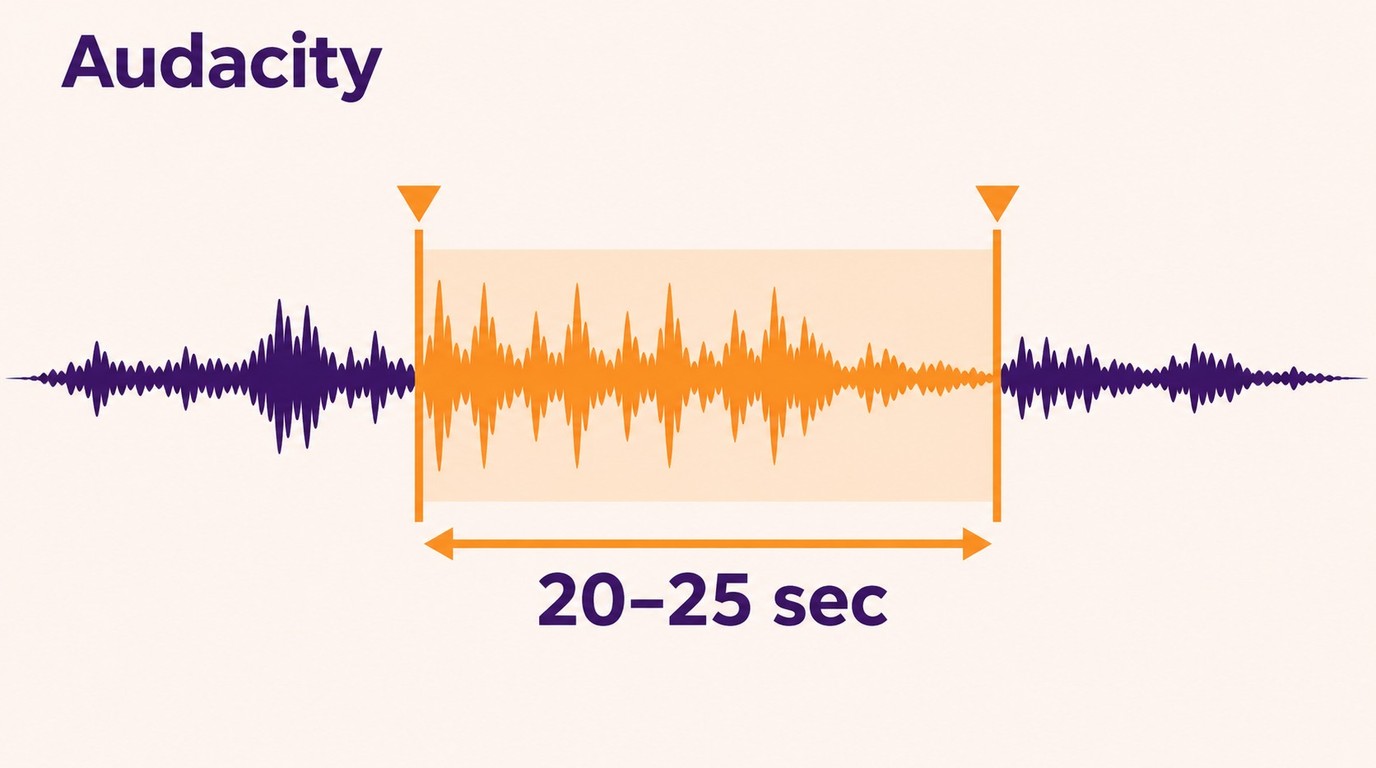
A 15–30-second clip is a practical editing target; GarageBand applies a 30-second limit when it exports a ringtone. A tight loop lands better than a full verse. Pick the catchiest phrase — the drop, the hook, the punchline — and clip either side.
Edit the saved audio with a separate audio trimmer, such as Audacity on desktop, a lightweight app on mobile, or GarageBand on Apple gear. As an editing preference, I would start with a 20–25-second phrase that ends naturally rather than automatically filling the full 30 seconds. Cut on a beat, not mid-word.
Step 3: Pick MP3 or GarageBand-Compatible Audio
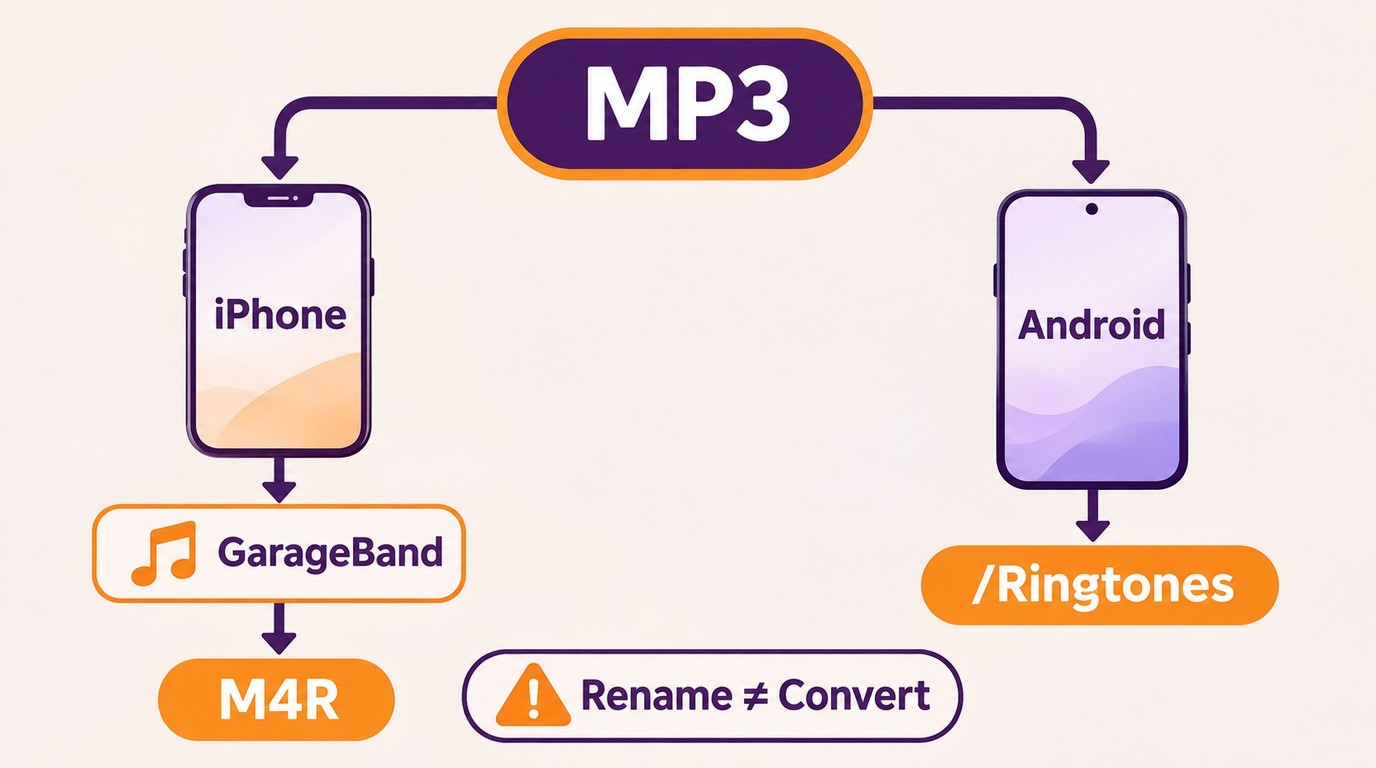

This step solves the file mismatch between your saved source and the phone's ringtone workflow. GarageBand can import MP3, AAC, WAV, and AIFF audio before exporting the iPhone ringtone, while Android can select a stored MP3 file. For a clip I plan to use on both platforms, I choose MP3 as the editing handoff.
| Phone/workflow | Editor input | Ringtone setup |
|---|---|---|
| iPhone with GarageBand | MP3, AAC, WAV, or AIFF audio | My Songs > Share > Ringtone |
| Android with Samsung settings | Stored MP3 audio file | Settings > Sounds and vibration > Ringtone > Add (+) |
If your saved source is an MP4 video, extract the actual audio first, trim it, and export MP3 for Android or a supported audio format for GarageBand. Changing a file extension from .mp4 to .mp3 does not convert the video into audio. A clean source matters, but a larger export bitrate cannot restore detail already lost from the source.
If GarageBand rejects an otherwise usable clip, re-exporting the trimmed audio as WAV is a reasonable compatibility step before importing it again.
Step 4: Set the Ringtone on Your iPhone
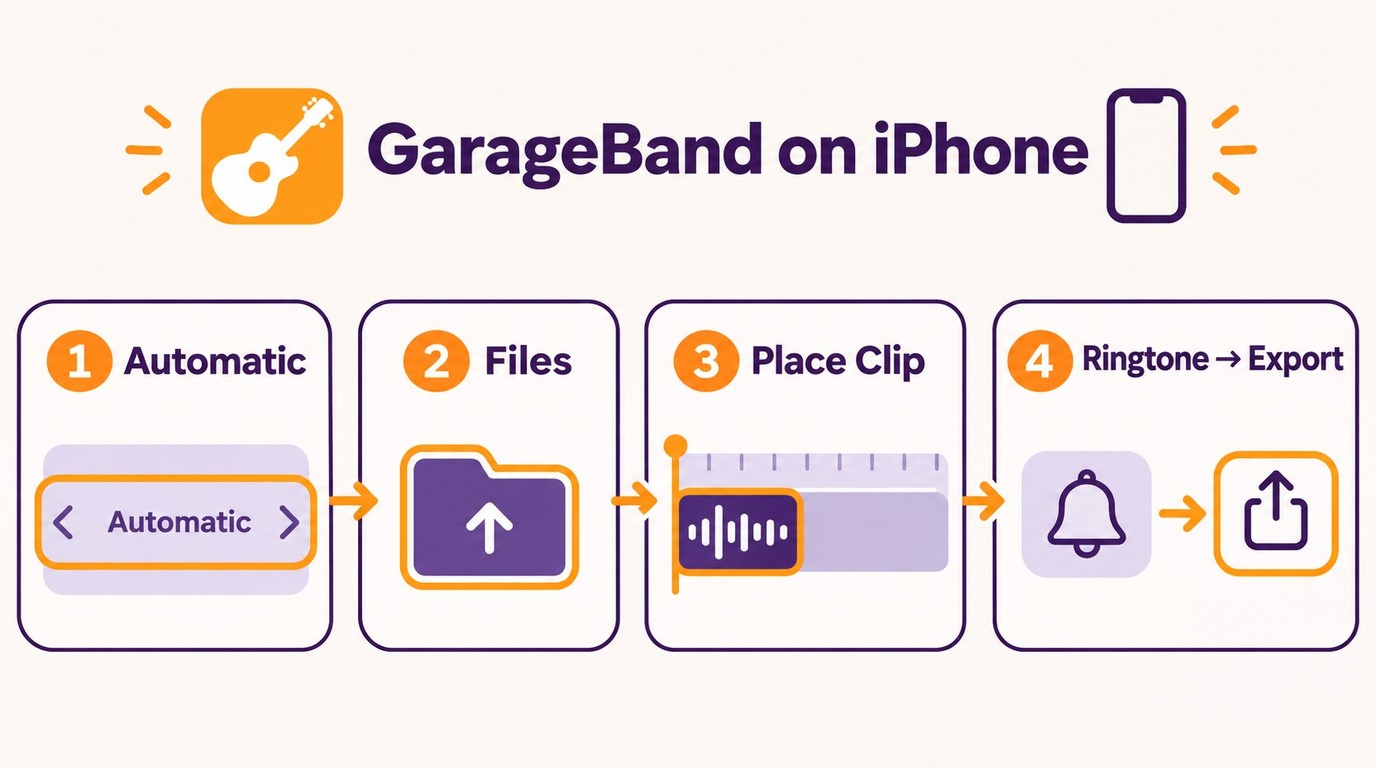

GarageBand for iPhone imports supported audio, including MP3, AAC, WAV, and AIFF, and exports a ringtone of up to 30 seconds. A prebuilt M4R file is not required for that workflow. Setting the song-section length to Automatic allows a complete audio import.
- Open GarageBand, start an audio project, and set the song-section length to Automatic.
- Open Loop Browser > Files, import the supported audio file, and place the clip at the beginning of the track.
- Return to My Songs, open the project's sharing options, and choose Share > Ringtone.
- Name the ringtone, tap Export, and select it from Settings > Sounds & Haptics > Ringtone.
If your phone offers a ringtone action for the saved clip, you can use that route instead. Otherwise, use the documented GarageBand workflow or a compatible computer-transfer option. On a compatible Mac setup, Finder's device view remains an alternative for transferring a prepared ringtone.
Fixes When GarageBand or M4R Won't Work
Two failure modes come up repeatedly:
- GarageBand won't install. As of November 2026, the current US GarageBand listing requires iOS 27.0 or later. This requirement applies to installing the latest release; an already-installed compatible version may still be usable on an older device. If GarageBand is unavailable, use the phone's ringtone action when it is offered for the saved clip, or use a compatible computer-transfer route.
- The audio won't import or the exported ringtone doesn't appear. Confirm that the input is MP3, AAC, WAV, or AIFF audio rather than a renamed video file. I would check import compatibility before exporting again; if necessary, re-export the trimmed audio as WAV and repeat the GarageBand import and ringtone export.
Step 5: Set the Ringtone on Your Android Phone
Android's last hurdle is getting Settings to recognize the prepared clip as a real local audio file. Make sure the trimmed MP3 is stored on the phone, then open its ringtone picker; the exact menu and storage location differ by manufacturer and Android version.
Samsung Galaxy phones use a device-specific ringtone picker. Follow the steps below to add the stored audio file and keep the beginning of your trimmed clip.
Use an actual local audio file, not an offline download stored only inside a streaming app.
Trim the clip first so the ringtone begins at the intended moment.
Save the audio where the phone's file picker can access it.
Check the audio format if the file does not appear in the ringtone picker.
Preview the selected tone and adjust ringtone volume separately from media volume.
Choose Your Saved Clip on Samsung
Open Settings on your Samsung Galaxy phone.

Tap Sounds and vibration, then select Ringtone.

Tap Add (+) and choose the stored audio file you prepared.

Turn off Play selected highlights only if you want the ringtone to begin at the start of your trimmed clip, then tap Done.

Online Converters: Check Safety Before You Click
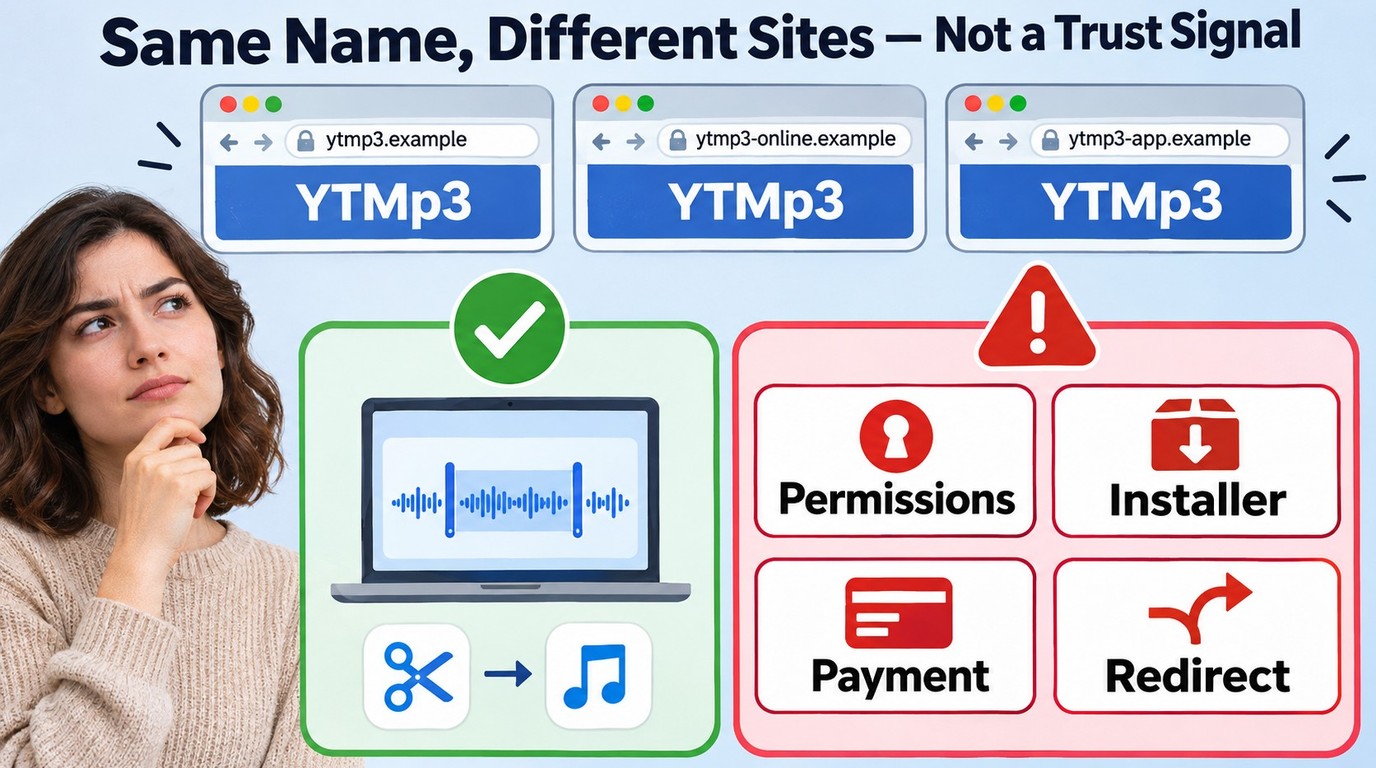
A browser ringtone editor can be practical for a small audio or video file that you are authorized to edit. Labels such as YTMp3 may appear across different domains, so a familiar name alone does not establish that a site is trustworthy. Stop if the site forces an extension, redirects to an unrelated installer, or requests unnecessary payment or browser permissions.
For a small local clip, I use this checklist before uploading a file:
- The site should never demand an app install or ask for broad browser permissions.
- Do not enter payment details when a basic trim or export unexpectedly demands them.
- Confirm that the export is an actual audio file, then scan it before opening it.
- Leave the site if it redirects to unrelated installers or blocks the export behind a helper app.
Clean interface, no forced app installs or aggressive permission prompts.
- Accepts an authorized local audio or video file without requiring an account.
- Exports a standard audio file that can be checked before transfer.
Intrusive pop-ups, redirects, or fake "download" buttons crowding the page.
- Hides the output format or provides a renamed video file instead of exported audio.
Requests to install a browser extension or a "helper" app before the download.
If you still use an online converter, do this
> Select or upload a local audio or video file that you are authorized to edit.
> Trim the recognizable phrase and export it as an actual audio file without installing an extension or helper app.
> Check and scan the exported file before transferring it to your phone for ringtone setup.

FAQs
1. Can I use a YouTube Music track as a ringtone?
YouTube Music offline downloads remain available for listening within the app; they are not editable local ringtone files. Use an original recording or another local audio file whose license and platform permissions allow editing and ringtone use, then follow the same trim, format, and setup workflow.
2. Is it legal to turn a YouTube video into a ringtone?
Authorization to listen does not automatically grant permission to download, modify, or use a video's audio. Use only content you are authorized to access and edit for this purpose, do not redistribute it, and follow applicable law and YouTube's terms for your specific use case. Personal ringtone creation falls within personal-use norms in many jurisdictions, but this is not legal advice and rules differ by country; personal use itself does not grant download or editing permission.
3. Why does my YouTube ringtone sound too quiet?
Ringtone volume and media volume are separate controls, so check the ringtone level first. If the clip is still quiet, raise its level in an audio editor without clipping; a higher export bitrate will not make it louder or restore missing source detail.
4. Can I set a YouTube Shorts clip as a ringtone?
Yes, if you are authorized to download and edit the content. Extract actual audio from the Short, trim the desired phrase, and use the appropriate phone workflow. GarageBand can import supported audio and export a ringtone of up to 30 seconds; Android can select a stored MP3 audio file.
Conclusion
The YouTube to ringtone process becomes manageable once you solve the three obstacles in order: obtain an editable source file, isolate a recognizable 15–30-second moment, and use the format and installation route your phone accepts. A browser editor may be enough for a small authorized local clip. For repeatable preparation, I recommend StreamFab YouTube Downloader Pro as a desktop option for high-quality local audio from authorized content. The final check is simple: play the saved ringtone from Settings and confirm that it begins at the moment you intended.
YouTube creator downloads and YouTube Music offline listening follow different file-access rules.
Current Workflow Notes
GarageBand imports supported audio and exports iPhone ringtones of up to 30 seconds.
Samsung Galaxy phones can add a stored audio file through Ringtone settings.
An MP4 video requires actual audio extraction before it can be used as ringtone audio.
Authorized access alone does not grant permission to download or edit a video.
Note:Use this software only for content you are authorized to access, save, and edit for personal offline use. Do not redistribute saved files. Follow YouTube's terms, other applicable platform terms, and local law; permission depends on the specific content and intended use.

To get straight to the point, downloading YouTube videos on a PC starts with choosing the right outcome: account-bound offline viewing, a copy of your own upload, or an authorized local file. You need a PC, legitimate access to the video, and a method that matches how you plan to watch it.
By Jacob Harrison - Oct 29, 2026

Compare ten YouTube download and recording options, with a six-tool table for desktop playlist workflows. Learn which free or paid approach fits your device, how to save authorized videos as MP4, and how to check completed files for missing video or audio.
By Erika Leen - Oct 15, 2026
Downloading a deleted YouTube video requires a surviving authorized copy in an archive or existing backup. Learn to distinguish saved media from page metadata, locate videos with or without a URL, and back up accessible videos before deletion. The three prevention workflows include a checklist for verifying saved files.
By Nicole Lopez - Oct 13, 2026
Choose an available 2160p source to download YouTube videos in 4K with audio. This guide explains desktop, browser, and mobile workflows, with checks for resolution, sound, full duration, and HDR. Compare local files with YouTube Premium offline viewing and find concise answers about free tools and missing audio.
By Nicole Lopez - Oct 13, 2026