What Is an M3U8 File? How It Works, Playback, and MP4

Summary: Struggling with encrypted M3U8 streams? Learn how to extract live URLs, fix VLC playback errors, and bypass 2026 DRM protections easily with advanced downloading solutions.
Table of Contents
What Is an M3U8 File?
Here's the short answer: an M3U8 file is a UTF-8 encoded text playlist (manifest) used by HTTP Live Streaming (HLS). It lists the URLs of small media segments and stream metadata, and it does not itself contain the video or audio. If you clicked an .m3u8 link or downloaded one and it won't open like a normal video, that is why. This guide walks through what's inside a manifest, how HLS uses it, how M3U8 compares to MP4, how to play M3U8 files across VLC, browsers, Android, and iPhone, and where encrypted streams fit in.
Inside an M3U8 File: Anatomy and Tags
Reading the manifest is the fastest way to understand what you actually downloaded, because every tag tells the player something specific about the stream.
A Sample M3U8 Manifest
A minimal master playlist looks roughly like this:
#EXTM3U
#EXT-X-VERSION:4
#EXT-X-STREAM-INF:BANDWIDTH=2000000,RESOLUTION=1280x720
index_720p.m3u8
#EXT-X-STREAM-INF:BANDWIDTH=5000000,RESOLUTION=1920x1080
index_1080p.m3u8
Each variant playlist then lists the actual segments:
#EXTM3U
#EXT-X-VERSION:4
#EXT-X-TARGETDURATION:6
#EXT-X-KEY:METHOD=AES-128,URI="key.php?id=1"
#EXTINF:6.000,
segment_001.ts
#EXTINF:6.000,
segment_002.ts
#EXT-X-ENDLIST
Core M3U8 Tags Explained
#EXTM3U— required header identifying the file as an extended M3U playlist.#EXT-X-VERSION— the HLS protocol version the manifest targets.#EXT-X-STREAM-INF— appears in a master playlist, one entry per bitrate/resolution variant.#EXTINF— the duration of the segment on the line directly beneath it.- The
.tsor.m4ssegment lines are the actual media chunks the player fetches. #EXT-X-KEY— signals that segments are encrypted (for example, AES-128) and points to the key resource.- If the paths in the manifest are local (like
C:\media\chunk_1.ts) instead of absolute remote URLs, moving the file to another device will break playback because those directory links no longer resolve.
Once you can read these tags, an "empty" or garbled M3U8 usually gives itself away: a truncated file, a missing #EXTM3U header, or a GZIP-compressed payload the client failed to decode.
How M3U8 Works in HLS Streaming
Now that you know what the manifest contains, here is how HLS actually uses it in the wild.
Adaptive Bitrate and Media Segments
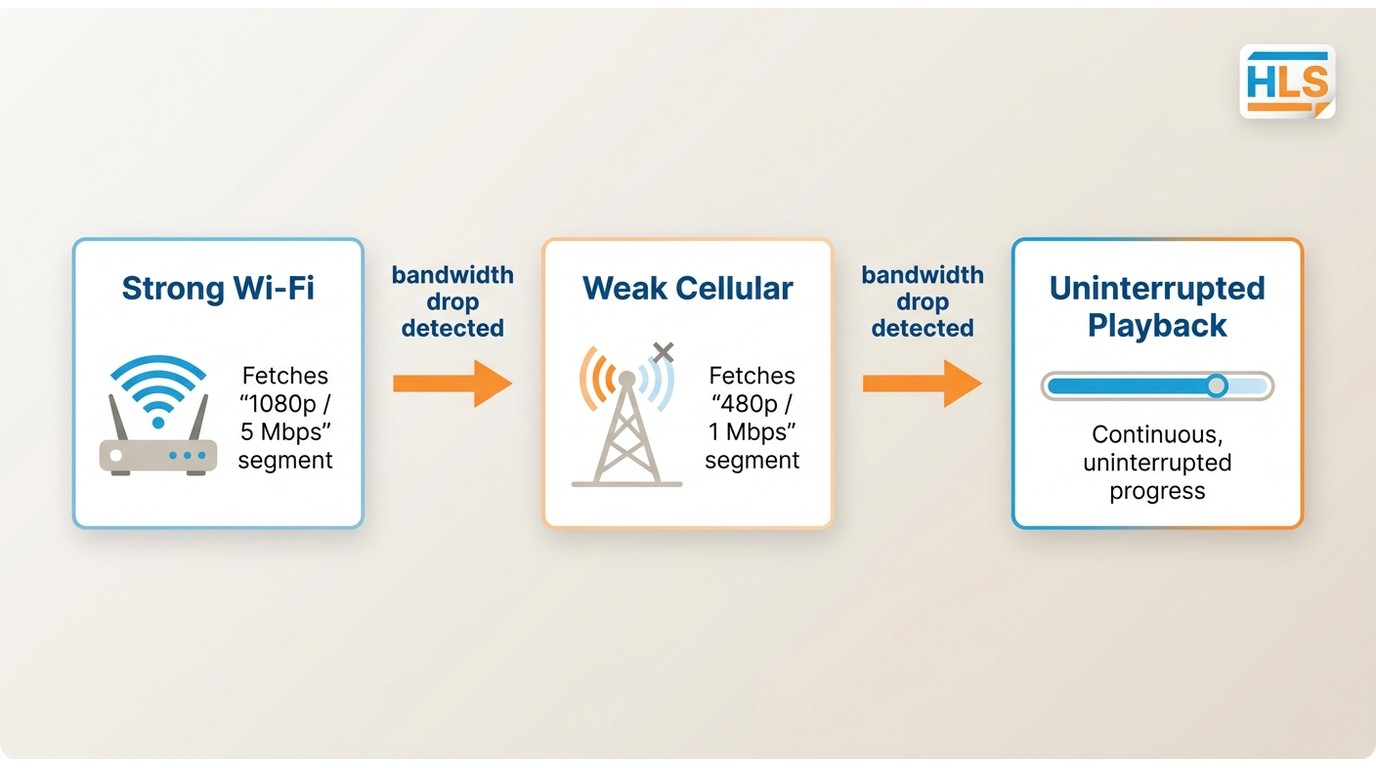
HLS is built around adaptive bitrate streaming. The master M3U8 points to a set of variant playlists, each representing a different quality level (for example 1080p, 720p, 480p). The player switches between variants based on real-time bandwidth: when the network slows, it drops to a lower bitrate segment so playback keeps going instead of buffering. This is why the same show can look sharp on Wi-Fi and soften on a weak cellular signal without ever pausing.
Local Paths vs Remote URLs
Inside the payload, the #EXT-X-KEY tag signals an encrypted stream. And if the segment paths are local rather than absolute remote URLs, moving the manifest to another device instantly breaks playback because the referenced files aren't there.
M3U8 vs MP4: Key Differences
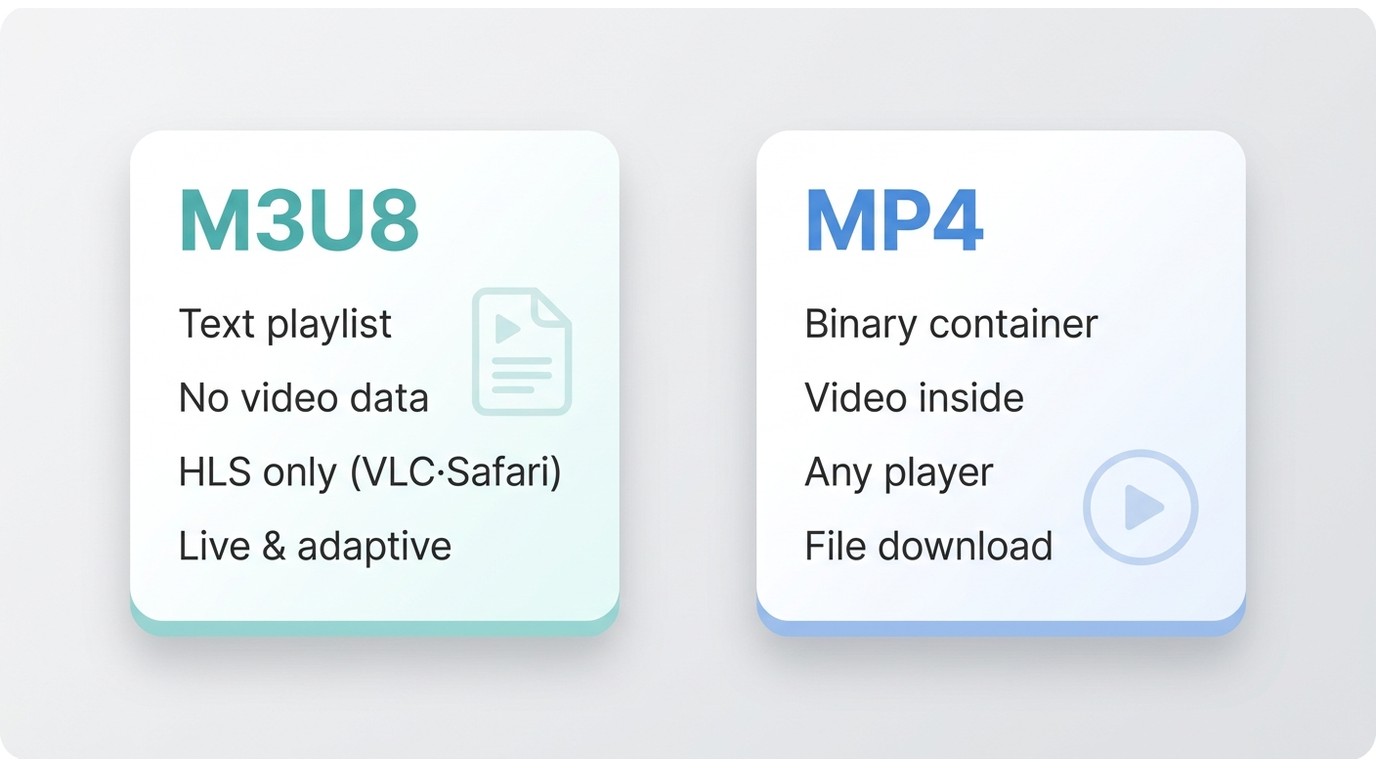
The single biggest source of confusion is that M3U8 and MP4 are not the same kind of thing. One is a text playlist, the other is a self-contained media file.
| Dimension | M3U8 (HLS playlist / manifest) | MP4 (self-contained container) |
|---|---|---|
| What it is | UTF-8 text file listing segment URLs and metadata | Binary container holding video, audio, and subtitles in one file |
| Contains video data | No — only pointers to .ts or .m4s segments | Yes — the media itself lives inside the file |
| How you play it | An HLS-aware player (VLC, Safari, hls.js in Chrome/Firefox) fetches segments in order | Any mainstream player opens it directly |
| Best use | Live and adaptive on-demand streaming over HTTP | Offline playback, sharing, editing, archiving |
| To get one file | Download and merge every referenced segment into a single container | Already one file — just save it |
Because an M3U8 only points to segments, "converting M3U8 to MP4" really means merging M3U8 segments into an MP4 — a workflow that only applies to public streams or content you're authorized to access. For a walk-through, see our guide on merging M3U8 segments into an MP4.
Opening and Playing M3U8 Files
Because an M3U8 is just a manifest, playback comes down to picking a client that can follow the segment list and fetch it over HTTP. Here is what actually works across the environments most readers ask about.
| Environment | Native HLS support | Practical way to play | Best for / Not ideal for |
|---|---|---|---|
| VLC (Windows / Mac / Linux) | Yes | Media > Open Network Stream, paste the .m3u8 URL | Best for public streams and quick playback tests. Not ideal for streams behind short-lived session tokens. |
| QuickTime (macOS) | Yes | File > Open Location, paste the URL | Best for straightforward HLS URLs. Not ideal for encrypted or token-protected streams. |
| Chrome / Firefox / Edge (desktop) | No | Use a site that embeds the hls.js client-side library, or an HLS playback extension | Best for sites that ship their own player. Not ideal for pasting a raw .m3u8 into the address bar. |
| Safari (iOS / macOS) | Yes | Open the .m3u8 URL directly in Safari | Best for on-the-go playback. Not ideal if the stream is region-locked. |
| Android | No system-wide | VLC for Android, or an HLS-aware player app | Best for public HLS URLs. Not ideal for DRM-protected catalogs. |
Playing M3U8 in VLC
For unencrypted streams, VLC is still the most reliable desktop option. Open Media > Open Network Stream, paste the URL, and hit play. One caveat worth flagging: VLC struggles when a site rotates short-lived session tokens, so a link that worked five minutes ago may quietly stop resolving. If that happens, generating a fresh URL from the source page usually fixes it.
Browsers, Android, and iPhone
Desktop Chrome, Firefox, and Edge do not play HLS natively — the site itself has to load hls.js, a client-side JavaScript library that feeds segments into a Media Source Extensions buffer. Safari on iOS and macOS plays HLS natively, so a plain .m3u8 URL opens directly. On Android, VLC or an HLS-aware player app is the practical choice.
A common gotcha across all of these is an "Access Denied" response. It's rarely a firewall — usually it's Cross-Origin Resource Sharing (CORS) rules, geoblocking, or a missing HTTP referrer header, all decided by the server hosting the stream.
Finding M3U8 Stream URLs
For content you're authorized to access, where permitted by platform terms and applicable law, locating the manifest URL is often the first practical step. In my editorial testing, this is also where most readers hit their first wall — the URL you can see in DevTools may not be the URL your player can actually use.
Using Browser Network Tools
For public, unencrypted streams, browser DevTools still works.
Step 1: Fire up your favorite browser and pull open the developer tools (usually Ctrl+Shift+I).
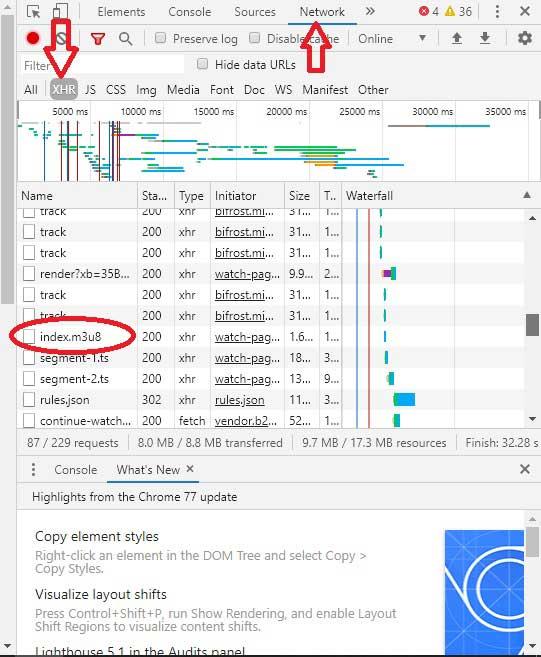
Step 2: Load the target video and press play. Filter the network traffic using the "XHR" tab, then search for ".m3u8". Once the index file appears, right-click and copy the URL.
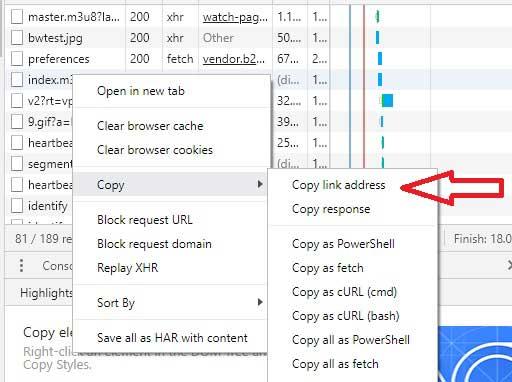
For the full end-to-end workflow, our pillar on downloading an M3U8 video from a website walks through fetching, merging, and saving the segments.
Why Token-Protected Streams Fail in Standard Players
Many sites now deliver their manifests through temporary Blob URLs and short-lived session tokens. A Blob URL is a memory-scoped pointer, not a shareable link, so copying it out of DevTools rarely gives you something a plain player can open. Even when you do capture a real URL, the session token often expires within minutes, which is why VLC stops resolving a link that worked moments ago. The point isn't to defeat that mechanism — it's to recognize why token-protected streams behave this way in a general-purpose player.
Protected Streams and Encrypted M3U8
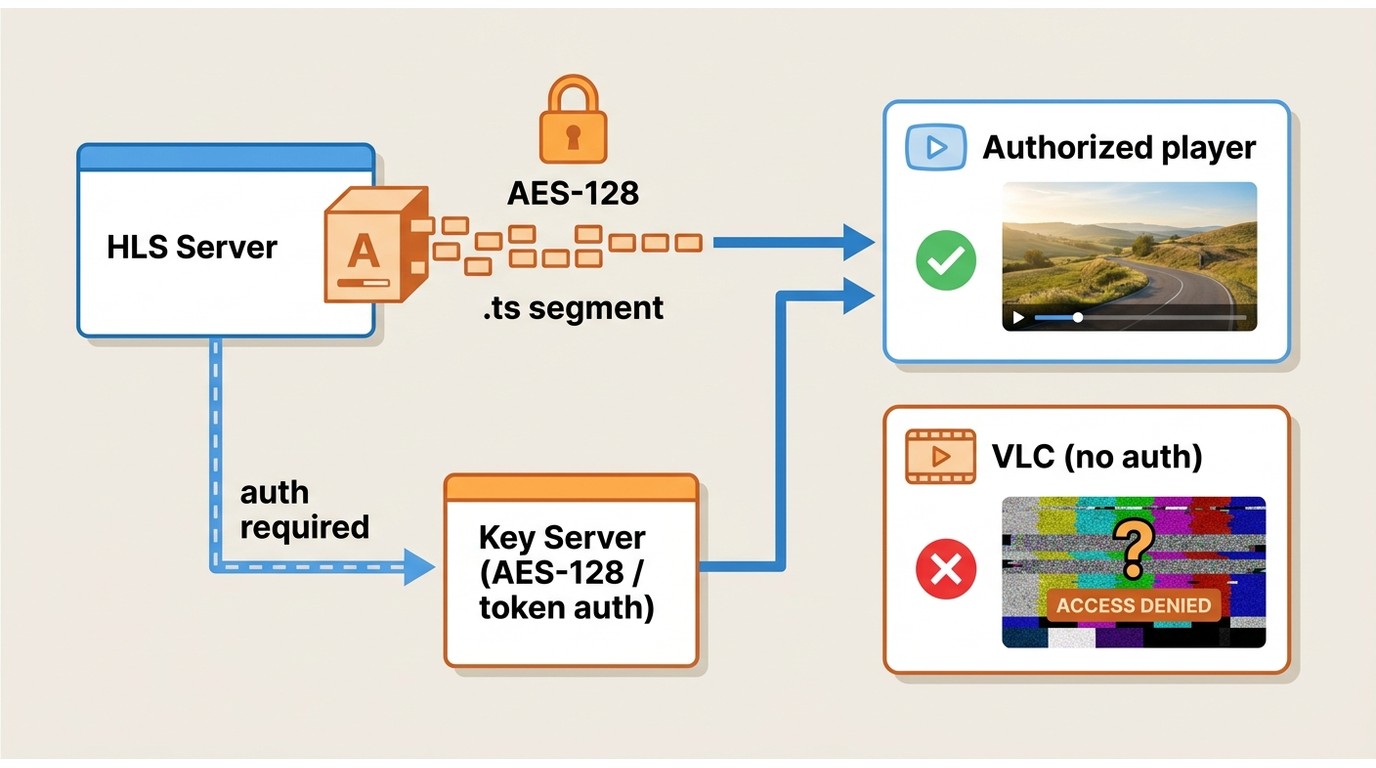
Not every M3U8 you encounter is open. Once you can read the tags, it's easy to tell when a stream is walled off — and worth understanding why a general-purpose player can't push past that boundary.
AES-128 and Widevine Encryption Explained
Many HLS streams wrap their transport stream segments in AES-128 encryption; on major subscription platforms, Widevine L1/L3 typically sits on top of that. Both mechanisms require the platform's own key handshake to decode. Without authorization from the service, the segments arrive as unreadable bytes — that isn't a bug in your player, it's the design of the protection layer.
Saving an Authorized Stream for Offline Viewing
For content you're authorized to access, where permitted by platform terms and applicable law, a desktop tool can save a local copy for personal offline viewing when a browser can't. StreamFab DRM M3U8 Downloader is one such option on Windows and Mac. In the section above we explained why saved segments often land as raw .ts files; a tool like this handles the container step for you, outputting a single MP4 or MKV that opens in any standard player.
On quality, it keeps the source's multichannel audio track rather than downmixing it, and saves video up to the plan maximum (up to 1080p, as of August 2026). For long series, batch mode plus scheduled overnight downloads let a season queue run unattended.
Best for: Windows and Mac users who want a local MP4/MKV of a stream they're authorized to watch, without stitching segments by hand.
Not ideal for: DRM-locked subscription catalogs you aren't licensed to copy, or platforms whose terms explicitly forbid local saves.

- Pre-select the subtitles along with the audio based on the UI language
- Saves M3U8 videos to common MP4/MKC files
- Download M3U8 videos up to 1080p, along with 5.1 stereo
- Full support for metadata such as cast, genre, storyline, and name
- Allows 10x faster speed, plus bulk downloading function
- Save the subtitles to SRT or remux them into the videos together
| Solution | Success Rate on DRM | Time Efficiency | Quality / Bitrate |
|---|---|---|---|
| VLC Media Player | 0% (Fails on AES-128/Widevine) | N/A (Playback only) | Original (If unencrypted) |
| Chrome Extensions | Low (Blocked by Blob URLs & Tokens) | Slow (Real-time recording) | Degraded (Re-encoded) |
| StreamFab Downloader | 99% (Automated hardware-level handshake) | 10x Faster (Direct Segment DL) | 1080p + 5.1 Surround (1:1 Bitstream) |
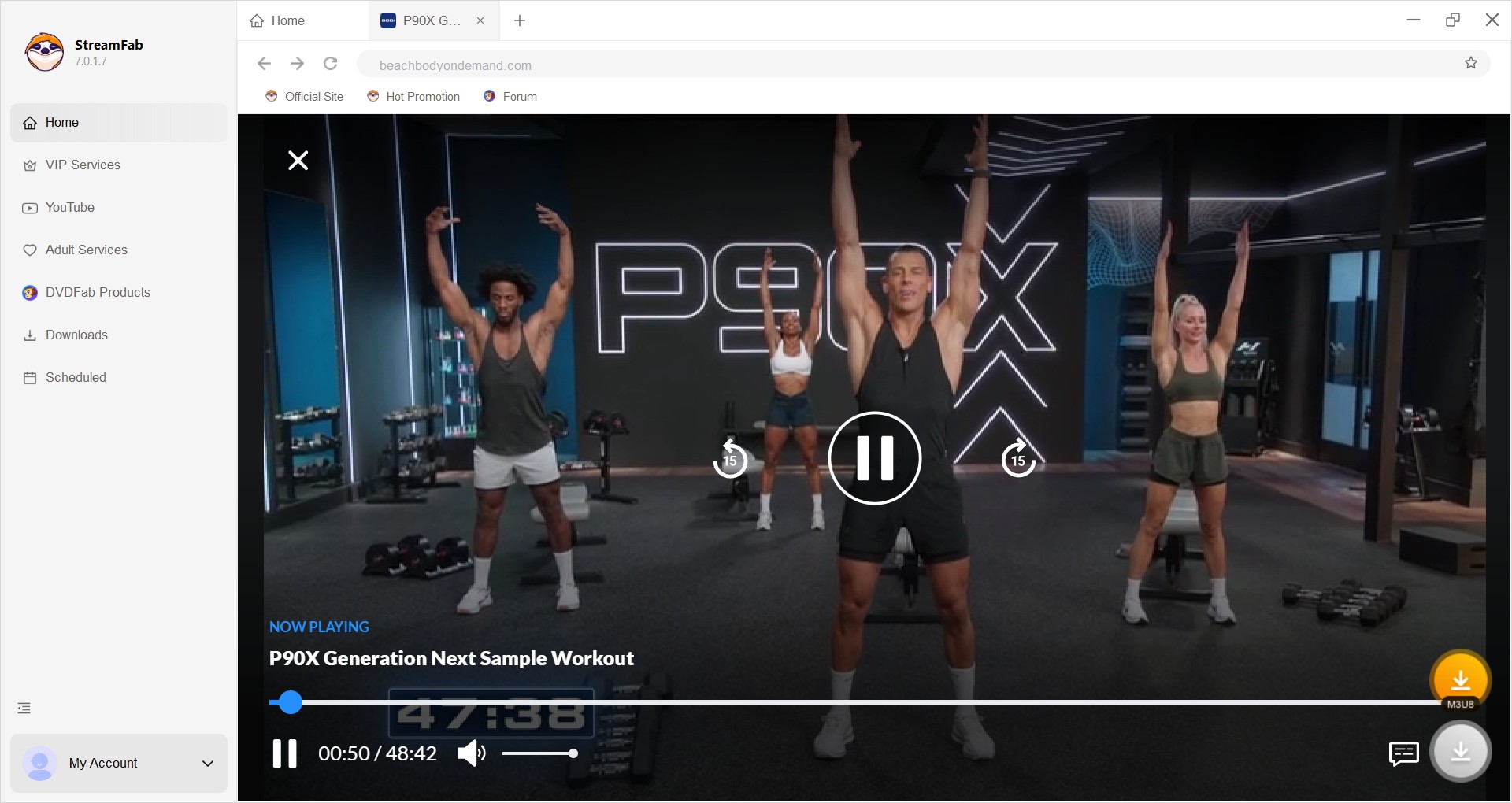
Open the targeted website
Head to the M3U8 website where you want to download videos from into the top part of the address bar on your Homepage. Access it with the help of an in-built browser.
Finalize the particular resolution to download
Start playing the video to download to watch offline. After the beginning of the playback, at the top-left corner of the screen, tap on the 'download' icon. Confirm the desired resolution in your next pop-up.
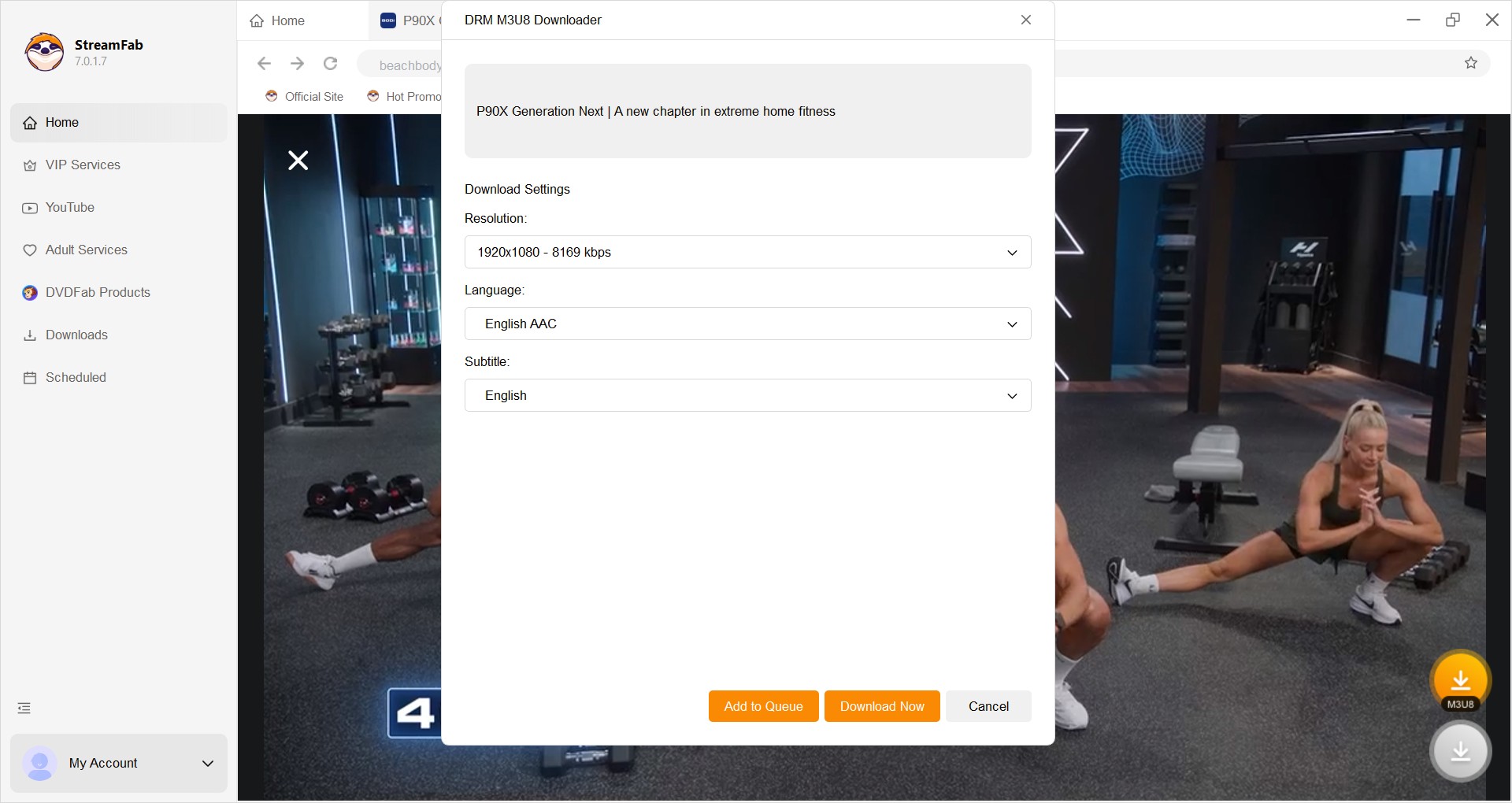
Begin the downloading procedure
After setting up your preferences, click the 'download' button to initiate the downloading process.
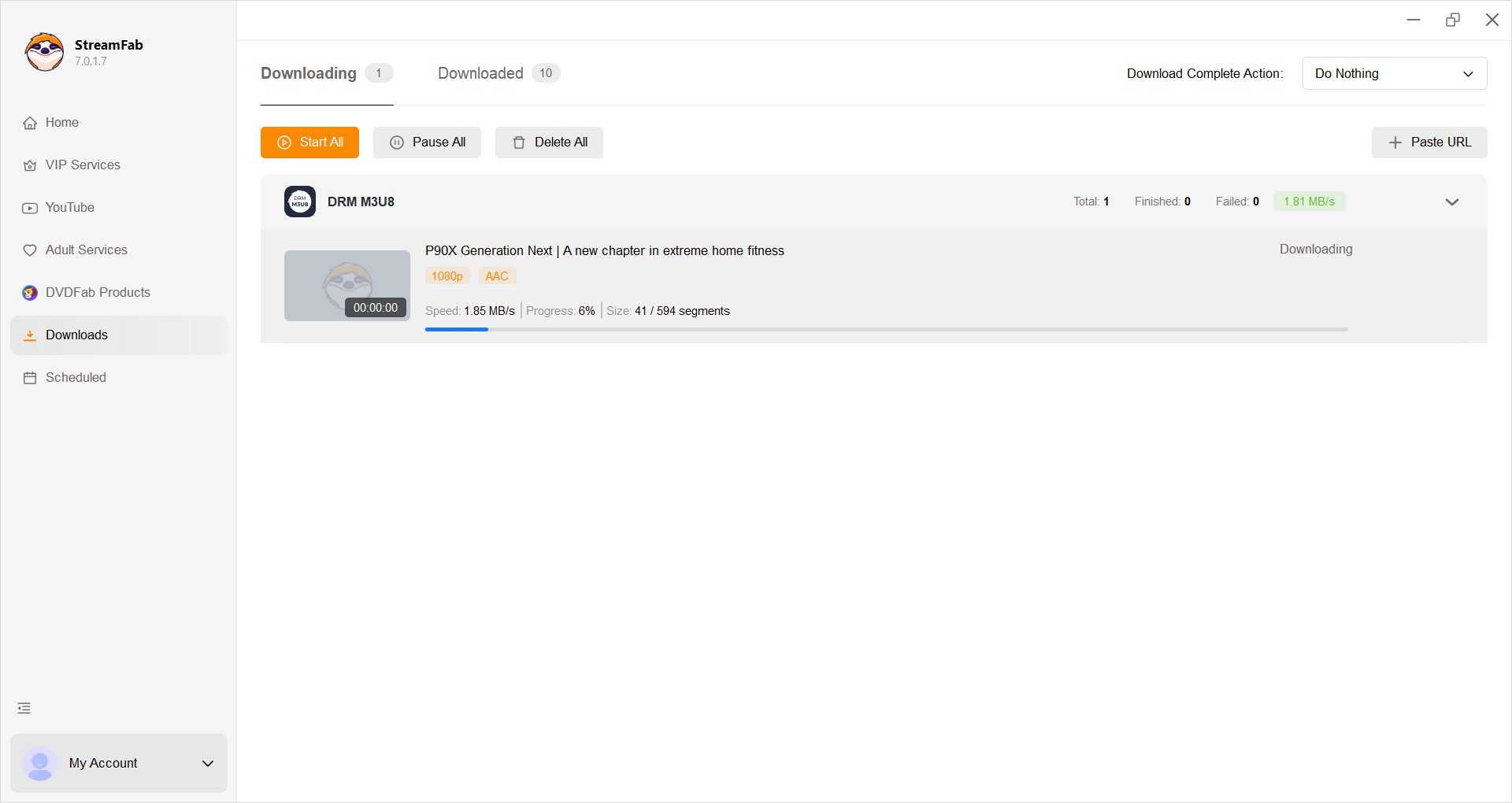

Besides, as a comprehensive M3U8 video downloader, it can also download videos on CBC Gem, 10 Play, TVer, or even help you download from Digital Concert Hall.
FAQs
Conclusion
You came here because an M3U8 link wouldn't play — and now the reason is obvious: it's a playlist, not a video. Once you can read the manifest, HLS behavior, playback quirks in VLC or a browser, and the boundary between open and encrypted streams all make sense. For public streams, VLC or a browser with hls.js will usually handle playback; for authorized content you want offline, a desktop downloader can save a single MP4 or MKV instead of loose segments.


Instagram offers three practical download routes: its native Download action, a no-login browser tool for accessible public posts, and a Windows or Mac desktop workflow for repeated authorized saves. This guide explains access limits, file-quality checks, safety warnings, and fixes for missing buttons, muted audio, and failed links.
By Nicole Lopez - Aug 6, 2026
This article explains how to download videos from M3U8 files, covering what M3U8 is and introducing main methods along with their pros and cons, helping users choose a safe and effective solution for offline viewing.
By Jacob Harrison - Aug 6, 2026
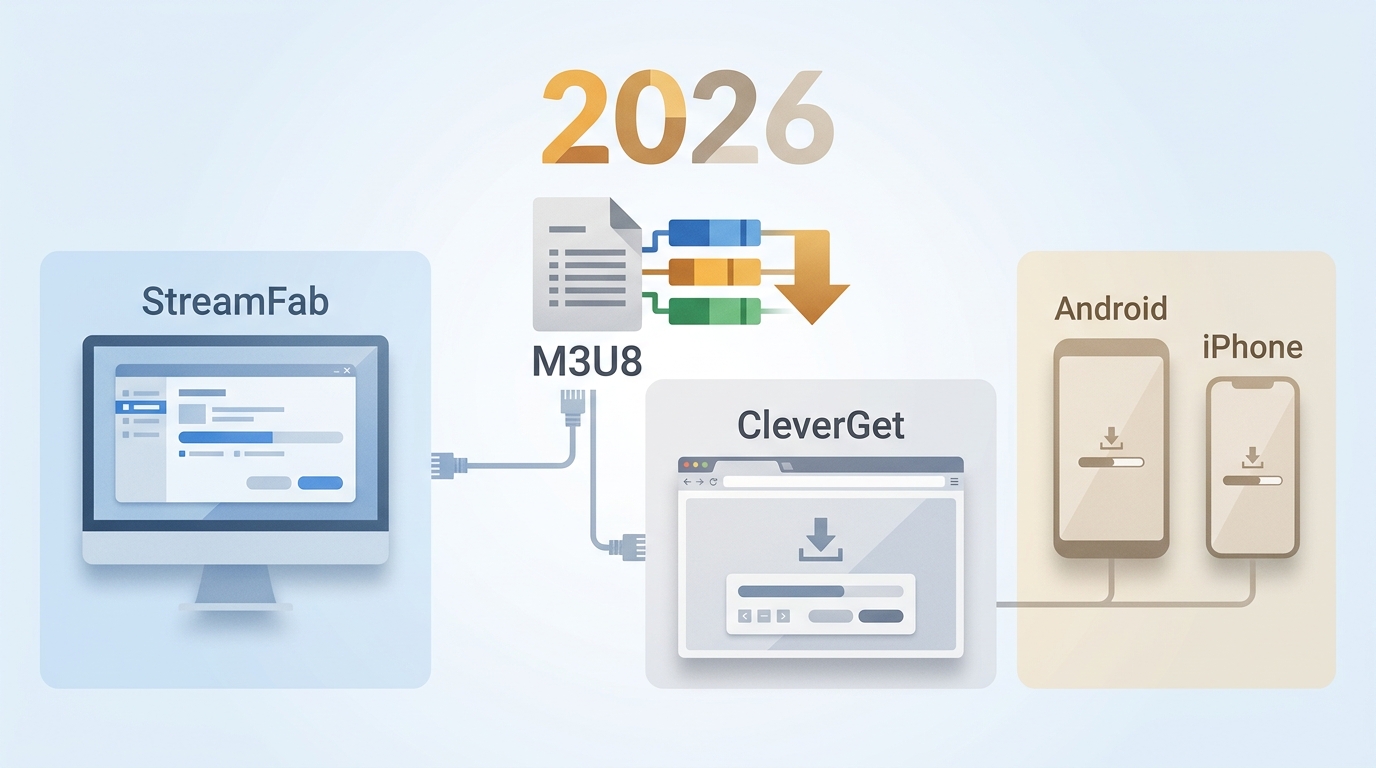
The right M3U8 downloader depends on whether the stream is public, login-required, or access-controlled, plus whether you need a quick file, a playlist, or a reusable local format. This guide compares desktop apps, browser extensions, and mobile options so you can choose the fit before you download an M3U8 playlist.
By Jacob Harrison - Aug 5, 2026
M3U8 files store video links, not content—hence the need to convert to MP4. Three methods: StreamFab (high-quality, Android support), online tools (risky, limited), and VLC (open-source). Table compares platforms, quality, and users; FAQs answer format differences. Recommend StreamFab for reliability.
By Jacob Harrison - Aug 4, 2026