
Top 5 iTunes DRM Fix Tools in 2026: Apple TV, Music & MP4

Summary: This guide separates modern Apple TV video, Apple Music audio, and legacy iTunes libraries so readers can choose a realistic playback or export path. It covers MP4, M4V, and MKV compatibility, official redownload and iTunes Match eligibility, StreamFab and MusicFab workflows, hardware limits, and the boundaries for authorized personal use in the United States.
- Environment first: Modern video playback is centered on the Apple TV app; legacy converters fit legacy iTunes methods a narrow iTunes 12.7–12.9 window.
- Split the goal: Choose video for movies and TV, or audio for Apple Music and audiobooks.
- Video path: Use an authorized Apple TV desktop download route Video path and Alternative solutions when the official offline option is unavailable.
- Audio path: Use an Apple Music-focused export tool Audio path and Alternative solutions and check tags, lyrics, and player support.
- Compliance note: Keep access authorized, use files personally, and do not redistribute protected content.
- Format check: Confirm MP4 or M4V compatibility the comparison sheet of iTunes DRM tools with the player you actually use.
When an iTunes movie opens only in Apple TV, the answer is usually a path decision rather than a missing codec. Modern Apple TV video, legacy iTunes purchases, and Apple Music tracks follow different compatibility rules, so this guide separates video from audio, checks MP4 and M4V playback, and keeps the US use boundary clear.
The phrase iTunes DRM removal often describes a playback problem, not a license to change account rights. For an older-library reference, the iTunes movie compatibility guide keeps the terminology focused on playback. If you are comparing what iTunes means today with older libraries, start with the environment and the media type.

Apple DRM in 2026: What Changed
Apple DRM FairPlay is not one single workflow in 2026. Apple TV app playback, Apple TV DRM support, and legacy iTunes 12.7–12.9 libraries should be treated as separate environments, with different options for video and audio.
FairPlay, Apple TV, and Legacy iTunes
Apple TV app purchases and rentals generally stay inside the current Apple ecosystem, while older iTunes movie DRM workflows may still depend on a maintained legacy setup. That split explains why an old converter can appear useful for one library and fail for another.
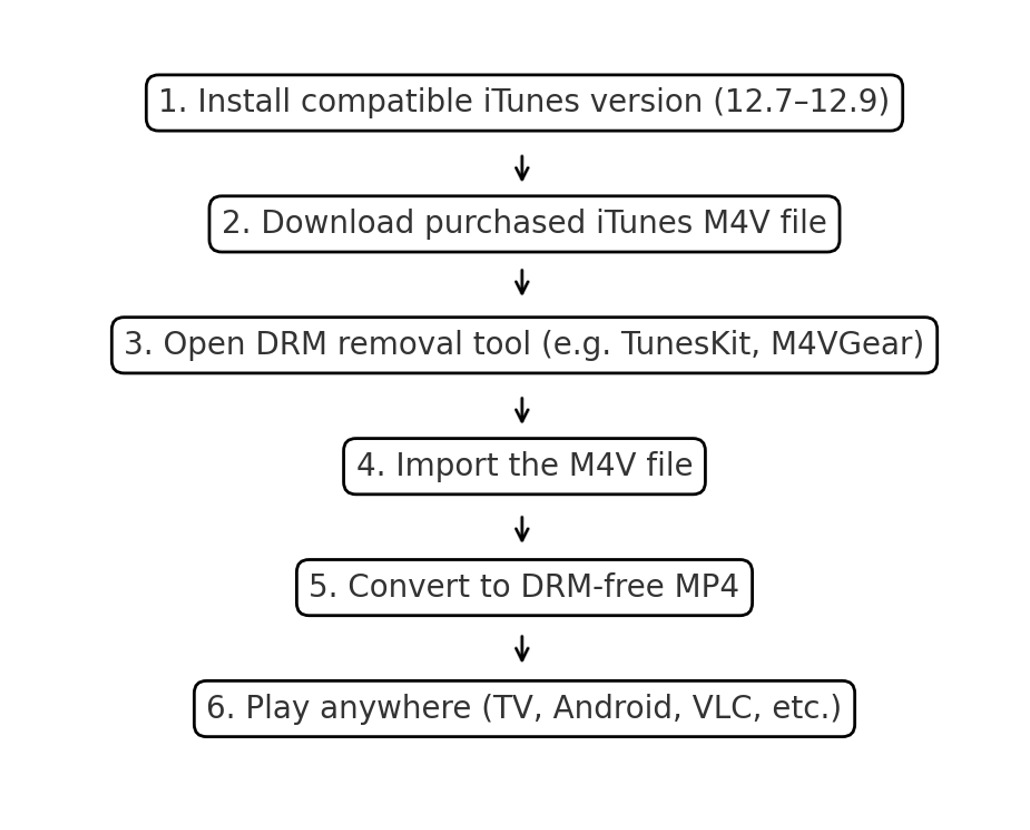
In practical terms, apple tv DRM support is strongest when the app, account, and player match the purchase path. A narrow legacy window can be useful for an older iTunes movie DRM library, but it is not a dependable answer for every current title.
- Current Apple TV app purchases use a modern app path rather than the old iTunes converter workflow.
- Older purchases may still open in iTunes 12.7–12.9 on a compatible legacy system.
- A fallback can involve an official redownload, an eligible library match, or a controlled capture for a short personal clip.
| Media path | Source environment | Output focus | Current viability | Practical next step |
|---|---|---|---|---|
| Apple TV video | Apple TV app | MP4/MKV where supported | Depends on account and title | Check official download, then a desktop alternative |
| Apple Music audio | Music app / Apple Music | MP3, FLAC, or WAV | Tool and plan dependent | Use an audio-focused export path |
| Legacy iTunes video | iTunes 12.7–12.9 | M4V or MP4 | Narrow, dated support | Test the library on its matching system |
| Official fallback | Redownload or iTunes Match | Apple-managed file | Eligibility dependent | Confirm purchase and library eligibility |
Is iTunes DRM Handling Legal in the US?
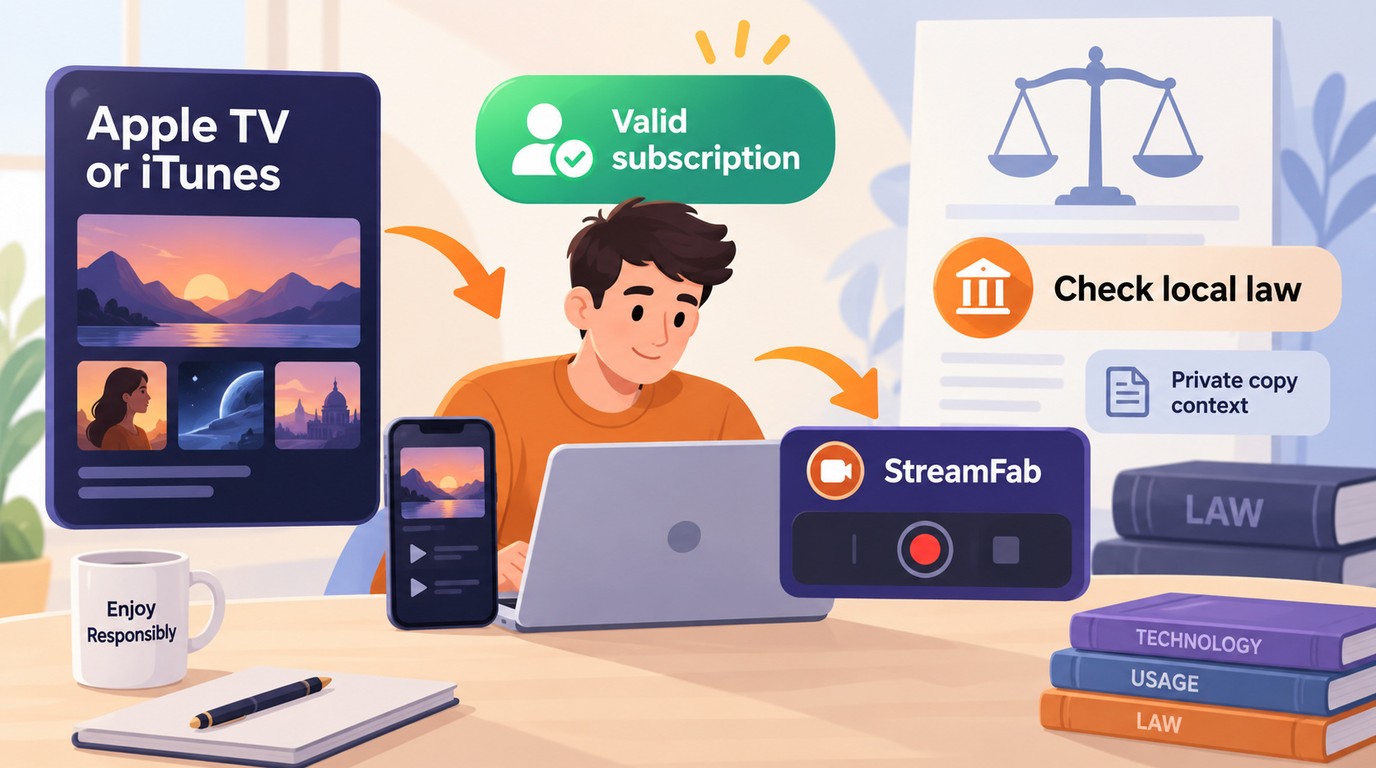
There is no blanket US answer for iTunes DRM removal or Apple DRM removal. A personal workflow should begin with authorized access and authorized content, then follow applicable law and the platform terms for that account and title.
Keep the boundary practical: use a copy for your own offline viewing, do not redistribute or sell it, and remember that a platform rule can still limit what an otherwise authorized account may do. When a path does not fit, use the platform’s official download, trial, support, or refund route instead.
| Usage Scenario | Main concern | Safer boundary | Check before saving |
|---|---|---|---|
| Personal backup | Account or format changes | Authorized access and personal use | Purchase or subscription status |
| Cross-device playback | Player and regional limits | Follow platform terms and local law | Device, region, and title availability |
| Redistribution or public sharing | Copyright and account exposure | Do not share or sell protected files | Stop at private use |
Top 5 iTunes DRM Playback Tools
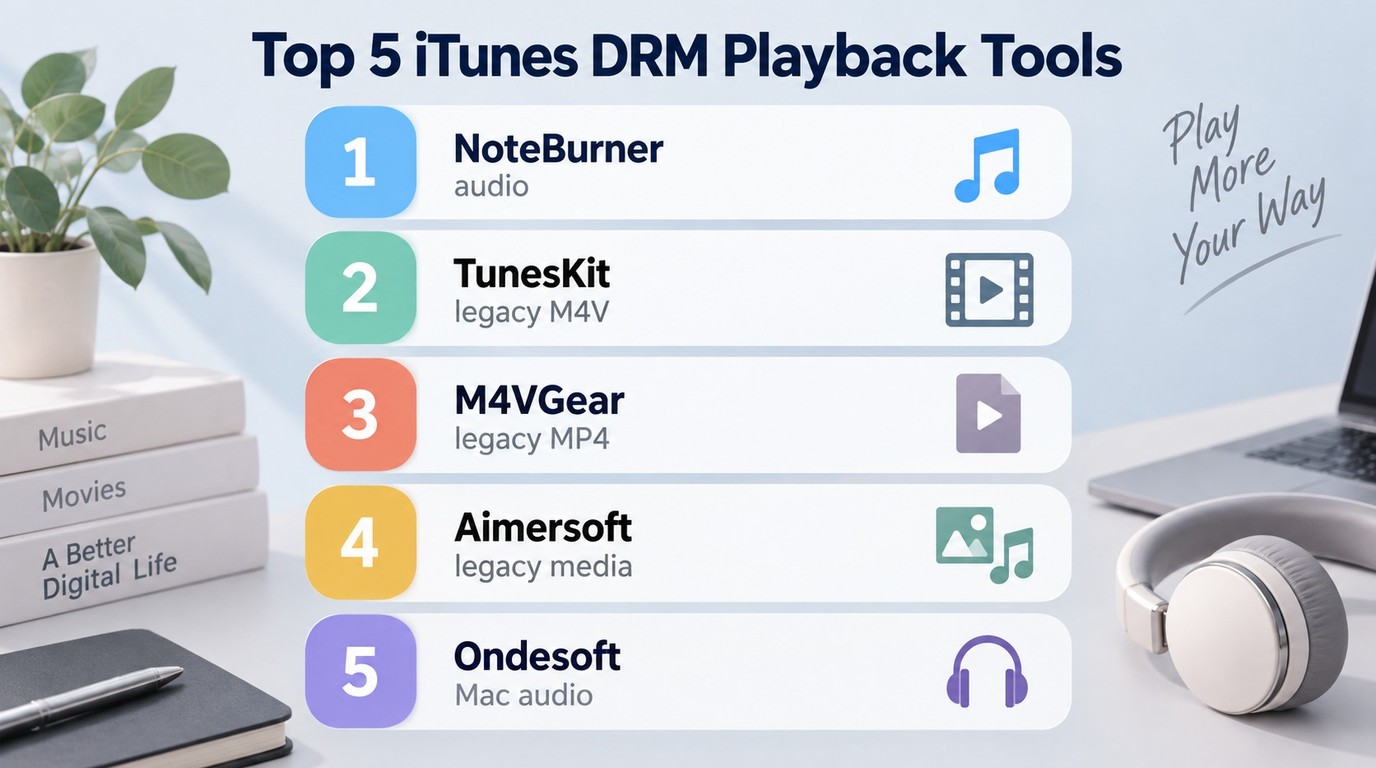
As of September 2026, these five iTunes DRM tools are mostly media-specific or legacy utilities. Treat “DRM removal” as a search label for a compatibility task, then check the source environment, output, and current support before relying on a converter.
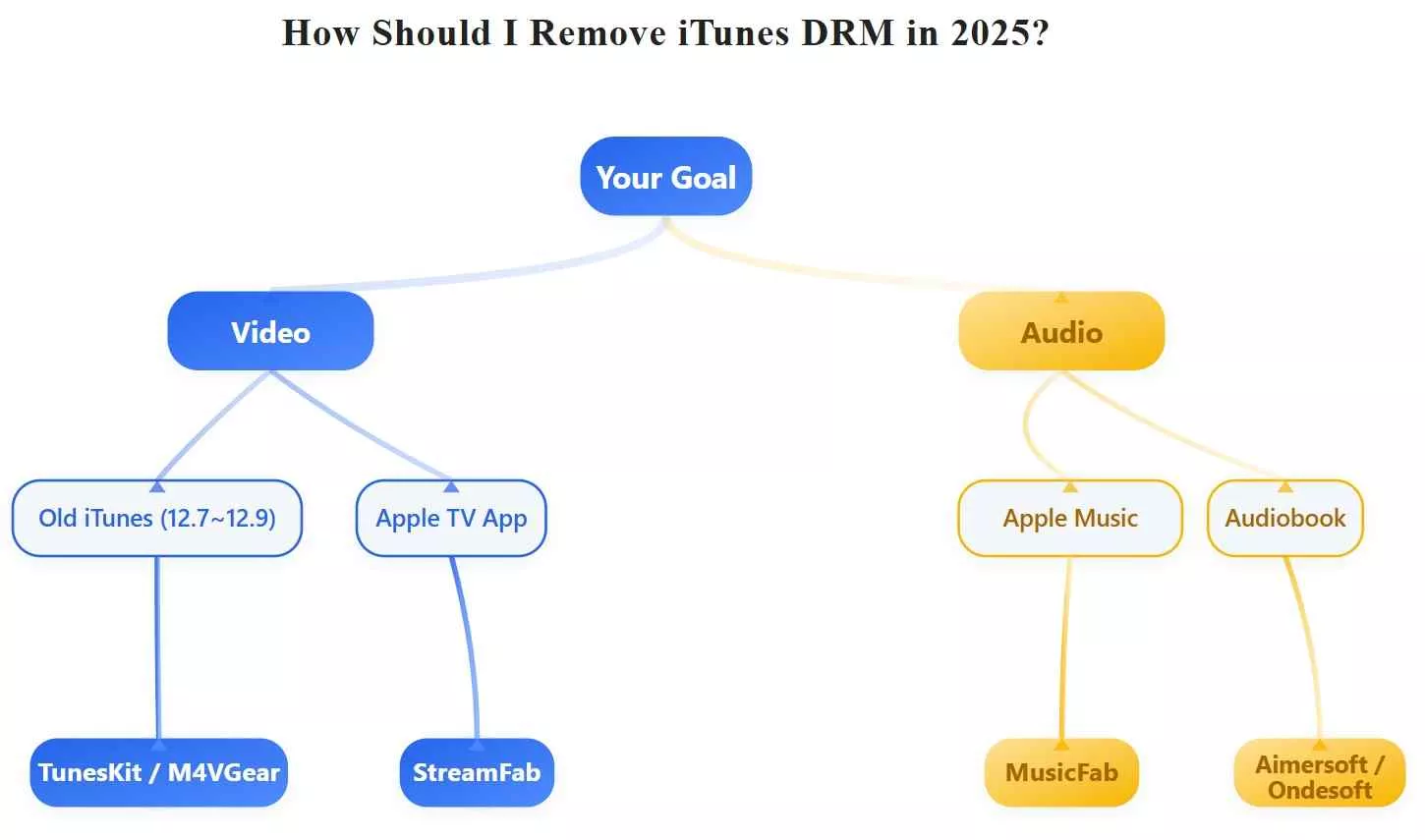
1. NoteBurner Audio Converter
Best for: Apple Music tracks, iTunes audio, and audiobooks on Windows or Mac. Not ideal for: Apple TV movies or TV shows.
People searching for an apple music DRM remover are usually trying to make audio usable in a familiar player. NoteBurner is an audio-focused option with MP3, M4A, M4B, FLAC, and WAV output options; current app support and account limits still need to match the user’s setup.
The practical takeaway is simple: it belongs in the audio lane, not the iTunes movie lane.
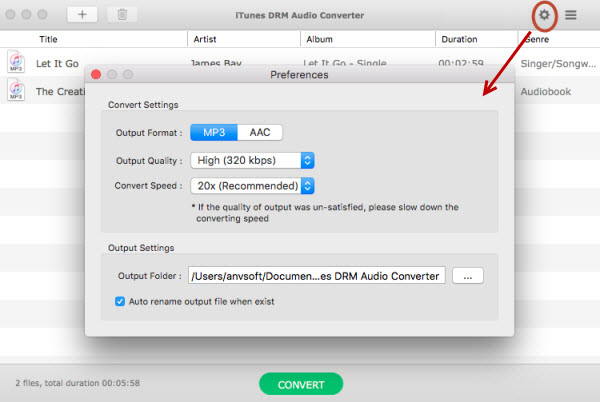

- Handles iTunes and Apple Music audio exports to MP3, M4A, M4B, FLAC, or WAV
- Available on Windows and Mac

- Audio-focused; it is not a video workflow.
2. TunesKit DRM Media Converter
Best for: A dated iTunes M4V library on a matching Windows setup. Not ideal for: New Apple TV app purchases or current macOS assumptions.
TunesKit is often associated with iTunes M4V conversion. Its fit depends on the old iTunes environment and the title type, so the M4V playback guide is more useful than a broad promise. A separate Mac compatibility overview can help readers assess an older setup.
My editorial judgment: keep this as a legacy candidate only when the library and operating system genuinely match its dated window.
- A legacy option for selected iTunes video purchases
- Windows settings and output behavior vary by version
- Does not cover Apple Music audio
- Current Apple TV app support is not established
- Mac compatibility depends on an older macOS range
- Update history should be checked before use
- Rental behavior can differ from purchased content
3. M4VGear DRM Media Converter
Best for: A legacy iTunes video library where the output goal is MP4. Not ideal for: Modern Apple TV app content or a new operating system.
The query iTunes M4V to MP4 describes a format goal. M4VGear is associated with that older path, but current title and system support should be checked before a library is organized around it. The linked M4V-to-MP4 format guide explains the player-side decision.
Its fit is narrow: useful for a matching legacy collection, less suitable as a general Apple TV answer.
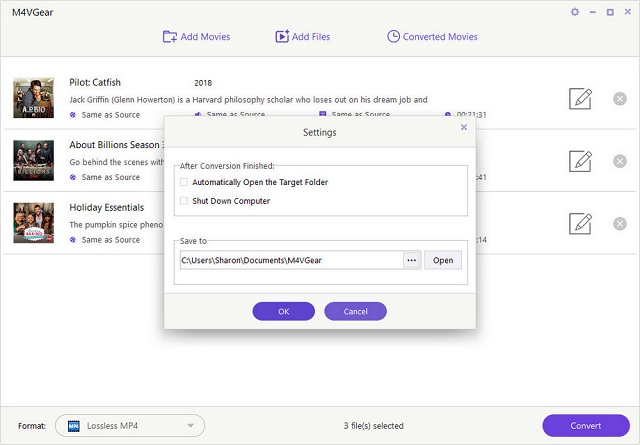
- MP4 output is the main use case
- Windows and Mac availability depends on the product version
- Conversion behavior varies with source and hardware
- Video-focused rather than an Apple Music solution
- Modern Apple TV app support is not established
- Older Mac requirements may apply
- Rental titles can behave differently
- Support and update status should be checked
4. Aimersoft DRM Media Converter
Best for: Readers investigating a broader legacy media converter. Not ideal for: Anyone who needs a clearly current Apple TV workflow.
Aimersoft’s older DRM Media Converter identity and present support need confirmation before use. That makes it a research lead rather than a firm recommendation for iTunes movies, Apple Music, or audiobooks.
The sensible takeaway is to verify the current product page, supported OS, and output behavior before installing anything.
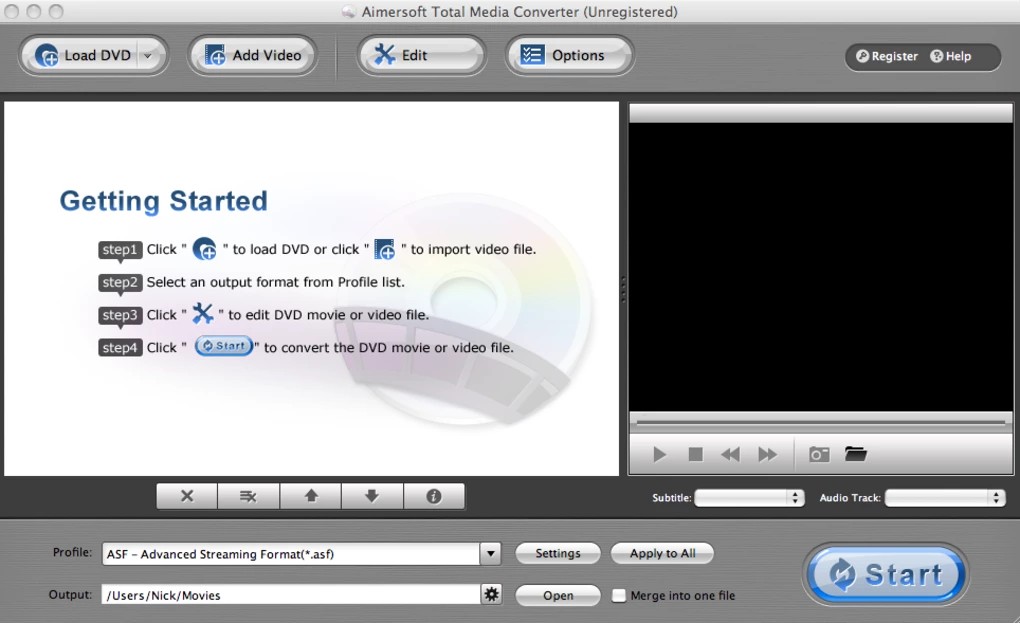
- Historically described as handling both iTunes video and audio
- Broader legacy media coverage is version dependent
- Windows availability is the main legacy fit
- Re-encoding can affect output quality
- The interface and update cadence may be dated
5. Ondesoft iTunes Converter
Best for: Mac users working with Apple Music audio or audiobooks. Not ideal for: iTunes movies and TV shows.
Ondesoft is another audio-centered name in searches for apple music DRM removal. Its current compatibility depends on the Apple Music app, macOS version, and account access, so it should be evaluated as an audio path rather than a video converter.
For a Mac-only audio library, the fit is clearer than it is for legacy movie files.
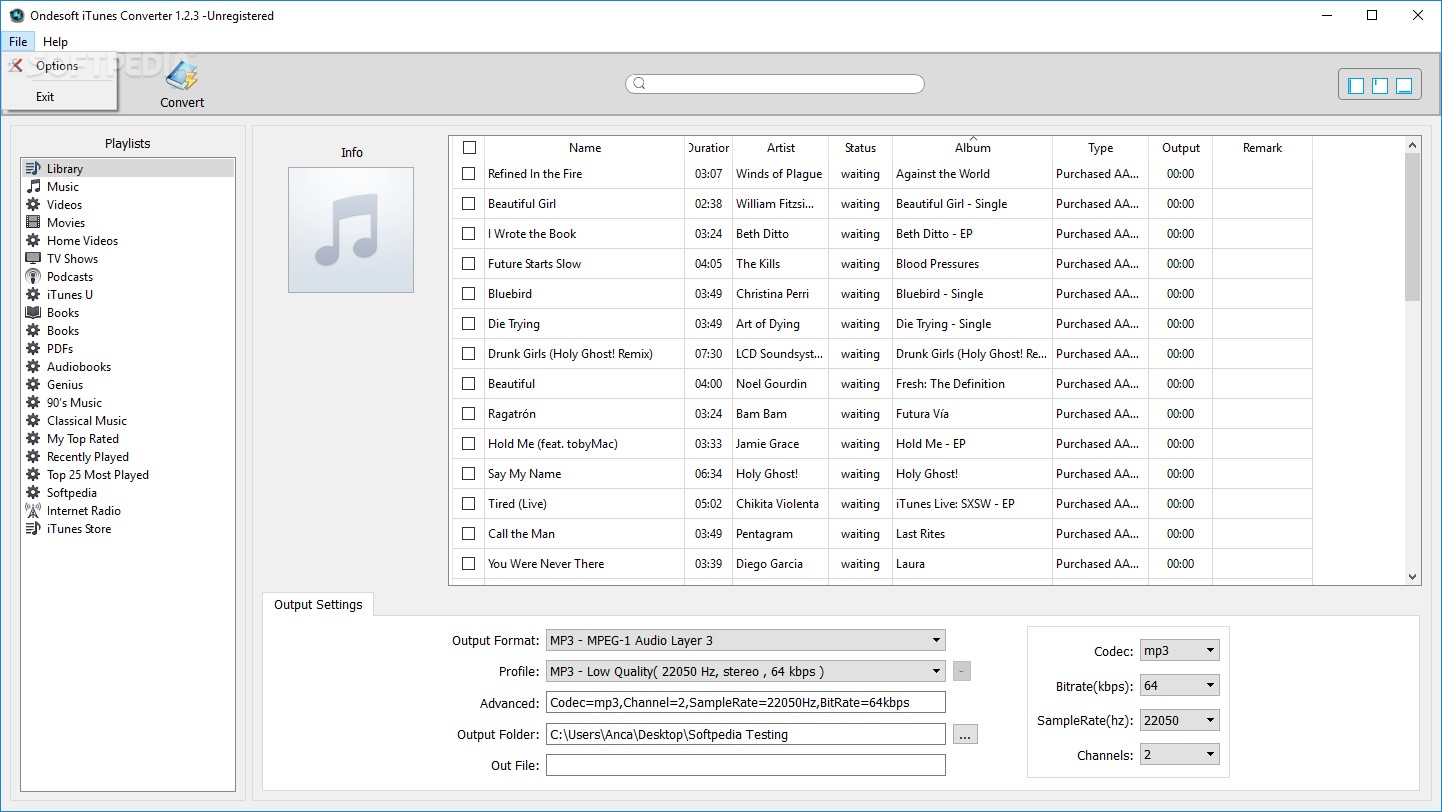
- Audio extraction and library organization are the main use cases
- A clean interface can suit non-technical users
- Does not cover iTunes movie or TV workflows
- No Windows path in the listed profile
- Apple Music account access is required
- Large audiobook libraries may need extra time
Choose a Video or Audio Path
Use the media type as the first filter. An apple tv DRM removal search usually points to a video compatibility problem, while apple music DRM removal points to an audio export workflow.
For video, check the official Apple TV download first and then consider a desktop alternative. For audio, choose a converter that exposes the formats and metadata your player needs.
- Check environment: If the library is not tied to iTunes 12.7–12.9 on a compatible older system, treat legacy tools as uncertain.
- Use the video route: Follow the Apple TV desktop workflow below when an official offline option is unavailable.
- Verify output: Check resolution, subtitles, audio tracks, and playback in the target player.
- Prepare: Sign in to Apple Music and confirm that the library item is available to the account.
- Convert: Use an Apple Music-focused converter for a batch export.
- Check metadata: Validate tags, cover art, lyrics, and a short sample before organizing a library.
Modern Alternatives and Official Fallbacks
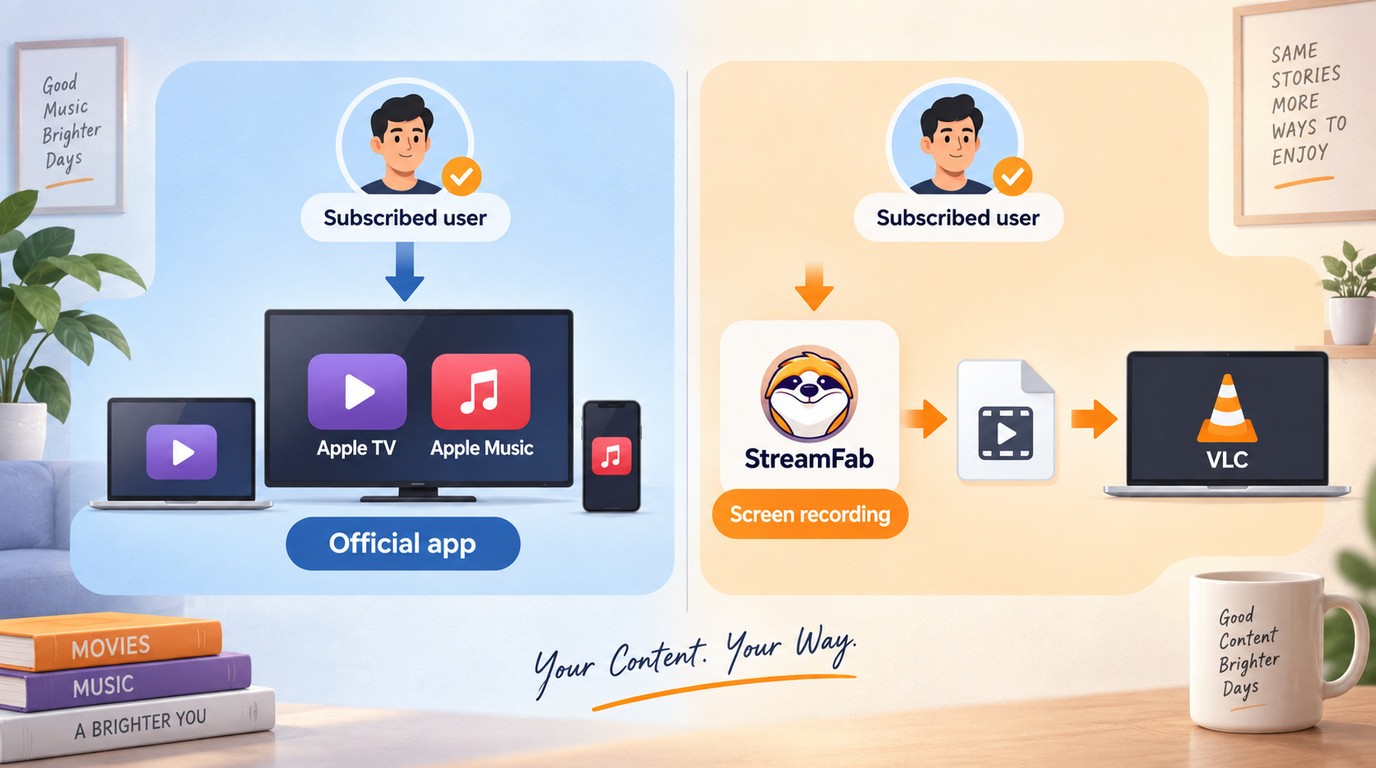
Modern Apple TV users should start with the official download capability and eligibility rules, then choose a desktop path only when it fits authorized personal offline viewing. Legacy tools remain a narrow branch, not a universal answer.
StreamFab Apple TV Downloader
StreamFab Apple TV Downloader is a desktop alternative when official Apple TV downloads are unavailable, for personal offline viewing of content you are authorized to access, where permitted by platform terms and applicable law.
Its documented fit is Windows and macOS, with up to 1080p or 4K where the service and plan allow it, Dolby audio, multiple subtitles, MP4/MKV output, metadata, batch jobs, and scheduled downloads. An authorized iTunes DRM offline copy should be treated as a personal local file, not a change to account rights.
When subtitles matter, the subtitle download guide is the natural next reference. For the broader set of iTunes playback paths, see the iTunes playback tools guide.

- Download Apple TV videos in original 1080p/4K quality
- Save Apple TV episodes with Dolby Atmos audio
- Output MP4/MKV format files
- Auto ad-cut is open to all tiers of accounts
- Save metadata together with the Apple TV videos
- Schedule download and bulk download are available
- Selectable codecs between H.264 & H.265
- Download subtitles & audio tracks in various languages
- Quality depends on the service, plan, title, network, and selected output settings. Check the resulting file in the player you plan to use. Keep the workflow within authorized personal viewing.
The operation sequence below shows the authorized setup; the surrounding guidance explains when this route fits.
Log in to Apple TV
Use the built-in browser to sign in with the authorized account.

Navigate to the video
Find and play the title, then choose available audio and subtitle options.

Start downloading
Choose “Download Now” or add the title to the queue after checking the options.
MusicFab for Apple Music
MusicFab is the audio path for Apple Music tracks, playlists, podcasts, and audiobooks when the account and platform terms permit a personal export workflow. It supports MP3, FLAC, and WAV choices, with ID3 tags and lyrics handling.
The practical fit is batch-oriented audio organization, not Apple TV video. For multi-language audio-track context, the audio track guide is a relevant companion.

- Download Apple Music tracks at 20x faster speed
- Search and convert Apple Music to MP3 with a built-in browser
- Offers various output options like MP3/FLAC/WAV, etc.
- Preserves ID3 tags and saves lyrics (external .Irc files)
- Bulk download songs/playlists/albums/podcasts/audiobooks
Keep account access active while preparing the export, and check a small sample for tags, cover art, lyrics, and playback before processing a larger library.
Official Redownload and iTunes Match
Eligibility comes before any fallback. Re-download an eligible purchase through Apple, or use iTunes Match where the account and library qualify. These routes preserve Apple’s own account and catalog rules.
For a clear distinction between a managed download and a recording, see the difference between downloading and recording. For a player-focused container choice, the MKV format guide is useful.
- iTunes Match: Eligible purchased music may be available for re-download through Apple’s matching service; Apple Music subscription tracks follow different rules.
- Limited capture: A streaming box and capture device can serve a rare-title or short-clip use case, but quality and rights constraints apply.
- QuickTime on Mac: Short personal clips can be recorded with system tools where permitted; long-library archiving is a different task.
Limited Capture Fallbacks
Capture is a constrained fallback for a short personal clip or a title that is not available through an eligible official path. It can introduce quality loss, large files, or missing track and subtitle data, so it is not a substitute for a current download workflow.
MP4 and M4V Output Compatibility
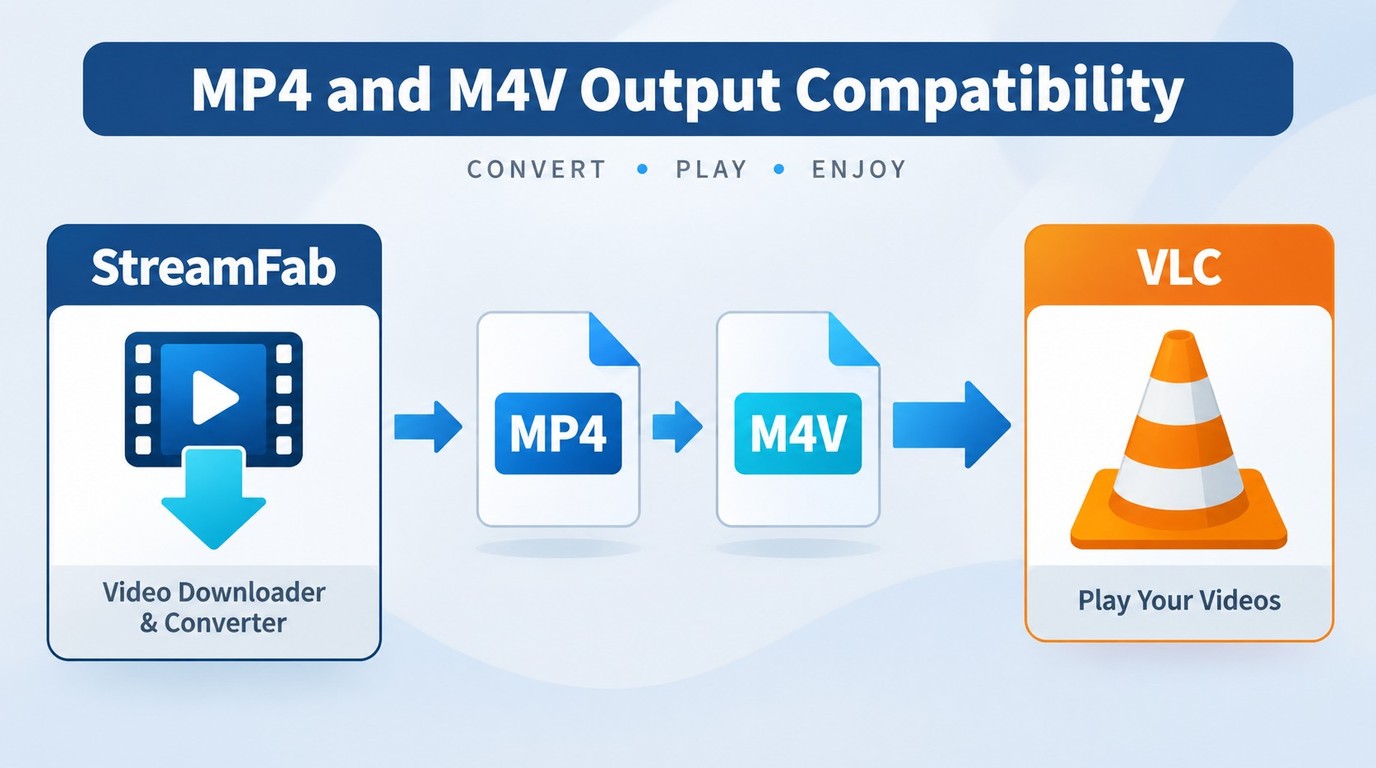
iTunes DRM removal MP4, DRM removal itunes movies, and iTunes M4V to MP4 are usually format questions. MP4 is broadly accepted by modern players, while M4V compatibility depends on the source workflow and the player’s support for its audio, subtitles, and metadata.
For a format-specific walkthrough, use the M4V compatibility article or the download movies as MKV files guide. StreamFab’s documented Apple TV output is MP4 or MKV on Windows and macOS, with available resolution and audio depending on the service and plan.
Choose a Format for Your Player
Choose MP4 when broad player support is the priority. Choose MKV when the target player handles multiple tracks and metadata well. Keep M4V for a workflow that already depends on Apple’s container behavior.
Check Subtitles, Audio, and Metadata
Apple TV DRM support is not just a resolution question. Check the selected subtitle language, audio track, metadata fields, and the actual player before filing a library copy.
| Output check | Video | Audio | Metadata |
|---|---|---|---|
| Target player | Confirm resolution and container | Sample the selected track | Check title, cover, and tags |
Overall Comparison Between iTunes DRM Fixes
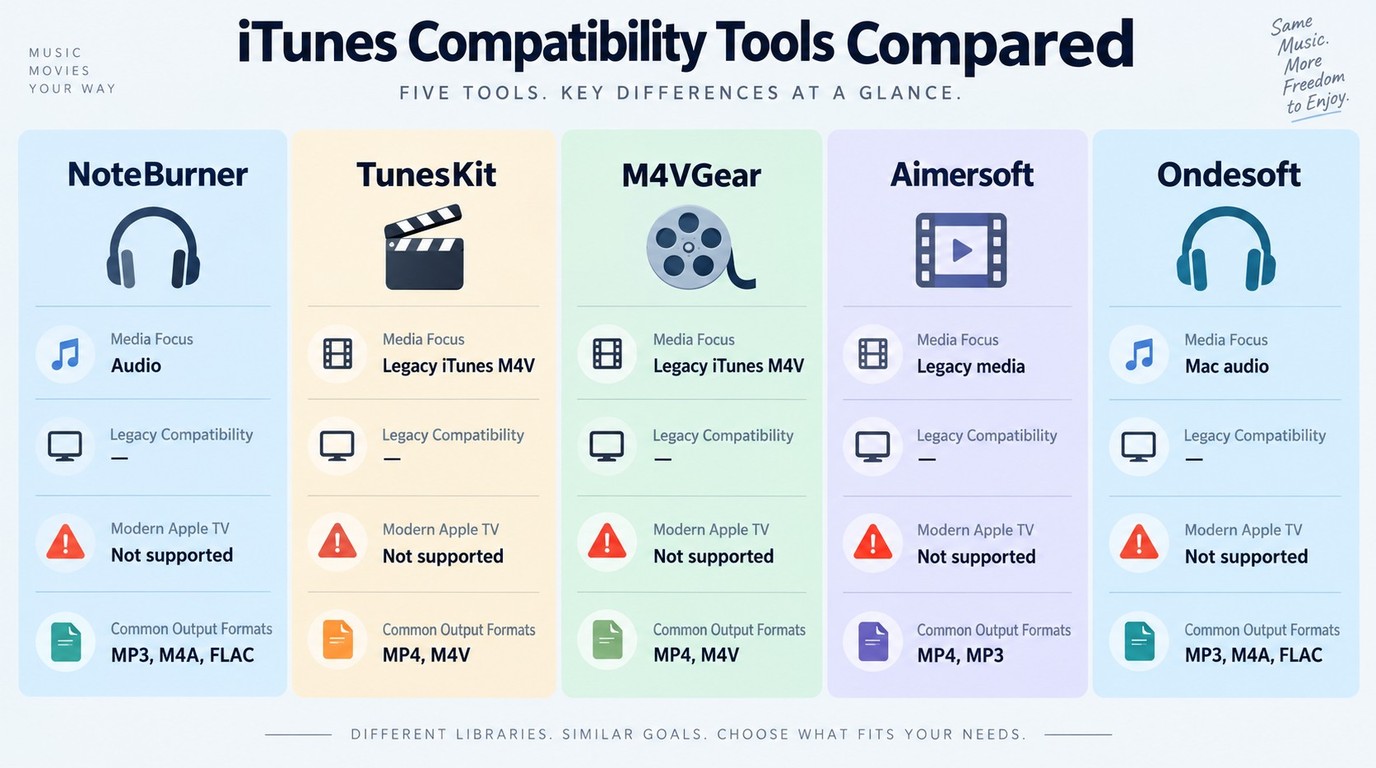
Use this path-level comparison to decide whether the task is modern Apple TV video, Apple Music audio, legacy iTunes, or an official fallback. The label iTunes DRM tools covers all four, but their current viability is not the same. Mac readers can also review the Mac-focused iTunes compatibility page.
| Path | Typical source | Output focus | OS fit | 2026 viability |
|---|---|---|---|---|
| Apple TV video | Apple TV app | MP4/MKV | Windows, macOS | Practical when authorized and supported |
| Apple Music audio | Music app / Apple Music | MP3, FLAC, WAV | Windows, macOS | Practical with account and plan limits |
| Legacy iTunes converters | iTunes 12.7–12.9 | M4V or MP4 | Matching older setup | Narrow and dated |
| Official redownload / Match | Apple purchase library | Apple-managed file | Apple ecosystem | Eligibility dependent |
- Compatibility: Match the app, account, title, and operating system before starting.
- Output: Sample subtitles, audio, metadata, and playback in the target player.
- Fallbacks: Use official redownload or eligible matching before a limited capture route.
- Hardware context:
- CPU, GPU, storage, and network conditions affect local processing and file handling.
- Wired gigabit Ethernet, 200Mbps bandwidth
- Samsung 970 EVO Plus 1TB NVMe M.2
Hardware Constraints in DRM Processing
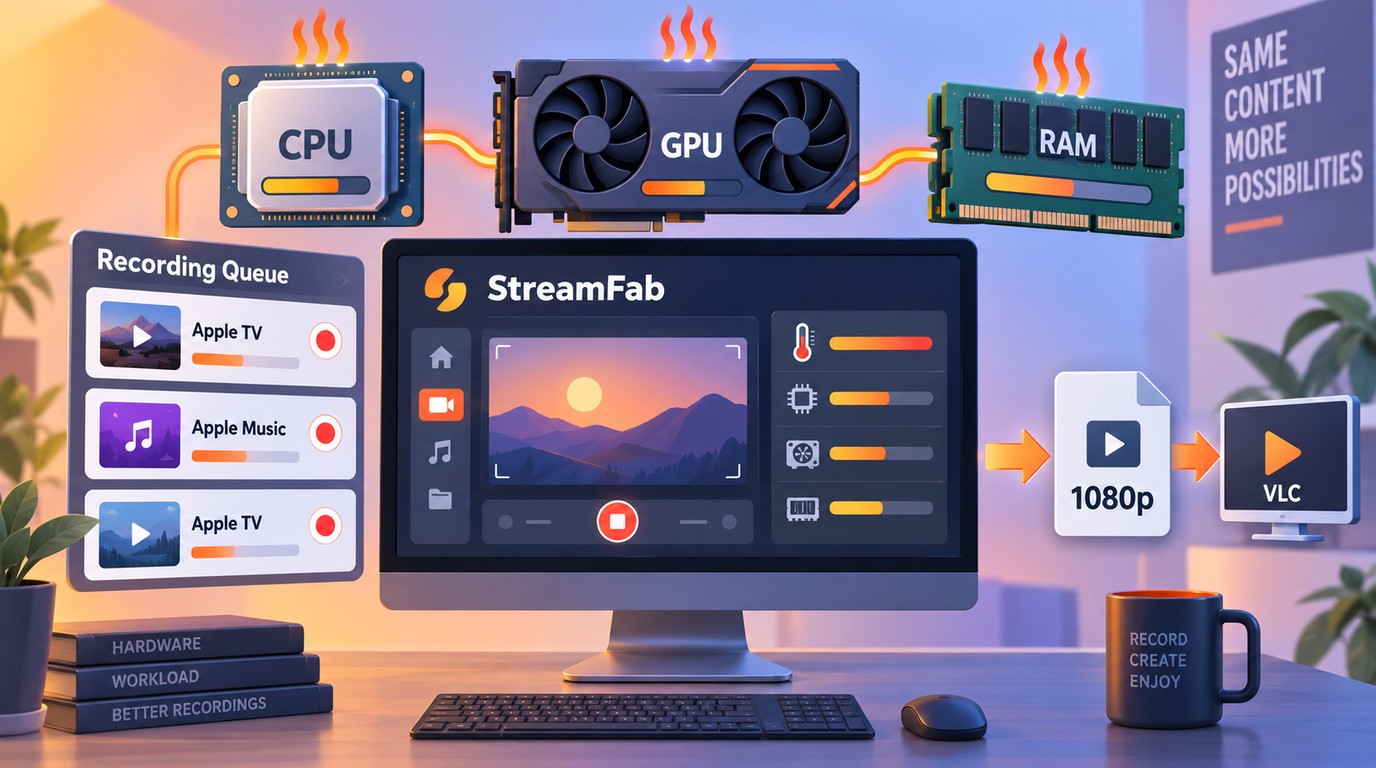
Dell XPS 8940 Desktop Pros and Cons
A Dell XPS 8940-class desktop can be a reasonable local-processing base, but hardware does not change platform rights or ensure a successful title workflow. CPU/GPU headroom, free storage, thermal behavior, and network stability all influence how a conversion or download feels.
Best for: Windows users with local storage and a target player ready for MP4/MKV files. Not ideal for: anyone expecting hardware to solve an unsupported Apple TV app path or an account restriction.
My practical take is to keep hardware troubleshooting separate from compatibility troubleshooting: update the OS and drivers, leave working storage space, test one short title, and then decide whether a larger batch is sensible.
FAQs
Can I save an iTunes or Apple TV video as an MP4 file?
Sometimes, depending on the title, account, app path, and terms. MP4 is a common output for an authorized desktop workflow, but an Apple TV app purchase is not automatically transferable to every player. Check the output, subtitles, audio, and metadata in the target player.
Are there any free options for handling iTunes DRM issues?
Official downloads and limited trials may cover a narrow use case, but there is no universal free converter promise. Start with Apple’s own eligibility path, then compare a tool’s supported media, operating system, and trial limits.
Can older iTunes purchases still work with today’s apps?
Some older purchases may still depend on iTunes 12.7–12.9 or another matching legacy setup. The modern Apple TV app follows a different path, so a converter that once fit an old library should not be treated as current Apple TV support.
What should US users check before making a personal backup?
Confirm authorized access and content, keep the copy for personal use, do not redistribute it, follow applicable law and platform terms, and consider the specific title and account conditions. If those boundaries do not fit, use an official download or support route.
Conclusion
The right 2026 path depends on the media and the environment. Modern Apple TV video calls for an official download check and, where permitted, a documented desktop alternative; Apple Music calls for an audio-focused export path; older iTunes libraries may still fit a narrow legacy converter; and eligible purchases should use Apple redownload or iTunes Match first.
Start with one title, confirm the account and platform terms, then verify MP4 or M4V playback, subtitles, audio, and metadata in the player you actually use. That keeps an iTunes DRM offline copy practical without turning a compatibility fix into a broader rights claim.

Are you looking for the best media converter Mac software to address iTunes playback restrictions? Having a reliable video tool at hand will enable you to enjoy your iTunes movies and music for offline play flexibly. You have come to the right page. This post lists the top 5 best converters for Mac used to back up iTunes videos, audiobooks, and Apple Music on Mac easily.
By Nicole Lopez - Sep 29, 2026
Streaming video content is often protected by DRM (Digital Rights Management) technology to prevent users from downloading and recording. This article explains what DRM-protected content is and how to save videos for personal offline viewing.
By Nicole Lopez - Sep 28, 2026
Identify protected and unprotected M4V files, use authorized Apple TV playback, convert compatible files, or choose a separate supported-streaming workflow.
By Erika Leen - Sep 8, 2026
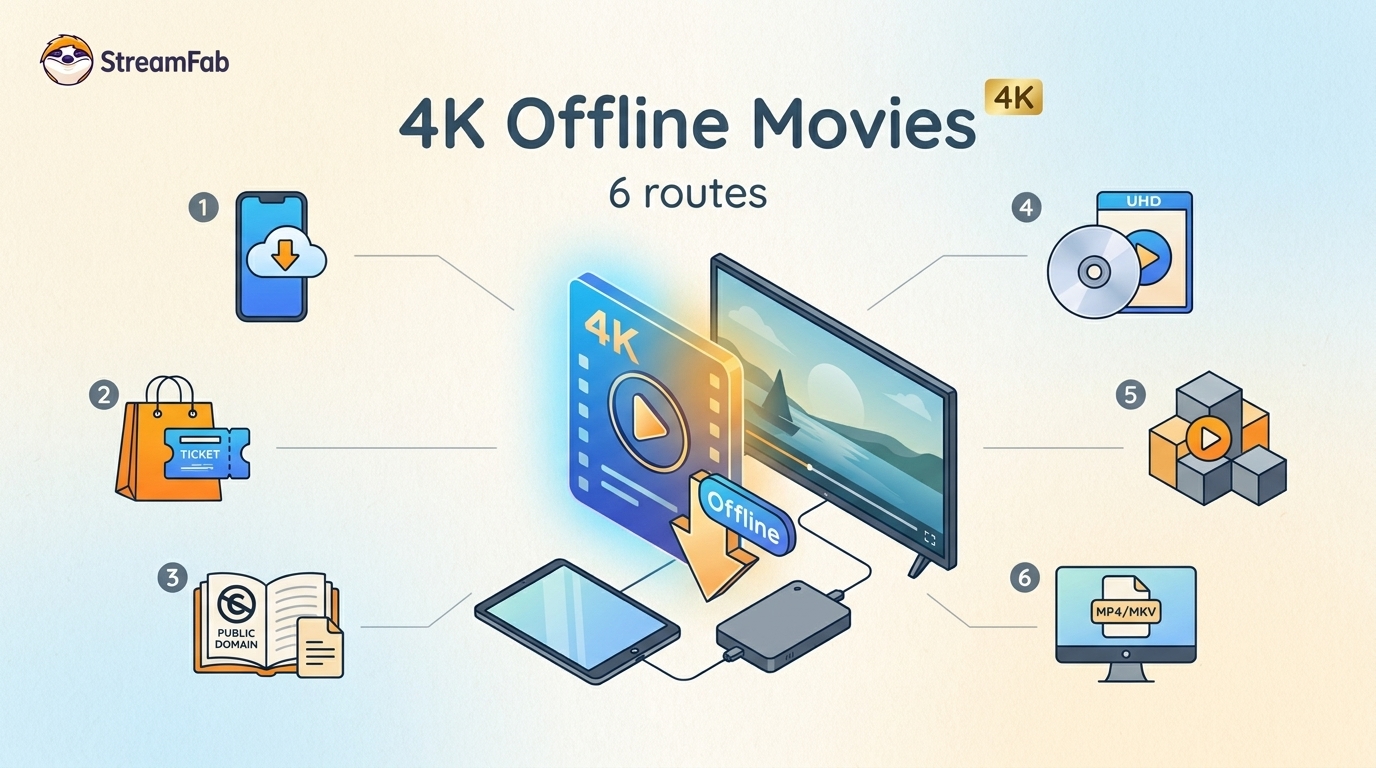
Legal 4K movie downloads do not all provide the same kind of offline access. Most mainstream services offer app-locked downloads, while portable movie files, UHD Blu-ray, public-domain media, and authorized desktop workflows involve different quality, cost, device, and licensing limits.
By Jacob Harrison - Aug 12, 2026